
Search News
Industry Portal
Popular Tags
HMI display resolution standards that affect screen readability
Author
Dr. Isaac Logic
Time
May 07, 2026
Pageviews
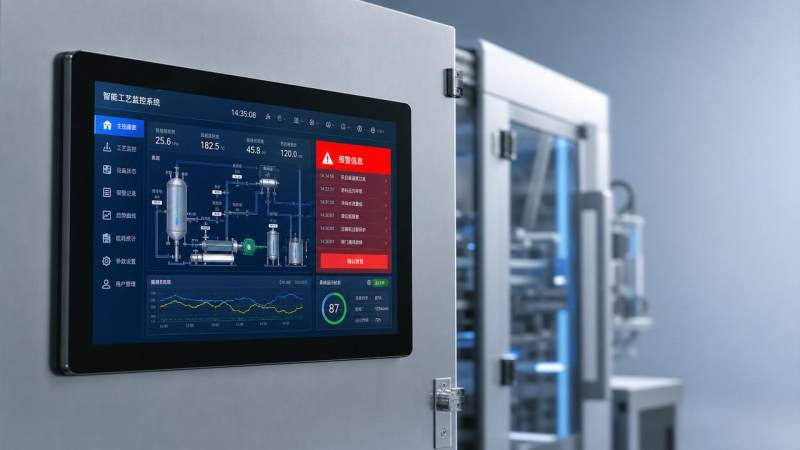
In industrial environments, HMI display resolution standards play a critical role in screen readability, operator accuracy, and response speed. For users and machine operators, the right resolution is not just a visual preference—it directly affects how clearly data, alarms, and controls can be understood under real production conditions. This article explores the key standards and practical factors that determine whether an HMI screen truly supports safe and efficient operation.
What do HMI display resolution standards actually mean for operators?
When people search for hmi display resolution standards, they are often not asking for a theory lesson. They want to know whether a screen will be easy to read during a shift, under factory lighting, while wearing gloves, under time pressure, and sometimes from a distance. In practice, display resolution standards refer to the way screen pixel count, aspect ratio, interface layout, and legibility expectations work together to support human-machine interaction.
A higher resolution does not automatically create a better HMI. If designers shrink text and icons to fit more information onto the display, readability can actually decline. For operators, the real value of resolution lies in whether alarms stand out clearly, whether buttons are easy to identify, and whether process values remain readable without eye strain. This is why hmi display resolution standards should always be evaluated alongside font scaling, viewing distance, panel size, and environmental conditions.
In smart manufacturing environments reviewed by engineering-focused platforms such as G-IFA, resolution is not a cosmetic feature. It is part of a broader decision around usability, safety, and production reliability. A screen that looks sharp in a showroom may fail on the shop floor if it cannot communicate information fast enough to real users.
Why can the same resolution feel clear on one HMI and hard to read on another?
This is one of the most common operator questions, and the answer is simple: readability depends on more than pixel count. A 1024×600 display on a 7-inch screen will feel very different from the same resolution on a larger panel. Pixel density changes how small text appears, while screen brightness, contrast ratio, and anti-glare treatment shape how easily the eye separates symbols from the background.
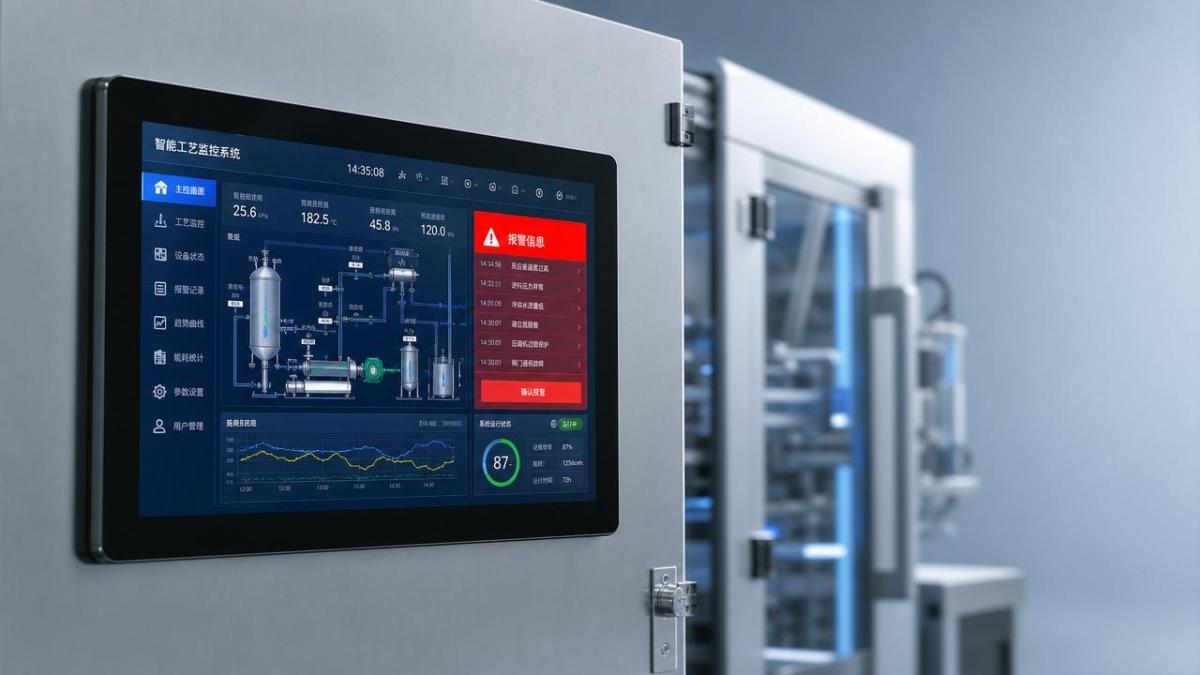
Another factor is interface design. Some HMIs use crowded layouts with too many values, trend windows, and navigation elements on one page. Even if the screen meets common hmi display resolution standards, poor visual hierarchy can reduce comprehension. Operators need immediate recognition, not visual complexity. Critical alarms should be visible at a glance, and frequently used controls should not compete with low-priority data.
The operating environment also matters. In food processing, packaging, metalworking, or logistics lines, users may face vibration, dust, washdown conditions, side-angle viewing, or changing daylight. In these cases, a theoretically acceptable resolution may still produce weak readability if brightness is too low or if the touch targets are too small.
Which practical screen factors matter most besides resolution?
Operators and maintenance teams should judge hmi display resolution standards together with several other usability factors. In many factories, these factors are more important than the headline resolution number listed in a product catalog.
- Screen size: A resolution that works well on a 15-inch HMI may feel cramped on a compact 7-inch model.
- Brightness and contrast: High ambient light can wash out low-contrast interfaces.
- Viewing angle: Wall-mounted or machine-mounted panels are not always viewed straight on.
- Touch target size: Buttons must remain easy to hit, especially with gloves.
- Font rendering: Fine fonts may look elegant in software previews but fail during real operation.
- Alarm prioritization: Resolution should support fast identification of abnormal conditions, not just detailed graphics.
For this reason, many experienced automation engineers avoid choosing an HMI based on resolution alone. They ask whether the panel helps people perform repetitive tasks accurately and whether it supports faster error recognition in live production conditions. That operator-centered approach is far more aligned with how hmi display resolution standards should be applied.
How can users compare common HMI resolution options without getting lost in specs?
A simple comparison framework helps. Instead of asking which resolution is “best,” ask which one matches the task, screen size, and information density. The table below summarizes common judgment points for operators and buyers.
This comparison shows why hmi display resolution standards should be read as a fit-for-purpose decision. A packaging machine with straightforward start-stop controls may perform very well with a modest resolution, while a line-monitoring dashboard may require a larger, higher-resolution display to avoid excessive page switching.
What standards or design principles should buyers and operators pay attention to?
There is no single universal resolution number that guarantees readability, but there are recognized industrial design principles and standards-based practices that influence good HMI outcomes. Buyers often review whether equipment aligns with broader engineering expectations linked to ISO, IEC, CE, and human-centered interface design approaches. These frameworks matter because they push suppliers to think beyond hardware specs and focus on safe use.
For operators, the most useful principle is consistency. A good HMI uses readable fonts, predictable navigation, stable color logic, and alarm visibility that remains clear under stress. In this context, hmi display resolution standards support the interface, but they do not replace proper visual engineering. A high-quality display paired with inconsistent screen design still creates confusion.
Engineering benchmark organizations like G-IFA emphasize this wider evaluation method. When comparing industrial hardware and software foundations, the right question is not just whether a panel is modern, but whether it delivers verified usability under demanding production conditions. That is especially important in cross-sector automation where machine uptime, worker safety, and process clarity all intersect.
What are the most common mistakes when evaluating screen readability?
One frequent mistake is assuming that more pixels always mean better operator experience. In reality, higher resolution can make text and symbols smaller unless the interface is designed carefully. Another mistake is testing the screen in office conditions rather than on the production floor. Factory lighting, reflected glare, and operator movement often reveal problems that are invisible during desk reviews.
A third mistake is ignoring the actual user profile. Some screens are selected by engineering teams who focus on system capability, while operators care more about speed of recognition, fatigue reduction, and touch accuracy. If the screen will be used by staff wearing PPE, by multilingual teams, or by workers who need rapid alarm acknowledgment, those realities must influence how hmi display resolution standards are interpreted.
Finally, many teams underestimate lifecycle issues. A screen may be readable when new, but if software updates add more process variables or remote support tools, the display can become crowded over time. Readability should be judged not only for today’s interface but also for future expansion.
How should an operator or factory team decide what resolution is right before purchase or upgrade?
Start with the real workflow, not the brochure. Ask what the operator needs to see in the first three seconds of interaction. Is the main task manual control, recipe selection, alarm handling, diagnostics, or line overview? If the answer is simple control, a lower or mid-level resolution may be enough. If the answer involves trends, multiple machine states, quality checks, and maintenance diagnostics, a larger and more detailed display may be justified.
Next, verify the physical conditions. Measure viewing distance, expected angle, ambient light, glove use, and whether users must react while moving. Then request realistic demo screens rather than generic marketing visuals. The best suppliers can show how their HMI behaves with actual process pages, alarm windows, and navigation structures. That is where hmi display resolution standards become meaningful in practice.
It is also wise to involve both operators and automation engineers in the review. Operators will identify readability problems quickly, while engineers can confirm compatibility with PLC, SCADA, MES, and control architecture. This collaborative check reduces the risk of buying a technically capable panel that performs poorly in daily use.
What questions should you ask suppliers or internal teams before moving forward?
Before finalizing an HMI choice, ask focused questions that connect screen specs to real use. For example: What is the intended viewing distance? How large are default fonts and touch targets? How does the panel perform under glare? Can alarm screens remain readable when trend charts are active? Is the interface scalable if more data points are added later? These questions help translate hmi display resolution standards into decision-ready criteria.
If your factory is comparing vendors, also ask for evidence of standards awareness, integration experience, and long-term support. Resolution is only one part of dependable automation. A good partner should explain how display clarity fits with system safety, operator training, software design, and maintenance efficiency.
If you need to confirm a specific solution, parameter set, implementation direction, project timeline, budget range, or cooperation model, the best starting point is to discuss the operating environment, the number of on-screen variables, the critical alarm strategy, expected screen distance, and future expansion plans. Those points will make any conversation about hmi display resolution standards more practical, more accurate, and far more valuable for real production use.
Recommended News
- 2026/10/24Car Spare Parts: How to Check Fitment and Avoid Ordering the Wrong PartOrder car spare parts with confidence. Learn how to verify VINs, OEM numbers, and fitment details to avoid costly mistakes and choose the right replacement first time.
- 2026/10/23How Do You Select a Motion Control System for Synchronized Axes?How do I select a motion control system for synchronized axes? Discover key timing, feedback, and performance checks to choose confidently and reduce costly integration risks.
- 2026/10/23Integrating End-of-Line Sortation with Packing Stations and Conveyor ControlsOptimize end of line sortation with coordinated packing stations and conveyor controls. Learn how to prevent bottlenecks, improve routing accuracy, and handle exceptions reliably.