
Search News
Industry Portal
Popular Tags
Are LED lights dimmable without flicker?
Author
Dr. Isaac Logic
Time
May 29, 2026
Pageviews
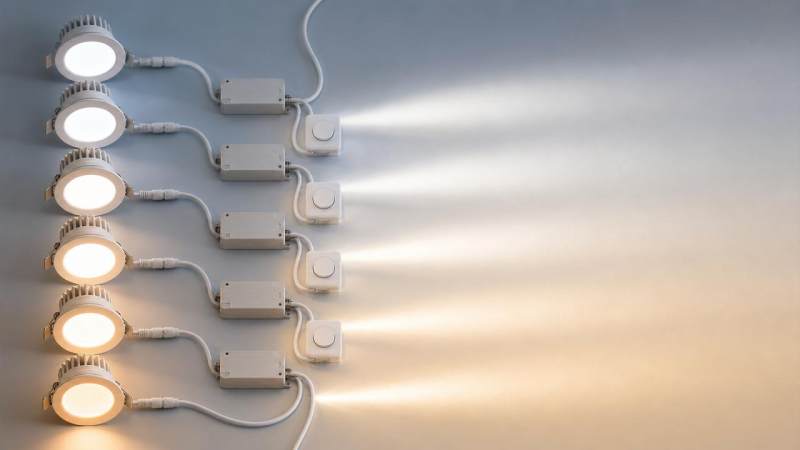
Are LED lights dimmable without flicker? The practical answer is yes, but only when the lamp, dimmer, driver, load range, and wiring conditions are correctly matched.
Many LED lights dimmable products promise smooth brightness control, yet flicker can appear when one part of the circuit behaves differently from the others.
This checklist explains how to select, install, and test LED lights dimmable systems for stable comfort in homes, offices, shops, and automated facilities.
Why LED Lights Dimmable Systems Need a Checklist

LED dimming is not the same as dimming old incandescent lamps. LEDs depend on electronics that convert power into controlled current.
If that current becomes unstable, the eye may see shimmer, pulsing, low-end flashing, or sudden brightness jumps.
A checklist reduces guesswork. It helps confirm whether LED lights dimmable products can work safely with the selected dimmer and electrical environment.
The same logic applies across general industry. Lighting affects visual comfort, inspection accuracy, machine visibility, and workspace safety.
Core Checklist for Flicker-Free LED Lights Dimmable Performance
Use this list before buying, replacing, or troubleshooting LED lights dimmable installations. Each point affects the final dimming result.
- Confirm the lamp is marked dimmable, because non-dimmable LEDs may flash, buzz, overheat, or fail when connected to a dimmer.
- Match the dimmer type to the LED driver, especially when choosing trailing-edge, leading-edge, 0-10V, DALI, or smart dimming controls.
- Check the minimum load rating, since many dimmers need enough connected wattage to regulate LED lights dimmable circuits correctly.
- Avoid mixing LED models on one dimmer, because different internal drivers may respond at different speeds and create uneven fading.
- Review the dimming range, because some LEDs dim smoothly to 10 percent while others become unstable below 30 percent.
- Inspect neutral wire requirements, as several modern smart dimmers need neutral wiring to power internal control electronics consistently.
- Select certified products carrying recognized safety marks, so LED lights dimmable components meet electrical and electromagnetic compatibility expectations.
- Test one circuit before full installation, especially when retrofitting older wiring, multi-gang switches, or mixed lighting loads.
The most reliable setup uses matched components. A premium bulb cannot compensate for an incompatible dimmer or unstable driver.
How Dimming Technology Affects Flicker
Phase-Cut Dimming
Phase-cut dimming is common in residential retrofit projects. It modifies the AC waveform before power reaches the LED lamp.
Leading-edge dimmers were designed mainly for resistive or magnetic loads. Some LED lights dimmable bulbs still work, but compatibility varies.
Trailing-edge dimmers usually perform better with electronic LED drivers. They often reduce buzzing and improve low-level control.
0-10V and DALI Control
0-10V dimming separates the control signal from mains power. It is common in commercial and industrial lighting systems.
DALI allows addressable digital control. It supports scenes, grouping, monitoring, and predictable behavior in advanced automation environments.
For large installations, these methods often make LED lights dimmable performance more stable than simple wall dimmers.
PWM and Driver Quality
Pulse-width modulation, or PWM, switches LEDs rapidly to control perceived brightness. Poor design may create visible or camera-detected flicker.
A high-quality driver manages current ripple, thermal behavior, and switching frequency. That is why driver quality matters as much as bulb design.
Application Notes for Different Lighting Scenarios
Living Rooms and Bedrooms
Comfort spaces need quiet dimming, warm tones, and low glare. Choose LED lights dimmable bulbs tested with the exact dimmer model.
Watch low-end behavior carefully. If lamps pulse near minimum brightness, raise the trim setting or use a more compatible dimmer.
Kitchens and Task Areas
Task areas need stable brightness for cutting, reading labels, or checking surface details. Flicker can reduce comfort and accuracy.
Use higher color rendering and consistent beam angles. LED lights dimmable fixtures should maintain color quality as brightness changes.
Offices and Commercial Interiors
Office lighting must support long viewing periods. Visible or invisible flicker may contribute to fatigue in screen-heavy environments.
Specify drivers with low flicker percentages, proper power factor, and suitable control protocols for occupancy sensors or daylight harvesting.
Factories and Automation Areas
In automated facilities, lighting interacts with inspection cameras, robotic cells, machine vision, and operator stations.
Flicker may appear in camera feeds even when the human eye sees stable light. Validate LED lights dimmable fixtures under real operating conditions.
Industrial projects should consider IEC, CE, EMC behavior, surge protection, and control integration with PLC, BMS, or industrial IoT systems.
Commonly Ignored Risks That Cause LED Flicker
Incorrect Minimum Load
Many LED lamps use far less power than incandescent lamps. A dimmer expecting higher wattage may struggle to regulate the circuit.
This often causes flashing at low brightness. Adding compatible load, changing the dimmer, or using integrated fixtures can solve it.
Cheap Drivers and Unknown Specifications
Some products say LED lights dimmable but provide limited data. Missing details on dimmer compatibility, flicker rate, or driver type are warning signs.
Reliable specifications should mention dimming method, supported dimmer families, input voltage, operating temperature, and safety certification.
Mixed Circuits
Combining LED lamps with halogen, compact fluorescent, or different LED brands can create unstable control behavior.
For best results, use identical LED lights dimmable products on the same dimming zone and avoid unnecessary load variation.
Voltage Instability and Electrical Noise
Flicker may come from the supply side, not the bulb. Large motors, compressors, welders, or elevators can disturb voltage quality.
In demanding sites, check grounding, harmonic distortion, surge events, and electromagnetic interference before blaming the lighting product.
Practical Testing Steps Before Final Installation
A small test can prevent a costly replacement. Evaluate LED lights dimmable performance before scaling to every room or zone.
- Install one lamp or fixture on the intended dimmer and test from full brightness to the lowest usable setting.
- Listen for buzzing at the dimmer, lamp base, or driver enclosure, because noise often signals electrical mismatch.
- Observe flicker with direct sight, peripheral vision, and a phone camera in slow-motion mode for a simple field check.
- Adjust low-end trim if available, then confirm the lamp turns on reliably from the lowest selected level.
- Repeat the test after adding all lamps, because total connected load changes the dimmer’s operating behavior.
For professional verification, use a light flicker meter. This is helpful for offices, inspection areas, laboratories, and production lines.
Buying Guide for LED Lights Dimmable Products
A good purchase decision starts with compatibility, not only wattage or price. Read the technical sheet before relying on marketing claims.
- Choose lamps with a published compatible dimmer list, because tested pairings reduce the chance of flicker and buzzing.
- Prefer products that state dimming depth clearly, such as smooth control from 100 percent to 10 percent.
- Check color temperature consistency, since poor LEDs may shift color noticeably when dimmed to lower brightness.
- Select fixtures with replaceable or high-quality drivers when maintenance access matters in commercial or industrial settings.
- Document circuit layout, dimmer model, lamp model, quantity, and installation date for future troubleshooting.
When specifications are unclear, choose another product. LED lights dimmable reliability depends on transparent electrical data.
Quick Troubleshooting When Flicker Appears
Start by identifying when flicker happens. Low-end flicker, random flashing, and constant shimmer usually have different causes.
If flicker occurs only at low brightness, raise the dimmer trim or replace the dimmer with an LED-compatible trailing-edge model.
If flicker appears after adding more lamps, check total load, mixed models, and wiring connections in the dimming zone.
If flicker happens randomly, investigate voltage dips, loose neutrals, shared circuits, or nearby equipment creating electrical disturbance.
If smart controls are involved, update firmware, confirm neutral wiring, and verify that LED lights dimmable loads meet the device requirements.
Summary and Next Action
LED lights can be dimmable without flicker, but the result depends on system compatibility. The bulb label alone is not enough.
For stable LED lights dimmable performance, match the dimmer, driver, load range, control method, wiring, and application environment.
Before purchasing in volume, test one complete circuit. Record results at full, medium, and low brightness levels.
The safest next step is simple: select certified LED lights dimmable products, verify compatibility data, and test under real operating conditions.
Recommended News
- 2026/10/24Car Spare Parts: How to Check Fitment and Avoid Ordering the Wrong PartOrder car spare parts with confidence. Learn how to verify VINs, OEM numbers, and fitment details to avoid costly mistakes and choose the right replacement first time.
- 2026/10/23How Do You Select a Motion Control System for Synchronized Axes?How do I select a motion control system for synchronized axes? Discover key timing, feedback, and performance checks to choose confidently and reduce costly integration risks.
- 2026/10/23Integrating End-of-Line Sortation with Packing Stations and Conveyor ControlsOptimize end of line sortation with coordinated packing stations and conveyor controls. Learn how to prevent bottlenecks, improve routing accuracy, and handle exceptions reliably.