
Search News
Industry Portal
Popular Tags
Control Systems Exporter Delays Often Start with Compliance
Author
Dr. Isaac Logic
Time
May 01, 2026
Pageviews
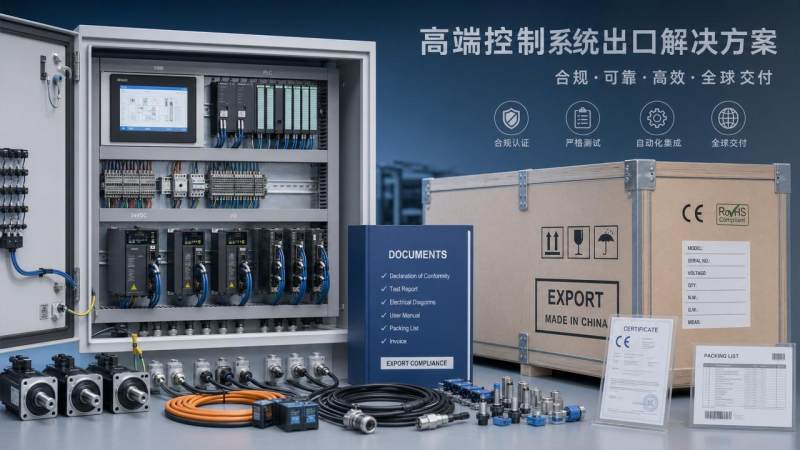
For project managers under pressure to deliver automation on time, delays rarely begin on the factory floor. They often start earlier—with overlooked certifications, documentation gaps, and shifting market requirements. A reliable control systems exporter understands that compliance is not a formality but a critical path issue that affects timelines, customs clearance, and commissioning success.
Why compliance has moved to the front of export planning
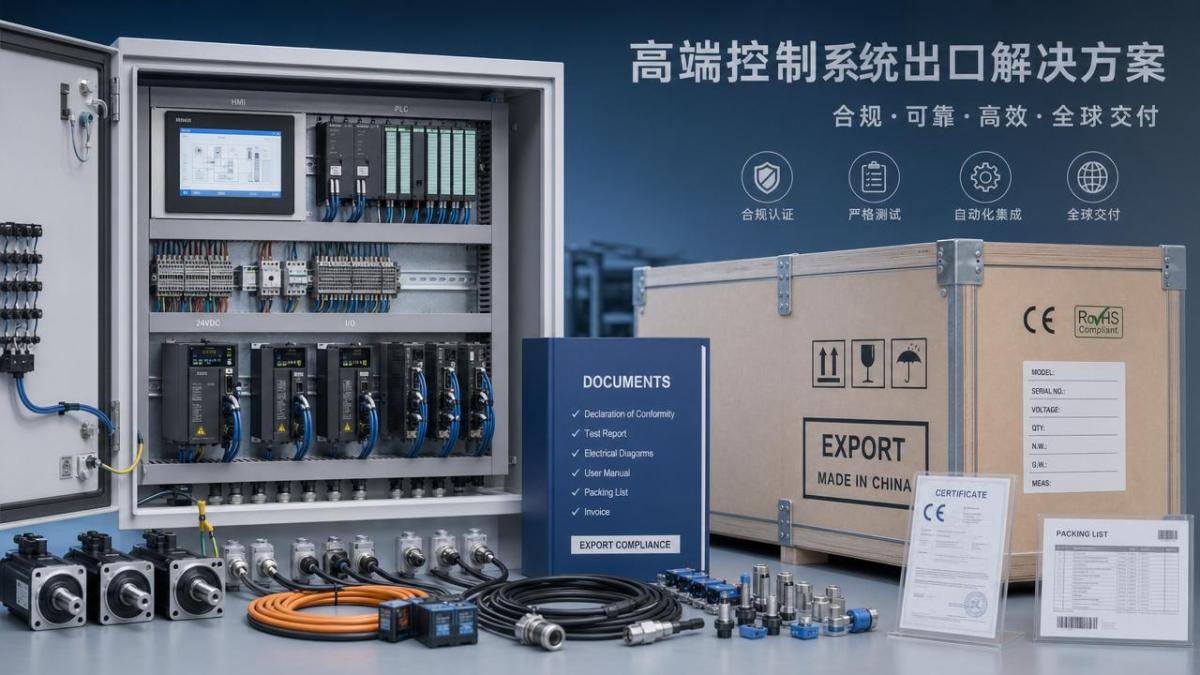
Across industrial automation, a clear shift is underway: export risk is no longer judged only by shipping capacity, lead time, or component availability. More buyers now evaluate whether a control systems exporter can align products, technical files, and delivery packages with local regulations before equipment ever leaves the warehouse. This change is especially visible in cross-border automation projects where PLC cabinets, HMI platforms, drives, sensors, and integrated safety logic must pass not only performance tests but also documentation review by customs officials, notified bodies, end users, and commissioning teams.
For project leaders, the practical implication is significant. In the past, compliance might have been treated as a parallel task handled near dispatch. Today, it increasingly shapes procurement sequencing, FAT preparation, system design decisions, packaging records, and handover schedules. A capable control systems exporter is therefore expected to operate less like a parts supplier and more like a risk-control partner.
This trend is not limited to one region or one product family. Whether the destination market requires CE-related documentation, IEC alignment, RoHS declarations, origin paperwork, software traceability, or machine safety evidence, the same pattern appears: compliance gaps create friction early, but the visible delay often emerges late, when the schedule is already fragile.
The strongest signals project managers should not ignore
Several market signals explain why export compliance has become a frontline management issue for any control systems exporter. First, global automation projects now combine more hardware and software layers than before. A cabinet shipment may include PLCs, safety relays, remote I/O, industrial PCs, network switches, firmware-dependent devices, and licensed supervisory software. Each element can trigger different review requirements.
Second, buyers are less tolerant of ambiguity. Engineering, procurement, and operations teams increasingly ask for document completeness before approval: wiring diagrams, bill of materials consistency, declaration packages, labeling conformity, software versions, and test records. Third, destination rules evolve faster than many exporters update their internal workflows. In this environment, a control systems exporter that relies on outdated templates or distributor assumptions can become a hidden bottleneck.
For G-IFA’s audience of production directors, system integrators, and automation engineers, these signals point to a broader conclusion: the strongest control systems exporter is not necessarily the one with the fastest quoted lead time, but the one whose engineering rigor reduces uncertainty across the full project lifecycle.
What is driving the change behind exporter delays
The first driver is regulatory complexity. Automation equipment increasingly sits at the intersection of electrical safety, electromagnetic compatibility, machine integration rules, environmental declarations, and digital system accountability. A control systems exporter shipping a simple panel ten years ago may have managed with basic labeling and a small documentation pack. That is no longer enough for many destinations and customer profiles.
The second driver is design modularity. Modern production lines are built from interoperable modules supplied by different vendors. While this improves flexibility, it also raises responsibility questions. Which supplier owns the conformity of the assembled function? Who verifies the final safety architecture? Which software revision was tested during FAT? If ownership is unclear, delay risk rises rapidly.
The third driver is the shift from component buying to outcome buying. End users increasingly purchase automation systems for uptime, digital visibility, and fast startup rather than for hardware alone. That changes exporter expectations. A control systems exporter must now support not just shipment, but deployment readiness, auditability, and service continuity.
Finally, global supply chain volatility still matters. Product substitutions, alternate brands, emergency redesigns, and split shipments can all invalidate earlier compliance assumptions. When documentation governance is weak, every approved change introduces a new possibility of mismatch between the physical shipment and the declared configuration.
Where the impact is felt most across the project chain
Not every stakeholder experiences exporter delays in the same way. For project managers, the problem appears as milestone slippage and reduced schedule confidence. For procurement teams, it shows up as repeated clarification cycles, document chasing, and vendor escalation. For automation engineers, the issue becomes technical inconsistency: approved drawings no longer match delivered devices, or the file set required for startup is incomplete.
Site teams face another version of the same challenge. When a control systems exporter ships a panel that clears customs late or arrives with unresolved paperwork, electricians and commissioning engineers lose productive time. The factory may have reserved installation windows, shutdown periods, or integrator resources that cannot easily be rescheduled. In high-throughput manufacturing, even a short compliance-driven delay can produce disproportionate cost.
Why stronger exporters are changing their operating model
A modern control systems exporter is increasingly judged by process maturity. High-performing exporters are moving compliance checks upstream into quotation review, engineering release, and supplier qualification. They are creating product data discipline around standards mapping, approved substitutions, and destination-specific documentation packs. They also connect mechanical, electrical, and software records more tightly so that the final delivered package reflects the system actually tested.
This matters because export resilience now depends on engineering traceability. If a servo drive is replaced, if a PLC CPU revision changes, or if a safety component comes from an alternate source, the downstream documentation cannot remain static. An effective control systems exporter updates declarations, panel labels, firmware references, and acceptance records as part of one controlled workflow. That is the difference between routine delivery and last-minute project disruption.
For buyers, this shift also changes vendor evaluation criteria. Questions about price and lead time remain essential, but they are no longer sufficient. The exporter’s document governance, standards familiarity, and cross-functional coordination are now direct indicators of schedule reliability.
What project managers should monitor before delays become visible
The most useful warning signs appear earlier than many teams expect. One warning sign is slow response when requesting standard compliance documentation. If a control systems exporter cannot quickly provide consistent declarations, test references, or labeling examples, the risk is not only administrative; it suggests weak internal control over technical records.
Another signal is uncertainty around change ownership. If substitutions are discussed casually by email, or if software revisions are updated without formal issue tracking, approval drift is likely. Project managers should also watch for vague statements such as “this is commonly accepted” or “customs usually allows it.” In international automation, assumptions are not substitutes for evidence.
A more strategic check is to review whether the control systems exporter understands the final application context. A panel for food processing, pharmaceutical packaging, battery production, and general assembly may face different expectations around traceability, hygiene compatibility, safety documentation, and system validation. Exporters that ask detailed application questions early usually manage risk better later.
Practical response strategies for the next 12 months
Given the direction of the market, project teams should treat compliance as a planning stream, not a dispatch checklist. The first practical step is to define a compliance gate in the master schedule with named owners from engineering, procurement, and the control systems exporter. The second is to require a destination-specific document matrix before final production release. This matrix should cover certificates, declarations, manuals, labeling, software records, and test evidence.
Third, buyers should verify the exporter’s substitution governance. In volatile supply conditions, substitutions are sometimes unavoidable, but they must be controlled. Fourth, FAT should be linked directly to the final shipping configuration. A control systems exporter that tests one setup and ships another creates avoidable startup risk. Fifth, digital handover should be reviewed with the same rigor as physical packing. Missing backups, license details, network settings, and parameter files can delay commissioning just as severely as missing hardware paperwork.
How this trend fits the wider automation landscape
In smart manufacturing, competitive advantage increasingly comes from reliable integration, not isolated component performance. That is why the compliance capability of a control systems exporter now matters to broader factory outcomes. If export readiness is weak, digitization plans slow down, capacity expansion slips, and return-on-investment assumptions become harder to realize. For globally distributed manufacturing networks, even small documentation errors can block the flow of otherwise high-quality automation assets.
This is also where G-IFA’s role becomes relevant. In an environment shaped by Industry 4.0, engineering integrity depends on data transparency, standards alignment, and verified technical comparability. Project managers need more than supplier claims; they need clearer signals about whether an exporter can support international deployment with the same discipline used to design the control architecture itself.
Questions to confirm before selecting a control systems exporter
Before final vendor commitment, companies should ask a focused set of questions. Can the control systems exporter show examples of destination-specific documentation packs? How are engineering changes reflected in declarations and labels? Who owns software version traceability? What happens when approved components become unavailable? How are FAT records linked to final shipment content? Which international standards are routinely mapped during design and release?
These questions are not administrative detail. They are early indicators of schedule resilience. In the current market, the difference between a smooth project and a delayed one often lies in whether compliance has been embedded into the exporter’s operating model, not simply appended to the end of production.
Final judgment for project-driven buyers
The key industry change is clear: compliance has shifted from a supporting task to a leading project variable. For any project manager overseeing automation delivery, evaluating a control systems exporter now means evaluating risk visibility, documentation discipline, and cross-border execution capability. Delays still appear at customs, at site, or during commissioning, but they usually begin much earlier in design release, standards interpretation, and change control.
If your team wants to judge how this trend may affect upcoming projects, focus on four points: whether the exporter works with destination-specific compliance logic, whether substitutions are controlled, whether software and hardware records stay synchronized, and whether final delivery packages are built for approval as well as operation. Those answers will reveal more about timeline certainty than quoted lead time alone.
Recommended News
- 2026/10/24Car Spare Parts: How to Check Fitment and Avoid Ordering the Wrong PartOrder car spare parts with confidence. Learn how to verify VINs, OEM numbers, and fitment details to avoid costly mistakes and choose the right replacement first time.
- 2026/10/23How Do You Select a Motion Control System for Synchronized Axes?How do I select a motion control system for synchronized axes? Discover key timing, feedback, and performance checks to choose confidently and reduce costly integration risks.
- 2026/10/23Integrating End-of-Line Sortation with Packing Stations and Conveyor ControlsOptimize end of line sortation with coordinated packing stations and conveyor controls. Learn how to prevent bottlenecks, improve routing accuracy, and handle exceptions reliably.