
Search News
Industry Portal
Popular Tags
Machine automation projects fail when this bottleneck is missed
Author
Dr. Isaac Logic
Time
May 06, 2026
Pageviews
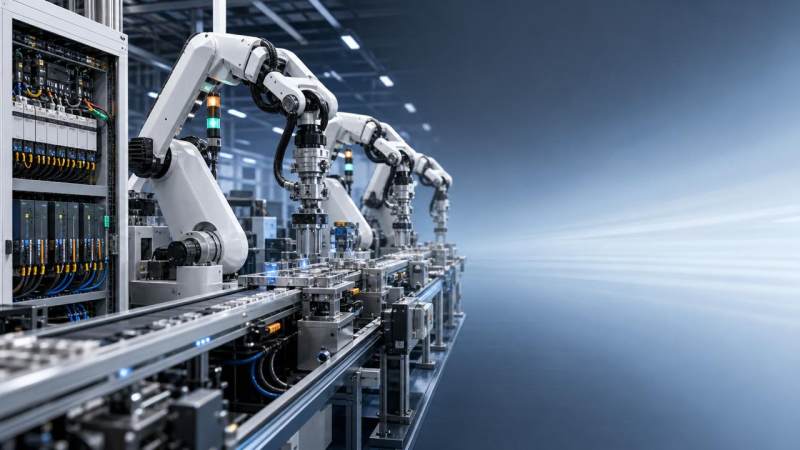
Many machine automation projects underperform not because of weak hardware or software, but because a critical bottleneck is identified too late. For project managers and engineering leaders, overlooking integration readiness, data flow, or control alignment can trigger delays, cost overruns, and unstable production outcomes. This article explores the hidden constraint that often determines whether machine automation delivers scalable efficiency or becomes a costly operational risk.
Why the bottleneck changes from one machine automation scenario to another
In practice, machine automation is never deployed into a neutral environment. A packaging line, a precision assembly cell, a retrofit project in an aging plant, and a greenfield smart factory may all use robots, PLCs, servo systems, sensors, and MES connections, yet the primary project risk is often different in each case. That is why project managers who rely on a generic checklist often miss the real bottleneck until commissioning or ramp-up.
The hidden constraint is usually not a single device. It is the point where mechanical design, controls logic, data architecture, safety requirements, and production expectations stop aligning. In one scenario, the bottleneck is field-level communication between legacy equipment and a new PLC platform. In another, it is recipe management across machines and software layers. In a high-mix operation, the weak point may be changeover logic and exception handling rather than cycle time. Understanding these differences is essential if machine automation is expected to deliver repeatable ROI.
For organizations evaluating machine automation across industries, this is also where technical benchmarking matters. G-IFA’s role in comparing robotics, control systems, motion platforms, Industrial IoT software, and fluid power technologies against ISO, IEC, and CE expectations reflects a simple reality: the success of automation depends on whether the complete system is ready for the production context it enters.
The most common bottleneck: integration readiness, not component quality
Across most machine automation projects, the decisive bottleneck is integration readiness. This includes interface definition, signal mapping, timing coordination, network structure, data ownership, safety zoning, and operational handoff. Teams often validate machine specifications in isolation but fail to validate how systems will interact under real production conditions.
This bottleneck becomes dangerous because it remains partially invisible during procurement. A robot may meet payload and repeatability targets. A servo axis may satisfy speed requirements. A software platform may promise connectivity. Yet when the line starts, alarms cascade, interlocks fight each other, cycle balancing breaks down, and production teams bypass intended logic just to keep output moving. That is not a hardware failure. It is a scenario-specific integration failure.
Project leaders should therefore treat machine automation planning as a system interoperability exercise first and a device selection exercise second. The earlier this mindset is embedded, the lower the chance of discovering the bottleneck during FAT, SAT, or worse, during live production.
Where this problem appears: four typical machine automation scenarios
Different applications expose different failure points. The table below highlights how the missed bottleneck in machine automation changes with the operational scenario.
This scenario view matters because the same machine automation budget can lead to very different outcomes depending on whether the real bottleneck is identified early. Capital efficiency improves when teams ask, “What will stop this line from operating as one system?” instead of only asking, “Which machine performs best on paper?”
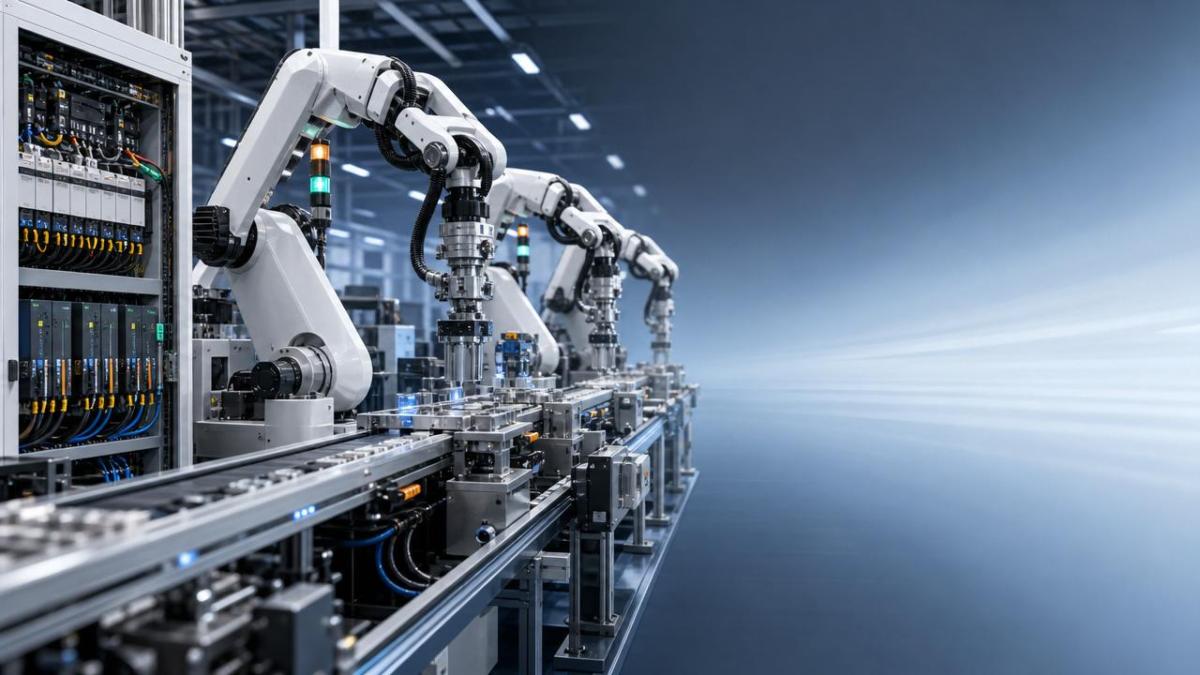
Scenario 1: Retrofit projects fail when legacy constraints are underestimated
Retrofit machine automation projects are especially vulnerable because they promise fast gains without the cost of a full replacement. However, older machines often lack clean electrical documentation, standardized fieldbus communication, or enough controller capacity for new logic. Project teams assume integration will be manageable because the mechanical footprint already exists. In reality, the bottleneck is often hidden behind legacy assumptions.
For project managers, the key question is not whether the new subsystem is advanced enough. It is whether the old environment can support deterministic communication, coordinated safety functions, and reliable data exchange. When that check is skipped, timelines stretch through unexpected rewiring, ad hoc gateway additions, and repeated code revisions.
In this scenario, the best decision is to invest early in a control architecture survey, I/O mapping review, network capture, and practical maintainability assessment. Machine automation in retrofit settings should be judged by compatibility and recoverability, not just by raw performance.
Scenario 2: High-speed lines fail when timing and exception handling are treated as secondary
In packaging, sorting, converting, or continuous production lines, machine automation often targets throughput first. Teams focus heavily on servo speed, robot pick rate, or conveyor capacity. But the missed bottleneck is usually synchronization under disturbance. A line can achieve target speed in a demo and still collapse under minor jams, product variation, sensor noise, or reject events.
What matters here is whether each machine can communicate state changes quickly enough and whether the control strategy prevents small disruptions from propagating downstream. One poorly defined handshake can force cascading micro-stops that destroy OEE. One reject path with weak logic can create rework, operator intervention, or hidden quality loss.
In high-speed machine automation, project leaders should insist on testing not only nominal production but also fault conditions, startup sequencing, restart behavior, and throughput recovery after interruption. If those conditions are not simulated, the real bottleneck remains undiscovered until production pressure is highest.
Scenario 3: Flexible assembly fails when software logic is not designed for variation
High-mix manufacturing environments often adopt machine automation to reduce labor dependency while preserving product flexibility. This is common in electronics, consumer goods, specialty industrial products, and customized subassembly. The hidden bottleneck here is rarely mechanical reach or payload. It is the software and control logic required to manage frequent variation without creating instability.
If recipes are poorly structured, traceability fields are inconsistent, or HMI workflows are confusing, operators compensate manually. That may keep output moving for a short time, but it undermines repeatability, training, and quality assurance. In these scenarios, machine automation succeeds only when exception handling, version control, and changeover routines are built into the project scope from the beginning.
For engineering leaders, this means selecting platforms that support modular code, maintainable data structures, and clear operator guidance. It also means involving production supervisors and maintenance personnel before finalizing logic design. Flexible automation is not just about adding smart tools. It is about making variation manageable at scale.
Scenario 4: Smart factory programs fail when the data layer is disconnected from shop-floor reality
Greenfield and digitally ambitious machine automation programs often start with a strong Industry 4.0 vision. They include robotics, MES integration, ERP connectivity, IIoT dashboards, and predictive maintenance goals. Yet the bottleneck frequently emerges where data architecture meets control reality. If naming conventions, event models, and machine states are inconsistent, higher-level software cannot generate reliable insights.
This problem is especially important for project owners trying to standardize across sites or regions. Without a common framework for machine states, alarm priorities, historian structure, and device-level data quality, software intelligence becomes expensive noise. A machine automation project may appear digitally advanced while still producing fragmented reports and weak decision support.
The practical solution is to define the information model before deployment scales. That includes deciding what data is critical, where it originates, who owns it, and how it will be validated. G-IFA’s cross-pillar benchmarking approach is relevant here because software value only becomes real when the control, motion, robotics, and sensing layers are aligned around verifiable standards.
How to judge whether your machine automation scenario is truly ready
Project managers and engineering leads can reduce risk by using a scenario-based readiness review before procurement is locked. The most useful questions are practical and cross-functional:
- Have all machine-to-machine interfaces been defined at signal, timing, and state level?
- Is the control architecture suitable for the production scenario, not just the component list?
- Can the line recover predictably from jams, rejects, and planned stoppages?
- Are data structures aligned with MES, ERP, traceability, and reporting goals?
- Do safety logic and production flow support each other, or create hidden delays?
- Has maintainability been tested from the technician’s perspective?
If several of these questions remain unanswered, the bottleneck is probably still hidden. In machine automation, uncertainty at the interface level becomes cost at the implementation level.
Common misjudgments that lead to machine automation underperformance
Several patterns appear repeatedly across industries. First, teams assume the best-performing device will create the best-performing system. Second, they treat software integration as a final-stage task instead of a design input. Third, they evaluate automation based on average cycle time rather than stability under real operating variation. Fourth, they overlook the skill gap between a sophisticated system and the local team expected to run it.
Another major misjudgment is separating mechanical, electrical, controls, and digital decisions too early. Machine automation becomes fragile when each discipline optimizes its own scope without protecting whole-line behavior. For project owners, the lesson is clear: the bottleneck is often organizational before it becomes technical.
FAQ: machine automation bottleneck questions project leaders often ask
Is the main bottleneck usually hardware or software?
Usually neither in isolation. In most machine automation projects, the bottleneck sits in the interaction between equipment, controls, data, and process expectations.
Which scenario is most risky: retrofit or greenfield?
Both can be risky for different reasons. Retrofit projects struggle with hidden legacy constraints, while greenfield machine automation can fail through poor architecture standardization.
When should integration readiness be reviewed?
Before final equipment selection and before design freeze. Waiting until commissioning is too late and too expensive.
Final takeaway: match machine automation decisions to the real operating scenario
The machine automation projects that scale successfully are not always the ones with the newest robots, fastest drives, or most connected dashboards. They are the ones where the true bottleneck is identified early, in the context of the actual application scenario. Retrofit, high-speed, flexible assembly, and smart factory deployments each demand a different judgment framework.
For project managers and engineering leaders, the next step is to audit the scenario before approving the solution. Clarify interfaces, validate control logic against production variation, align the data model with business use, and benchmark critical technologies against recognized standards. That is how machine automation moves from an attractive concept to a reliable production asset with lower risk and stronger long-term returns.
Recommended News
- 2026/10/24Car Spare Parts: How to Check Fitment and Avoid Ordering the Wrong PartOrder car spare parts with confidence. Learn how to verify VINs, OEM numbers, and fitment details to avoid costly mistakes and choose the right replacement first time.
- 2026/10/23How Do You Select a Motion Control System for Synchronized Axes?How do I select a motion control system for synchronized axes? Discover key timing, feedback, and performance checks to choose confidently and reduce costly integration risks.
- 2026/10/23Integrating End-of-Line Sortation with Packing Stations and Conveyor ControlsOptimize end of line sortation with coordinated packing stations and conveyor controls. Learn how to prevent bottlenecks, improve routing accuracy, and handle exceptions reliably.