Search News
Industry Portal
Popular Tags
Control systems OEM vs in-house build
Author
Dr. Isaac Logic
Time
Apr 17, 2026
Pageviews
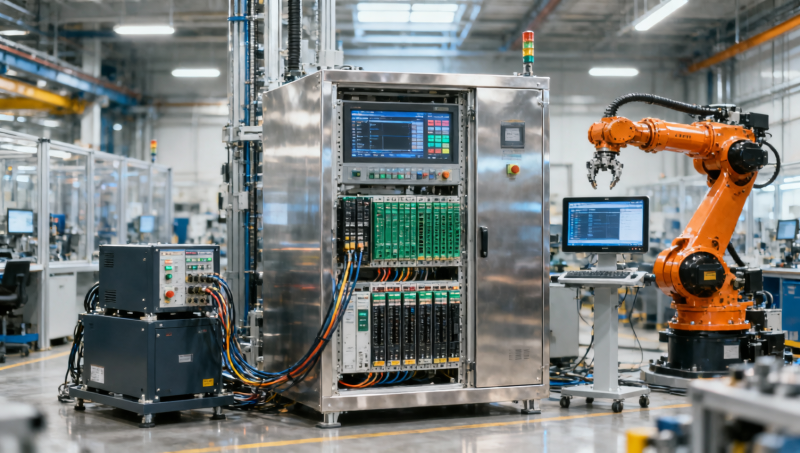
Choosing between a control systems OEM and an in-house build is rarely just an engineering preference. It affects deployment speed, total cost of ownership, integration risk, maintainability, and how well a factory can scale future automation investments. For most information seekers evaluating smart manufacturing options, the practical answer is this: a control systems OEM is usually the lower-risk and faster path when time-to-value, compliance, and multi-vendor coordination matter most, while an in-house build is often stronger when a company has deep controls expertise, unique process requirements, and the internal capacity to support the system over its full lifecycle.
That distinction matters well beyond the control cabinet itself. The sourcing decision can influence how smoothly your architecture connects with motion control supplier ecosystems, MES software sourcing priorities, industrial IoT expansion plans, and ERP systems supplier compatibility. This guide compares both paths from a decision-maker’s perspective so you can judge fit based on risk, customization, budget, and long-term operational strategy.
What is the real difference between a control systems OEM and an in-house build?
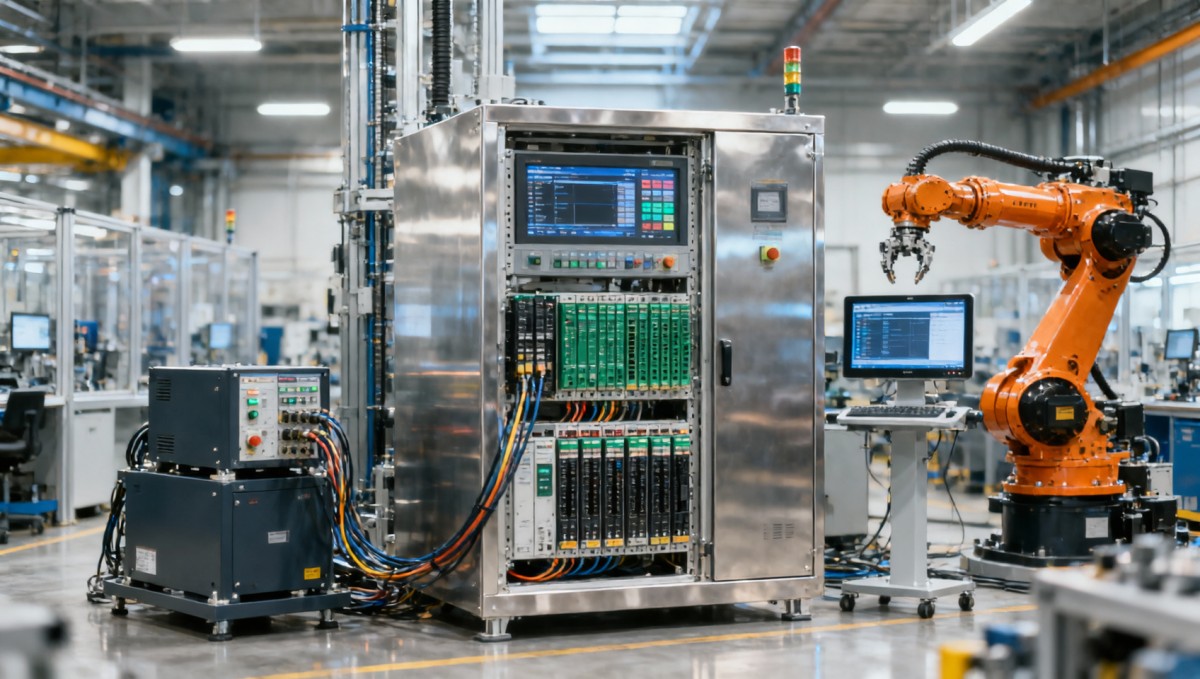
A control systems OEM typically delivers a packaged or semi-custom automation solution that includes control hardware, software logic, documentation, testing, and in many cases commissioning support. Depending on the project, the OEM may also coordinate panels, PLC programming, HMI/SCADA layers, motion control integration, safety circuits, and validation against relevant standards.
An in-house build means your own engineering team designs, programs, integrates, tests, and supports the control system internally. This can include selecting PLC platforms, building the control architecture, defining communication protocols, managing external component vendors, and handling the long-term maintenance burden after go-live.
In simple terms, the OEM model buys external specialization and execution capacity. The in-house model buys control over design decisions, intellectual property, and future modification flexibility—provided your team has the resources to carry that responsibility.
Which option is usually better for cost, speed, and long-term value?
Many buyers assume in-house is always cheaper because they avoid OEM margins. In reality, the answer depends on what costs are included.
OEM advantages on cost and speed:
- Shorter engineering lead times due to standardized design templates and prior application experience
- Lower project risk from established testing, validation, and commissioning processes
- Fewer internal labor hours diverted from other factory priorities
- Potentially faster integration across robotics, motion control, safety, and supervisory software
In-house advantages on cost and value:
- Lower recurring external dependency if your team can support upgrades and troubleshooting independently
- Better alignment with plant-specific workflows and unique production logic
- Greater ownership of source code, architecture decisions, and future change management
- Potential savings over multiple similar deployments if internal standards are mature
The hidden cost driver is lifecycle support. A low-cost initial build can become expensive if documentation is weak, fault diagnosis is slow, or future expansions require major rework. For this reason, total cost of ownership matters more than first-pass project price. Teams comparing a control systems OEM vs in-house build should ask not only “What does it cost to deploy?” but also “What will it cost to maintain, scale, validate, and modify over the next five to ten years?”
When does a control systems OEM make more sense?
A control systems OEM is often the better choice when risk reduction is the priority. This is especially true in the following cases:
- Tight launch timelines: You need faster commissioning and cannot afford prolonged design iterations.
- Limited internal controls expertise: Your maintenance or engineering team can operate systems, but not architect them from scratch.
- Complex multi-vendor integration: The project includes robotics, servo drives, machine vision, MES connectivity, and ERP data exchange.
- High compliance requirements: Documentation, safety validation, and standards alignment are critical.
- Global rollout objectives: You want a repeatable engineering template that can be deployed across sites.
For companies sourcing through an industrial automation B2B platform, OEMs can also simplify supplier coordination. Instead of managing separate relationships across PLC vendors, motion control suppliers, HMI providers, panel builders, and software integrators, the OEM can act as the primary technical owner. That reduces interface ambiguity and often speeds issue resolution.
When is an in-house control system build the smarter move?
An in-house build is often justified when the system is a strategic capability rather than just a supporting utility. It can be the stronger path if:
- Your process is highly proprietary: Competitive advantage depends on unique machine behavior, logic, or production sequencing.
- You already have a strong automation team: Internal PLC, SCADA, networking, and commissioning expertise is proven and available.
- You need continuous modification: Frequent process changes make external change requests too slow or expensive.
- You want architectural standardization across plants: Internal governance favors one engineering framework controlled centrally.
- You are building long-term automation competence: The company sees controls engineering as a core internal asset.
However, in-house success depends on discipline. Without strong version control, documentation standards, cybersecurity practices, testing procedures, and spare parts planning, internal ownership can create technical debt rather than strategic advantage.
What are the biggest risks buyers underestimate?
The most common sourcing mistakes are not usually about hardware selection. They come from underestimating execution and support risk.
Common OEM-side risks:
- Vendor lock-in around proprietary logic structures or service access
- Limited flexibility if the delivered architecture is too standardized for plant realities
- Higher change-order costs after the specification is frozen
- Dependency on the OEM’s service responsiveness in later years
Common in-house risks:
- Project delays caused by overloaded internal teams
- Inconsistent engineering quality across sites or personnel changes
- Weak validation, FAT/SAT discipline, or incomplete documentation
- Integration failures with MES, ERP, IIoT, and third-party motion systems
- Longer troubleshooting cycles after deployment if knowledge is concentrated in a few engineers
For information researchers, this is where the evaluation should become evidence-based. Look beyond claims of “flexibility” or “customization” and ask for proof: reference architectures, test methods, cybersecurity approach, code ownership terms, support SLAs, and documented integration experience.
How should you evaluate OEM vs in-house if MES, ERP, and motion systems are involved?
This is where the decision becomes more strategic. Control systems no longer operate in isolation. They increasingly sit between machines, operators, production data layers, and enterprise planning systems.
If your roadmap includes MES software sourcing, ERP integration, remote diagnostics, traceability, or advanced analytics, then the quality of your controls architecture matters as much as the hardware itself. Ask these questions:
- Can the control system support open industrial communication standards?
- How easily can it exchange data with MES and ERP platforms?
- Will your chosen motion control supplier ecosystem integrate cleanly with the PLC platform?
- Who owns responsibility when machine logic, historian data, and enterprise workflows do not align?
- How scalable is the architecture for future plant expansion or digitalization initiatives?
In many factories, the strongest answer is a hybrid model: core architecture and governance stay in-house, while a control systems OEM handles execution-heavy packages, specialty modules, or geographically distributed deployment. This approach can balance speed with internal ownership.
A practical decision framework for buyers
If you need a simple way to decide, use the following framework:
- Assess internal capability honestly. Do you have enough controls engineers, software discipline, and commissioning bandwidth?
- Define how unique the process really is. If the system is not highly differentiated, OEM standardization may be more valuable than internal customization.
- Map integration complexity. The more systems involved—robotics, drives, MES, ERP, safety, SCADA—the more valuable proven delivery experience becomes.
- Calculate lifecycle cost, not purchase price. Include maintenance, downtime risk, upgrades, training, documentation, and support response.
- Clarify ownership boundaries. Decide who owns source code, backups, network architecture, cybersecurity controls, and future modifications.
- Plan for scale. Choose the model that can support future plants, line expansions, and digital manufacturing initiatives.
As a practical rule, choose an OEM when certainty, speed, and cross-domain integration are more important than maximum internal control. Choose in-house when the system is central to your competitive process and you have the engineering maturity to support it properly.
Conclusion: control systems OEM vs in-house build is really a question of risk ownership
The best choice is not universal. A control systems OEM is often the safer path for organizations that need faster deployment, lower integration risk, and reliable support across a broader automation stack. An in-house build can deliver stronger customization, internal knowledge retention, and long-term strategic control—but only when supported by real engineering capacity and lifecycle discipline.
For information seekers comparing smart manufacturing options, the most useful lens is not simply cost or customization alone. It is risk ownership. Who is best positioned to design, integrate, validate, maintain, and evolve the system over time? Once that answer is clear, the OEM versus in-house decision becomes much easier—and much more aligned with long-term factory performance.
Recommended News
- 2026/10/24Car Spare Parts: How to Check Fitment and Avoid Ordering the Wrong PartOrder car spare parts with confidence. Learn how to verify VINs, OEM numbers, and fitment details to avoid costly mistakes and choose the right replacement first time.
- 2026/10/23How Do You Select a Motion Control System for Synchronized Axes?How do I select a motion control system for synchronized axes? Discover key timing, feedback, and performance checks to choose confidently and reduce costly integration risks.
- 2026/10/23Integrating End-of-Line Sortation with Packing Stations and Conveyor ControlsOptimize end of line sortation with coordinated packing stations and conveyor controls. Learn how to prevent bottlenecks, improve routing accuracy, and handle exceptions reliably.