
Search News
Industry Portal
Popular Tags
PLC Cycle Time Benchmarks: What Counts as Good
Author
Dr. Isaac Logic
Time
Apr 28, 2026
Pageviews
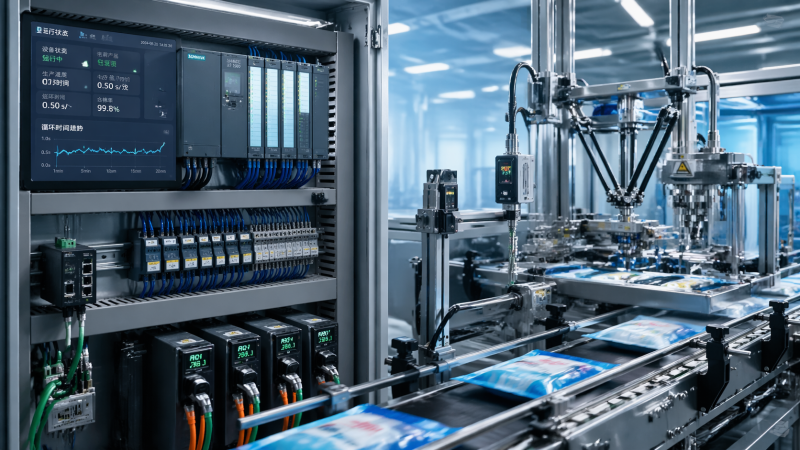
In smart manufacturing, PLC cycle time benchmarks are more than a technical metric—they reveal how quickly and reliably a control system can respond under real production pressure. For engineers, buyers, and plant leaders evaluating performance, understanding what counts as “good” cycle time is essential to balancing speed, stability, scalability, and investment risk across today’s increasingly data-driven automation environments.
What Is a Good PLC Cycle Time in Practice?
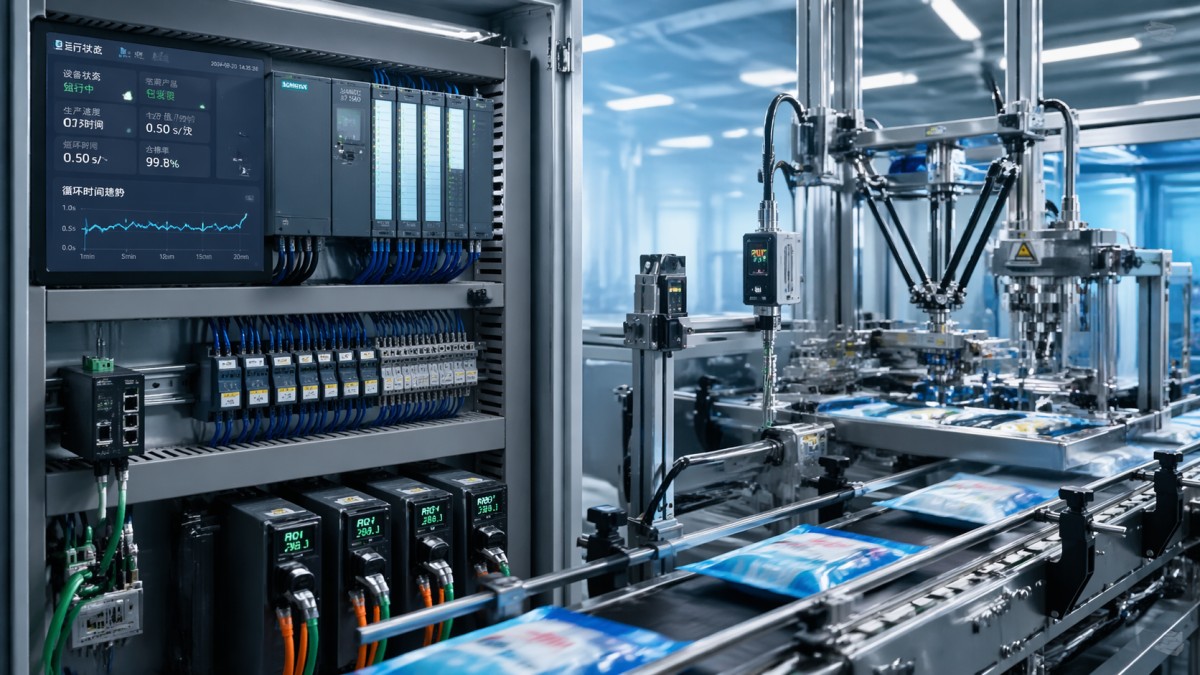
The short answer is: a “good” PLC cycle time is one that is fast enough for the process, stable under load, and repeatable in real operating conditions. In most industrial environments, there is no single universal number that defines good performance.
That said, practical benchmarks are useful:
- Below 1 ms: Typically considered excellent for very high-speed, tightly synchronized, or motion-critical applications.
- 1–10 ms: Good for many fast discrete automation tasks, packaging systems, assembly cells, and coordinated machine control.
- 10–50 ms: Often acceptable for standard machine automation, general sequence control, and many process-related tasks.
- 50 ms and above: May still be acceptable for slow-moving systems, utilities, building services, or non-time-critical operations, but can be too slow for demanding manufacturing lines.
For most readers, the real question is not whether the PLC is “fast” on a brochure. It is whether the controller can maintain an appropriate scan time when logic complexity increases, communication traffic rises, HMI activity grows, and multiple devices are connected.
Why PLC Cycle Time Matters to Engineers, Buyers, and Plant Leaders
Cycle time affects more than response speed. It influences machine quality, throughput, troubleshooting visibility, future scalability, and even safety margins.
For different decision-makers, the concern is slightly different:
- Engineers and integrators want to know whether the PLC can execute logic, communications, diagnostics, and motion tasks without creating bottlenecks.
- Operators and maintenance teams care about stable machine behavior, predictable reactions, and fewer intermittent faults caused by overloaded control systems.
- Procurement teams need to compare vendors beyond headline specifications and avoid overpaying for performance they do not need.
- Business decision-makers want to reduce downtime risk, preserve line efficiency, and ensure the control platform remains viable as production expands.
A poor or unstable PLC scan time can show up as missed sensors, delayed actuator response, inconsistent synchronization, nuisance alarms, slower machine cycles, or difficulty integrating additional devices later.
Benchmarks by Application: Good Compared to What?
The best way to judge PLC cycle time benchmarks is by application class rather than by a single universal threshold.
High-speed packaging and assembly
These applications often require very fast response to sensors, encoders, and actuators. A good benchmark is commonly in the sub-millisecond to low single-digit millisecond range, especially where product spacing, counting, sorting, or synchronized motion matters.
General machine automation
For standard production equipment such as conveyors, feeders, labeling machines, and standalone workstations, 5–20 ms is frequently acceptable if control logic is well structured and the process itself is not extremely time-sensitive.
Motion-intensive systems
Where servo coordination, camming, interpolation, or tightly timed axis control is involved, cycle time expectations become stricter. Here, the benchmark depends not only on the PLC CPU but also on the motion architecture, network determinism, and task scheduling. In many cases, very low and highly consistent update times matter more than average scan time alone.
Process and utility control
In applications such as water treatment, thermal systems, bulk material handling, or plant utilities, longer scan times can still be fully acceptable. A 20–100 ms control response may work well if the process dynamics are slow and predictable.
This is why “good” always depends on the physical process, not just the controller specification sheet.
What Actually Affects PLC Cycle Time?
Many readers assume PLC cycle time is determined only by CPU speed. In reality, several factors shape real-world performance:
- Program size and logic structure: Large routines, nested conditions, repeated calculations, and poorly organized code increase scan time.
- I/O volume: More inputs and outputs mean more processing, especially with distributed architectures.
- Communication load: HMI polling, SCADA traffic, MES/ERP connectivity, remote I/O, and third-party device communication can add significant overhead.
- Motion and specialty functions: PID loops, high-speed counting, vision triggers, recipe handling, and safety coordination can increase timing demands.
- Task prioritization: Modern PLCs often use cyclic, event-driven, or priority-based tasks. Poor task planning can create jitter even if average cycle time appears acceptable.
- Data logging and diagnostics: Advanced trace functions and analytics are valuable, but they consume resources.
For this reason, the most useful benchmark is not “fastest lab result.” It is achievable cycle time under realistic production load.
Average Scan Time Is Not Enough: Stability and Jitter Matter Too
A PLC that runs at 4 ms most of the time but spikes unpredictably to 20 ms may be more problematic than one that runs consistently at 8 ms. This is especially true in synchronized, high-speed, or quality-sensitive environments.
When evaluating performance, consider:
- Average cycle time
- Worst-case cycle time
- Cycle time consistency or jitter
- Behavior during peak communication or alarm activity
- Performance after future expansion
From an engineering and investment standpoint, predictability is often more valuable than a single impressive benchmark number.
How to Evaluate Whether a PLC Is Fast Enough Before You Buy
If you are comparing PLC platforms, use a practical evaluation method rather than relying only on vendor marketing claims.
1. Start with the process requirement
Ask what the machine or line actually needs. Sensor reaction, axis coordination, product tracking, and network update requirements should define the performance target.
2. Measure under realistic architecture conditions
Include remote I/O, HMI traffic, historian or MES connection, alarm events, and any expected future devices. A benchmark without system load has limited value.
3. Check both current and future capacity
A PLC may be fast enough for today’s machine but struggle after recipe expansion, traceability features, additional stations, or IIoT integration are introduced.
4. Review engineering tools and diagnostics
Fast hardware alone is not enough. Good diagnostics, task monitoring, code profiling, and troubleshooting support reduce lifecycle risk and help maintain performance.
5. Compare deterministic performance, not just CPU class
Two controllers with similar advertised specifications may behave very differently once communications, motion, and software functions are added.
When Faster PLC Cycle Time Is Worth Paying For—and When It Is Not
Not every factory benefits from choosing the fastest available PLC. In many projects, that approach increases cost without delivering measurable production value.
Higher-performance PLC platforms are usually worth the investment when:
- The application involves high-speed packaging, inspection, or sorting
- Multi-axis motion coordination is critical
- Product quality depends on tight timing accuracy
- The line will scale significantly in complexity
- Downtime or control instability carries high financial risk
A more moderate platform may be sufficient when:
- The process is slow and stable
- Logic complexity is limited
- Motion requirements are minimal
- Expansion plans are modest
- The business case favors cost control over surplus performance
For procurement and management teams, the goal should be fit-for-purpose performance, not maximum specification at any cost.
Common Mistakes When Interpreting PLC Cycle Time Benchmarks
Several errors lead to poor decisions:
- Using one benchmark number for all industries and machine types
- Confusing lab test results with real plant performance
- Ignoring communication and software overhead
- Focusing on average scan time while overlooking jitter and peak load behavior
- Buying too small for future expansion
- Overbuying performance for slow, low-complexity applications
The best evaluation balances engineering need, operational reliability, and long-term cost efficiency.
Conclusion: What Counts as Good PLC Cycle Time?
A good PLC cycle time is not defined by a single universal figure. It is defined by how well the controller supports the speed, consistency, and growth demands of the actual application.
As a rule of thumb, sub-10 ms performance is good for many modern machine automation tasks, while sub-1 ms can be important for high-speed or motion-critical systems. But the most important benchmark is not just raw speed. It is stable, deterministic performance under real production conditions.
For engineers, operators, buyers, and factory leaders, the right decision comes from matching PLC capability to process requirements, communication load, future expansion, and business risk. That is the benchmark that matters most.
Recommended News
- 2026/10/24Car Spare Parts: How to Check Fitment and Avoid Ordering the Wrong PartOrder car spare parts with confidence. Learn how to verify VINs, OEM numbers, and fitment details to avoid costly mistakes and choose the right replacement first time.
- 2026/10/23How Do You Select a Motion Control System for Synchronized Axes?How do I select a motion control system for synchronized axes? Discover key timing, feedback, and performance checks to choose confidently and reduce costly integration risks.
- 2026/10/23Integrating End-of-Line Sortation with Packing Stations and Conveyor ControlsOptimize end of line sortation with coordinated packing stations and conveyor controls. Learn how to prevent bottlenecks, improve routing accuracy, and handle exceptions reliably.