
Search News
Industry Portal
Popular Tags
Remote I/O Module Wholesale: Common Buying Mistakes
Author
Dr. Isaac Logic
Time
Apr 28, 2026
Pageviews
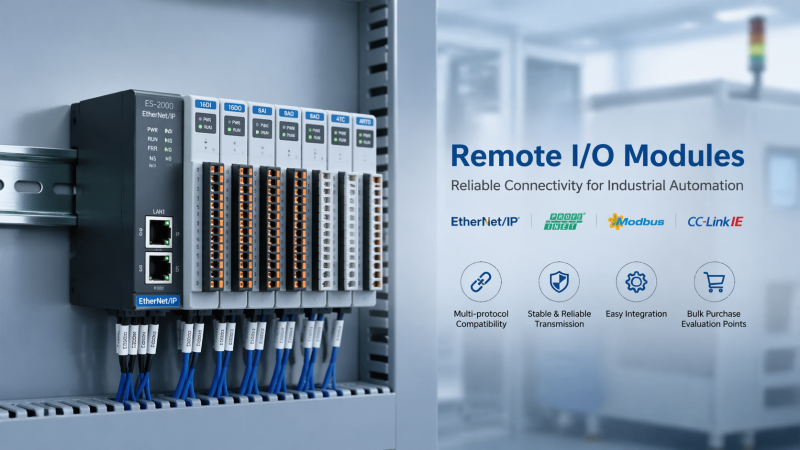
Sourcing a remote I/O module wholesale order looks simple on paper: compare prices, confirm channel count, and place the purchase. In practice, the biggest buying mistakes happen before the first unit is installed. Teams often underestimate protocol compatibility, response latency, environmental ratings, cybersecurity, lifecycle support, and the impact of chip shortage on automation supply chains. For procurement managers, engineers, operators, and business decision-makers, the safest approach is to evaluate remote I/O modules as part of a long-term control architecture—not as interchangeable commodities.
What buyers usually get wrong when purchasing remote I/O modules in bulk
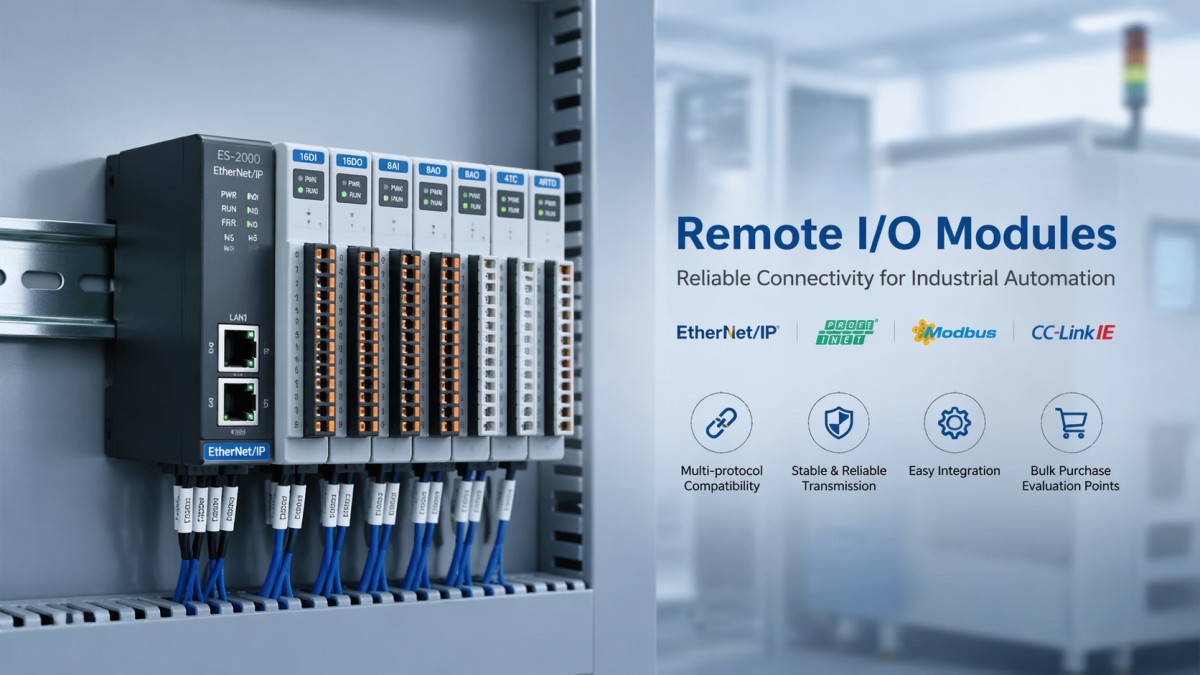
The core search intent behind “Remote I/O Module Wholesale: Common Buying Mistakes” is not just to find suppliers. It is to avoid costly procurement errors before making a volume purchase. Most readers want to know how to compare products correctly, what risks are easy to miss, and how to choose modules that will actually work in their automation environment over time.
The most common mistake is assuming that all remote I/O modules with similar specifications are functionally equivalent. A module may appear suitable based on input/output count alone, yet fail in real-world use because of protocol mismatch, insufficient update speed, poor diagnostics, weak EMC performance, or limited software support. In wholesale buying, these issues multiply across cabinets, lines, and facilities.
Another frequent error is allowing unit price to dominate the decision. A lower upfront cost may lead to higher total cost of ownership through longer commissioning time, integration rework, spare stock complexity, and unplanned downtime. For decision-makers, the right question is not “Which module is cheapest?” but “Which option lowers risk and supports stable operation at scale?”
Compatibility is the first filter, not a detail to check later
Compatibility is where many bulk purchases go wrong. Buyers sometimes confirm that a remote I/O module “supports Ethernet” or “works with PLCs” without checking the exact industrial communication protocol and controller ecosystem. In automation projects, these details matter immediately.
Before committing to a wholesale order, verify:
- Supported protocols such as PROFINET, EtherNet/IP, Modbus TCP, EtherCAT, or CANopen
- PLC brand and model compatibility
- Required GSD, EDS, or device description files
- Engineering software support and firmware dependencies
- Interoperability with existing gateways, HMIs, SCADA, and MES layers
For system integrators and plant engineers, the risk is not only whether the module can communicate, but whether it can communicate reliably, be configured efficiently, and be diagnosed quickly during faults. For procurement teams, this means technical validation must happen before price negotiation is finalized.
If the deployment spans multiple plants or export markets, buyers should also consider compliance expectations, including IEC-aligned electrical performance, CE marking where relevant, and supplier documentation quality. A wholesale purchase without this review can create standardization problems across regions.
Latency, update speed, and determinism directly affect machine performance
One of the most underestimated buying mistakes is ignoring timing performance. Remote I/O modules are often treated as passive components, but in many applications their response behavior influences machine stability, sensor accuracy, and actuator coordination.
This matters especially in:
- High-speed packaging lines
- Conveyor sorting systems
- Motion-linked safety or interlock sequences
- Distributed machine architectures with tight cycle time requirements
Buyers should ask suppliers for more than brochure-level specifications. Key evaluation points include:
- I/O refresh rate
- Bus cycle time
- Synchronization capability
- Diagnostic reporting speed
- Performance under full channel load
If a remote I/O module is used in non-critical utility monitoring, these factors may be less important. But in real-time control environments, poor latency characteristics can produce intermittent faults that are difficult to diagnose. Operators may experience unstable machine behavior while procurement teams assume the hardware met specification because the basic datasheet looked acceptable.
Environmental suitability matters more than many catalog comparisons suggest
A common wholesale mistake is buying for ideal conditions instead of actual plant conditions. Remote I/O modules installed near welding cells, heavy motors, washdown areas, dusty conveying zones, or outdoor enclosures face stress that standard office-style comparisons do not capture.
Important checks include:
- Operating temperature range
- Ingress protection rating
- Shock and vibration resistance
- EMC immunity
- Corrosion resistance for harsh industrial environments
- Mounting format and cabinet space requirements
In wholesale procurement, a mismatch here can become expensive very quickly. If one batch fails under heat, moisture, or electrical noise, the problem is not isolated to one machine—it can affect an entire standardized rollout. For buyers in food processing, automotive, logistics, utilities, or process industries, environmental fit should be treated as a first-tier screening factor.
Cybersecurity for industrial control can no longer be ignored
As more distributed I/O architectures connect into plant-wide Ethernet, SCADA, and industrial IoT layers, cybersecurity for industrial control is now a procurement issue, not only an IT issue. Buyers sometimes focus solely on hardware functionality and forget that insecure edge devices can introduce operational risk.
When assessing remote I/O module wholesale options, ask whether the supplier provides:
- Secure firmware management
- User authentication or role-based access support
- Signed updates or controlled update processes
- Clear vulnerability disclosure procedures
- Network segmentation guidance
- Long-term firmware maintenance
Not every remote I/O module will have advanced security features, especially in simpler architectures. But suppliers should at least provide transparent documentation and lifecycle support. For enterprise decision-makers, this is part of de-risking production uptime. For engineers, it helps ensure that the module does not become the weakest link in an increasingly connected control network.
The hidden supply-chain mistake: buying without lifecycle and shortage planning
The impact of chip shortage on automation has changed how smart buyers evaluate industrial hardware. A module that is technically suitable today may become difficult to source, delayed, or redesigned during the life of the machine. One of the biggest wholesale mistakes is treating availability as a short-term purchasing issue instead of a lifecycle planning issue.
Before placing a bulk order, confirm:
- Current lead times and buffer stock reality
- Product lifecycle status
- Availability of drop-in replacements
- Regional service and logistics capability
- Spare parts support window
- Manufacturer roadmap stability
This is especially important for OEMs, multi-site manufacturers, and system integrators standardizing on one platform. If the supplier cannot support future expansion, maintenance stock, or replacement strategy, a low-cost wholesale deal may create serious continuity risks later.
At G-IFA, this is exactly why benchmark-driven evaluation matters. Industrial buyers need more than marketing claims—they need evidence of supplier maturity, product continuity, and standards alignment.
Don’t evaluate remote I/O modules without looking at diagnostics and maintainability
For users and operators, maintainability often matters more than raw specification. Yet it is frequently undervalued during procurement. A remote I/O module that is hard to diagnose can extend downtime, confuse maintenance teams, and increase support dependence on external specialists.
Useful questions include:
- Are channel-level diagnostics available?
- Can faults be identified remotely?
- Are status LEDs clear and meaningful?
- How easy is module replacement during operation?
- Is parameter backup or auto-restore supported?
- Are manuals written clearly for field teams?
For plants with lean maintenance staffing, these factors directly affect uptime. For procurement and leadership, they influence service cost and operational resilience. In other words, maintainability is not a secondary convenience feature—it is part of business value.
A practical checklist for comparing wholesale remote I/O suppliers
If buyers want to avoid the most common mistakes, they should compare suppliers with a structured checklist instead of relying on catalog summaries or price sheets alone.
A practical evaluation framework should cover:
- Technical fit: protocol, channel type, voltage/current rating, response time, diagnostics
- Integration fit: PLC compatibility, software tools, documentation, commissioning simplicity
- Environmental fit: temperature, EMC, vibration, ingress protection
- Cybersecurity posture: update policy, firmware support, network risk transparency
- Supply reliability: lead time, lifecycle commitment, global support
- Total cost: installation effort, spare parts strategy, downtime risk, training burden
This approach helps different stakeholders align. Engineers can validate function. Operators can assess usability. Procurement can compare supply stability. Executives can judge long-term risk and return.
Conclusion: the best wholesale decision is the one that reduces future surprises
Buying remote I/O modules wholesale is not just a sourcing task—it is a control system decision with operational, financial, and strategic consequences. The most common mistakes come from oversimplifying the choice: focusing on unit price, assuming compatibility, ignoring latency, overlooking cybersecurity for industrial control, and underestimating the impact of chip shortage on automation supply continuity.
The best buyers take a broader view. They evaluate technical performance, integration reality, maintainability, standards alignment, and supplier credibility before placing large-volume orders. That approach not only avoids expensive mistakes, but also supports more stable automation, faster commissioning, and lower lifecycle risk.
For organizations navigating industrial automation choices at scale, the smartest purchase is rarely the fastest or cheapest one. It is the one backed by verified data, clear engineering logic, and long-term operational confidence.
Recommended News
- 2026/10/24Car Spare Parts: How to Check Fitment and Avoid Ordering the Wrong PartOrder car spare parts with confidence. Learn how to verify VINs, OEM numbers, and fitment details to avoid costly mistakes and choose the right replacement first time.
- 2026/10/23How Do You Select a Motion Control System for Synchronized Axes?How do I select a motion control system for synchronized axes? Discover key timing, feedback, and performance checks to choose confidently and reduce costly integration risks.
- 2026/10/23Integrating End-of-Line Sortation with Packing Stations and Conveyor ControlsOptimize end of line sortation with coordinated packing stations and conveyor controls. Learn how to prevent bottlenecks, improve routing accuracy, and handle exceptions reliably.