
Search News
Industry Portal
Popular Tags
Why some automation engineering suppliers slow projects down
Author
Dr. Isaac Logic
Time
May 02, 2026
Pageviews
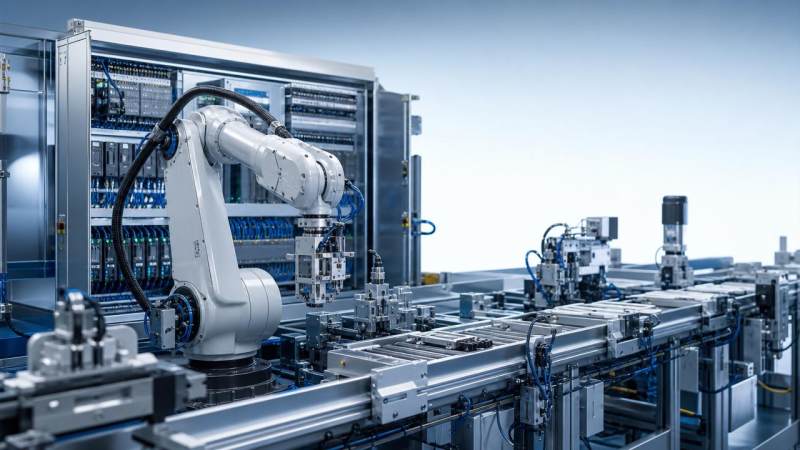
Choosing the right automation engineering supplier can determine whether a project stays on schedule or slips into costly delays. For project managers and engineering leaders, the real risk often lies not in the technology itself, but in poor integration planning, weak compliance control, and limited cross-system expertise. Understanding why some suppliers slow projects down is essential to protecting delivery timelines, budgets, and long-term factory performance.
Why project delays look different across automation scenarios
Not every delayed factory project fails for the same reason. In one plant, the bottleneck may be late PLC logic validation. In another, it may be mechanical redesign after a robot reach study was skipped. In a third, the issue may come from poor MES or ERP handshaking that was treated as a software task instead of a production continuity risk. This is why evaluating an automation engineering supplier only by price, lead time promises, or equipment brand portfolio is rarely enough.
For project managers, the more useful question is scenario-based: in your factory context, what kind of supplier behavior is most likely to slow execution? A greenfield production line, a brownfield retrofit, a multi-vendor packaging upgrade, and a compliance-heavy export project all demand different capabilities from an automation engineering supplier. A supplier that performs well in one scenario can underperform badly in another if integration discipline, standards knowledge, or commissioning readiness are weak.
This matters across comprehensive industries because modern automation projects rarely involve one technology stack alone. Robotics, motion control, industrial networking, safety systems, sensor layers, and supervisory software must work as one system. G-IFA’s cross-pillar benchmarking philosophy reflects this reality: delivery risk often sits at the interfaces between components, not only inside each component.
Typical business scenarios where an automation engineering supplier can slow a project down
Project delays are easier to prevent when leaders identify the business scenario early. The following comparison helps clarify where an automation engineering supplier must demonstrate different strengths.
For a project manager, this table highlights a simple truth: the right automation engineering supplier is not just the one that can supply hardware, but the one that fits the project scenario and can control risk at each handoff point.
Scenario 1: Greenfield projects often slow down because planning is too equipment-centered
In new factory or new line construction, some suppliers appear strong because they respond fast with layouts, quotations, and component lists. Yet greenfield execution often slows when the automation engineering supplier builds the proposal around machines instead of production flow. Equipment may arrive on time, but power distribution, cabinet interfaces, network segmentation, safety zoning, and recipe management remain unresolved.
This scenario is especially risky when multiple vendors are involved. If no one owns signal lists, communication protocols, line balancing assumptions, and acceptance logic, integration effort shifts back to the client team. Project schedules then slip not because of one major technical failure, but because of dozens of unresolved interface details.
A capable automation engineering supplier for greenfield work should provide more than a bill of materials. They should define control architecture, validation stages, FAT and SAT criteria, spare strategy, and escalation paths before procurement is locked. If these items remain vague during early design review, project leaders should treat that as a schedule warning sign.
Scenario 2: Brownfield retrofits fail when legacy complexity is underestimated
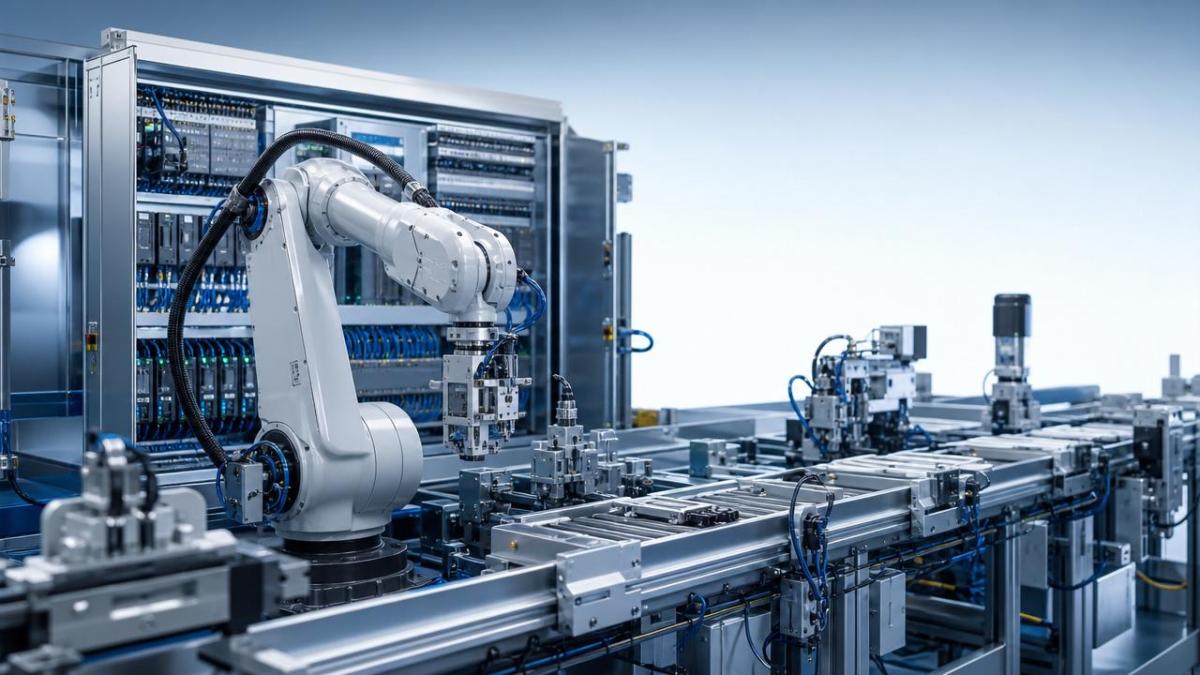
Retrofit projects are among the most common situations where an automation engineering supplier slows a project down. On paper, replacing drives, upgrading controllers, or adding traceability can look straightforward. On the shop floor, however, legacy systems may contain undocumented logic, obsolete fieldbus networks, nonstandard safety wiring, and operator workarounds that are critical to stable production.
Some suppliers approach these jobs as simple replacement tasks. They schedule aggressively, assume old drawings are accurate, and skip deep site verification. The result is predictable: unplanned shutdown extension, extra engineering revisions, and emergency procurement. In brownfield settings, every missing cable map or unverified I/O point can translate into real production loss.
For this scenario, project managers should prioritize an automation engineering supplier with proven migration discipline. That includes on-site audit depth, rollback planning, phased commissioning methods, and the ability to work around short maintenance windows. The best supplier is often not the one with the most advanced technology pitch, but the one with the best method for reducing operational disruption.
Scenario 3: Robotic and motion applications slow down when cycle time proof is weak
Robotic cells, high-speed pick-and-place systems, and servo-driven assembly stations create a different delay pattern. In these projects, the automation engineering supplier may show excellent component knowledge but weak application verification. A robot may be correctly sized, yet the cell still misses throughput because part presentation, gripper timing, vision latency, or conveyor synchronization was not modeled well enough.
This problem becomes more severe when proposals rely on nominal vendor specs rather than validated application behavior. A servo motor can meet torque requirements on paper and still underperform because acceleration, thermal duty, or mechanical backlash was not treated realistically. Likewise, a cobot may be attractive for flexibility, but not suitable for the required takt time or payload margin.
In such scenarios, project leaders should ask the automation engineering supplier for evidence of simulation quality, application assumptions, and exception handling logic. Can they prove recovery from jams? Have they validated product variation? Is the safety design likely to reduce speed more than expected? These are not secondary details. They determine whether the line achieves output on the planned start-up date.
Scenario 4: Software-linked automation slows down when ownership is blurred
In Industry 4.0 programs, many delays no longer come from mechanics or controls alone. They come from software ownership gaps. When a project includes MES integration, ERP connectivity, traceability, OEE dashboards, or IIoT data layers, some suppliers underestimate how much cross-functional governance is required. The automation engineering supplier may say the machine is ready, while the software side says data conditions are not complete. Go-live then stalls between teams.
This is common in packaging, electronics, automotive subassembly, food processing, and general manufacturing environments where automation must feed planning and reporting systems. A supplier with weak software coordination may leave unclear who owns tag naming, transaction timing, recipe version control, alarm coding, and rework logic. Even if hardware commissioning is finished, production cannot stabilize without clean digital workflows.
Project managers should therefore judge an automation engineering supplier not only by machine expertise, but also by how they define interface responsibility. Clear data maps, exception cases, cyber access rules, and integrated test scripts are strong signals that the supplier understands system delivery rather than isolated equipment supply.
Scenario 5: Compliance-heavy projects slow when documentation is treated as an afterthought
Another high-risk scenario is the export, multinational, or safety-sensitive project. Here, the automation engineering supplier may have good engineering capability but still delay delivery because certification readiness is poor. Technical files, risk assessments, safety calculations, validation records, and conformity references may be incomplete or inconsistent with the actual build.
For factories shipping into strict markets or operating under corporate engineering standards, this is more than an administrative issue. Late compliance findings can trigger redesign, retesting, and postponed installation. This is why international standards awareness matters. Suppliers working across robotics, PLCs, drives, pneumatics, and industrial software must understand not only performance requirements, but also how evidence is created and maintained throughout the project lifecycle.
G-IFA’s benchmark-driven perspective is useful here because project leaders need suppliers whose technical claims can withstand standards-based scrutiny. When evaluating an automation engineering supplier, ask whether compliance checkpoints are built into design reviews, FAT, and final handover. If not, the schedule risk is already rising.
How needs differ by project owner and factory context
The same supplier can be acceptable for one buyer and unsuitable for another. Context shapes the risk.
This is why supplier selection should not be based on generic capability statements. A project manager needs fit-for-scenario evidence from the automation engineering supplier, not just references from unrelated applications.
Common misjudgments that make the wrong supplier look acceptable
Several errors repeatedly cause teams to choose a supplier that later slows execution. First, buyers confuse equipment familiarity with integration competence. Second, they accept optimistic timelines without checking engineering assumptions. Third, they evaluate quotations in detail but review interface ownership only superficially. Fourth, they assume standards compliance is automatic if major brands are used. None of these assumptions is safe.
Another frequent mistake is relying on presentations instead of delivery artifacts. A credible automation engineering supplier should be able to show sample FAT structures, I/O management methods, change logs, risk assessment templates, and commissioning plans. These practical documents reveal maturity far better than sales language.
Finally, many project teams fail to assess how the supplier handles exceptions. Normal operation is easy to describe; recovery logic is harder. Yet restart after a fault, manual intervention procedures, and production continuity during edge cases often determine whether start-up succeeds on time.
A practical checklist for selecting the right automation engineering supplier
Before award, project leaders should confirm a few scenario-specific fundamentals:
- Has the supplier completed similar work in your actual project scenario, not just in the same industry?
- Are system boundaries, responsibilities, and communication interfaces documented clearly?
- Is there evidence of standards awareness across controls, safety, robotics, and software layers?
- Do they have a realistic FAT, SAT, and commissioning methodology?
- Can they manage brownfield constraints, short shutdowns, or digital integration complexity if relevant?
- Are change control, risk logs, and documentation quality visible before project kick-off?
When these answers are weak, the automation engineering supplier may still win on cost, but the project often pays later through delays, rework, and unstable ramp-up.
Final takeaway for project managers and engineering leaders
Some suppliers slow projects down not because automation is inherently difficult, but because the supplier is mismatched to the business scenario. Greenfield lines need architecture discipline. Retrofits need legacy control and shutdown precision. Robotic cells need application proof. Software-linked programs need interface governance. Compliance-heavy projects need documentation rigor from day one.
If you are evaluating an automation engineering supplier, frame the decision around your plant reality, not generic capability claims. Compare vendors by scenario fit, cross-system competence, standards alignment, and their ability to reduce integration uncertainty. That is the approach most likely to protect schedule, budget, and long-term factory performance.
For organizations seeking more confidence in automation decisions, a benchmark-led perspective like G-IFA’s can help filter suppliers through verifiable engineering criteria rather than sales promises alone. In complex industrial projects, that difference often separates smooth delivery from costly delay.
Recommended News
- 2026/10/24Car Spare Parts: How to Check Fitment and Avoid Ordering the Wrong PartOrder car spare parts with confidence. Learn how to verify VINs, OEM numbers, and fitment details to avoid costly mistakes and choose the right replacement first time.
- 2026/10/23How Do You Select a Motion Control System for Synchronized Axes?How do I select a motion control system for synchronized axes? Discover key timing, feedback, and performance checks to choose confidently and reduce costly integration risks.
- 2026/10/23Integrating End-of-Line Sortation with Packing Stations and Conveyor ControlsOptimize end of line sortation with coordinated packing stations and conveyor controls. Learn how to prevent bottlenecks, improve routing accuracy, and handle exceptions reliably.