
Search News
Industry Portal
Popular Tags
When hydraulic systems custom work saves cost
Author
Robert Valve
Time
May 20, 2026
Pageviews
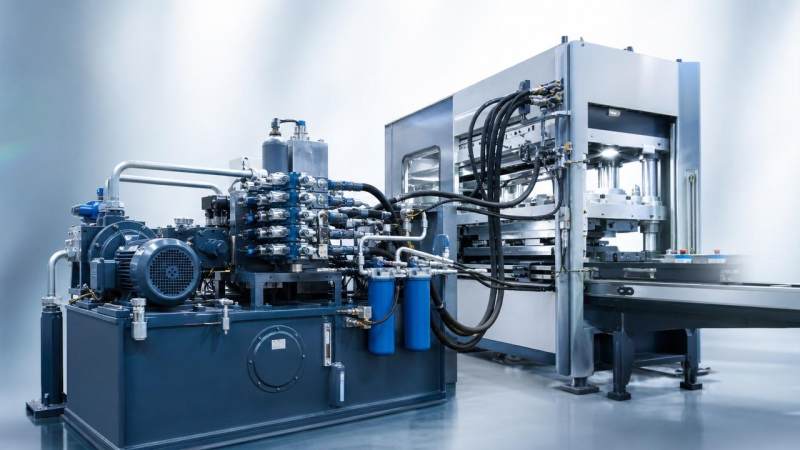
In modern manufacturing, every inefficiency in power transmission can quietly erode margins. That is why hydraulic systems custom solutions are gaining attention among decision-makers who need better performance, lower lifecycle costs, and less operational risk. By aligning component design, control logic, and application demands, companies can turn hydraulic optimization into a practical strategy for smarter investment and measurable savings.
When hydraulic systems custom work creates value in real operating scenarios
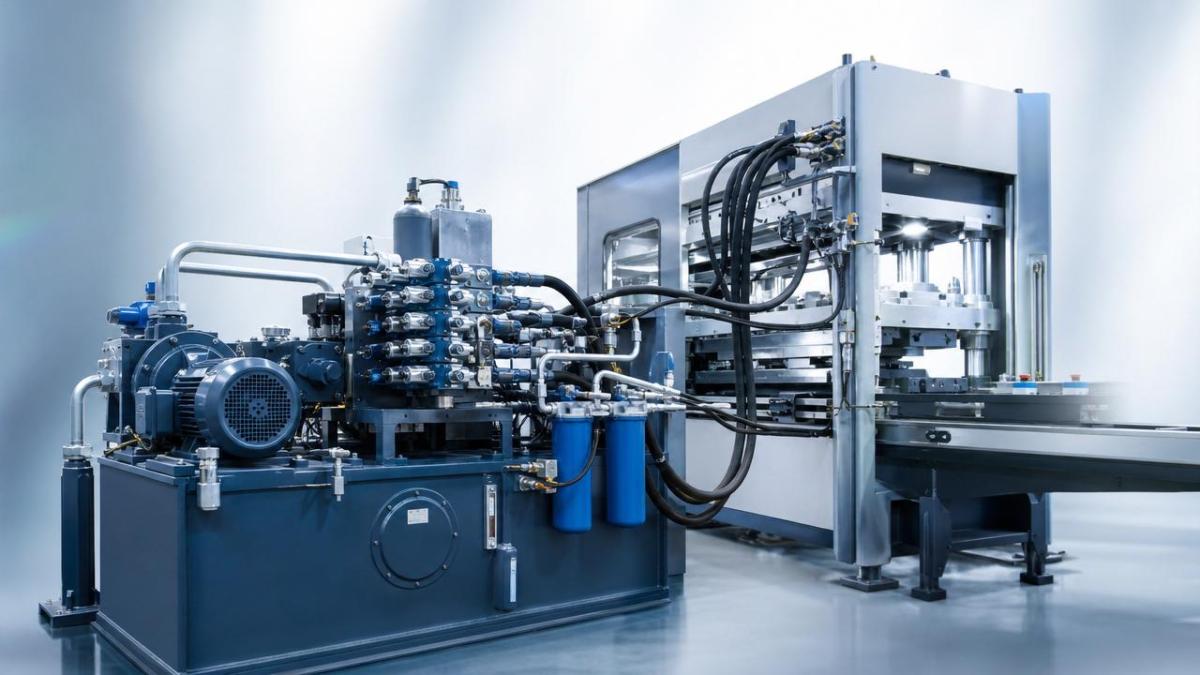
Hydraulic performance is never judged in isolation. It is shaped by load profiles, cycle time, duty hours, ambient conditions, and control accuracy.
A standard package may work acceptably. Yet acceptable is often expensive when energy waste, heat buildup, leakage risk, and maintenance interruptions accumulate over years.
This is where hydraulic systems custom engineering becomes commercially relevant. It helps match pressure, flow, valve response, filtration, and sealing to the actual task.
For a platform like G-IFA, this topic matters because smart manufacturing depends on measurable reliability. Hardware must support data-driven control, not undermine it.
Across integrated factories, hydraulic systems custom decisions often influence throughput stability, spare parts strategy, energy intensity, and compliance with ISO, IEC, and CE expectations.
How to judge whether a standard hydraulic design is no longer enough
Not every machine needs a custom solution. The cost benefit appears when operating demands deviate meaningfully from generic design assumptions.
Scenario 1: Variable loads and unstable cycle times
Presses, lifting platforms, forming cells, and material handling systems often face rapidly changing loads. Standard systems may oversize pumps to cover peak demand.
That oversizing raises idle energy consumption and heat generation. Hydraulic systems custom tuning can reduce waste through variable displacement pumps and optimized flow control.
Scenario 2: Precision motion with strict quality tolerance
In cutting, clamping, positioning, and molding, repeatability matters as much as force. A small pressure fluctuation can affect part quality and downstream automation accuracy.
Hydraulic systems custom design improves actuator sizing, servo valve behavior, and feedback integration. The result is better motion consistency and fewer quality-related stoppages.
Scenario 3: Harsh environments and contamination exposure
Mining support equipment, offshore units, recycling lines, and heavy-duty manufacturing face dust, vibration, and temperature swings. Generic sealing choices may fail prematurely.
A hydraulic systems custom approach can specify reservoir layout, filtration grade, hose routing, corrosion protection, and fluid compatibility for longer service intervals.
Scenario 4: Connected production lines needing digital visibility
Industry 4.0 environments demand traceable performance data. Standard hydraulic units often lack the sensor architecture needed for predictive maintenance and process transparency.
Hydraulic systems custom integration can add pressure sensing, temperature monitoring, flow analytics, and PLC connectivity. That supports smarter alarms and cleaner root-cause analysis.
Typical applications where hydraulic systems custom work saves cost fastest
Metal forming and industrial pressing
Press applications need high force, controlled acceleration, and stable return cycles. Custom circuits reduce shock loads, lower oil temperature, and improve die protection.
Savings usually come from lower scrap, fewer seal failures, and reduced motor energy during partial-load operation.
Injection molding and clamping systems
Molding lines need fast response during clamp, hold, and release stages. Standard hydraulic sizing often favors speed at the expense of controllability.
Hydraulic systems custom optimization balances response speed with pressure stability. That protects molds and improves cycle repeatability.
Mobile machinery and lifting equipment
Mobile assets face compact space limits and broad duty variation. A custom hydraulic package can reduce component count and simplify field maintenance access.
Cost reduction often appears through fuel or electricity savings, less downtime, and better safety margin under peak movement conditions.
Automated production cells with mixed technologies
Many lines combine robotics, conveyors, vision, and hydraulic force functions. Poorly matched hydraulics can slow the entire takt time.
Hydraulic systems custom coordination with PLC logic and servo timing reduces bottlenecks. This is especially valuable when multiple stations depend on synchronized motion.
Different scenarios require different hydraulic systems custom priorities
The table shows why hydraulic systems custom planning should start with operating context. The same cylinder force target can require very different engineering choices.
Practical selection advice before investing in hydraulic systems custom upgrades
A strong evaluation process avoids unnecessary customization while identifying changes with the highest return.
- Map actual duty cycles instead of relying on nameplate assumptions.
- Measure pressure peaks, idle periods, and temperature trends over time.
- Review whether control precision affects product quality or takt stability.
- Check contamination sources, seal wear patterns, and hose routing stress.
- Compare maintenance cost against the expected custom retrofit value.
- Confirm integration requirements with PLC, MES, or remote diagnostics systems.
Hydraulic systems custom work should not mean complexity for its own sake. The best designs simplify operation while improving measurable performance.
Common misjudgments that reduce the value of hydraulic systems custom projects
Focusing only on upfront component cost
Lower purchase price can hide higher operating cost. Pump inefficiency, overheating, and short seal life often cost more than a better initial design.
Treating all hydraulic loads as steady-state loads
Transient spikes matter. If acceleration, shock, or rapid reversal is ignored, the system may be oversized in one area and vulnerable in another.
Ignoring digital diagnostics during customization
A modern hydraulic systems custom package should support monitoring. Otherwise, troubleshooting remains reactive and hidden losses continue.
Copying one machine design across unlike environments
Two similar machines may experience very different fluids, temperatures, or contamination levels. Direct replication can shorten service life and inflate downtime risk.
Why data-led engineering makes hydraulic systems custom decisions more reliable
The strongest savings come from verified engineering, not assumptions. This aligns with G-IFA’s role as a benchmark repository for industrial automation decisions.
Cross-sector comparison helps identify whether hydraulic systems custom investment is justified by pressure stability, efficiency gains, compliance, or maintenance reduction.
When hydraulic hardware is evaluated alongside robotics, PLC systems, motion control, and industrial software, the business case becomes clearer and less risky.
Next steps to evaluate whether hydraulic systems custom work will save cost
Start with one target asset or production cell. Gather duty cycle data, maintenance records, energy use, and quality deviations linked to hydraulic behavior.
Then compare current performance against realistic custom options such as pump resizing, sensor addition, filtration upgrades, or valve response optimization.
A disciplined hydraulic systems custom review can reveal where standardization still works and where tailored engineering produces durable savings.
In a competitive factory environment, better hydraulic fit is not just a technical improvement. It is a practical route to lower total cost and stronger operational resilience.
Recommended News
- 2026/10/24Car Spare Parts: How to Check Fitment and Avoid Ordering the Wrong PartOrder car spare parts with confidence. Learn how to verify VINs, OEM numbers, and fitment details to avoid costly mistakes and choose the right replacement first time.
- 2026/10/23How Do You Select a Motion Control System for Synchronized Axes?How do I select a motion control system for synchronized axes? Discover key timing, feedback, and performance checks to choose confidently and reduce costly integration risks.
- 2026/10/23Integrating End-of-Line Sortation with Packing Stations and Conveyor ControlsOptimize end of line sortation with coordinated packing stations and conveyor controls. Learn how to prevent bottlenecks, improve routing accuracy, and handle exceptions reliably.