
Search News
Industry Portal
Popular Tags
Why Some Automation Components Fail Early in High Dust Environments
Author
Robert Valve
Time
Apr 17, 2026
Pageviews
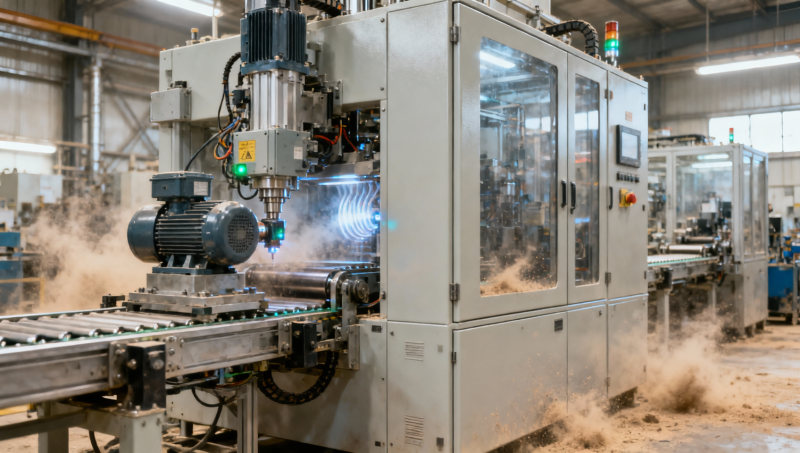
In high-dust facilities, even advanced automation components can fail sooner than expected, disrupting industrial equipment, industrial control, and production automation. For teams managing factory integration, industrial machinery, and intelligent manufacturing systems, understanding why these breakdowns happen is essential. This article explores the hidden causes behind early failure and how smarter automation solutions can protect robotic arms, manufacturing systems, and long-term operational reliability.
Dust is often treated as a housekeeping issue, but in automated production environments it behaves more like a system-level risk. Fine particles enter cable glands, settle on heat sinks, contaminate encoder feedback devices, degrade pneumatic seals, and shorten the service life of motors, sensors, PLC cabinets, and HMI interfaces. In sectors such as cement, metal processing, woodworking, feed production, mining, and bulk material handling, dust load can remain high for 8 to 24 hours per day.
For information researchers and frontline operators, early failure is rarely caused by one defective part alone. It usually results from a chain of mismatches between environment, enclosure rating, installation method, maintenance intervals, and control strategy. From a B2B decision perspective, the goal is not simply to buy stronger components, but to select automation solutions that remain stable under particulate stress, thermal cycling, and repetitive operation.
How High Dust Environments Damage Automation Systems Faster Than Expected
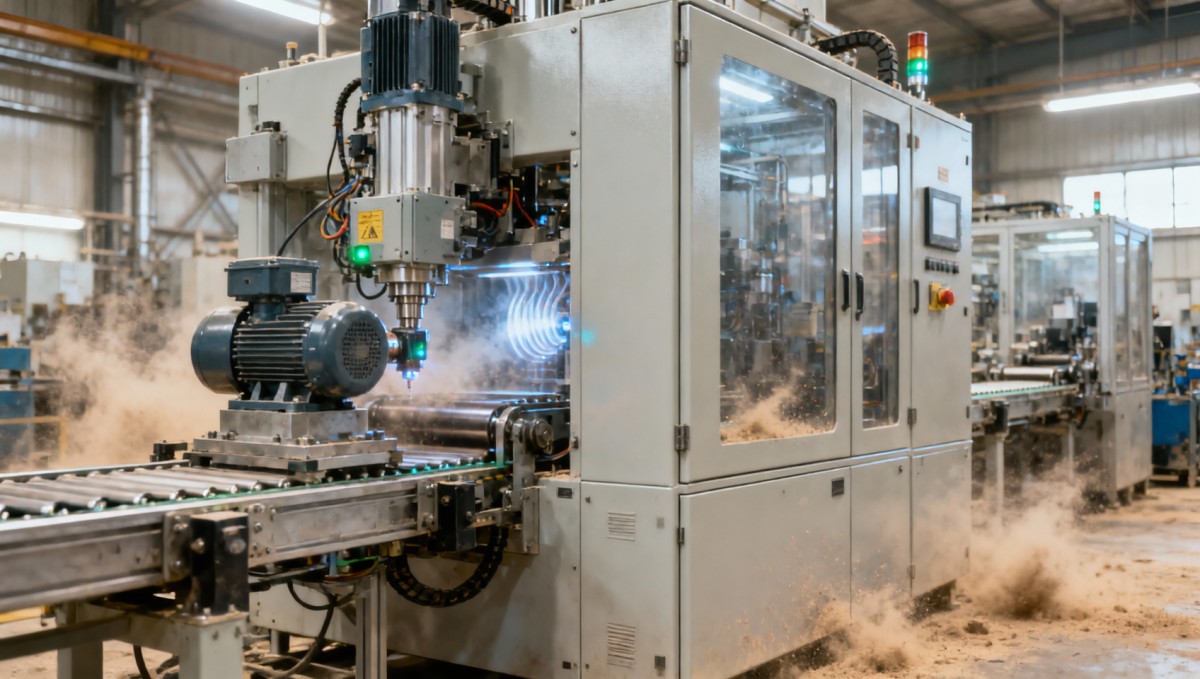
Dust-related failure usually starts with microscopic interference and ends with visible downtime. A 50-micron particle may seem insignificant, yet when thousands of particles settle inside a control enclosure or along moving assemblies, they alter heat transfer, create abrasion, and increase electrical instability. In facilities with poor filtration or open transfer points, contamination can build up within 2 to 6 weeks, especially around fan-cooled drives and unsealed sensor heads.
Mechanical wear is often the first warning sign
Linear guides, ball screws, pneumatic cylinders, rotary joints, and conveyor bearings are vulnerable because dust turns normal friction into abrasive friction. If particles mix with lubricant, the result is often a grinding paste that accelerates wear. In high-cycle applications running 16 to 20 hours daily, this can reduce bearing or seal life by 20% to 40% compared with cleaner indoor assembly lines.
Robotic arms and servo-driven axes are also exposed. Dust on couplings, cable tracks, and encoder housings can reduce positioning consistency. Even when repeatability remains within tolerance at first, vibration and drift tend to increase over time. Operators may notice more frequent alarm resets, higher motor temperature, or inconsistent response at the end of each shift rather than an immediate hard failure.
Electrical and thermal issues develop quietly
Dust accumulation on cooling fins and ventilation paths raises internal temperatures in servo drives, PLC cabinets, power supplies, and IPCs. A temperature rise of just 10°C can significantly shorten the life of electronic components such as capacitors and insulated gate devices. In dusty plants, this thermal penalty is common when cabinets use forced-air cooling without staged filtration or when filters are not changed on a 30-day to 90-day schedule.
Conductive dust introduces an additional risk. Metal fines, carbon dust, and some process residues can bridge contacts or settle on terminal blocks, increasing the chance of short circuits, leakage current, or unstable input signals. This matters in industrial control panels where 24V I/O, communication modules, and safety relays sit close together. A false signal every few hours may appear random, but it often traces back to contamination rather than software logic.
Common failure paths seen in dust-heavy factories
- Clogged ventilation causes drive overheating and unplanned shutdowns during peak load periods.
- Dust-laden grease accelerates wear in bearings, guides, and motion transmission assemblies.
- Contaminated photoelectric sensors create false detections, missed parts, or conveyor stops.
- Seal degradation in pneumatic valves and cylinders leads to pressure loss and slower actuation.
- Deposits on connectors and terminals increase resistance, intermittent communication faults, and maintenance time.
What makes early failure difficult to prevent is that symptoms appear across multiple subsystems at once. One line may show servo overload alarms, another may show unstable barcode reading, while a third sees valve sticking. When these issues are treated separately, the underlying environmental cause remains in place. Effective analysis starts by viewing dust exposure as a cross-functional reliability problem affecting mechanics, electronics, control architecture, and service planning together.
Why Component Selection Fails in Dusty Applications
Many automation components fail early not because they are low quality, but because they were selected for nominal performance instead of environmental fit. Procurement teams may compare torque, speed, cycle time, or communication protocol, yet overlook enclosure design, seal materials, cable entry protection, and maintenance access. In dust-heavy operations, those details are often more decisive than the headline specification.
IP rating alone does not tell the full story
An IP65 or IP67 label helps, but real-world durability depends on mounting orientation, washdown exposure, cable sealing quality, and the type of dust present. Fine powder behaves differently from coarse grain or fibrous particles. For example, an enclosure that performs well against splash and larger debris may still struggle if negative cabinet pressure pulls fine dust through panel gaps, hinges, or poorly fitted filters.
Another frequent issue is partial system protection. A sensor body may be rated for dusty conditions, while the connector, junction box, or field cable is not. Servo motors may have sufficient enclosure protection, yet the brake assembly, encoder, or feedback cable remains vulnerable. This mismatch creates hidden weak points that fail months before the main component reaches its expected life cycle.
The table below outlines where specification gaps most often appear during automation component selection for high-dust environments.
The key takeaway is that selection must be system-based rather than component-based. If one vulnerable connector or cabinet vent allows contamination, the strongest motor or controller upstream cannot protect the full automation line. Reliability in dusty facilities is built from coordinated protection across mechanics, electrics, pneumatics, and data connectivity.
Environmental specification should be treated as a purchasing gate
A practical purchasing workflow usually evaluates at least 4 dimensions before approval: particulate severity, duty cycle, cleaning method, and maintenance accessibility. In factories where dust concentration varies by zone, zoning is especially important. Packaging areas, transfer hoppers, cutting stations, and crusher feed points should not share the same selection assumptions as sealed final assembly cells.
- Map contamination by zone and by shift, not only by building average.
- Verify the full chain: component body, connector, cable, gland, cabinet, and purge or filter device.
- Match service interval targets, such as 30, 60, or 90 days, to actual labor capacity.
- Check whether maintenance can be performed without exposing internal parts directly to dust clouds.
For organizations using benchmark-driven sourcing, this is where engineering repositories and comparative technical data become valuable. Cross-referencing hardware suitability against ISO, IEC, and CE-aligned expectations helps narrow options before installation risk turns into production loss.
The Hidden Role of Installation, Airflow, and Maintenance Discipline
Even well-selected automation components can fail early when installation practices do not reflect dust dynamics inside the plant. The positioning of a cabinet, the direction of airflow, the height of a sensor above a conveyor, and the routing of cables near vibrating structures all influence contamination exposure. In many factories, installation shortcuts add more risk than the component datasheet suggests.
Improper airflow design can turn cabinets into dust collectors
Control cabinets should not simply be ventilated; they should be ventilated with contamination control in mind. If cabinet cooling fans create negative pressure without adequate filtration, they actively draw dust through seams and cable penetrations. In severe environments, positive-pressure cabinet strategies or closed-loop heat exchangers are often more reliable than standard fan-filter arrangements, especially when ambient dust remains elevated for more than 12 hours per day.
Placement matters as much as cooling method. A cabinet mounted near floor level in a powder handling area may experience far higher dust load than one mounted 1.5 to 2 meters above ground with shielding. Likewise, sensor heads aimed into dust plumes or positioned directly downstream of extraction gaps will require more frequent cleaning and produce less stable readings over time.
Maintenance intervals must reflect real contamination rates
Many maintenance plans are still calendar-based rather than condition-based. A filter change every 90 days may be reasonable in light industrial assembly, but too slow in grinding, mixing, or transfer operations. In dust-heavy lines, filter inspection may need to happen weekly, lens cleaning every shift, and seal checks every 30 days. If the line runs three shifts, component service load can effectively triple compared with a single-shift operation.
The following table shows typical maintenance pressure points and practical review frequencies used in dusty industrial settings.
The practical lesson is that dusty automation systems need maintenance designed around contamination speed, not just equipment age. Plants that combine routine inspection with condition signals such as rising cabinet temperature, increased current draw, or abnormal cycle time drift usually detect failure earlier and reduce secondary damage.
Installation and maintenance mistakes that shorten service life
- Mounting control hardware in direct dust plumes rather than in shielded or isolated locations.
- Using compressed air to blow dust deeper into connectors and encoder housings during cleaning.
- Applying general-purpose grease where dust-resistant lubrication or protected bearings are required.
- Replacing filters too late, after temperature alarms begin appearing.
- Ignoring small seal cracks because the machine still appears operational.
For system integrators and plant operators, these are highly actionable variables. Unlike raw material dust levels, installation geometry and maintenance discipline can be improved quickly, often within one shutdown window or one planned retrofit cycle.
How to Choose More Reliable Automation Solutions for Dust-Heavy Facilities
A better approach begins with application engineering rather than catalog filtering. The right choice depends on whether the line uses robotics, PLC-based conveyance, servo positioning, pneumatic actuation, or integrated MES and IIoT monitoring. In dust-heavy environments, reliable automation solutions balance 5 factors at once: enclosure protection, thermal control, serviceability, contamination tolerance, and diagnostic visibility.
Priority criteria for selection and specification
When comparing options, ask whether the component can maintain stable operation across expected contamination cycles. A reliable spec review should include operating temperature range, enclosure rating, connector sealing, cleaning compatibility, and mean maintenance interval. For example, if an actuator must complete 500,000 to 1,000,000 cycles between overhauls in a dusty zone, standard assumptions from clean-room style automation are not useful.
In robotic and motion control applications, protected feedback systems and cable routing matter as much as motor performance. In pneumatic systems, air preparation quality and exhaust contamination control can make the difference between stable actuation and repeated valve sticking. In digital architecture, cabinetized network gear should be reviewed for thermal margin and contamination isolation, especially if it supports MES, ERP, or remote monitoring functions critical to plant visibility.
A practical comparison framework for buyers and engineers
The table below provides a simple decision model that can help teams evaluate automation hardware for dusty industrial environments without relying only on price or nominal throughput.
This framework supports both technical and commercial decisions. A lower-cost component that requires weekly unscheduled cleaning or quarterly replacement may be more expensive over 12 months than a better-protected device with a higher initial purchase price but longer stable runtime.
Recommended selection workflow
- Define the dust profile by zone, particle type, and shift exposure.
- Identify the failure-critical assets, such as servo drives, sensors, PLC cabinets, or pneumatic manifolds.
- Compare component protection and maintenance requirements against the real plant environment.
- Validate with pilot installation or a controlled trial period of 30 to 90 days where possible.
- Standardize the selected configuration across similar lines to reduce spare part complexity.
For organizations using trusted benchmark resources, the value lies in reducing uncertainty before rollout. A technical intelligence platform such as G-IFA helps buyers and engineers compare automation hardware, control systems, motion solutions, and pneumatic architectures in a more structured way, particularly when reliability under demanding factory conditions is a top procurement criterion.
FAQ: Common Questions About Dust-Driven Automation Failure
How can operators tell whether dust is the real cause of failure?
Look for patterns rather than isolated alarms. Repeated overheating after long runs, sensor errors that improve after cleaning, sticky pneumatic motion, and connector issues concentrated in one zone are strong indicators. If failures rise after 2 to 4 weeks of operation and drop temporarily after shutdown cleaning, environmental contamination is likely part of the root cause.
Which automation components are usually the most vulnerable?
Optical sensors, fan-cooled drives, encoder assemblies, HMI panels, exposed connectors, pneumatic valve islands, and lubricated transmission components often fail first. They either rely on clean surfaces, stable airflow, or tight sealing. Components with moving interfaces and fine tolerances generally show degradation faster than fully sealed passive hardware.
Is a higher IP rating always the best answer?
Not always. Higher protection is useful, but system compatibility matters more. A high-IP device connected through an unprotected cable gland or mounted inside a poorly ventilated cabinet can still fail early. The best result comes from combining enclosure protection, thermal management, correct installation height, and realistic maintenance planning.
How often should dust-heavy automation systems be reviewed?
For severe environments, a layered schedule works well: quick visual checks each shift, cleaning and filter review every 7 to 14 days, seal and connector inspection every 30 to 60 days, and a deeper reliability assessment each quarter. High-value robotics or control cabinets that support continuous production may justify permanent temperature or current monitoring for earlier intervention.
Early failure in high dust environments is rarely a mystery once the full system is examined. The main drivers are abrasive wear, thermal stress, signal instability, incomplete sealing, poor airflow design, and maintenance schedules that do not match actual contamination levels. For production teams, integrators, and operators, the most effective response is to combine better component selection with better installation discipline and condition-aware maintenance.
G-IFA supports this process by helping industrial decision-makers compare automation hardware and software foundations through verifiable technical logic, cross-sector benchmarking, and practical engineering perspective. If you are reviewing robotic arms, PLC and control systems, motion transmission, IIoT architecture, or pneumatic and hydraulic equipment for harsh factory conditions, now is the right time to evaluate the reliability gap before it becomes downtime. Contact us to discuss your application, request a tailored solution path, or learn more about automation choices built for dust-heavy production environments.
Recommended News
- 2026/06/25What Does Global Chain Mean in Supply Networks and Where Do Disruptions Usually Start?Global chain risks often begin upstream, not at delivery. Learn where disruptions start, how hidden data and standards gaps spread, and how to strengthen supply network resilience.
- 2026/06/25How to Choose a Photovoltaic Solar Panels Manufacturer in Germany for Commercial ProjectsPhotovoltaic solar panels manufacturer in Germany selection starts with more than price. Discover how to compare quality, compliance, delivery, and long-term reliability for commercial solar projects.
- 2026/06/25Rail Freight vs Sea Freight for Heavy Cargo: Cost, Transit Time, and Risk ComparedRail freight vs sea freight for heavy cargo: compare cost, transit time, and risk to choose the best shipping mode for industrial equipment, tighter schedules, and smarter logistics decisions.