
Search News
Industry Portal
Popular Tags
Why Industrial Sensors Fail Early in Harsh Factory Environments
Author
Robert Valve
Time
May 04, 2026
Pageviews
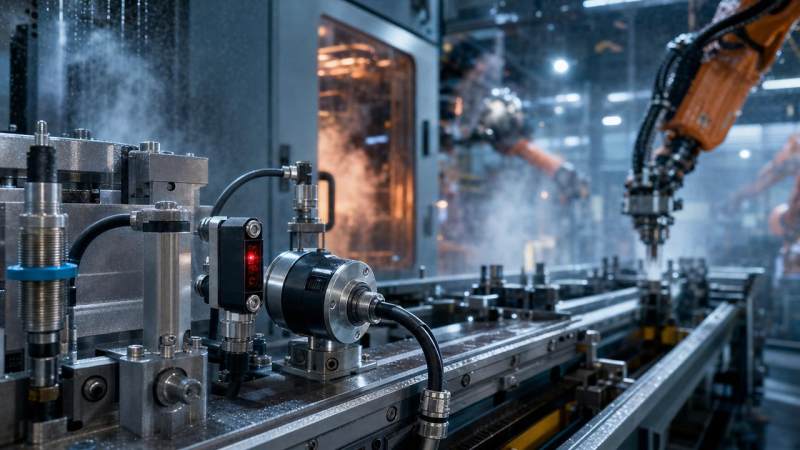
Industrial sensors often fail long before their rated lifespan when exposed to heat, vibration, dust, moisture, and electrical noise on the factory floor. For after-sales maintenance teams, these early failures mean repeated downtime, rising replacement costs, and difficult root-cause analysis. Understanding why industrial sensors break down in harsh environments is the first step toward improving reliability, extending service life, and protecting overall automation performance.
In modern automation lines, even a single failed proximity switch, photoelectric sensor, pressure transducer, or encoder can interrupt a sequence in less than 1 second and leave an entire machine cell waiting for a reset. For maintenance personnel, the issue is rarely just the sensor itself. Early failure usually points to a mismatch between the sensing device, the installation method, and the actual operating environment.
This matters across robotics, PLC control systems, motion platforms, IIoT-connected lines, and fluid power equipment. In each case, industrial sensors are the frontline devices that convert physical conditions into usable control signals. When those signals become unstable, false, delayed, or absent, troubleshooting time rises, spare-parts consumption increases, and service teams lose confidence in the original design. That is why a structured failure analysis approach is essential for every after-sales support function.
Why Industrial Sensors Fail So Early on Real Factory Floors
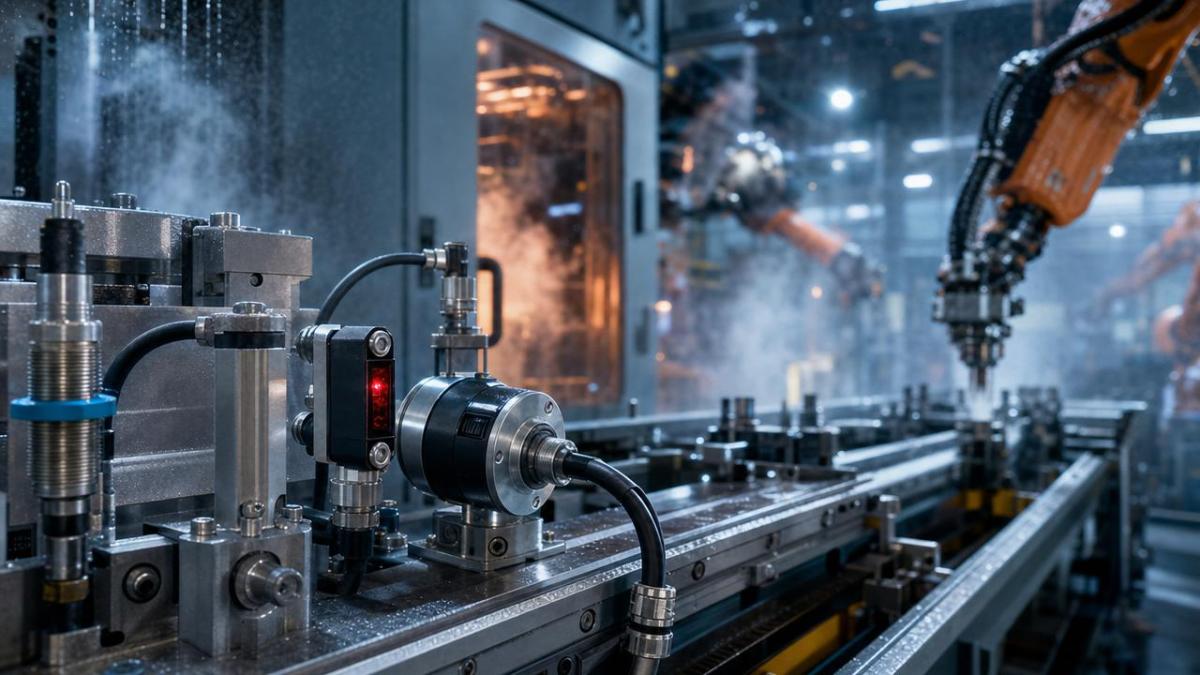
Rated life figures are often based on controlled laboratory conditions, but factories expose industrial sensors to combined stress. A sensor may be specified for -10°C to 70°C, IP67 sealing, and standard vibration resistance, yet the actual machine enclosure may reach 55°C for 10 hours per shift, with airborne coolant mist and intermittent cable movement. In those conditions, the gap between catalog performance and field performance becomes significant.
After-sales maintenance teams usually see the same pattern: the first replacement solves the symptom, but the second or third failure within 3 to 6 months reveals a deeper installation or environmental issue. The most common causes include thermal stress, mechanical vibration, contamination ingress, electrical interference, poor connector practices, and incorrect sensor selection for the target medium or sensing distance.
Heat Accelerates Material and Electronic Degradation
Temperature is one of the fastest life reducers for industrial sensors. Internal components such as semiconductors, adhesives, seals, and potting compounds age faster as heat rises. A device installed near a servo drive cabinet, furnace zone, hydraulic power unit, or motor housing can experience continuous temperature swings of 15°C to 25°C per cycle. Repeated expansion and contraction weakens solder joints, shifts calibration, and can create micro-cracks in encapsulated electronics.
In optical sensors, high heat may also affect emitter output and receiver stability. In pressure and temperature sensors, drift can increase slowly before a total failure appears. Maintenance teams should not only compare ambient temperature to the rated value, but also measure local surface temperature, enclosure heat buildup, and daily cycle duration. A sensor operating at 80% to 90% of its maximum temperature rating for long periods has very little safety margin.
Vibration and Shock Damage More Than the Housing
On conveyors, stamping lines, pick-and-place modules, and high-speed packaging equipment, vibration can exceed what standard mounting hardware can absorb. The visible sensor body may look intact, but internal wiring, connector pins, and PCB solder points are often the real failure points. Even low-amplitude vibration at high frequency, repeated for 2,000 to 5,000 operating hours, can create intermittent output loss that is difficult to reproduce during bench testing.
Mechanical stress also comes from poor bracket design. Long unsupported brackets, thin sheet-metal mounts, and misaligned target positions increase the chance of sensing error. In many field cases, replacing the sensor without redesigning the bracket only restarts the failure cycle. For after-sales technicians, checking the mounting stiffness is just as important as checking the device specification.
Dust, Moisture, Oil, and Cleaning Chemicals Create Hidden Failure Paths
Ingress protection ratings help, but they do not eliminate all risks. Fine dust can interfere with optical faces, metal particles can affect inductive sensing stability, and emulsified oil can migrate into cable terminations over time. Washdown areas introduce another challenge: repeated exposure to water jets, detergent, and temperature shock during cleaning can degrade seals after dozens or hundreds of cycles.
A common field mistake is assuming IP67 is enough for every wet application. In practice, sensor placement, connector orientation, cable bend radius, and mating plug quality matter just as much. A downward-facing M12 connector, for example, usually performs better in wet zones than a horizontal connector where fluid can collect around the seal. Small details like this often determine whether industrial sensors survive 18 months or fail in less than 12 weeks.
Electrical Noise Causes False Signals and Premature Electronics Stress
Variable frequency drives, servo amplifiers, contactors, welding equipment, and long cable runs create electromagnetic interference that can corrupt low-level sensor signals. This is especially relevant for analog outputs such as 4–20 mA and 0–10 V, as well as high-speed pulse signals from encoders. The result may look like random process instability, but the root problem is often electrical rather than mechanical.
Noise-related failures can include false triggering, output chatter, communication dropouts, or damaged input stages after repeated surges. Separation distance matters: routing sensor cables in the same tray as motor power lines for 15 to 30 meters significantly raises risk. Shield termination, grounding strategy, transient suppression, and PLC input filtering should all be reviewed before declaring the sensor defective.
The table below shows how common environmental stressors affect industrial sensors and what maintenance teams should inspect first during service visits.
For after-sales work, the main lesson is clear: early sensor failure is usually multi-factor. If only one symptom is addressed, repeat failures remain likely. A faster service response comes from checking thermal, mechanical, contamination, and electrical conditions together instead of in isolation.
How After-Sales Teams Can Diagnose the Real Root Cause
Efficient troubleshooting starts with separating sensor failure from system failure. On many automated lines, a bad reading can be caused by the target condition, cable harness, PLC input card, power supply ripple, or software filtering delay rather than the sensor element itself. A disciplined 5-step diagnostic routine reduces unnecessary part replacement and helps maintenance teams build stronger failure records for future prevention.
Step 1: Verify the Failure Mode
Start by classifying the issue into one of four categories: no output, unstable output, incorrect measurement, or communication loss. That classification narrows the likely causes quickly. For example, no output may point to supply voltage or internal damage, while unstable output often suggests contamination, vibration, or EMI. Record whether the problem is continuous, appears only after warm-up, or happens during specific machine states such as acceleration, washdown, or tool change.
Field checks that should take less than 15 minutes
- Measure supply voltage at the sensor under load, not only at the cabinet terminal.
- Inspect LED diagnostics before disconnecting the device.
- Check sensing distance against the real target position and movement tolerance.
- Look for contamination on optical faces, magnetic targets, or pressure ports.
- Gently move the cable near the connector to detect intermittent contact.
Step 2: Review Installation Quality
Many industrial sensors fail because installation quality never matched the application severity. Common issues include over-tightened housings, unsupported connectors, cables bent below the recommended radius, and direct exposure to splash or impact. If a sensor is mounted 20 mm from a moving actuator when the application would allow 80 mm, the extra risk has no benefit. Installation should always be reviewed as part of the failure analysis.
For analog and precision sensing, the mounting structure also affects measurement repeatability. A pressure sensor on a pulsating hydraulic line, or a displacement sensor on a flexible bracket, may appear defective when the true problem is process instability or mechanical resonance. This is particularly important for maintenance teams supporting motion control and pneumatic or hydraulic systems where dynamic loads are high.
Step 3: Compare the Real Environment With the Sensor Rating
Nameplate ratings should be treated as minimum checks, not final proof of suitability. Review at least 6 points: operating temperature, ingress rating, chemical exposure, vibration level, cable movement, and electrical interface type. If any one of these exceeds the intended operating window for long periods, the service life of industrial sensors can drop sharply even without immediate visible damage.
This is where a benchmark-driven approach helps. Teams working with mixed fleets of machines from different suppliers should compare sensor type, enclosure material, sealing method, and output format against international design expectations such as ISO, IEC, and CE-aligned machine practices. Standardized comparison reduces subjective decisions and supports more consistent spare-part selection across sites.
Step 4: Check the Electrical Ecosystem Around the Sensor
A sensor is only one node in a larger control path. Inspect 24 VDC supply stability, grounding integrity, shield treatment, PLC input type, and any intermediate I/O module. Voltage dips below acceptable tolerance, surge events during motor switching, or poor shield continuity can produce repeat incidents that resemble multiple sensor failures. In plants with frequent drive switching or welding loads, adding isolation or surge suppression may prevent the next 6 to 12 months of service calls.
Step 5: Document and Standardize Corrective Action
A maintenance intervention only creates long-term value if the findings are recorded in a usable format. Each event should include the sensor type, machine zone, runtime before failure, environmental conditions, visible damage, electrical measurements, and final corrective action. Over time, even a sample of 20 to 30 service records can reveal clear patterns such as repeated failures in one washdown zone or on one cable routing path.
How to Select Industrial Sensors for Harsh Environments More Effectively
Prevention starts at selection. When industrial sensors are chosen only by sensing principle and price, lifecycle cost often increases later through more downtime, more service labor, and more emergency replacement. After-sales teams should contribute feedback to procurement and engineering so that future purchases reflect real field conditions rather than only catalog specifications.
Choose by Application Severity, Not by General Category
Two proximity sensors may both detect metal targets at similar distances, yet their suitability can differ greatly depending on housing material, connector sealing, vibration resistance, and operating temperature. The same is true for photoelectric, ultrasonic, pressure, and position sensors. The correct question is not “Will it detect?” but “Will it keep detecting accurately after 4,000 hours in this environment?”
The following table can be used as a practical screening guide when selecting industrial sensors for demanding factory zones.
The key takeaway is that reliable sensor selection is a systems decision. Durability depends on thermal margin, installation geometry, signal compatibility, and maintenance access just as much as on the sensing technology itself.
Build a Better Spare Parts Strategy
For harsh environments, keeping only one generic replacement sensor is risky. Maintenance teams should classify spares into at least 3 groups: standard duty, severe duty, and critical process measurement. This approach reduces the temptation to install a convenient but under-specified replacement during urgent downtime. It also helps procurement balance stock cost against downtime exposure.
Where possible, align spare-part decisions with machine criticality. A sensor on a secondary indicator circuit may tolerate a 24- to 48-hour lead time, while a sensor on a robot safety interlock, carton indexing axis, or hydraulic pressure feedback loop may justify local stock. Service performance improves when stocking rules reflect application impact rather than only part value.
Maintenance Practices That Extend Sensor Life
Preventive work can significantly reduce premature failure if it is targeted. Cleaning, retightening, and routine replacement alone are not enough. What matters is whether the maintenance plan addresses the known stress points for industrial sensors in each machine area. A short 30-minute inspection added to a monthly PM routine can prevent many repeat incidents.
Use a Zone-Based Inspection Plan
Divide the machine into environmental zones such as high heat, washdown, high vibration, and high EMI. Then assign specific checks to each zone. In washdown areas, inspect seals and connectors every 2 to 4 weeks. In vibration zones, check bracket condition and cable restraint monthly. In high-heat areas, verify that airflow paths and shields remain in place after service work. This simple zoning method often delivers better results than treating all sensors equally.
Train Teams to Spot Early Warning Signs
Early warning signs usually appear before total failure. Examples include delayed switching, increased analog noise, occasional PLC alarms, discoloration near the cable entry, cracked lens covers, or moisture traces inside connectors. If technicians are trained to record these signs during regular visits, corrective action can be scheduled before an unplanned stop occurs. In many plants, this is the difference between a 20-minute planned intervention and a 4-hour emergency callout.
Common Maintenance Mistakes to Avoid
- Replacing the sensor without checking the cable and connector set.
- Ignoring bracket redesign after repeated vibration-related failures.
- Using the same sensor type in both dry indoor zones and aggressive washdown zones.
- Routing replacement cables along power lines for installation convenience.
- Skipping documentation because the machine restarted after part replacement.
These mistakes are common because they save time in the moment, but they usually increase total service hours over the next quarter. Better maintenance discipline reduces recurring faults and supports stronger lifecycle cost control.
Why Benchmarking Matters for Sensor Reliability Decisions
For global manufacturers and service organizations, sensor reliability should not be judged from isolated incidents alone. Comparing hardware suitability, installation practices, and control integration across multiple lines creates a clearer view of what actually works under harsh factory conditions. This is where engineering benchmark repositories and cross-sector evaluation frameworks become valuable, especially when maintenance teams support robotics, PLC systems, motion platforms, IIoT software-linked equipment, and pneumatic or hydraulic assets at the same time.
A benchmark-led approach helps teams ask better questions during replacement, retrofit, and procurement decisions. Is the selected industrial sensor aligned with the machine’s real environmental severity? Does the control architecture support stable signal handling? Is the replacement part suitable for long-term use or only for temporary recovery? These questions reduce guesswork and improve communication between maintenance, engineering, and sourcing teams.
Industrial sensors fail early in harsh environments not because they are unimportant, but because they are often treated as simple accessories instead of critical control components. For after-sales maintenance teams, the most effective response is a combination of root-cause discipline, better installation review, smarter spare strategies, and application-specific selection criteria. That approach protects uptime, lowers repeat replacement rates, and supports more reliable automation performance across the factory.
If your team is reviewing sensor failures across robotics cells, PLC-driven lines, motion equipment, IIoT-connected assets, or pneumatic and hydraulic systems, G-IFA can support a more structured evaluation process through engineering benchmarks and cross-sector technical insight. Contact us to discuss your application, request a tailored reliability review, or learn more about practical automation solutions for harsh industrial environments.
Recommended News
- 2026/05/23When a servo motors manufacturer becomes a risk factorServo motors manufacturer risk can quietly raise downtime, tuning effort, and lifecycle cost. Learn the warning signs, evaluation criteria, and smarter ways to protect automation uptime.
- 2026/05/23How to judge a control systems exporter by supportControl systems exporter selection starts with support. Learn how to evaluate response speed, technical depth, documentation, and after-sales service to reduce risk and choose a stronger automation partner.
- 2026/05/23What makes ERP systems price vary so much in 2026ERP systems price in 2026 varies by integration depth, compliance needs, and scalability. Learn what really drives costs and compare smarter before you invest.