
Search News
Industry Portal
Popular Tags
IIoT Software Pricing: Compare Licensing, Integration, and Scaling Costs
Author
Lina Cloud
Time
Oct 20, 2026
Pageviews
IIoT Software Pricing: Compare Licensing, Integration, and Scaling Costs
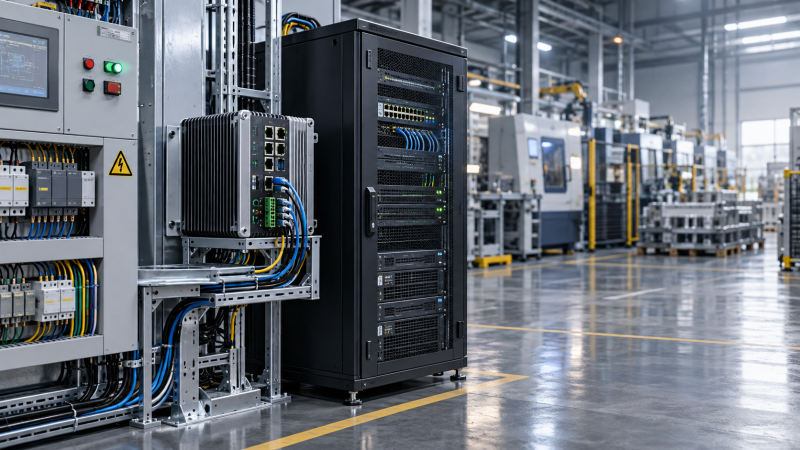
A competitive license quote can hide an expensive industrial rollout. Comparing IIoT software pricing means looking beyond subscription fees to integration work, data infrastructure, support, and the cost of adding devices or sites. Per-device, per-user, and usage-based models can produce very different long-term budgets, especially when connecting legacy equipment with MES or ERP systems.
The useful comparison is not simply which platform costs less today. It is which proposal covers the same operating requirements, assigns implementation responsibility clearly, and remains affordable when the pilot becomes a production service. That requires a cost model built around your factory—not the vendor’s pricing page.
Define the billable scope before comparing prices
There is no reliable universal price per connected machine. A machine sending a few operating states is not equivalent to one streaming high-frequency process data, even if both count as one asset. Public subscription prices, where available, may also exclude industrial connectors, deployment services, or production support.
Give competing suppliers the same scope sheet: equipment count and types, required signals, collection frequency, retention periods, user roles, deployment locations, and MES or ERP interfaces. Separate requirements needed at launch from later possibilities. Otherwise, a comprehensive proposal can look overpriced beside an incomplete one.
Define operational expectations too. Must collection continue during an internet outage? Who restores a failed gateway? Is weekend support necessary? These requirements can change architecture and support costs before anyone adds another dashboard.
Compare licensing models by what makes the bill grow
Most industrial software contracts combine several charging mechanisms. A platform subscription may include an asset allowance, charge separately for users, and meter storage or analytics. Treat the commercial model as a set of linked meters rather than a single monthly fee.
A per-device offer is attractive only when “device” is unambiguous. One gateway might connect several machines, but that does not necessarily mean one license. Ask the supplier to annotate your proposed architecture with every billable component.
Perpetual licensing needs similar scrutiny. It can reduce dependence on recurring access fees, but maintenance, upgrades, infrastructure, and database licenses may remain payable. Subscription pricing shifts some costs into recurring expenditure; it does not automatically transfer responsibility for operating the system.
Integration costs follow equipment diversity, not just machine count
Connecting another machine of an already validated type may be straightforward. Connecting a different controller generation, undocumented serial interface, or isolated production network may require discovery, hardware, programming, and another commissioning visit. Equipment count alone is therefore a weak estimator of integration effort.
“OPC UA supported” or “MQTT compatible” is a starting point, not proof of a finished connection. Confirm the actual controller capabilities, available firmware options, security configuration, accessible data, and licensing requirements. A supported protocol does not guarantee usable timestamps or consistent machine-state definitions.
Require the integration quotation to distinguish these work packages:
- Connectivity: drivers, gateways, network changes, controller access, and installation.
- Data preparation: tag mapping, engineering units, asset hierarchy, timestamp handling, and quality flags.
- Business-system integration: MES or ERP mappings, authentication, transaction rules, and exception handling.
- Commissioning: testing, production access, operator validation, documentation, and handover.
The business-system interface deserves particular attention. Reading a work-order identifier is different from posting completed quantities back into an ERP system. Write-back requires agreement on authoritative records, duplicate prevention, retries, and reconciliation when transactions fail. A connector license rarely settles those questions.
For a G-IFA-style engineering benchmark, the useful comparison links software requirements to the underlying PLCs, robots, drives, and other production equipment. Global Intelligent Factory & Automation’s cross-sector perspective is relevant here: hardware precision and software capability need to be evaluated together. A platform comparison detached from the installed equipment misses much of the implementation risk.
Where legacy connectivity is uncertain, consider a separately priced discovery phase before accepting a fixed rollout commitment. Its deliverables should include a verified connection method, sample data, known limitations, and a revised implementation scope—not merely a presentation.
Data architecture can change the economics
A cloud platform can simplify central access and reduce some on-site administration. It can also introduce separate charges for ingestion, processing, retention, and data extraction. On-premises deployment retains local control but leaves someone responsible for servers, backups, patching, and recovery. Hybrid designs split those responsibilities rather than eliminating them.
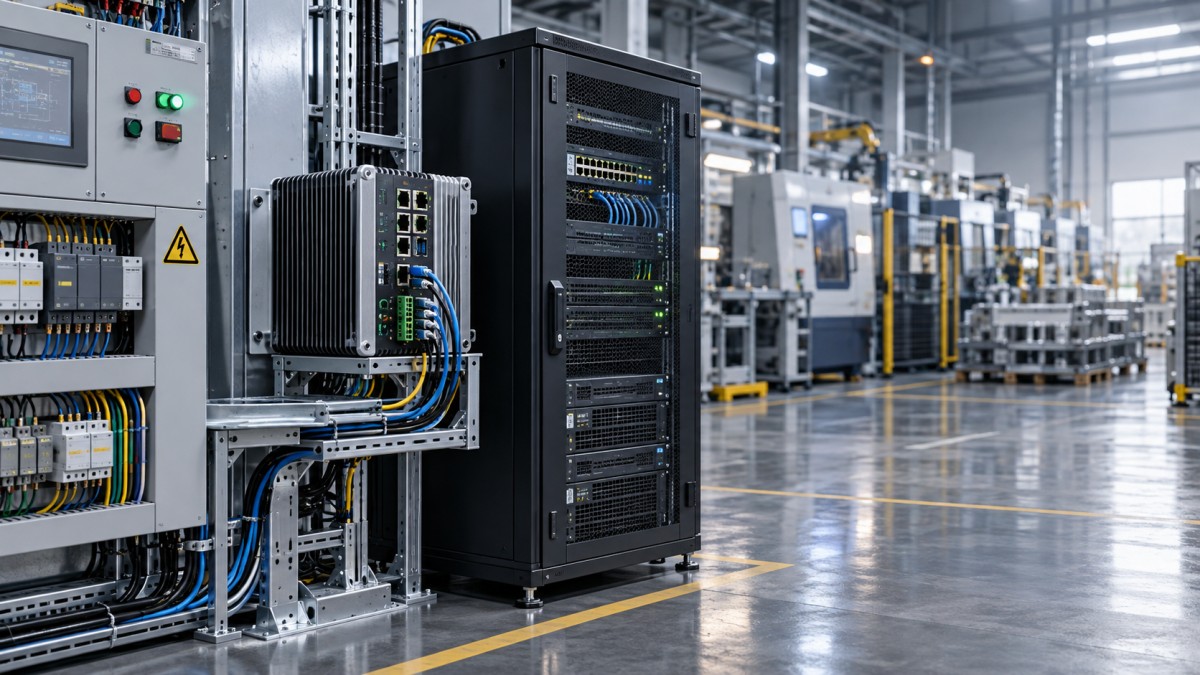
As a hypothetical sizing example, 100 machines with 20 signals each, sampled once per second, generate 172.8 million signal observations daily before filtering. That is not a storage estimate: payload structure, batching, compression, and metadata affect actual volume. It does show why “only 100 machines” is insufficient for a usage-based quotation.
Ask which information needs continuous transmission and which can remain at the edge. An availability dashboard may work with state changes and periodic summaries. Diagnosing a brief process disturbance may require higher-resolution records. Applying one collection policy to both can either inflate cost or discard useful evidence.
Specify retention by data class. Recent raw measurements, long-term production summaries, alarm histories, and audit records need not share one retention rule. Confirm whether backups, replicas, and archived data consume separate billable capacity, and whether retrieval carries additional fees.
Build a three-year TCO that exposes uncertainty
For an initial comparison, a three-year total cost of ownership provides more visibility than the first invoice. Extend the horizon if your investment process requires it, but keep the assumptions consistent across suppliers.
Three-year TCO = implementation + hardware and infrastructure + recurring software and consumption charges + internal operating effort + planned expansion + transition costs.
Do not bury internal effort. OT engineers may need to approve controller access, IT teams may configure identity and networks, and production personnel must validate reports. Even when these activities do not generate supplier invoices, they consume capacity and can delay deployment.
Model a baseline deployment and a credible expansion scenario. Keep launch costs separate from adding assets at an existing site and opening a new site. The latter may require another security review, local infrastructure, language configuration, and different equipment mappings.
For each cost line, record the quantity, unit price, included allowance, overage rate, payer, and confidence level. Mark unverified connectivity or consumption assumptions explicitly. A contingency linked to those uncertainties is more defensible than an unexplained percentage added to the total.
Compare the result against the intended business use. An inexpensive dashboard is poor value if it cannot distinguish planned downtime from equipment failure. Conversely, paying for advanced analytics before reliable machine-state data exists can add cost without resolving the immediate operational question.
Negotiate expansion, support, and exit before signing
Volume discounts matter, but the expansion rules can matter more. Establish whether new assets receive the original discount, whether crossing a tier reprices the entire estate, and whether a new facility triggers another platform minimum. Check renewal increases and minimum commitments against your rollout schedule.
Support wording also needs operational detail. “24/7 support” does not necessarily promise restoration within a defined period. Check response targets, escalation routes, remote-access conditions, and responsibility when a fault spans the gateway, network, cloud service, and MES interface.
Include test environments and recovery arrangements in the commercial review. A pilot may use one environment; production may require staging, backups, or standby capacity. Ask whether those instances need full licenses and how temporary overlap during upgrades is treated.
Finally, price the exit. Confirm export formats, access to configuration and asset models, bulk extraction charges, integrator documentation, and the period available to retrieve data after termination. Owning the data contractually is not the same as being able to move it economically.
Make the pilot resolve commercial questions
Select representative equipment, not just the easiest machine to connect. Include a meaningful legacy interface or business-system dependency where those will affect rollout. Measure actual consumption, integration hours, data quality, and recovery after a connection interruption.
Before approving the wider purchase, obtain an updated bill of materials and cost model based on those observations. The strongest IIoT software pricing proposal is not necessarily the lowest subscription. It is the one whose billable units, implementation boundaries, and expansion terms still make sense after the system meets real production conditions.
Recommended News
- 2026/10/24Car Spare Parts: How to Check Fitment and Avoid Ordering the Wrong PartOrder car spare parts with confidence. Learn how to verify VINs, OEM numbers, and fitment details to avoid costly mistakes and choose the right replacement first time.
- 2026/10/23How Do You Select a Motion Control System for Synchronized Axes?How do I select a motion control system for synchronized axes? Discover key timing, feedback, and performance checks to choose confidently and reduce costly integration risks.
- 2026/10/23Integrating End-of-Line Sortation with Packing Stations and Conveyor ControlsOptimize end of line sortation with coordinated packing stations and conveyor controls. Learn how to prevent bottlenecks, improve routing accuracy, and handle exceptions reliably.