
Search News
Industry Portal
Popular Tags
How Industrial IoT Improves Predictive Maintenance Results
Author
Lina Cloud
Time
Apr 26, 2026
Pageviews
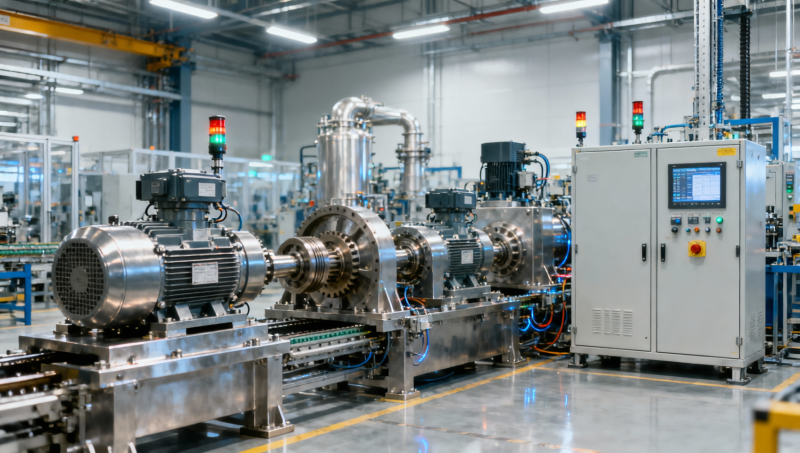
Industrial IoT for predictive maintenance is reshaping how factories reduce downtime, optimize heavy duty industrial equipment, and unlock smart manufacturing benefits. For buyers, engineers, and plant leaders comparing industrial IoT solutions, control systems OEM options, or MES software sourcing, data-driven maintenance delivers measurable value. This article explains how connected assets improve reliability, lower industrial equipment price pressure, and support better decisions across the industrial automation B2B platform.
Across modern production lines, maintenance is no longer just a service function. It directly affects OEE, spare parts planning, labor allocation, product quality, and capital utilization. When a gearbox, servo drive, hydraulic unit, compressor, or PLC-connected subsystem fails unexpectedly, the cost is often much higher than the repair invoice alone. Lost output, missed delivery windows, overtime labor, and emergency sourcing can multiply the real impact within 4–12 hours of downtime.
For information researchers, operators, procurement teams, and business decision-makers, the practical question is not whether connected maintenance matters, but how Industrial IoT improves predictive maintenance results in measurable, scalable ways. From sensor-level visibility to MES and ERP integration, the right architecture helps factories detect wear patterns earlier, prioritize interventions better, and extend the useful life of critical assets without relying on guesswork.
Within the G-IFA perspective, predictive maintenance must be evaluated as part of a wider smart manufacturing stack. Hardware precision, control logic, industrial networking, and software analytics all contribute to maintenance performance. That is why benchmark-driven comparison across robotics, PLC systems, motion control, Industrial IoT software, and fluid power systems is essential when reducing technical risk in automation investment.
What Predictive Maintenance Looks Like in an Industrial IoT Environment
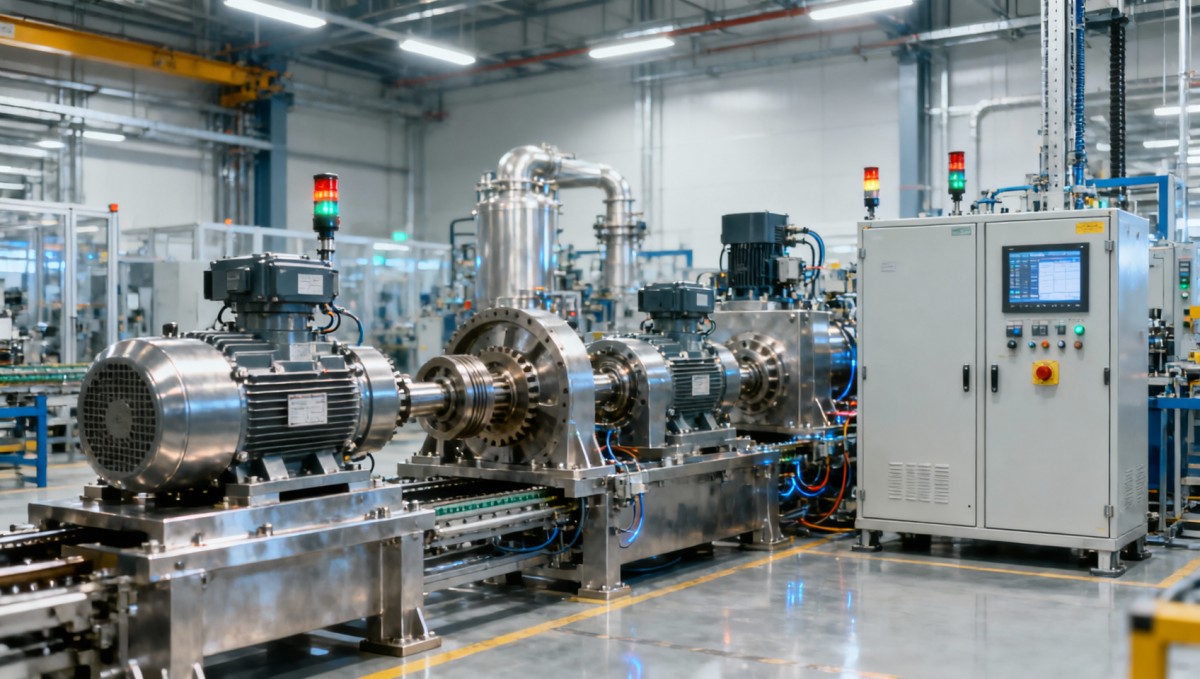
Predictive maintenance uses real operating data to estimate when equipment performance is degrading and when service should be scheduled. In an Industrial IoT environment, machines, drives, pumps, conveyors, robotic axes, and utility systems continuously send condition data such as vibration, temperature, current, pressure, cycle count, and runtime. Instead of waiting for a fault alarm or replacing parts every fixed 30, 60, or 90 days, maintenance teams act according to equipment condition and risk level.
This approach differs from reactive maintenance and preventive maintenance in both timing and data depth. Reactive maintenance starts after failure. Preventive maintenance follows a calendar or usage interval. Predictive maintenance combines real-time monitoring with threshold logic, trend analysis, and historical comparison. In many factories, even a basic setup with 5–8 monitored parameters per asset can improve maintenance planning for motors above 5 kW, compressors, servo systems, and high-cycle packaging or assembly stations.
Core data layers that support prediction
The most effective systems usually collect data across 3 layers. The first is machine-layer sensing, including thermal, vibration, pressure, and electrical signatures. The second is control-layer context from PLCs, HMIs, and drives, which explains load, speed, mode changes, and fault sequences. The third is software-layer correlation inside SCADA, MES, CMMS, or ERP systems, where maintenance history, spare parts consumption, and production schedules can be aligned.
When these layers are connected, the maintenance team can answer more useful questions. Is a temperature rise normal for a high-load batch? Did vibration exceed the warning threshold for 3 cycles or for 300 cycles? Is rising motor current linked to worn bearings, poor lubrication, or an upstream process imbalance? Better answers improve maintenance outcomes and avoid unnecessary part replacement.
Typical monitored variables
- Vibration velocity and acceleration for rotating machinery, often checked at intervals of 1 second to 5 minutes depending on asset criticality.
- Temperature rise in motors, gearboxes, and hydraulic power units, with alert bands commonly set at 5–15°C above established baseline.
- Current draw and power factor for pumps, fans, and conveyors, useful for identifying overload, drag, or imbalance.
- Pressure stability and cycle time in pneumatic and hydraulic systems, especially where seal wear or leakage causes output variation.
- Run hours, start-stop frequency, and fault code recurrence from PLC or drive data logs.
The table below shows how maintenance strategies differ in factory operations and why Industrial IoT creates a stronger basis for prediction and procurement decisions.
The key takeaway is that predictive maintenance delivers the best results when it is built on usable industrial data, not isolated dashboards. For factories evaluating Industrial IoT solutions, the most important question is whether the system can convert raw condition signals into maintenance action, workflow priority, and purchasing visibility.
Why Connected Assets Improve Maintenance Results and Lower Downtime Risk
Industrial IoT improves predictive maintenance results because it changes maintenance from an inspection-centered process into a condition-centered process. Instead of depending on periodic manual checks every 1–4 weeks, plants can watch asset behavior continuously and detect subtle drift before a hard fault occurs. This matters most in high-throughput environments where a single line stoppage can affect packaging, assembly, material handling, and downstream shipping within the same shift.
Connected assets also improve fault prioritization. Not every anomaly requires immediate shutdown. A 3°C temperature increase on a lightly loaded fan may be tolerable, while a 12% vibration rise on a critical spindle or robotic reducer may require intervention within 24–72 hours. With proper thresholds, maintenance teams can separate warning conditions from critical events and use labor where the risk-adjusted return is highest.
Operational improvements that buyers and plant teams can measure
In practical deployments, maintenance gains usually appear in 4 areas. First, unplanned downtime drops because faults are found earlier. Second, spare parts are stocked with better timing, reducing both excess inventory and emergency buying. Third, service labor is scheduled around production windows rather than crisis response. Fourth, equipment life can be extended because overloaded or poorly aligned operating conditions are corrected sooner.
These improvements influence total cost even when industrial equipment price remains unchanged. If a plant extends bearing replacement from every 6 months to condition-based replacement at 8–10 months for selected assets, the saving is not just in parts. It includes reduced shutdown frequency, fewer rushed interventions, and better coordination with production planning. For procurement teams, this means evaluating Industrial IoT as a lifecycle cost tool rather than only a software expense.
Common result indicators
- Reduction in emergency maintenance work orders over a 90-day or 180-day period.
- Lower mean time to diagnose because machine, control, and event data are already linked.
- Improved maintenance compliance for critical assets with service windows of 7, 14, or 30 days.
- Better spare parts turnover for motors, seals, belts, filters, sensors, and gearbox components.
- Higher confidence in capex deferral when asset condition remains stable under monitored load.
Another advantage is cross-functional alignment. Operators gain better visibility into what warning signs matter. Engineers get trend data instead of isolated alarms. Procurement sees which components create repeated cost pressure. Executives can compare maintenance performance against throughput, quality, and delivery metrics. This shared visibility is especially important in multi-line factories where 20–200 connected assets may compete for service attention at the same time.
For G-IFA-style benchmarking, the strongest predictive maintenance programs are usually those that connect hardware reliability with software interpretation. A high-quality sensor on its own is not enough. Likewise, analytics software without signal quality, installation discipline, and control system context often produces noise. Real improvement comes from the combined engineering quality of sensors, PLC logic, communication layer, and maintenance workflow.
Key Technologies, Integration Points, and Selection Criteria
When selecting an Industrial IoT architecture for predictive maintenance, factories should evaluate the full signal path from asset to action. That path usually includes sensors, edge devices or gateways, industrial communication protocols, control systems, data storage, analytics, alarm logic, and enterprise integration. Missing even one layer can reduce the practical value of the system, especially in mixed environments with legacy machines, newer robotic cells, and utility infrastructure operating in parallel.
For most industrial sites, the first selection decision is where to start. High-criticality assets are the best entry point. These may include compressors, chillers, extruders, presses, robotic gearboxes, servo-driven conveyors, high-speed spindles, or hydraulic power units. A pilot covering 10–30 assets often provides enough signal diversity to test alert quality, data integration, and maintenance workflow without delaying value behind an oversized rollout.
What to compare when sourcing Industrial IoT solutions
Procurement and engineering teams should compare more than dashboard features. They need to check sensor compatibility, sampling intervals, environmental rating, protocol support, edge processing capability, integration effort with PLC and MES systems, cybersecurity controls, and support for maintenance escalation rules. A solution that looks strong in software but requires complex retrofitting on every asset may increase total project time from 6 weeks to 6 months.
Control system compatibility is especially important in plants using multiple OEM platforms. Predictive maintenance data is far more useful when alerts can be linked to machine state, production recipe, speed profile, or downtime code. That requires practical integration with PLC and control systems rather than a standalone monitoring island. In many cases, factories benefit from a hybrid approach: edge collection for high-frequency data and MES or CMMS synchronization for maintenance planning.
The table below provides a practical sourcing framework for Industrial IoT solutions used in predictive maintenance programs.
A strong selection process balances engineering integrity with practical deployment speed. The best-fit system is not always the most feature-heavy option. It is the one that collects stable data, integrates with existing controls, and supports clear maintenance decisions within the plant’s staffing, budget, and digital maturity level.
Shortlist checklist for buyers
- Confirm whether the solution can handle both new equipment and legacy assets older than 10 years.
- Check implementation scope in 3 parts: hardware install, software configuration, and workflow integration.
- Ask how alerts are validated during the first 30–60 days to reduce false positives.
- Review whether the provider supports multi-site expansion if the pilot succeeds.
Implementation Roadmap, Risk Control, and Common Mistakes
A predictive maintenance project succeeds when it is implemented in stages rather than launched as a broad digital transformation slogan. Most factories can move from pilot to repeatable value in 3 phases. Phase 1 identifies critical assets, baseline conditions, and integration constraints. Phase 2 installs sensors, validates data quality, and configures alert rules. Phase 3 links events to maintenance workflow, spare parts planning, and performance review. Depending on complexity, a pilot can take 4–12 weeks and a scaled program 3–9 months.
Asset prioritization should combine production criticality and failure consequence. A low-cost motor may still be high priority if it stops a bottleneck line. A high-value machine may be lower maintenance priority if it has built-in redundancy. This is why teams often use a simple 2-by-2 matrix based on failure probability and operational impact. It helps focus resources on the 10%–20% of assets that drive the majority of maintenance risk.
A practical 5-step rollout approach
- Map critical assets and define baseline metrics such as downtime hours, failure modes, and maintenance cost over the last 6–12 months.
- Choose sensors and communication architecture based on environment, asset type, and data frequency requirements.
- Set warning and critical thresholds using historical behavior, OEM guidance, and operating load context.
- Connect alerts to work order processes, escalation owners, and spare parts availability rules.
- Review results every 30 days, tune thresholds, and expand only after the pilot produces reliable action signals.
One of the most common mistakes is collecting too much data too early. High-frequency vibration data on every small motor may sound advanced, but it often overwhelms teams that lack analysis capacity. Another mistake is ignoring installation quality. Poor sensor placement, loose mounting, inconsistent sampling windows, or missing machine-state context can produce misleading alerts. Good predictive maintenance depends as much on engineering discipline as on software functionality.
Frequent risk areas in predictive maintenance deployment
Risk control should also include people and process factors. If operators do not understand alert meaning, or if maintenance planners do not trust the data, the system becomes another dashboard with low action value. Plants should define who reviews alarms, who confirms inspection findings, and who closes the loop in CMMS or MES. In many cases, a weekly 20–30 minute review meeting is enough to keep early-stage deployment on track.
Cybersecurity and network segmentation deserve equal attention. Industrial IoT devices must fit plant-level access policies, especially where production networks are isolated from enterprise systems. Buyers should ask whether data transfer can be managed through edge buffering, role-based access, and secure update practices. Maintenance visibility should not create unnecessary attack surface in critical manufacturing environments.
FAQ for Buyers, Engineers, and Plant Leaders
How do we choose which equipment to monitor first?
Start with assets that combine high downtime impact and repeat failure patterns. In many factories, the best first candidates are compressors, pumps, servo axes, conveyors, hydraulic units, and robotic transmission components. A pilot with 10–20 critical assets is usually easier to manage than a site-wide launch. If those assets account for even 30% of emergency maintenance hours, the business case becomes easier to validate.
Is predictive maintenance only suitable for large factories?
No. Small and mid-sized plants can benefit as long as they focus on the right assets and avoid overengineering. A facility with 1 line and 25 machines may only need basic temperature, vibration, and runtime monitoring on 5–8 critical points. The goal is not data volume. It is maintenance clarity. Even modest deployments can improve planning if spare parts are expensive, skilled labor is limited, or delivery schedules are tight.
What should procurement teams ask suppliers during evaluation?
Ask about integration effort, not just hardware cost. Key questions include sensor suitability, protocol support, pilot duration, alert tuning process, software licensing structure, and compatibility with CMMS, MES, or ERP systems. Buyers should also request a clear division of responsibilities across installation, commissioning, training, and post-launch support. A system that is cheaper upfront but requires extra engineering weeks may not deliver lower total cost.
How long does it take to see useful maintenance results?
Basic visibility can appear within the first 2–4 weeks after sensor installation and data stabilization. Reliable predictive behavior usually requires 30–90 days of operating history, depending on asset type and duty cycle. Seasonal utilities or low-cycle equipment may need longer observation windows. Plants should define success milestones early, such as fewer emergency callouts, better inspection timing, or fewer repeated faults on targeted assets.
How does G-IFA help decision-makers reduce technology risk?
G-IFA’s value is in structured comparison across the hardware and software layers that shape maintenance performance. By reviewing Industrial IoT platforms alongside PLC and control systems, motion components, robotics, and fluid power infrastructure, decision-makers can evaluate predictive maintenance in the broader context of smart manufacturing readiness. This benchmark-driven view helps teams avoid isolated buying decisions and align maintenance investments with technical compatibility, standards awareness, and operational goals.
Industrial IoT improves predictive maintenance results by turning equipment behavior into actionable maintenance intelligence. It helps factories identify abnormal conditions earlier, reduce unplanned downtime, schedule service with better precision, and support lifecycle-based purchasing decisions. For operators, it creates clearer alerts. For engineers, it delivers richer fault context. For procurement and plant leaders, it provides a better basis for comparing solutions, controlling long-term cost, and scaling smart manufacturing with lower technical risk.
If your team is evaluating industrial IoT solutions, control system compatibility, MES integration, or benchmark-based automation sourcing, G-IFA can support a more informed path forward. Contact us to discuss your use case, request a tailored solution view, or explore more smart manufacturing and predictive maintenance options aligned with your production environment.
- PLC systems
- motion control
- industrial IoT
- MES software
- ERP systems
- hydraulic systems
- control systems
- smart manufacturing
- industrial automation
- industrial equipment
- industrial automation B2B platform
- control systems OEM
- MES software sourcing
- industrial equipment price
- industrial IoT solutions
- smart manufacturing benefits
- heavy duty industrial equipment
- industrial IoT for predictive maintenance
Recommended News
- 2026/06/21Smart Watches Buying Guide: How to Compare Health Sensors, Battery Life, and OSSmart watches buying guide: compare health sensors, battery life, and OS compatibility to find a model that fits your routine, delivers reliable insights, and feels smarter every day.
- 2026/06/21Custom Components vs Standard Parts: How to Decide for Cost, Lead Time, and FitCustom components or standard parts? Learn how to compare cost, lead time, fit, maintenance, and lifecycle risk to make smarter automation decisions with confidence.
- 2026/06/21RV Components Explained: Which Parts Affect Safety, Power, and Water Systems Most?RV Components shape safety, power, and water reliability more than most owners expect. Learn which parts matter most, avoid costly failures, and upgrade smarter.