
Search News
Industry Portal
Popular Tags
Industrial Automation Manufacturer Selection Affects Downtime
Author
Lina Cloud
Time
May 01, 2026
Pageviews
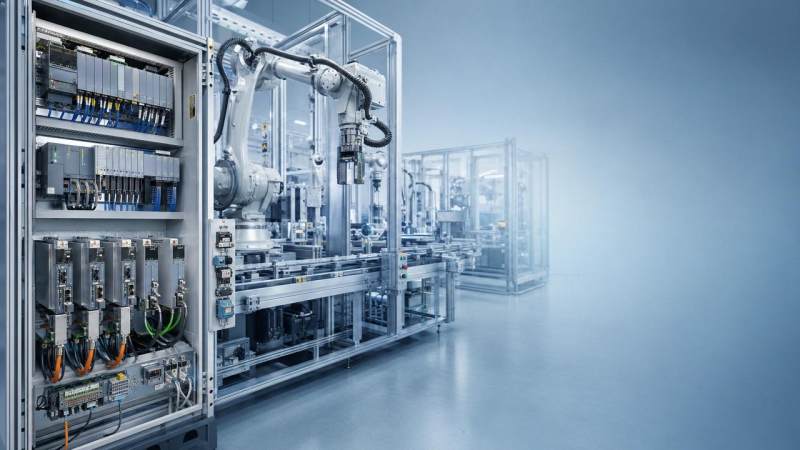
For after-sales maintenance teams, choosing the right industrial automation manufacturer can be the difference between fast recovery and costly production downtime. From spare parts availability to control system compatibility and long-term service support, every decision affects reliability on the factory floor. Understanding how manufacturer selection shapes maintenance efficiency is essential for reducing risk and keeping smart production lines running without interruption.
Why manufacturer selection has become a downtime issue, not just a purchasing issue
A clear shift is taking place across smart manufacturing. In the past, many factories evaluated automation suppliers mainly by upfront price, delivery speed, and basic performance. Today, that logic is changing. As production lines become more connected, software-dependent, and data-driven, the choice of an industrial automation manufacturer now has direct consequences for maintenance speed, spare part continuity, cybersecurity patching, and cross-platform troubleshooting.
For after-sales maintenance personnel, this change is highly practical. Downtime no longer comes only from mechanical wear. It increasingly comes from firmware mismatch, controller incompatibility, delayed remote support, obsolete communication modules, and poor documentation. In this environment, the wrong industrial automation manufacturer can create hidden service risks long after installation is complete.
This trend matters across sectors because modern factories rely on integrated ecosystems: robots, PLCs, HMIs, drives, sensors, MES connectivity, pneumatic units, and safety systems must all work together. When the manufacturer behind one critical layer cannot support fast diagnosis or stable lifecycle supply, the maintenance team inherits the complexity.
The main trend signals maintenance teams should not ignore
Several market signals explain why industrial automation manufacturer selection is receiving more attention from technical service teams and production leaders.
- Production lines are becoming more modular, but not always more interoperable.
- Spare part lead times remain unstable in many regions, especially for specialized controllers, servo components, and communication boards.
- Remote maintenance is expanding, which makes software access, diagnostic tools, and user permission design more important.
- Lifecycle expectations are rising; factories want longer service availability, not just initial commissioning support.
- Compliance pressure is increasing, especially where CE, ISO, IEC, and safety integration affect upgrades or replacements.
For maintenance teams, these are not abstract developments. They shape how quickly faults can be isolated, how easily replacement units can be installed, and whether a line can recover within hours instead of days.
What is driving this shift in the industrial automation manufacturer landscape
The move toward closer scrutiny of the industrial automation manufacturer is being driven by both technology and operations. First, equipment architecture is no longer isolated. A fault in one drive, edge gateway, or PLC module can affect data collection, machine coordination, safety logic, and ERP-linked reporting. This increases the operational cost of weak support ecosystems.
Second, maintenance is under pressure to do more with less. Many plants are trying to reduce unplanned downtime while operating with lean technical teams. That means maintainability, standardization, and vendor responsiveness have become strategic priorities. A manufacturer that offers clear manuals, backward compatibility, fast shipment, and remote engineering support can reduce the burden on internal teams.
Third, digital transformation has changed expectations. A line is no longer judged only by output; it is judged by visibility, traceability, and recovery speed. If a manufacturer cannot support event logging, predictive alerts, software backups, and secure diagnostics, maintenance teams lose valuable time during failure events.
How different maintenance scenarios are affected by manufacturer selection
Not all downtime events are equal, and the impact of manufacturer choice varies by service scenario. However, the pattern is consistent: stronger vendors reduce uncertainty during recovery.
Emergency fault response
During a line stop, the best industrial automation manufacturer is often the one that enables diagnosis in minutes, not hours. Access to wiring data, alarm code libraries, parameter files, and 24/7 support can determine whether a team performs a board-level replacement, a software rollback, or a full module swap. Weak vendor ecosystems force technicians into trial-and-error repair.
Preventive maintenance planning
Preventive maintenance is increasingly shaped by the availability of condition data and lifecycle notices. Manufacturers that provide service bulletins, health monitoring tools, and end-of-life warnings help teams plan interventions before failures escalate. This is especially valuable for servo systems, robotic joints, valves, and control components that can degrade gradually.
Retrofit and line expansion
When factories retrofit older assets or add new stations, compatibility becomes a hidden downtime risk. A capable industrial automation manufacturer supports migration paths, adapter modules, protocol conversion, and engineering guidance. Without that support, maintenance teams often struggle with mixed-generation hardware that is difficult to diagnose and standardize.
The strongest signals of a maintenance-friendly industrial automation manufacturer
For after-sales service teams, manufacturer evaluation should move beyond catalog performance. The following signals deserve close attention because they directly affect uptime resilience.
- Stable global spare parts network with realistic lead-time visibility
- Consistent firmware management and clear upgrade procedures
- Readable technical documentation, alarm libraries, and wiring references
- Cross-platform compatibility with common PLC, motion, and IIoT environments
- Remote support tools that are secure, practical, and usable during emergencies
- Long-term lifecycle planning, including replacement maps and end-of-support communication
- Training resources that reduce dependence on one expert technician
These points are becoming more important as factories pursue smart manufacturing but still depend on fast physical recovery when failures happen. In other words, digital ambition does not eliminate the importance of basic maintainability; it makes it more critical.
Who feels the impact most across the factory organization
The consequences of industrial automation manufacturer selection do not stop with maintenance technicians. The effects spread across several operational roles.
How to judge future-fit manufacturers as the market keeps evolving
Looking ahead, maintenance teams should expect the industrial automation manufacturer market to keep separating into two groups: vendors that sell components, and vendors that support recoverable production systems. The second group will become more valuable as factories depend on higher uptime, multi-site standardization, and software-connected assets.
A practical way to judge future readiness is to ask whether a supplier improves the full maintenance chain. Can technicians identify faults quickly? Can parts be sourced locally or through regional hubs? Are parameter backups easy to restore? Does the vendor help with legacy migration? Are software tools usable without excessive licensing or specialist intervention? These questions reflect where the market is moving.
Another important signal is openness without chaos. Factories increasingly prefer solutions that integrate with broader control and data environments, but they still need stable support boundaries. A strong industrial automation manufacturer balances interoperability with disciplined documentation, tested update paths, and accountability during service events.
Recommended actions for after-sales maintenance teams now
Maintenance teams do not need to wait for the next major upgrade to act. They can start by mapping current downtime causes against manufacturer-related risk factors. This often reveals that recurring service delays are tied not only to machine condition, but also to weak vendor support structures.
- Audit critical assets by manufacturer, model age, firmware status, and spare part availability.
- Identify which vendors provide clear escalation paths during urgent failures.
- Standardize backup practices for PLC programs, drive parameters, robot data, and HMI projects.
- Review whether mixed-brand lines create recurring compatibility delays.
- Add serviceability criteria to supplier scorecards, not just purchase price and performance.
- Track lifecycle notices to avoid emergency replacement under obsolete conditions.
These steps help transform manufacturer selection from a one-time sourcing decision into an ongoing uptime strategy.
Key questions worth confirming before the next supplier decision
If a factory wants to understand how industrial automation manufacturer selection may affect its own downtime exposure, several questions deserve priority. How long would it take to replace the most failure-prone control or motion components? Which systems depend on proprietary software access? Which vendors support backward-compatible replacements? Which platforms have the best documentation for night-shift troubleshooting? Where are the single points of service dependency?
The trend is clear: manufacturer choice is no longer a background procurement detail. It is a frontline reliability decision. For after-sales maintenance teams, the most resilient factories will be those that select an industrial automation manufacturer not only for equipment capability, but for long-term recoverability, compatibility, and service depth. If companies want to reduce future downtime risk, they should start by testing whether their current suppliers are truly helping the maintenance team restore production faster, safer, and with fewer unknowns.
Recommended News
- 2026/06/21Smart Watches Buying Guide: How to Compare Health Sensors, Battery Life, and OSSmart watches buying guide: compare health sensors, battery life, and OS compatibility to find a model that fits your routine, delivers reliable insights, and feels smarter every day.
- 2026/06/21Custom Components vs Standard Parts: How to Decide for Cost, Lead Time, and FitCustom components or standard parts? Learn how to compare cost, lead time, fit, maintenance, and lifecycle risk to make smarter automation decisions with confidence.
- 2026/06/21RV Components Explained: Which Parts Affect Safety, Power, and Water Systems Most?RV Components shape safety, power, and water reliability more than most owners expect. Learn which parts matter most, avoid costly failures, and upgrade smarter.