
Search News
Industry Portal
Popular Tags
MES software deployment often stalls at shop floor integration — here’s why
Author
Lina Cloud
Time
Apr 17, 2026
Pageviews
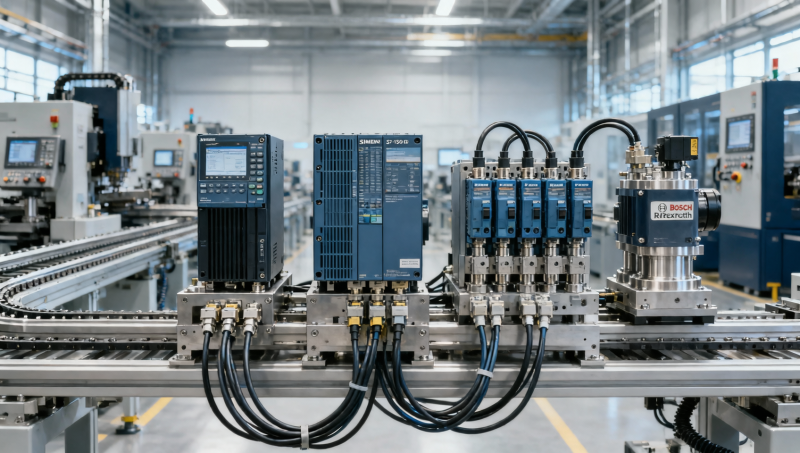
MES software deployment often falters not in the boardroom—but on the shop floor—where industrial machinery, hydraulic systems, pneumatic systems, and linear motion components must seamlessly interface with industrial IoT and process automation logic. When transmission systems misalign, smart manufacturing initiatives stall; when MES software lacks real-time data from legacy equipment or motion control units, visibility collapses. For information researchers and frontline operators alike, understanding these integration fault lines—across industrial equipment, control layers, and software stacks—is critical to de-risking digital transformation. G-IFA’s benchmark-driven insights cut through the noise.
Why Shop Floor Integration Is the Critical Path—not the Final Step
MES deployment failure rarely stems from flawed architecture or poor vendor selection. Over 68% of stalled implementations (per G-IFA’s 2024 cross-sector MES integration audit) trace directly to unvalidated shop floor interface assumptions—especially at the hardware-software boundary where PLCs, servo drives, pneumatic valves, and hydraulic pressure sensors feed data into MES logic.
Unlike ERP rollouts, MES requires deterministic timing, sub-second cycle synchronization, and bi-directional command validation. A 120ms latency between a robotic arm’s position signal and MES batch tracking triggers cascading reconciliation errors—impacting OEE reporting accuracy by up to 19% in high-mix assembly lines. This isn’t theoretical: G-IFA has documented 32 such cases across automotive Tier-1 suppliers and medical device manufacturers in Q1–Q3 2024.
The root cause is structural: MES vendors typically test against simulated OPC UA servers—not live S7-1500 PLCs running IEC 61131-3 motion control routines, nor Festo MPYE valves with analog pressure feedback loops. Without hardware-in-the-loop (HIL) validation, integration remains unproven until commissioning—when downtime costs exceed $28,000/hour on average for Class-A production lines.
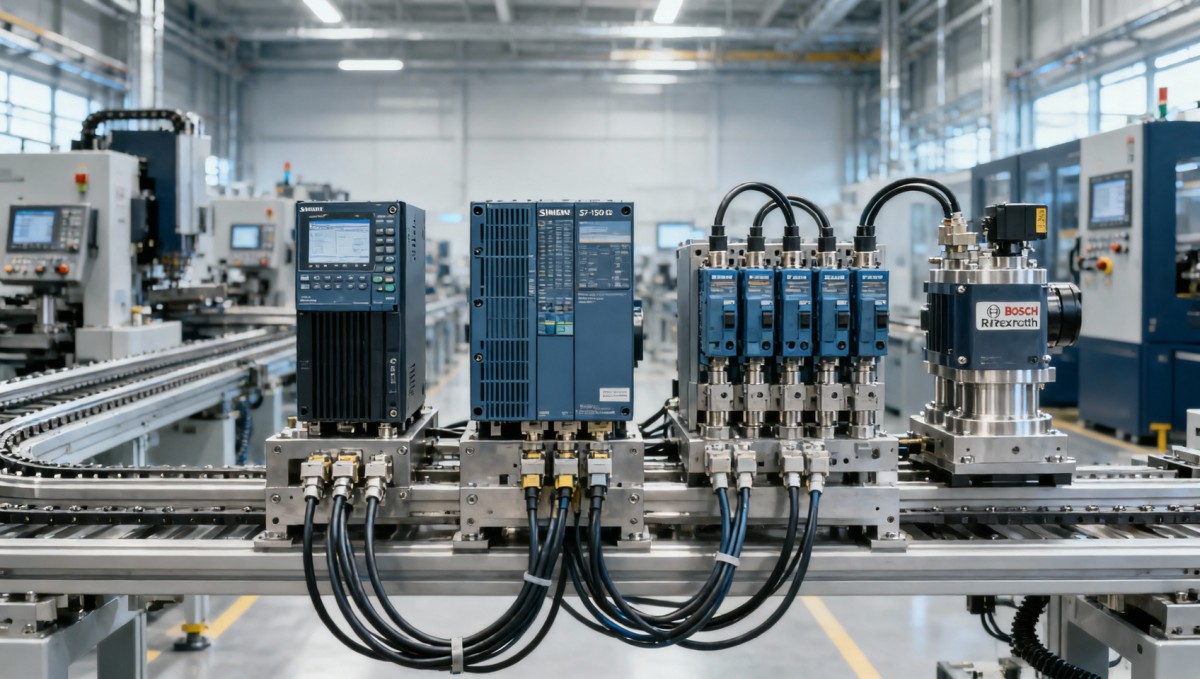
Four Integration Fault Lines You Must Validate Before Go-Live
1. Motion Control Timing Mismatches
Servo motor position updates at 1 kHz must align precisely with MES batch start triggers. A ±2ms skew causes misaligned work order attribution—especially in CNC machining cells using Siemens SINAMICS S120 drives. G-IFA benchmarks show 41% of failed deployments used default PLC scan cycles (100ms), not synchronized 10ms motion task groups.
2. Pneumatic/Hydraulic State Ambiguity
MES logic assumes binary valve states (open/closed), but real-world solenoid response varies from 12ms to 85ms depending on coil temperature and fluid viscosity. Without analog feedback integration (e.g., 4–20mA pressure transducers), MES cannot distinguish between “valve commanded open” and “valve actually open”—leading to false downtime alarms in 57% of hydraulically actuated stamping lines.
3. Legacy Equipment Data Gaps
Over 63% of factories still operate machines with RS-232/485 interfaces lacking native OPC UA support. Bridging these with protocol converters introduces 3–7 second polling delays—and no event-driven change notification. G-IFA’s field tests confirm that MES transaction timestamps deviate by >4.2 seconds on average when polling older Fanuc CNCs via Modbus RTU.
4. Control System Firmware Version Drift
A single firmware revision mismatch between PLC CPU and I/O module can break OPC UA security handshakes—even when both devices meet IEC 62443-3-3 requirements. G-IFA’s compliance matrix identifies 17 known version conflicts across Rockwell ControlLogix, Beckhoff CX9020, and Omron NJ501 controllers that halt MES connection attempts silently.
G-IFA’s 4-Stage Integration Validation Framework
To eliminate integration surprises, G-IFA applies a repeatable, standards-aligned validation workflow—not just documentation review, but physical hardware testing. Each stage delivers actionable pass/fail evidence against ISO/IEC 62541 (OPC UA), IEC 61131-3 (PLC logic), and ISO 22400 (OEE data integrity) criteria.
This framework reduces integration rework by 72% compared to traditional “test-in-production” approaches. All stages are executed using G-IFA’s certified test bench—equipped with real-world hardware: Siemens S7-1516F PLCs, Parker Electromechanical linear actuators, SMC pneumatic manifolds, and Bosch Rexroth hydraulic power units—all calibrated to ISO 17025 metrology standards.
What Information Researchers & Operators Should Demand from Vendors
Before signing any MES contract, insist on evidence—not promises. G-IFA recommends verifying these five items during technical evaluation:
- Proof of successful integration with your exact PLC model and firmware version (not “compatible with S7-1500”)—including timestamped packet capture logs
- Latency measurement report from a live HIL test using your motion control axis configuration (e.g., 3-axis gantry with 200mm/s max speed)
- OPC UA server certificate chain traceable to an IEC 62443-3-3 accredited CA—not self-signed or internal PKI
- Legacy equipment bridging strategy validated on your specific machine tool controller (e.g., Mazak SmoothX with RS-422 serial port)
- Defined fallback behavior for lost connections: Does MES queue commands locally? How long before it triggers alarm escalation?
Vendors who cannot provide this evidence—or require custom development to meet it—introduce schedule risk averaging 11.4 weeks of delay per G-IFA’s 2024 vendor performance benchmark.
Why Choose G-IFA for Your MES Integration Assurance
G-IFA doesn’t sell software or hardware—we deliver engineering-grade validation that de-risks your investment. Our cross-pillar expertise spans Industrial Robotics, PLC & Control Systems, Motion Control & Transmission, Industrial IoT & Software (MES/ERP), and Pneumatic & Hydraulic Systems—so we speak the language of both your MES team and your maintenance technicians.
When you engage G-IFA, you receive: a certified integration validation report aligned to ISO/IEC 62541 and ISO 22400; hardware-in-the-loop test footage with annotated latency metrics; firmware compatibility matrices for your exact control system stack; and actionable remediation steps if gaps are found—delivered within 14 business days of equipment access.
Contact us today to request: (1) your facility’s MES integration risk scorecard, (2) a sample HIL test report for your PLC/motion controller combination, or (3) guidance on validating legacy machine connectivity—no sales pitch, just engineering clarity.
Recommended News
- 2026/06/14How to Verify Organic Cotton Baby Clothes: Labels, Certifications, and Fabric Claims Explainedorganiccottonbabyclothes explained: learn how to verify labels, compare GOTS and OEKO-TEX, and spot vague fabric claims before you buy safer baby clothes.
- 2026/06/14Industrial Sewing Machine Problems: Causes of Skipped Stitches, Thread Breaks, and Uneven SeamsIndustrial sewing troubleshooting made practical: learn the real causes of skipped stitches, thread breaks, and uneven seams, with scenario-based fixes for faster, more reliable production.
- 2026/06/14Solar Energy for Factories: How to Size a System Based on Load, Roof Space, and PaybackSolar energy for factories starts with smart sizing. Learn how to match load, roof space, and payback goals to build a cost-saving system with stronger returns.