
Search News
Industry Portal
Popular Tags
Common Quality Gaps in Linear Guide Rail Wholesale Supply
Author
Marcus Torque
Time
Apr 29, 2026
Pageviews
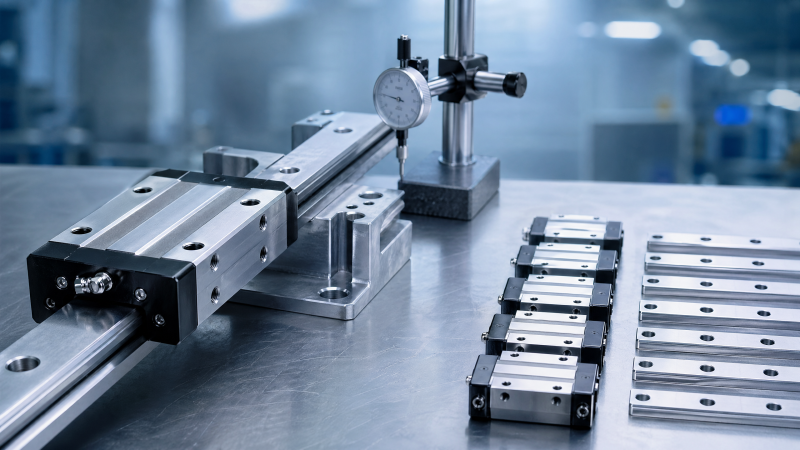
In linear guide rail wholesale, small quality gaps can trigger major risks for safety managers and quality teams—from premature wear and poor load accuracy to costly downtime and compliance issues. Understanding where suppliers commonly fall short helps buyers screen products more effectively, reduce hidden defects, and protect automation performance across demanding industrial applications.
Where do the most common quality gaps appear in linear guide rail wholesale?
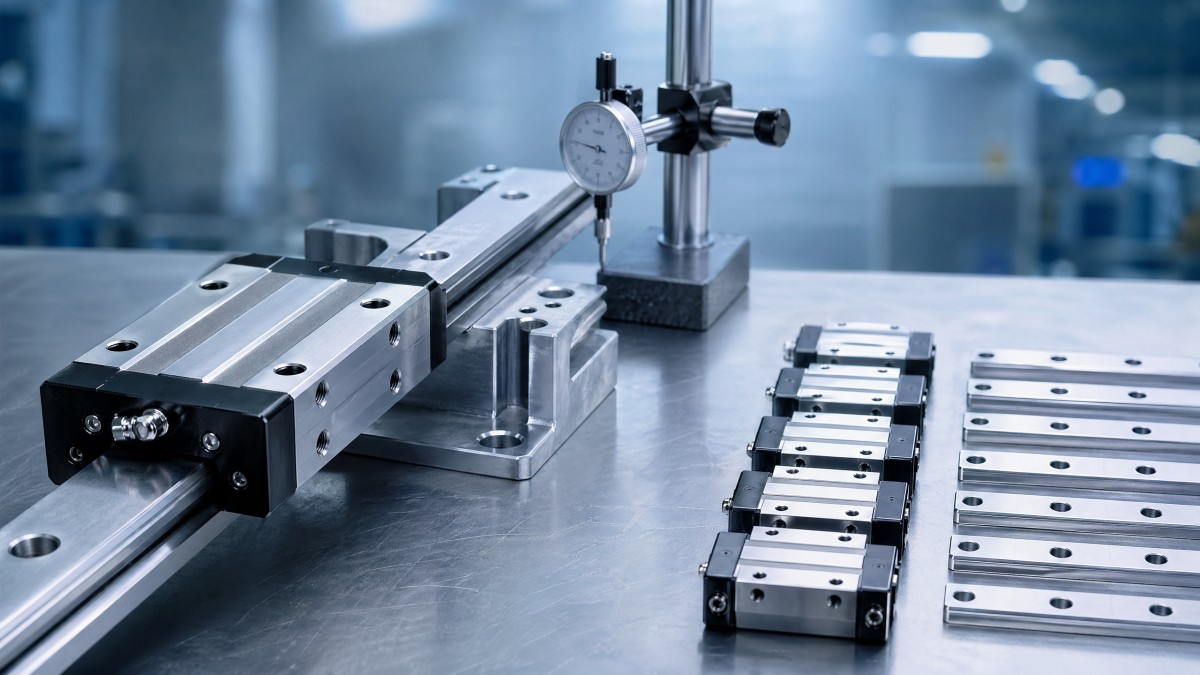
For quality control and safety managers, linear guide rail wholesale is not only a sourcing activity. It is a risk control task that affects repeatability, machine guarding behavior, positioning stability, and maintenance frequency across automated lines. In mixed-industry environments such as packaging, electronics, material handling, CNC integration, and robotic transfer, even a small deviation in rail straightness or block preload can create cumulative performance loss within 3 to 12 months of operation.
The most common quality gaps usually do not show up in a basic visual inspection. They appear in dimensional consistency, heat treatment stability, raceway finish, lubrication path design, sealing performance, and document traceability. In linear guide rail wholesale, these weak points often stay hidden until the rail enters continuous-duty service, especially under high cycle rates, dust exposure, vibration, or variable loads.
From a broader industrial automation perspective, G-IFA evaluates motion control and transmission products through the same logic used in smart factory benchmarking: measurable hardware integrity, application suitability, and alignment with international engineering expectations such as ISO, IEC, and CE-related compliance workflows. That matters because a guide rail is rarely an isolated part. It works inside a larger system involving servo tuning, PLC control, safety interlocks, and mechanical repeatability.
A practical way to assess linear guide rail wholesale supply is to divide risk into 5 core areas: material quality, machining precision, assembly consistency, inspection transparency, and after-sales accountability. If a supplier cannot clearly explain these 5 areas with records, tolerances, and process logic, the buyer is likely carrying more operational risk than the initial unit price suggests.
Typical hidden defects that pass entry inspection
- Micro-level raceway roughness variation that increases friction and shortens rolling element life during continuous travel.
- Inconsistent hardness depth after heat treatment, causing localized wear under medium or heavy loads.
- Rail-hole positional deviation that complicates installation alignment and introduces stress during fastening.
- Poor sealing design that allows coolant, dust, or fine metal particles into the block under high-frequency motion.
- Insufficient lot traceability, making root-cause analysis difficult when field failures emerge after 6 to 18 weeks.
For wholesale buyers managing multiple machine builds, these defects create a multiplier effect. One unstable lot can affect several OEM assemblies, spare parts inventories, and warranty obligations at the same time. That is why quality gaps in linear guide rail wholesale should be treated as system risks, not component-only issues.
How should quality teams compare suppliers beyond price?
Price-driven purchasing often masks the real cost drivers in linear guide rail wholesale. Two suppliers may quote similar dimensions and nominal load ratings, yet their performance diverges sharply in preload stability, running noise, corrosion resistance, and field life. For procurement teams supporting safety and uptime goals, comparison should focus on verifiable control points rather than catalog language.
A structured supplier comparison usually starts with 4 questions. First, how consistent is the production lot? Second, what inspection records are available before shipment? Third, does the supplier define application limits such as speed, lubrication interval, and contamination sensitivity? Fourth, how quickly can nonconformance cases be contained within 24 to 72 hours? These questions reveal whether the supplier understands industrial operating reality.
The table below helps quality and safety teams compare linear guide rail wholesale suppliers using practical B2B evaluation criteria. It is especially useful when sourcing for automation projects with 2 to 4 week assembly windows and limited tolerance for replacement delays.
This comparison shows why linear guide rail wholesale should be reviewed as a process capability question, not a one-time price event. A supplier with stronger lot control often reduces rework, alignment issues, and emergency replacement costs, which can outweigh a modest unit-price difference over a 6 to 24 month operating horizon.
Three comparison signals that deserve extra attention
First, watch for vague language around load capacity. A catalog rating without clear mounting conditions, stroke behavior, or lubrication assumptions does not give quality teams enough basis for risk approval. Second, review packaging and corrosion prevention. Long-distance wholesale shipping can expose rails to humidity and handling damage over 7 to 30 days. Third, confirm whether rails and blocks are managed as matched assemblies or mixed after production, because mismatch increases noise and wear risk.
For cross-border industrial procurement, G-IFA’s benchmarking mindset is valuable because it filters technical claims through use-case logic. That helps procurement and safety leaders avoid a common trap in linear guide rail wholesale: approving a part that looks acceptable on paper but performs inconsistently once integrated into robotics, transfer modules, or precision handling equipment.
What technical checks matter most before placing a linear guide rail wholesale order?
Before issuing a wholesale order, quality teams should move from generic specification review to application-fit verification. In practical terms, that means checking not only nominal rail size but also preload class, mounting reference quality, environmental sealing needs, lubrication access, and expected duty cycle. For many automation lines, these 5 checks determine whether the component will run smoothly for years or fail early under real production conditions.
Typical industrial scenarios vary widely. A clean electronics assembly cell may prioritize low friction and stable precision. A packaging line may require high-speed travel with frequent starts and stops. A machining or metal-cutting cell may place more emphasis on chip resistance, sealing, and relubrication discipline. In linear guide rail wholesale, a supplier that cannot map product characteristics to these scenarios is offering limited real engineering support.
The following table provides a useful pre-purchase screening framework for safety managers and quality engineers reviewing linear guide rail wholesale options across general industrial applications.
These checks are particularly important when projects involve multiple machines or repeated procurement lots. A single mismatch in preload behavior or sealing design can spread into recurrent maintenance events every few weeks, especially in high-cycle systems operating 16 to 24 hours per day.
A practical 4-step pre-approval workflow
- Define the application window: load direction, speed range, contamination level, and expected runtime.
- Request technical confirmation: preload, sealing, lubrication path, and material process explanation.
- Validate a sample or pilot lot: installation fit, running smoothness, and document traceability.
- Approve the release plan: packaging, lead time, lot identification, and corrective action pathway.
This workflow keeps linear guide rail wholesale aligned with broader factory risk management. It also supports safer integration with servo systems, actuators, and other motion hardware that depend on consistent mechanical guidance.
Which standards, documentation, and compliance details should buyers request?
In industrial procurement, compliance is not limited to a certificate file. For linear guide rail wholesale, buyers should request documentation that supports product identification, dimensional consistency, and process accountability. This is especially important when the rail will be used in automated equipment that later enters CE-related machine documentation, internal validation records, or customer audits.
A disciplined supplier should be able to support at least 3 documentation layers: product identification, inspection evidence, and issue-handling process. Depending on application risk, buyers may also ask for material information, corrosion protection details, packing specifications for 7 to 30 day transit, and storage recommendations for warehouse periods of several weeks or months.
G-IFA’s role as a technical filter is useful here because it connects mechanical components with broader system compliance expectations. In practice, a linear motion component affects machine accuracy, repeatability, and maintenance safety. That means weak documentation can become a problem not only for procurement, but also for installation validation and incident investigation.
What to request before approving shipment
- Lot or batch identification linking rails, blocks, and shipment records.
- Inspection items covering critical dimensions, visual condition, and assembly matching status.
- Basic handling and storage instructions, especially for corrosion-sensitive environments.
- Clear process for nonconformance reporting, sample return, and replacement timing.
Common compliance misconception
A frequent mistake in linear guide rail wholesale is assuming that general statements such as “produced to international standards” are enough. For quality teams, that is too broad. What matters is whether the supplier can show how the product was controlled, how it is identified, and how deviations are handled. Compliance without traceable process detail offers limited protection when a field issue appears.
As a rule, documentation review should happen before mass release, not after installation. Waiting until a line stops can turn a manageable quality concern into a production disruption that affects maintenance plans, operator schedules, and customer delivery commitments.
FAQ: what do buyers ask most about linear guide rail wholesale risk?
How can we judge whether a low quote is too risky?
Compare more than unit cost. Review 5 items: inspection scope, traceability, sealing suitability, preload consistency, and complaint response time. If these areas are unclear, the low price may simply shift cost into rework, replacement, and downtime. In many wholesale projects, a delay of even 2 to 5 days can disrupt machine assembly schedules and increase total project cost well beyond the original price gap.
What delivery details should safety and quality teams verify?
Confirm shipment protection, anti-corrosion measures, labeling accuracy, and whether rails and blocks arrive as matched sets. For imported linear guide rail wholesale orders, transport can involve 1 to 3 handling transfers before final receipt. Poor packaging may create dents, contamination, or identification loss before the product even reaches incoming inspection.
Are sample tests necessary before wholesale purchase?
For standard low-risk applications, documentation plus supplier verification may be enough. For high-cycle automation, precision handling, or contaminated environments, a sample or pilot lot is strongly recommended. Even a short validation period can reveal installation fit, running smoothness, and sealing behavior that is difficult to judge from drawings alone.
Which departments should join the evaluation?
The strongest linear guide rail wholesale decisions usually involve 4 roles: procurement, quality, mechanical engineering, and maintenance or safety oversight. Procurement manages lead time and commercial terms. Quality checks traceability and consistency. Engineering verifies fit and performance. Maintenance or safety teams assess accessibility, failure impact, and operational exposure during long production cycles.
Why choose G-IFA when evaluating linear guide rail wholesale supply?
G-IFA supports buyers who need more than a catalog comparison. In Industry 4.0 environments, motion components must be judged in relation to the full automation stack: industrial robotics, PLC and control systems, motion transmission, industrial software, and fluid power support systems. This cross-sector view helps quality and safety teams identify whether a guide rail supplier fits the real operating logic of the line.
Our value lies in technical filtering and benchmark-oriented evaluation. Instead of treating linear guide rail wholesale as a simple parts transaction, we help decision-makers review application risk, documentation depth, typical compliance expectations, and integration impact. That is especially useful for production directors, system integrators, and quality teams trying to reduce uncertainty before issuing repeat orders or approving alternative suppliers.
If you are reviewing linear guide rail wholesale options, you can contact G-IFA for targeted support on 6 practical topics: parameter confirmation, preload and application matching, delivery cycle expectations, customization feasibility, documentation and certification alignment, and sample-based verification planning. This is valuable when you need to compare suppliers quickly but still protect uptime, safety, and long-term maintenance control.
Share your operating scenario, required rail size, environmental conditions, expected runtime, and project schedule. We can help you structure a clearer evaluation path before purchase, whether your priority is quotation review, risk screening, replacement strategy, or a more reliable sourcing framework for future automation projects.
Recommended News
- 2026/06/21Smart Watches Buying Guide: How to Compare Health Sensors, Battery Life, and OSSmart watches buying guide: compare health sensors, battery life, and OS compatibility to find a model that fits your routine, delivers reliable insights, and feels smarter every day.
- 2026/06/21Custom Components vs Standard Parts: How to Decide for Cost, Lead Time, and FitCustom components or standard parts? Learn how to compare cost, lead time, fit, maintenance, and lifecycle risk to make smarter automation decisions with confidence.
- 2026/06/21RV Components Explained: Which Parts Affect Safety, Power, and Water Systems Most?RV Components shape safety, power, and water reliability more than most owners expect. Learn which parts matter most, avoid costly failures, and upgrade smarter.