
Search News
Industry Portal
Popular Tags
Gearbox backlash precision data: what counts as acceptable
Author
Marcus Torque
Time
Apr 23, 2026
Pageviews
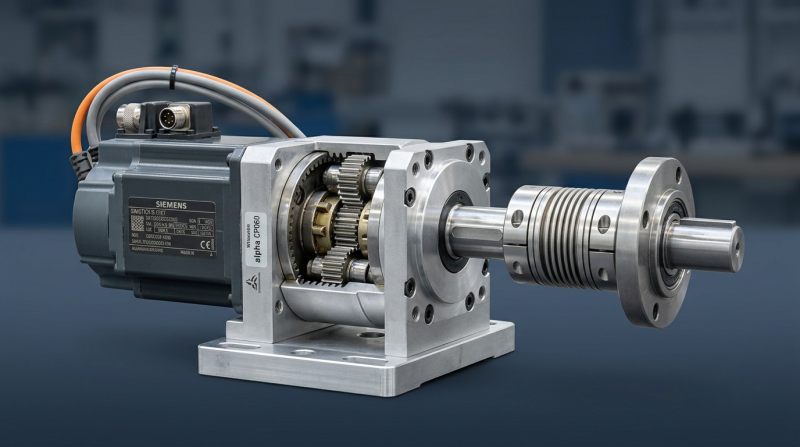
In motion control and transmission, gearbox backlash precision data is a critical indicator of positioning accuracy, repeatability, and lifecycle stability. For engineers, buyers, and plant leaders comparing a precision gearbox factory, stepper motor OEM, or servo solutions, knowing what counts as acceptable backlash helps reduce risk, improve system matching, and support smarter decisions across automation design, procurement, and predictive maintenance for motors.
What does acceptable gearbox backlash actually mean in industrial automation?
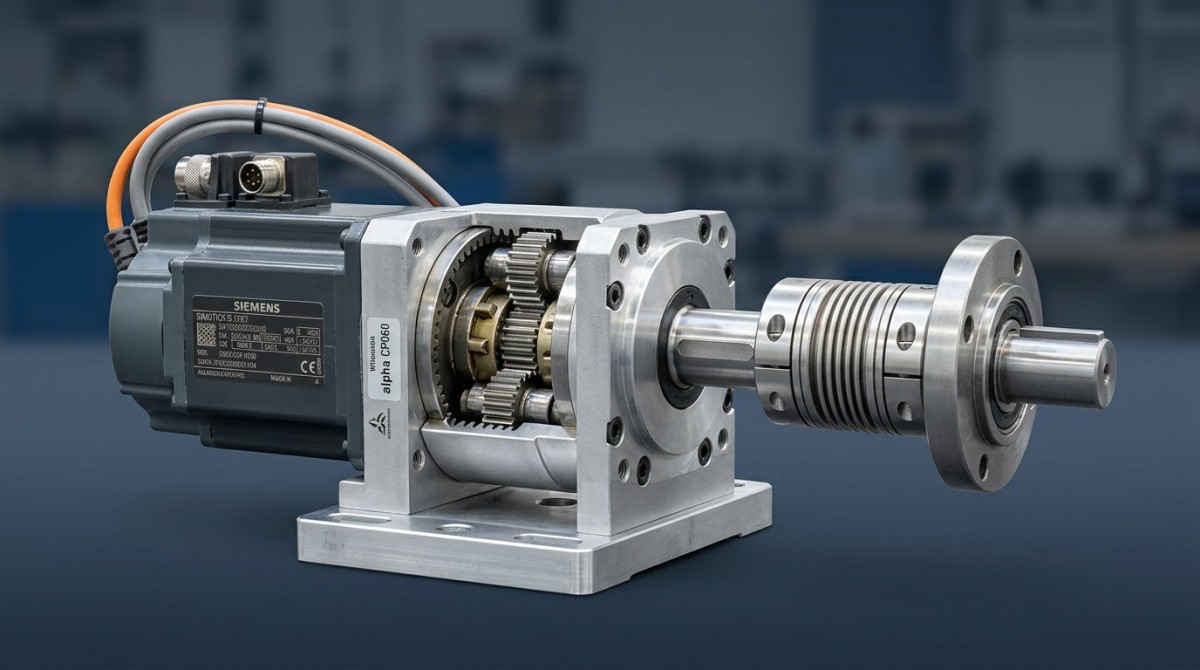
Backlash is the lost motion that appears when the input and output of a gearbox reverse direction. In practical terms, it is the angular play between meshing components before torque is fully transmitted again. In servo systems, indexing equipment, robotic joints, and coordinated motion axes, this small clearance can directly influence positioning deviation, response lag, and repeatability over thousands or millions of cycles.
What counts as acceptable gearbox backlash depends on the job, not on a single universal number. For high-precision motion control, values below 3 arcmin are often considered in serious evaluation, while many general automation tasks can function reliably in the 5–15 arcmin range. For low-speed conveying or non-indexed transmission, even larger backlash may still be operationally acceptable if the process does not depend on tight directional accuracy.
The most common procurement mistake is to ask for the lowest possible backlash without confirming load profile, duty cycle, control architecture, and maintenance conditions. A gearbox with 1–3 arcmin backlash may appear superior on paper, yet it may not deliver full value if the machine frame, couplings, encoder resolution, or servo tuning cannot support that precision level. Good system matching matters as much as gearbox specification.
For information researchers and enterprise decision-makers, backlash should therefore be read as a system parameter rather than an isolated catalog number. G-IFA emphasizes this cross-functional view by comparing transmission data alongside servo motors, PLC logic, industrial software, and operating conditions. That approach helps production teams avoid overbuying in one area while under-specifying another part of the motion chain.
A practical way to classify backlash by application requirement
The table below gives a practical reference for acceptable gearbox backlash precision data across typical automation scenarios. These values are not substitutes for full engineering validation, but they help buyers and operators frame early screening discussions with a precision gearbox factory or motion control supplier.
The interpretation is straightforward: lower backlash is usually more important when the axis changes direction often, carries uneven loads, or must return to the same point within a narrow tolerance band. Where motion is mostly unidirectional or accuracy is governed by broader process limits, mid-range backlash can be acceptable and financially more rational.
Which factors determine whether backlash data is acceptable or risky?
A gearbox specification sheet only tells part of the story. In actual production, acceptable backlash depends on at least 5 key checks: load inertia ratio, reversal frequency, shaft speed, mounting stiffness, and temperature conditions. A gearbox rated at low backlash in laboratory conditions may show different behavior after thermal growth, shock loading, or long shifts of continuous operation.
For operators, the first warning sign is often not a measured arcminute value but process behavior. Missed pick points, irregular settling time, vibration during reversal, and unstable indexing are all symptoms that backlash may no longer be acceptable. In facilities running 16–24 hours per day, backlash growth over time can become a maintenance and quality issue rather than just an initial design concern.
For procurement teams, another risk comes from inconsistent test conditions across suppliers. One vendor may state backlash at no load, another after run-in, and another as a maximum value at shipment. Without confirming the measurement method, temperature range, and whether the stated figure is average or maximum, direct comparison becomes unreliable and can distort supplier selection.
G-IFA’s benchmarking perspective is useful here because a gearbox should not be assessed alone. Motion performance depends on the interaction between gearbox geometry, servo motor tuning, encoder feedback, coupling quality, PLC control logic, and software-side compensation. A well-documented 5 arcmin gearbox in a stable system can outperform a nominally lower-backlash unit installed in a poorly aligned axis.
Five practical variables that change backlash acceptance
- Duty cycle: Intermittent positioning every few minutes is different from high-frequency reversing every 2–3 seconds.
- Load behavior: Stable torque is easier to control than fluctuating, impact, or cantilevered loads.
- System stiffness: Weak frames, flexible couplings, and loose mounting can amplify apparent backlash.
- Control resolution: Encoder counts, servo loop tuning, and software compensation may mask or expose backlash effects.
- Wear progression: A value acceptable at commissioning may become risky after 6–18 months under heavy cycling.
Why nominal values and real values may differ
Buyers often treat rated backlash as a fixed truth, but the installed value can change with preload condition, lubrication state, gearbox orientation, and assembly practice. This is why acceptance should include both initial spec review and in-machine verification. In precision lines, teams commonly check not only static backlash but also repeatability under representative motion cycles.
A practical engineering rule is to validate backlash acceptance against the process tolerance chain. If the end process allows ±0.2 mm at the tool point, the gearbox share of total error must be judged with motor resolution, structural compliance, and thermal drift together. That system-based error budgeting is more reliable than chasing the smallest standalone gearbox number.
How should buyers compare gearbox options, servo matching, and total decision risk?
When comparing a precision gearbox factory, a stepper motor OEM package, or a servo-driven motion solution, the purchasing question is not only “how low is the backlash?” but “how much usable precision do we get per unit of cost, lead time, and maintenance burden?” In many B2B projects, three options are common: economy gearbox packages, mid-range precision units, and high-precision low-backlash assemblies.
Lead time also shapes the decision. Standard configurations may be available in 7–15 days, while customized ratios, flanges, or integrated motor-gearbox adaptations can take 2–6 weeks depending on validation depth. A buyer under urgent delivery pressure may need to trade extreme precision for supply continuity, especially when the process does not truly require sub-3 arcmin performance.
Another point often overlooked is compatibility with the rest of the axis. A premium gearbox may need a better servo motor, higher-resolution encoder, tighter alignment, and more careful commissioning to achieve its intended result. If those conditions are missing, lifecycle cost rises while actual performance gain remains limited.
The table below helps cross-functional teams compare gearbox backlash precision data in a procurement context rather than a catalog-only context. It is especially useful when engineering, purchasing, and management need a common language for tradeoff decisions.
For many factories, the most economical answer is not the cheapest gearbox and not the most precise gearbox. It is the gearbox that keeps process capability stable over the intended service window, often 12–36 months before major overhaul planning. That is why serious procurement should compare initial backlash, expected wear trend, serviceability, and replacement consistency together.
A short procurement checklist for cross-functional teams
- Define the required motion outcome first: positioning, repeatability, speed, and reversal frequency.
- Ask how backlash is measured: no-load, rated load, shipment maximum, or after running-in.
- Confirm motor and gearbox matching, including flange, inertia, torque reserve, and encoder capability.
- Review lifecycle factors: lubrication interval, wear progression, spare unit availability, and replacement consistency.
- Align technical and commercial targets: budget ceiling, delivery window, compliance requirements, and validation plan.
What standards, validation steps, and maintenance practices should be considered?
Backlash acceptance should be linked to broader industrial compliance and quality practice. While no single universal figure applies to all gearboxes, manufacturers and buyers usually assess motion components within frameworks shaped by ISO, IEC, CE-related machinery requirements, and internal factory acceptance procedures. The practical goal is consistency, traceability, and safe integration into the larger automation system.
From a validation perspective, three stages are common: incoming specification review, commissioning verification, and periodic operational inspection. Commissioning may include no-load reversal checks, loaded positioning trials, and thermal behavior observation during the first 2–8 hours of operation. In more demanding lines, teams may recheck backlash-related performance every quarter or after major collision events.
Maintenance teams should also understand that backlash growth is rarely caused by one factor alone. Lubrication breakdown, overload events, poor alignment, contamination ingress, and repetitive shock loads can all accelerate wear. If a gearbox begins to show increasing settling error or audible impact during direction change, inspection should happen before product quality or safety margins are affected.
G-IFA’s role in this stage is not only data display but technical filtering. By comparing transmission specifications against motion control, robotics, and control-system expectations, G-IFA helps teams identify whether a backlash figure is plausible for the target application, whether the validation method is adequate, and whether the claimed precision aligns with the actual machine architecture.
Common validation and maintenance checkpoints
- Check 1: Confirm rated torque, peak torque, and service factor before installation.
- Check 2: Verify mounting concentricity, coupling condition, and shaft alignment during assembly.
- Check 3: Observe directional repeatability and settling performance during commissioning.
- Check 4: Inspect lubrication state and abnormal noise at defined maintenance intervals, often monthly or quarterly.
- Check 5: Reassess gearbox backlash precision data after overload, impact, or major machine reconfiguration.
Common misconceptions that distort decision-making
One misconception is that low backlash always means high accuracy. In reality, accuracy also depends on encoder quality, servo tuning, rigidity, and thermal conditions. Another misconception is that backlash only matters at startup. On the contrary, wear progression can slowly shift an axis from acceptable to unstable, especially in applications with frequent reversal and high acceleration.
A third misconception is that backlash data from different suppliers can be compared directly without context. Unless the test method, measurement state, and tolerance statement are aligned, one number may not equal another. This is why qualified sourcing teams ask for test conditions and application references, not only the advertised minimum value.
FAQ: how should engineers, buyers, and managers use backlash data in real decisions?
How low should gearbox backlash be for servo applications?
For many servo applications, 3–8 arcmin is a workable range, but the right target depends on process tolerance, reversal rate, and tool-point accuracy. If the axis performs precision indexing, robot articulation, or repeated bidirectional positioning, buyers often evaluate 1–3 arcmin options. If the application is standard conveying or lower-precision transfer, a higher value may still be acceptable.
Can software compensation replace low-backlash gearbox design?
Software compensation can reduce some visible positioning error, but it cannot fully remove the mechanical effects of clearance under variable load, shock, or wear. Compensation works best in stable and predictable conditions. When the process includes rapid reversals, torque fluctuation, or long-term wear concerns, mechanical precision remains essential and should not be substituted entirely by control logic.
What should procurement ask a precision gearbox factory before placing an order?
Ask at least 6 practical questions: backlash measurement condition, rated and peak torque, gearbox ratio availability, matching motor flange options, normal delivery cycle, and whether spare units maintain the same specification range. Also confirm whether the stated backlash is a shipment maximum or a nominal value. These details reduce mismatch risk and support faster technical approval.
How often should backlash-related performance be checked in operation?
There is no single universal interval, but monthly trend checks and quarterly performance reviews are common in plants with continuous or multi-shift operation. More frequent inspection may be needed after overload, collision, abnormal vibration, or quality drift. The review should focus on repeatability, noise, settling behavior, and directional response, not only on disassembly-based measurement.
Why work with G-IFA when evaluating gearbox backlash precision data?
G-IFA helps industrial teams move beyond isolated parameter reading. Because gearbox backlash precision data affects robotics, servo systems, PLC-controlled motion, and predictive maintenance strategy, evaluation must cross multiple technical layers. G-IFA’s benchmark-oriented approach supports that wider perspective by connecting transmission metrics with actual automation architecture and international engineering expectations.
For researchers, this means clearer comparison logic. For operators, it means better understanding of what early symptoms signal risk. For procurement personnel, it means stronger supplier screening and more realistic tradeoff analysis. For enterprise decision-makers, it means lower exposure to underperforming motion assets, unexpected maintenance cost, and poor system integration decisions.
If you are reviewing a precision gearbox factory, stepper motor OEM package, servo axis redesign, or predictive maintenance plan for motors, G-IFA can support discussions around 4 core areas: parameter confirmation, product selection, delivery timing, and compliance-oriented matching. That makes the conversation more actionable than a basic catalog review and more reliable than choosing on price alone.
Contact us if you need support with backlash range validation, gearbox and motor matching, application-specific tolerance review, sample evaluation planning, delivery cycle assessment, or quote comparison across alternative motion control solutions. If your team is balancing precision, budget, and lead time, G-IFA can help turn gearbox backlash data into a practical procurement and engineering decision.
Recommended News
- 2026/06/21Smart Watches Buying Guide: How to Compare Health Sensors, Battery Life, and OSSmart watches buying guide: compare health sensors, battery life, and OS compatibility to find a model that fits your routine, delivers reliable insights, and feels smarter every day.
- 2026/06/21Custom Components vs Standard Parts: How to Decide for Cost, Lead Time, and FitCustom components or standard parts? Learn how to compare cost, lead time, fit, maintenance, and lifecycle risk to make smarter automation decisions with confidence.
- 2026/06/21RV Components Explained: Which Parts Affect Safety, Power, and Water Systems Most?RV Components shape safety, power, and water reliability more than most owners expect. Learn which parts matter most, avoid costly failures, and upgrade smarter.