
Search News
Industry Portal
Popular Tags
Heavy Payload Robot Arms: What Wholesale Pricing Usually Misses
Author
Dr. Victor Gear
Time
Apr 28, 2026
Pageviews
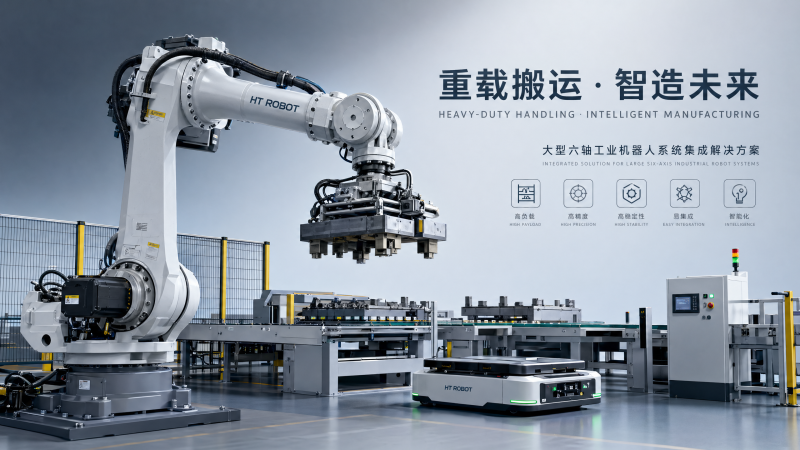
When companies compare heavy payload robot arm offers, the cheapest wholesale quote rarely reflects the real cost of deployment. In practice, the biggest budget gaps usually come from under-specified end-effectors, underestimated integration work, safety architecture, payload derating, floor reinforcement, controller compatibility, and long-term service exposure. For buyers evaluating a wholesale 6 axis robot arm for heavy payload applications, the smart question is not “Which supplier quoted lowest?” but “Which quote most accurately predicts installed performance, uptime, and total lifecycle cost?”
That distinction matters even more in smart manufacturing projects where the robot is only one node in a larger automation system. A heavy payload arm may need to coordinate with AGVs, positioners, welding automation, palletizing cells, PLC platforms, hydraulic fixtures, machine tending stations, or MES-driven production logic. If those dependencies are priced vaguely or omitted entirely, the initial savings can disappear during engineering, commissioning, or the first year of operation.
For procurement teams, plant engineers, operators, and business decision-makers, the goal is to compare offers with technical and commercial clarity. This article explains what wholesale pricing usually misses, where industrial robotics cost actually grows, and how to evaluate heavy payload robot arm proposals with less risk and better investment confidence.
Why a low wholesale price can be the most expensive option
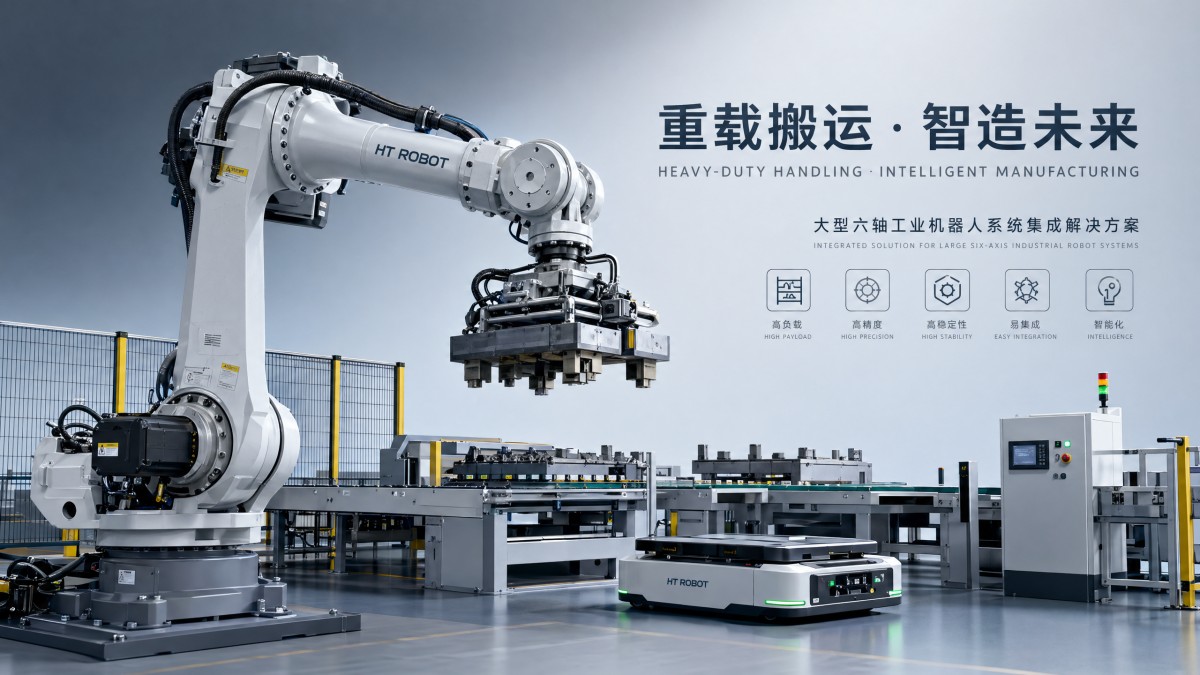
In industrial robotics, the quoted robot body is often just the visible part of a much larger system cost. Many wholesale offers emphasize arm reach, maximum payload, axis count, and headline unit price because those figures are easy to compare. But heavy payload applications are rarely plug-and-play. The moment the robot must lift offset loads, handle irregular parts, integrate with conveyors, or operate in harsh environments, hidden engineering requirements begin to affect the real budget.
One common issue is payload misinterpretation. A robot rated for a certain payload may only achieve that capacity under specific wrist moments, center-of-gravity conditions, and motion profiles. If the end-of-arm tooling is heavy, if the part is unbalanced, or if cycle time targets require aggressive acceleration, the practical payload envelope can shrink. Buyers who compare only the headline payload rating may end up selecting a robot that looks economical on paper but requires process compromises or a larger replacement model later.
Another problem is that some suppliers quote the robot but leave critical system components as optional or undefined. That may include base frames, teach pendants, safety scanners, fencing, cables, dress packs, lubrication systems, grippers, servo positioners, or vision interfaces. In a wholesale context, this structure is not always deceptive; sometimes it reflects standard modular quoting practice. But unless the buyer drives a detailed scope review, procurement can mistake an incomplete quote for a low-cost one.
What buyers actually need to evaluate beyond the robot arm itself
For serious comparison, decision-makers need to think in system layers rather than robot SKU alone. The first layer is application suitability: what exactly will the arm lift, move, weld, stack, machine-load, or position? The second layer is integration: what equipment must communicate with it, what control logic is required, and what takt time must be achieved? The third layer is lifecycle support: how maintainable is the system locally, and what downtime risk does the chosen supplier create?
In heavy payload projects, floor conditions and mechanical installation deserve much more attention than many RFQs give them. Large robot arms can impose significant dynamic loads. Depending on reach, speed, and part weight, the cell may require reinforced concrete, precision anchoring, vibration control, and additional guarding zones. If the quote does not clearly define foundation assumptions, the buyer may discover civil costs late in the project. That is especially important when retrofitting existing plants rather than building new automation cells from scratch.
Electrical and control compatibility also matter. A technically capable arm can still become an expensive choice if it does not fit the plant’s PLC environment, safety protocol, fieldbus standard, or data architecture. Plants that already run Siemens, Beckhoff, Rockwell, Omron, or mixed ecosystems should verify communication support early. The cost impact is not only hardware licensing. It may also affect programming time, fault diagnosis, operator training, and future scalability into MES, traceability, or industrial IoT layers.
Where industrial robotics cost usually expands after the quote stage
The first cost expansion zone is tooling. Heavy payload robot arms often need custom grippers, clamps, magnetic handlers, vacuum systems, or hydraulic end-effectors designed around part geometry, slip risk, and process repeatability. A supplier may provide a placeholder budget, but final tooling often changes after detailed part reviews and trials. If the application involves hot components, oily surfaces, weld spatter, sharp edges, or variable part tolerances, the tooling design can become a major engineering item rather than a minor accessory.
The second expansion zone is integration and commissioning. This includes PLC handshakes, safety validation, motion sequencing, peripheral tuning, offline simulation updates, and operator interface adjustments. In plants where heavy payload robots interact with machine tools, conveyors, AGVs, or SCADA systems, software coordination can take longer than expected. When quotation language says “integration support available if needed,” that often means the largest uncertainty has not yet been priced with precision.
The third zone is throughput tuning after startup. A system may technically run, yet fail to meet the target cycle time, part quality level, or changeover speed. That can lead to additional engineering hours, fixture redesign, path optimization, or hardware upgrades. In welding automation, for example, distortion control, torch access, cable management, and positioner timing can all affect whether the robot cell reaches stable production. In palletizing or material handling, box variability and upstream line inconsistency can create extra work that was invisible in the original wholesale quotation.
Heavy payload applications make specification accuracy far more important
Light-duty automation can sometimes tolerate broad assumptions. Heavy payload automation usually cannot. The larger the robot and the more demanding the process, the greater the penalty for an inaccurate input specification. This is why buyers should be careful with generic sourcing requests that ask only for “best price for 6 axis heavy duty robot arm.” That type of request encourages superficial comparison instead of useful engineering alignment.
A better approach is to define payload including tooling weight, center of gravity, reach requirement, acceleration expectations, duty cycle, installation orientation, environmental conditions, and expected path complexity. If the arm must work around fixtures or in a narrow envelope, the supplier should confirm not just nominal reach but accessible working geometry under real collision constraints. The same principle applies to mounting conditions, cable routing, and maintenance access around the cell.
Hydraulic systems quotation accuracy is another overlooked factor in high-force applications. If hydraulic clamping, lifting, or workholding supports the robot process, buyers should not accept vague “hydraulic package included” language. They need pressure range, valve logic, response time, power unit details, sealing assumptions, safety interlocks, and maintenance responsibilities clearly stated. Unclear hydraulic scope frequently creates disputes between robot supplier, fixture integrator, and plant engineering team during FAT or site commissioning.
How integration with AGVs, welding cells, and upstream equipment changes price reality
Many heavy payload robot projects now sit inside connected automation environments rather than isolated cells. When the arm must receive parts from AGVs, coordinate with machine vision, feed a CNC machine, or interact with welding positioners, the practical system cost shifts from hardware purchase to orchestration quality. A low quote that ignores communication mapping, safety zoning, traffic logic, or process recovery states is not a realistic quote.
AGV integration is a good example. If a mobile platform delivers parts to the robot cell, repeatable docking, payload transfer tolerance, and exception handling become crucial. What happens if the AGV arrives misaligned by a few millimeters? What happens if it is delayed, or if a pallet barcode cannot be read? The robot program may need more sensing, more logic, or a different fixture concept than initially assumed. Those additions affect both lead time and total installed cost.
In welding automation, buyers should also ask whether the quote includes process tuning support, torch cleaning, seam tracking options, welding power source integration, and fume management assumptions. For mixed production lines, quick-change fixturing and offline programming capability may matter more than a minor discount on the robot body. The right measure is not simply capital cost but the cost of achieving repeatable production performance under actual factory conditions.
What procurement teams should ask suppliers before comparing offers
The most effective RFQ process forces transparency. Buyers should ask suppliers to separate the quote into clear categories: robot arm, controller, safety package, end-of-arm tooling, software licenses, integration engineering, installation, commissioning, training, spare parts, warranty terms, and ongoing service options. A good quote should identify what is included, what is excluded, what remains provisional, and what assumptions must be validated before order confirmation.
It is also useful to ask for performance assumptions in writing. What payload and center of gravity were used for sizing? What cycle time is being estimated, and under what motion path assumptions? What ambient temperature, ingress protection, duty cycle, and maintenance interval are expected? If the supplier claims compatibility with a specific PLC or MES layer, ask whether that means native support, tested integration, or merely possible custom development. The differences can be commercially significant.
Decision-makers should request references for comparable applications, not just general robotics experience. A supplier with excellent small-payload pick-and-place history may not be equally strong in heavy payload forging transfer, large-part welding, machine tending, or pallet handling. Similarity of use case matters because it reduces uncertainty in tooling design, safety design, cycle time estimation, and service response planning.
How to compare total value instead of just initial capex
A practical evaluation model balances five dimensions: technical fit, integration risk, lifecycle support, delivery reliability, and total economic impact. Technical fit means the robot can safely perform the required task under real operating conditions, not just marketing specifications. Integration risk reflects the amount of unresolved engineering still hidden behind the proposal. Lifecycle support includes spares access, local service capability, software maintenance, and operator training quality.
Delivery reliability matters because delayed deployment can cost more than a higher purchase price. If a lower-cost supplier has uncertain lead times for controllers, reducers, servos, or spare parts, the plant may lose production opportunities or miss customer deadlines. For enterprise decision-makers, this should be measured alongside direct capex. The cheapest offer can become financially weak if it increases schedule risk during a capacity expansion project.
Total economic impact should include expected uptime, quality consistency, labor reduction, scrap reduction, and future expandability. A robot platform that is easier to program, easier to maintain, and easier to integrate into wider smart factory systems may generate stronger long-term value even if the initial quote is higher. This is especially true in factories building toward Industry 4.0 maturity, where data visibility and standardized automation architecture influence future competitiveness.
A practical checklist for smarter heavy payload robot arm sourcing
Before approving a supplier, buyers should verify seven points. First, confirm real payload capacity with tooling, center of gravity, and required acceleration included. Second, confirm all peripheral equipment and safety scope in detail. Third, validate floor and installation assumptions. Fourth, review control system compatibility with existing plant standards. Fifth, identify all provisional engineering items. Sixth, compare service response capability in the region of deployment. Seventh, request a realistic commissioning plan with clear responsibility boundaries.
For operators and maintenance teams, training should not be treated as a minor line item. Heavy payload systems create greater safety and recovery complexity when faults occur. Teams need to know not only how to run the robot, but how to handle alarms, restart sequences, lubrication checks, calibration issues, and basic wear inspection. A low wholesale quote that minimizes training can leave the plant dependent on external support for problems that should be manageable internally.
For executives and plant directors, the key takeaway is simple: wholesale pricing is only useful when it reflects system truth. In modern automation procurement, the best quote is not the shortest or the cheapest. It is the one that exposes assumptions, aligns with the plant’s real process requirements, and reduces the risk of expensive surprises after purchase order release.
Conclusion
Heavy payload robot arms are strategic automation assets, not commodity purchases. Wholesale pricing often misses the costs that matter most: application-specific tooling, safety engineering, controls integration, hydraulic and mechanical scope precision, site readiness, commissioning effort, and lifecycle support. That is why buyers should compare complete deployment value rather than robot body price alone.
For information researchers, operators, procurement teams, and business leaders, better sourcing begins with better questions. If a quote cannot clearly explain how the robot will perform in your exact production environment, it is not yet a strong basis for decision-making. In heavy-duty industrial automation, clarity is cost control.
Organizations that evaluate automation through verified engineering assumptions, integration readiness, and total lifecycle performance are far more likely to achieve reliable ROI. In other words, the real advantage is not finding the lowest price on a heavy payload robot arm. It is identifying the offer that most accurately converts budget into stable, scalable manufacturing output.
Recommended News
- 2026/10/24Car Spare Parts: How to Check Fitment and Avoid Ordering the Wrong PartOrder car spare parts with confidence. Learn how to verify VINs, OEM numbers, and fitment details to avoid costly mistakes and choose the right replacement first time.
- 2026/10/23How Do You Select a Motion Control System for Synchronized Axes?How do I select a motion control system for synchronized axes? Discover key timing, feedback, and performance checks to choose confidently and reduce costly integration risks.
- 2026/10/23Integrating End-of-Line Sortation with Packing Stations and Conveyor ControlsOptimize end of line sortation with coordinated packing stations and conveyor controls. Learn how to prevent bottlenecks, improve routing accuracy, and handle exceptions reliably.