
Search News
Industry Portal
Popular Tags
Is a 6 axis robot arm really energy-saving in mixed production?
Author
Dr. Victor Gear
Time
May 07, 2026
Pageviews
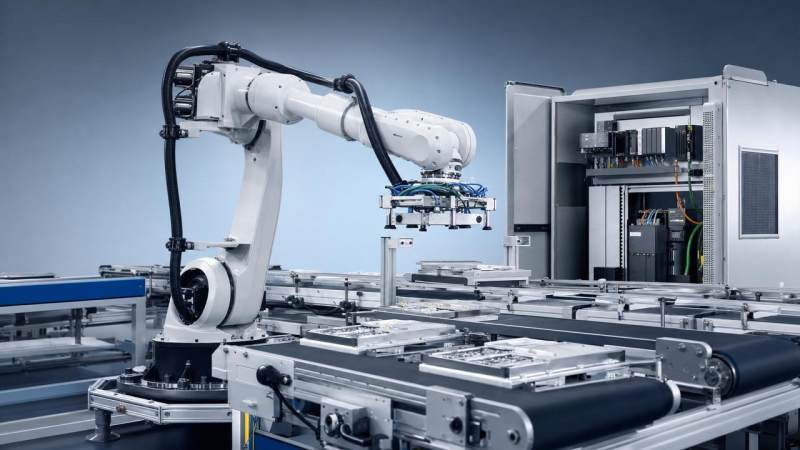
In mixed production environments, energy efficiency is no longer a secondary metric but a board-level concern. Yet is a wholesale 6 axis robot arm with energy-saving features truly capable of reducing total operating costs while preserving flexibility, precision, and throughput? For decision-makers evaluating automation investments, the answer depends on how robot performance aligns with changeover frequency, payload demands, control strategy, and real factory utilization.
For plant directors, CFOs, and automation leaders, the question is not whether a 6-axis robot can save power in theory. The real issue is whether it can lower energy per good part across high-mix, medium-volume production, where SKU changes, variable cycle times, and uneven loading conditions often weaken the business case of standard automation.
A wholesale 6 axis robot arm with energy-saving capability can deliver measurable gains, but only when the robot is selected and configured around actual production behavior. In many factories, 15%–35% of avoidable energy waste comes not from peak motor demand alone, but from idle time, over-specified payloads, poor motion tuning, inefficient grippers, and disconnected control logic between the robot, PLC, conveyors, and upstream MES scheduling.
That is why mixed production requires a broader evaluation model. G-IFA’s benchmarking perspective places robotic energy use inside the full automation stack: servo performance, motion path design, standby states, compressed air demand, line balancing, and software-level orchestration. A robot arm may be efficient on a datasheet, yet underperform financially if utilization stays below 45%, if changeovers exceed 8 times per shift, or if payload demand fluctuates sharply from 3 kg to 20 kg within the same workcell.
Why energy-saving claims look different in mixed production
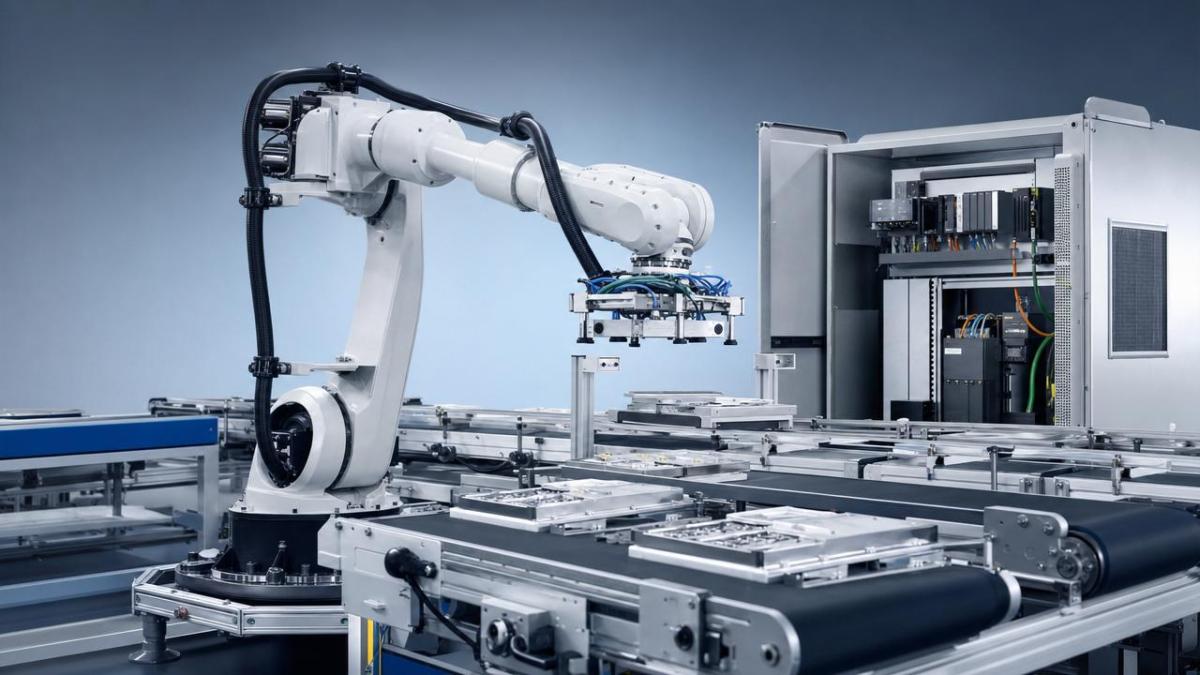
In fixed-volume production, robot energy assessment is relatively straightforward: repeat one motion path, measure cycle time, and calculate average power draw. Mixed production is more complex because robot duty cycles vary by product family, end-of-arm tooling, acceleration profile, and waiting logic. A wholesale 6 axis robot arm with energy-saving features may perform very well in one cell and only moderately well in another.
The core reason is variation. If a line runs 12 product variants, with 4 changeovers per day and 3 distinct payload bands, the robot does not consume energy in a stable pattern. During one hour it may execute fast pick-and-place moves with short reach; in the next, it may perform slower assembly tasks requiring higher torque, greater precision, and extended dwell time for vision inspection or operator interaction.
What energy-saving really means at the cell level
For executive decision-making, “energy-saving” should be translated into 4 measurable indicators: kilowatt-hours per shift, kilowatt-hours per good part, standby consumption during idle windows, and total utility impact including pneumatics, servo drives, safety devices, and ancillary equipment. Looking at the robot alone often produces an incomplete view.
- Robot arm power during motion and standby
- Controller cabinet demand under variable workloads
- Tooling energy, especially vacuum and compressed air use
- Indirect losses caused by slow restart, poor path planning, or bottlenecks
In practical terms, a lower-rated robot is not always the most efficient option. If it operates near 90% of payload capacity, it may run hotter, accelerate less efficiently, and extend cycle time by 8%–15%. The resulting throughput loss can erase utility savings. Conversely, an oversized robot may waste power during each move and add unnecessary capital cost.
Common mixed-production conditions that change the result
Energy performance is shaped by operating context. The following comparison helps procurement teams separate marketing claims from realistic plant-level outcomes.
The key conclusion is that energy efficiency in mixed production is rarely a single-machine attribute. It is a systems outcome. That is why G-IFA emphasizes benchmark evaluation across robotics, controls, motion, and software rather than headline wattage alone.
How to evaluate a wholesale 6 axis robot arm with energy-saving potential
For enterprise buyers, the right evaluation framework should link technical performance to total cost of ownership over 24–60 months. Procurement errors usually happen when teams compare only purchase price, reach, and nominal payload. In mixed production, at least 6 filters should be reviewed before approval.
1. Match payload to real operating range, not maximum theoretical load
If the application needs 8 kg for 80% of tasks and 12 kg for 20% of tasks, a 20 kg robot may be unnecessary unless tooling, orientation, and reach create additional moment loads. Oversizing by one full robot class can raise both capital expenditure and per-cycle energy use. The more realistic target is to keep average operation within a balanced load zone rather than at the extreme top end.
2. Evaluate cycle optimization capability, not just motor efficiency
A robot with efficient servo drives but poor path planning may consume more energy than a better-tuned alternative. Look for features such as smoother interpolation, regenerative braking, optimized acceleration curves, and reduced-axis micro-corrections. Even a 0.4-second cycle improvement repeated 9,000 times per day has direct energy and output implications.
3. Measure standby and restart behavior
In high-mix lines, idle periods can represent 10%–30% of scheduled time. That makes standby strategy important. A wholesale 6 axis robot arm with energy-saving controls should support low-power waiting states, predictable restart under PLC command, and fast recovery after changeovers. If warm restart takes 90 seconds instead of 20 seconds, the utility benefit may be offset by lost takt performance.
4. Include tooling, air, and software in the audit
Many automation cells underestimate the energy cost of vacuum ejectors, pneumatic grippers, and poorly synchronized conveyors. In some handling cells, compressed air can account for 25%–40% of total cell utility demand. Software also matters: if MES or line control dispatches jobs inefficiently, robots spend more time waiting between micro-batches.
The table below provides a practical enterprise-level checklist for comparing candidates beyond brochure claims.
This type of checklist helps decision-makers compare value instead of simply comparing list price. It also aligns purchasing with the broader automation objective: lower cost per unit with stable quality and manageable implementation risk.
Where the savings come from in real factory operations
When a wholesale 6 axis robot arm with energy-saving design performs well, savings usually come from 5 operational levers rather than a single breakthrough feature. Understanding these levers helps management teams set realistic expectations and define the right acceptance metrics.
Lower energy per motion through better servo and path control
Modern 6-axis systems can reduce unnecessary acceleration spikes, shorten empty travel, and reuse braking energy more effectively than older platforms. In repetitive handling or light assembly, optimized trajectories may cut energy per cycle by a meaningful margin, especially across 2-shift or 3-shift operation. The gain becomes more visible when annual cycle counts exceed 1 million movements.
Less waste during micro-stoppages and idle windows
Mixed lines frequently pause for barcode confirmation, feeder replenishment, quality checks, or operator handoff. If the robot and controller can enter efficient waiting states without long restart delays, the cell avoids burning power for non-productive minutes. In some plants, improving idle logic produces faster payback than changing the robot hardware itself.
More stable throughput under product changes
An energy-saving robot creates financial value only if it sustains output during variation. A line that loses 12% throughput during every changeover may consume less electricity per hour but more electricity per finished unit. For this reason, precision repeatability, recipe consistency, and software-driven change management remain central to the ROI discussion.
Typical areas where mixed-production ROI improves
- Cells with 2–6 product changeovers per day
- Applications where manual handling causes inconsistent takt time
- Processes using moderate payloads, typically 5 kg–15 kg
- Lines already equipped with PLC and MES integration capability
- Operations where downtime visibility is tracked at machine level
These are the conditions where a wholesale 6 axis robot arm with energy-saving features tends to move from a technical upgrade to a strategic cost-control tool. The robot becomes more than a manipulator; it becomes a controllable asset inside a data-driven production system.
Implementation risks, procurement mistakes, and how to avoid them
Even strong technology can disappoint if the buying process is weak. In B2B automation projects, the biggest risks usually appear before commissioning: wrong payload assumptions, incomplete utility audits, under-scoped integration, and no baseline measurement for comparing pre- and post-installation energy use.
Mistake 1: Buying on nominal power instead of total line economics
A lower nominal power figure may look attractive in procurement reviews, but it says little about annual output, maintenance burden, or integration fit. For board-level decisions, the more useful model is total cost per qualified unit over a defined period such as 36 months, including changeover time, maintenance intervals, and utility consumption.
Mistake 2: Ignoring the role of controls and software
Robots do not operate in isolation. If PLC sequencing is inefficient or MES dispatching creates batch fragmentation, the robot may spend too much time waiting or resetting. For mixed production, software coordination often determines whether projected energy savings remain visible after go-live.
Mistake 3: No acceptance criteria tied to mixed-production reality
Factory acceptance tests should reflect at least 3 operating states: standard run, high-changeover run, and partial-load run. Measuring only one ideal recipe can overstate efficiency. A more reliable plan is to test representative SKUs, real tooling, and actual idle behavior over a full shift or a simulated multi-batch schedule.
A practical 5-step procurement path
- Map current energy use by process, including robot, tooling, and air consumption.
- Define product mix, payload range, and expected changeover frequency.
- Compare robot candidates using cell-level metrics, not brochure metrics alone.
- Validate PLC, MES, and safety integration requirements before purchase order release.
- Set acceptance KPIs for cycle time, standby use, restart time, and scrap impact.
This structured approach reduces investment risk and supports better capital planning. It also reflects the way advanced factories evaluate automation: as an integrated production capability rather than a standalone machine purchase.
Final decision: when is the investment justified?
A wholesale 6 axis robot arm with energy-saving characteristics is genuinely worth considering when your factory faces frequent product variation, rising utility costs, labor instability, and pressure to improve traceable production efficiency. It is most justified when the robot will run in a coordinated environment with suitable payload sizing, optimized motion control, and integration into PLC and MES workflows.
For decision-makers, the strongest business case appears when three conditions align: utilization is high enough to capture recurring savings, changeovers are frequent enough that idle logic matters, and the production system can measure cost per unit rather than only power draw per hour. In that setting, the energy-saving robot becomes part of a larger operational improvement strategy.
G-IFA’s cross-sector benchmarking approach is built for this kind of evaluation. By comparing robotics, control architecture, motion efficiency, software coordination, and utility behavior against international engineering expectations, manufacturers can make more confident automation decisions and avoid expensive underperformance after deployment.
If you are assessing a wholesale 6 axis robot arm with energy-saving potential for mixed production, now is the right time to review the full system impact, not just the machine specification. Contact us to discuss your operating profile, request a tailored evaluation framework, or learn more about automation solutions that fit your factory’s real production mix.
Recommended News
- 2026/05/16Does an energy saving 6 axis robot arm cut power billsWholesale 6 axis robot arm with energy-saving features can cut power bills when sized and integrated right. See how to reduce kWh, waste, and ROI risk.
- 2026/05/16How to vet a plc expansion module factory before approvalplc expansion module factory approval starts with proof, not promises. Learn how to verify quality, compliance, production stability, and support before you sign.
- 2026/05/16When does remote i o module wholesale save wiring costsRemote i/o module wholesale saves wiring costs when layouts are spread out and labor is high. Learn when bulk buying cuts cabling, installation time, and total automation ROI risk.