
Search News
Industry Portal
Popular Tags
Is industrial robotics custom worth it?
Author
Dr. Victor Gear
Time
Apr 17, 2026
Pageviews
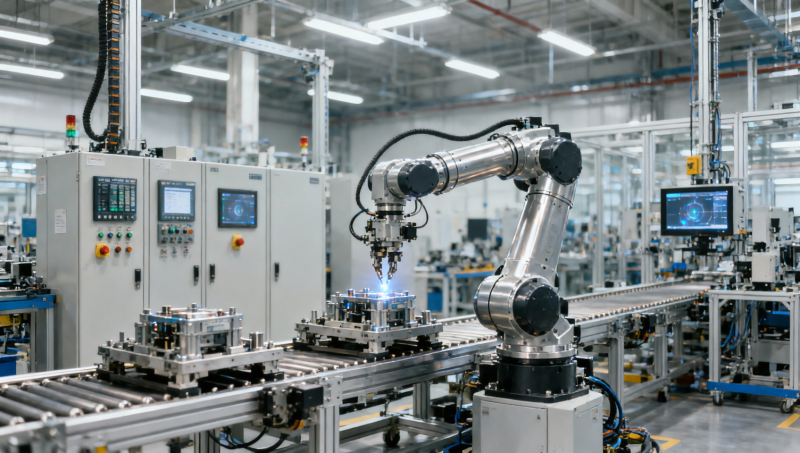
Is industrial robotics custom worth the investment for modern factories? For information seekers comparing an industrial automation B2B platform, automation engineering sourcing options, and robotic arms bulk order strategies, the answer depends on precision, scalability, and integration. From motion control supplier selection to MES software sourcing and control systems OEM decisions, customized robotics can unlock stronger efficiency, flexibility, and long-term manufacturing value.
For production directors, sourcing managers, and technical evaluators, the real question is not whether custom industrial robotics is inherently better than standard equipment. The better question is whether the factory’s process complexity, product variation, and digital integration demands justify the added engineering effort, validation time, and upfront cost. In many B2B manufacturing environments, that answer becomes clearer when robotics is assessed as part of a full automation architecture rather than as a standalone machine purchase.
This is where benchmark-driven research matters. Platforms such as Global Intelligent Factory & Automation (G-IFA) help reduce sourcing risk by comparing robotics, PLC systems, motion control, industrial software, and fluid power components against practical engineering criteria and international standards such as ISO, IEC, and CE. For information seekers, custom robotics is worth considering when it improves repeatability, shortens cycle time, reduces line changeover friction, and integrates cleanly with the broader production stack.
When Custom Industrial Robotics Makes Strategic Sense
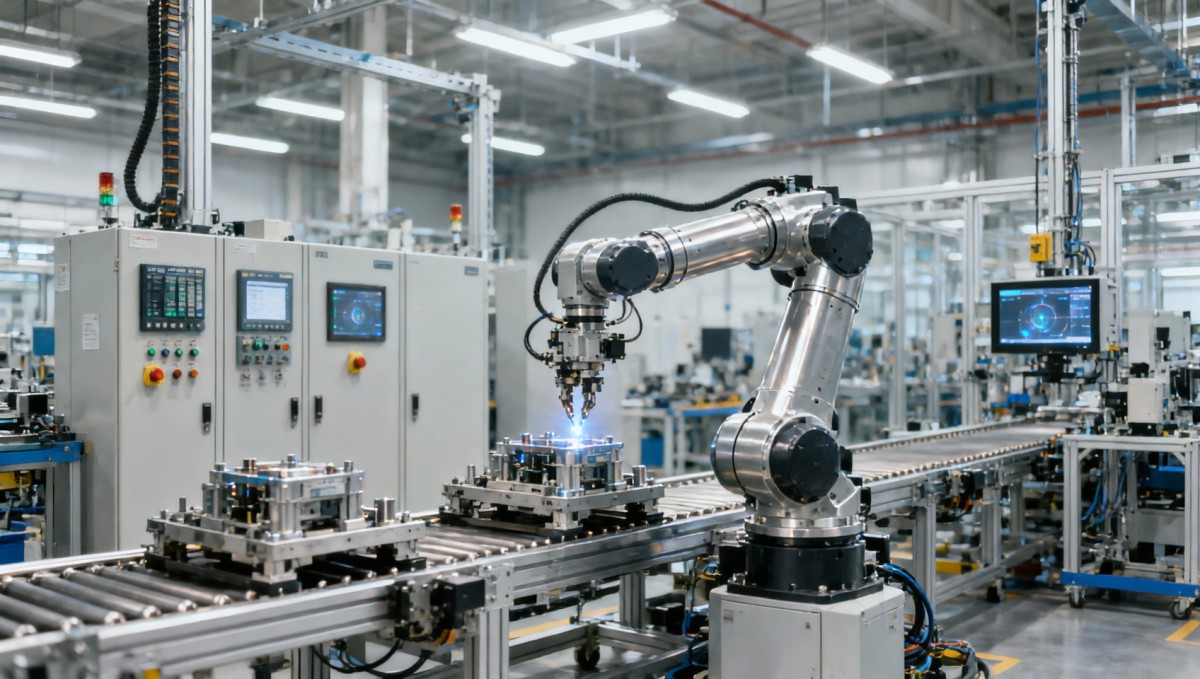
Custom industrial robotics usually becomes valuable when a factory has non-standard workpieces, multi-step handling logic, strict traceability requirements, or variable throughput targets across different SKUs. In simple pick-and-place lines with stable dimensions and low product variance, a standard 6-axis robot with basic end-of-arm tooling may be enough. But in factories running 20 to 80 product variants per month, customization often shifts from optional to operationally important.
The strongest use cases are often found in welding, machine tending, palletizing, assembly, dispensing, and vision-guided inspection. If part orientation changes frequently, if tolerances tighten below ±0.2 mm, or if upstream and downstream stations use mixed communication protocols, custom robotics can close integration gaps that standard packages leave unresolved. That is especially relevant in smart manufacturing projects where robot motion must synchronize with PLC logic, MES data collection, and servo-driven transfer systems.
A practical decision rule is to measure customization against three variables: process complexity, changeover frequency, and integration burden. If two out of three are high, the return profile improves. For example, a line with more than 4 product changeovers per shift and a target OEE improvement of 8% to 15% may benefit significantly from custom fixtures, robot programming, and software interfaces designed around actual production flow rather than generic assumptions.
Typical indicators that standard robotics may be insufficient
- Cycle time targets below 6 to 8 seconds where standard path programming cannot maintain stable accuracy.
- Payload or reach requirements that change across stations, such as 5 kg handling in one process and 20 kg in another.
- Need for communication with MES, ERP, barcode systems, vision sensors, and safety controllers in one workflow.
- Production lines requiring quick tooling swap, recipe management, or batch traceability across multiple part families.
For information-focused buyers evaluating an industrial automation B2B platform, the key lesson is that custom robotics should not be framed only as an equipment cost. It should be evaluated as a process capability investment. The right customization reduces engineering workarounds later, lowers commissioning friction, and supports cleaner expansion from one cell to 3, 5, or 10 cells over time.
Cost, ROI, and the Hidden Economics of Custom Robotics
The most common objection is simple: custom industrial robotics costs more upfront. That is often true. Compared with a standard robotic cell, a customized system may add 15% to 40% in engineering scope depending on tooling complexity, software integration depth, safety design, and validation requirements. However, direct purchase price alone rarely reflects the full economics. Factories also need to calculate downtime risk, rework, labor dependency, line balancing efficiency, and future expansion cost.
A custom solution may deliver payback in 12 to 36 months if it removes bottlenecks from labor-intensive stations, cuts scrap, or supports continuous production across 2 or 3 shifts. In contrast, a lower-cost standard robot can become more expensive if the integrator later needs repeated modifications, extra sensors, external fixtures, manual intervention steps, or software patches to meet original process goals. Procurement teams should therefore compare lifecycle cost over at least 3 to 5 years, not just CAPEX at purchase.
In many sourcing reviews, the hidden cost drivers are not the robot arm itself. They are the interfaces: PLC mapping, servo coordination, end-effector design, guarding, vision calibration, MES connectivity, and commissioning hours. These often represent 30% to 50% of total project effort. Buyers who separate robot price from system price may underestimate what successful deployment actually requires.
Standard vs custom robotics cost logic
The following comparison helps clarify when the investment case shifts in favor of customization. It is especially useful for teams balancing robotic arms bulk order planning with broader automation engineering sourcing decisions.
The table shows why custom industrial robotics often makes financial sense in mixed-model production, traceable manufacturing, and high-changeover environments. The value is less about prestige and more about avoiding repeated retrofits. For many factories, the true ROI emerges when customization lowers operational friction across years rather than months.
A practical ROI screening checklist
- Estimate annual labor hours replaced or redeployed.
- Calculate scrap or rework reduction potential, even if only 1% to 3%.
- Measure downtime caused by manual handling or unstable handoffs between stations.
- Project engineering change frequency over the next 24 months.
- Assess how many digital interfaces the robot cell must support from day one.
If the line scores high on at least 3 of these 5 points, custom robotics deserves serious consideration. This method is especially useful when comparing motion control suppliers, control systems OEM options, and software integration pathways on the same procurement timeline.
How to Evaluate a Custom Robotics Project Before Purchase
A successful custom robotics investment starts long before RFQ. Buyers need a structured technical review that includes process mapping, throughput validation, tolerance analysis, communication architecture, safety planning, and maintenance access. Without these inputs, even a capable supplier may design around assumptions that do not hold in live production. In B2B automation sourcing, the quality of the requirement definition often determines 50% or more of project outcome.
At minimum, factories should define five baseline data sets: part dimensions, payload range, takt time, station layout, and required digital interfaces. If the robot must handle parts from 200 mm to 900 mm in length, or from 2 kg to 25 kg in mass, that range influences gripper design, servo selection, acceleration profile, and safety logic. If MES integration is required, data handshakes, event logging, and error-state reporting must be specified before hardware is frozen.
Another common oversight is underestimating commissioning conditions. A robot that performs well in simulation may still need 5 to 15 days of onsite tuning due to feeder variability, sensor noise, part presentation changes, or plant communication differences. That is why information seekers should compare suppliers not only on machine specifications but also on debugging methodology, FAT criteria, SAT support, and spare parts planning.
Key evaluation dimensions for sourcing teams
The matrix below can support early-stage supplier screening. It works well when using an industrial automation B2B platform to compare integrators, subsystem vendors, and control architecture options.
This framework helps buyers move from generic claims to measurable project suitability. The more a supplier can answer these questions with engineering detail instead of sales language, the lower the sourcing risk tends to be.
Common mistakes during evaluation
- Comparing robot arm brands without comparing the full control and tooling ecosystem.
- Treating MES software sourcing as separate from robot cell event logic and traceability design.
- Ignoring cable routing, pneumatic routing, and maintenance clearance in compact layouts.
- Approving a concept before defining FAT acceptance points and onsite performance targets.
For technical research users, these points reinforce why custom robotics evaluation should include mechanical, electrical, and software layers together. Decisions made in isolation often reappear later as commissioning delays, unstable quality, or unexpected retrofit cost.
Integration, Delivery, and Risk Control in Real Factory Environments
Even a well-designed custom robotic system can fail to deliver value if integration planning is weak. In modern factories, robotics sits at the intersection of mechanics, control logic, motion transmission, safety systems, and industrial software. A robot cell that runs independently but cannot exchange status, alarms, and batch data with the plant network will create information blind spots. That reduces the value of automation, especially in Industry 4.0 environments where production visibility matters as much as motion performance.
A robust project usually follows 4 stages: requirement definition, engineering design, offline validation, and onsite commissioning. Depending on complexity, total delivery may range from 8 to 20 weeks. Simpler machine-tending cells may complete closer to 8 to 10 weeks, while multi-station assembly or vision-guided handling systems often require 12 to 20 weeks due to tooling iteration, software mapping, and FAT adjustments. Buyers should request a milestone plan with explicit approval gates instead of a single headline lead time.
Risk control should focus on three areas: interface clarity, acceptance discipline, and maintainability. Interface clarity means every I/O point, protocol, and alarm state is defined before build. Acceptance discipline means FAT and SAT are linked to measurable targets such as cycle time, repeatability, and data reporting behavior. Maintainability means operators and technicians can safely access wear parts, cable paths, pneumatic modules, and servo components without extended downtime.
Recommended implementation flow
- Map the process in detail, including part flow, takt targets, and exception handling.
- Freeze the communication architecture across robot, PLC, HMI, MES, and safety devices.
- Validate tooling, reach envelope, and collision logic through simulation and sample parts.
- Run FAT against agreed metrics before shipment, including recipe changes and alarm recovery.
- Complete SAT onsite with operator training, maintenance checklists, and spare parts confirmation.
Information seekers often underestimate training. Yet 1 to 3 days of structured training for operators and maintenance staff can significantly reduce false alarms, improper reset actions, and small stoppages. In high-mix production, recipe control and end-effector maintenance should be part of training from the beginning, not treated as an afterthought once the line is live.
Why benchmark-based sourcing matters
Platforms like G-IFA provide value by placing robotics decisions inside the wider automation context. A custom robot cell depends on compatible PLC architecture, stable motion components, appropriate industrial software links, and reliable pneumatic or hydraulic support. Looking at those pillars together helps decision-makers avoid fragmented procurement, which is one of the most common causes of expensive integration mismatches.
That broader view is particularly important when comparing control systems OEM offers, motion control supplier capabilities, and MES software sourcing pathways. The best robotics decision is rarely the cheapest isolated quote. It is the one that fits the entire line architecture with the least hidden engineering debt.
FAQ for Information Seekers Comparing Custom Robotics Options
How do I know if custom robotics is better than a standard robotic cell?
Start with process variability. If your line handles more than 10 product variants, requires repeatability tighter than ±0.2 mm, or needs 3 or more system interfaces such as PLC, MES, and vision, custom robotics is often the safer long-term choice. If production is stable, low-mix, and lightly integrated, a standard cell may be sufficient.
What delivery time should buyers expect?
A common range is 8 to 20 weeks from design approval to deployment, depending on tooling complexity, software integration, safety requirements, and sample-part validation. Projects involving custom end-effectors, multi-axis coordination, or MES connectivity usually fall toward the longer end of the range.
What should be included in the RFQ?
An effective RFQ should include part dimensions, payload range, takt time, line layout, available utilities, communication protocols, safety requirements, and expected acceptance metrics. If possible, include at least 3 sample parts and define changeover expectations such as recipe switching time under 5 minutes or tooling exchange under 10 minutes.
Can custom robotics still be scalable for bulk deployment?
Yes, if the customization is modular rather than one-off. The best bulk order strategies use a repeatable core architecture with configurable tooling, standardized control logic, and reusable HMI or MES interface templates. That approach supports rollout from 1 pilot cell to multiple sites without rebuilding the entire engineering model each time.
Custom industrial robotics is worth it when the factory needs more than generic automation capacity. If precision, flexibility, data integration, and expansion readiness matter, customization can protect long-term manufacturing performance better than a low-cost standard cell. The strongest investment cases appear in operations with frequent changeovers, strict quality control, multiple digital interfaces, and a clear plan to scale automation across lines or plants.
For information seekers using a technical comparison platform, the smartest path is to evaluate robotics alongside PLC systems, motion control, MES software, and fluid power support rather than in isolation. G-IFA helps make that process more transparent by connecting robotics decisions to the full engineering reality of smart manufacturing. To explore benchmark-driven sourcing insights, compare automation options, or discuss a custom robotics strategy aligned with your production goals, contact us today and get a more informed solution path.
- industrial robotics
- PLC systems
- motion control
- MES software
- control systems
- smart manufacturing
- industrial automation
- industrial software
- automation engineering
- robotic arms
- motion control supplier
- industrial robotics cost
- robotic arms bulk order
- industrial robotics custom
- automation engineering sourcing
- industrial automation B2B platform
- control systems OEM
- MES software sourcing
- Industry 4.0
Recommended News
- 2026/10/24Car Spare Parts: How to Check Fitment and Avoid Ordering the Wrong PartOrder car spare parts with confidence. Learn how to verify VINs, OEM numbers, and fitment details to avoid costly mistakes and choose the right replacement first time.
- 2026/10/23How Do You Select a Motion Control System for Synchronized Axes?How do I select a motion control system for synchronized axes? Discover key timing, feedback, and performance checks to choose confidently and reduce costly integration risks.
- 2026/10/23Integrating End-of-Line Sortation with Packing Stations and Conveyor ControlsOptimize end of line sortation with coordinated packing stations and conveyor controls. Learn how to prevent bottlenecks, improve routing accuracy, and handle exceptions reliably.