
Search News
Industry Portal
Popular Tags
What changes the final robotic arms quotation most?
Author
Dr. Victor Gear
Time
May 23, 2026
Pageviews
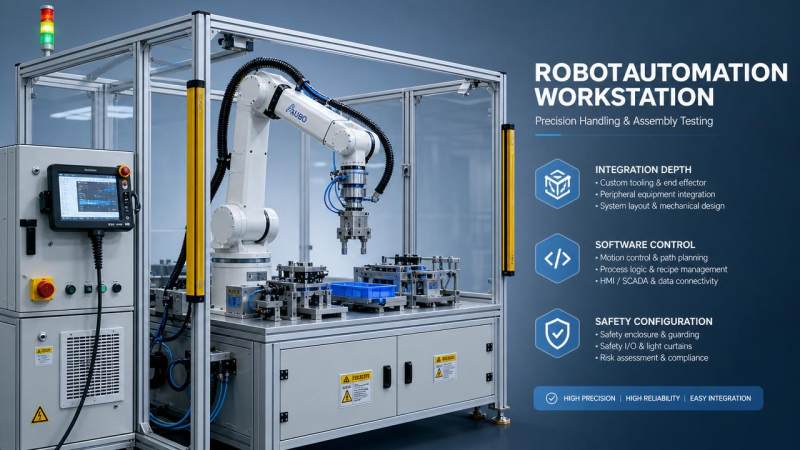
A robotic arms quotation can change dramatically before a project is approved. The visible price rarely tells the whole story. Real cost comes from technical fit, integration depth, compliance, and service scope.
When comparing any robotic arms quotation, the key is not only asking what the robot costs. It is asking what the robot must achieve, how safely it must operate, and how reliably it must scale.
In smart manufacturing, even similar robot models may produce very different quotations. Controller options, end-of-arm tooling, software licenses, and validation requirements can all reshape the final number.
What is included in a robotic arms quotation?
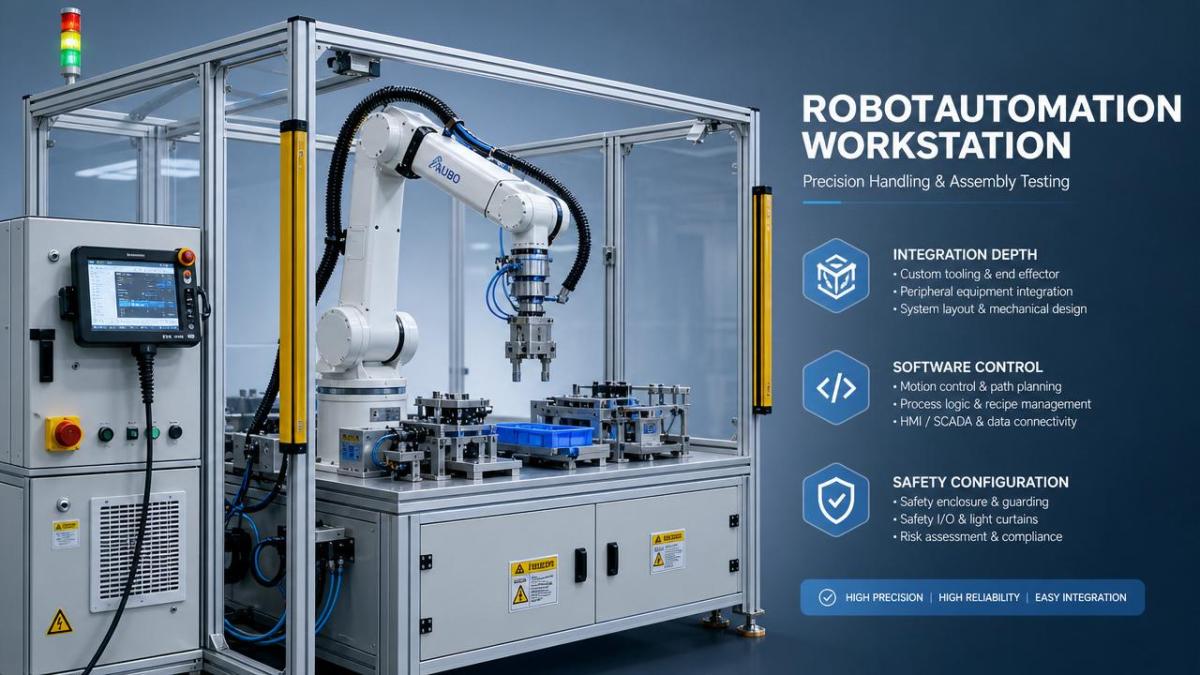
A robotic arms quotation should describe more than the arm itself. A complete offer usually includes hardware, controls, installation items, documentation, testing, and service conditions.
Some suppliers quote only the base robot. Others include the controller, teach pendant, cables, software package, safety modules, and communication interfaces.
This is why two offers may look similar at first glance but differ heavily in total value. A lower robotic arms quotation may simply exclude critical project components.
Typical quotation elements
- Robot arm, controller, pendant, and power cables
- Base frame, mounting parts, and cabinet design
- End-effector, gripper, welding torch, or vision kit
- PLC integration, fieldbus setup, and software licensing
- Safety fencing, scanners, light curtains, and interlocks
- Factory acceptance test, site commissioning, and training
A reliable robotic arms quotation should clearly separate standard supply from optional items. That makes cost comparison cleaner and reduces disputes later.
How do payload, reach, and precision change the final quotation?
Payload and reach are the most visible cost drivers, but they are not isolated variables. As both increase, structural rigidity, motor sizing, reducer quality, and control tuning also change.
A heavier payload usually requires stronger joints and more durable transmission components. That often raises not only the robot price but transport, mounting, and energy demands.
Reach also affects quotation. A longer arm may reduce station count, yet it can lower stiffness. To maintain repeatability, the supplier may specify a higher-grade mechanical platform.
Precision creates another major shift. Assembly, dispensing, and inspection tasks often need tighter repeatability than simple palletizing. Better encoders and calibration routines can significantly raise the robotic arms quotation.
Why similar robots may cost differently
- Different repeatability grades for the same payload class
- Speed optimization for cycle-time critical lines
- Special coatings for cleanroom, food, or harsh environments
- Enhanced cable routing for complex motion paths
The best approach is matching the robot to the application window, not buying the largest specification. Oversizing often leads to an inflated robotic arms quotation without better process results.
Why do controller architecture and software options matter so much?
The controller can change cost as much as the mechanics. Modern automation depends on communication, synchronization, diagnostics, and future expandability.
A basic controller may be enough for single-station handling. Multi-axis coordination, vision tracking, force control, or MES connectivity usually require stronger computing and additional licenses.
This matters in Industry 4.0 environments. If the robotic cell must exchange data with PLC platforms, ERP systems, or IIoT dashboards, the robotic arms quotation will reflect those digital integration needs.
Common software and control cost drivers
- Fieldbus protocols such as Profinet, EtherNet/IP, or EtherCAT
- Offline programming and digital twin compatibility
- Vision guidance, AI recognition, or adaptive path correction
- Remote monitoring, predictive maintenance, and alarm analytics
- Cybersecurity functions and user access management
A low initial robotic arms quotation can become expensive if software expansion is limited. Future-proof architecture often costs more now but protects system value over time.
How do safety, compliance, and site conditions affect price?
Safety is one of the most underestimated quotation variables. A robotic arm working alone in a restricted zone differs greatly from a collaborative or semi-open workstation.
If the system must meet ISO, IEC, CE, or customer-specific internal standards, the quotation may include risk assessment, safety validation, wiring design, and documented verification procedures.
Environmental conditions also change equipment selection. Dust, humidity, washdown exposure, explosive zones, and temperature variation can require upgraded housings or protected components.
These conditions do not always increase the robot arm price alone. They often increase installation complexity, commissioning time, and maintenance planning.
Frequent compliance-related additions
- Safety PLC, relays, scanners, and guarded access devices
- CE file preparation and electrical documentation
- Performance level or SIL validation
- Stainless, anti-corrosion, or cleanroom-ready options
When reviewing a robotic arms quotation, check whether compliance is already included or still pending. That distinction often explains major gaps between offers.
What hidden costs usually appear after the first quotation?
The first robotic arms quotation is rarely the final project cost. Hidden items often emerge during layout review, programming, acceptance testing, or production startup.
End-of-arm tooling is a common example. A standard gripper may be quoted early, then replaced after real product variation is analyzed.
Cycle-time guarantees can also trigger upgrades. Faster process targets may require servo positioning units, vision assistance, or conveyor tracking functions.
Training and spare parts are often separated from the original offer. Yet they directly influence uptime, troubleshooting speed, and lifecycle cost.
A strong review process should identify exclusions, assumptions, and change conditions. That is often the fastest way to evaluate a robotic arms quotation accurately.
How can quotations from different suppliers be compared fairly?
Fair comparison requires a shared technical baseline. Without that, one robotic arms quotation may appear cheaper simply because its scope is narrower.
Start with an application sheet. Define payload, reach, takt time, precision, environment, communication protocol, safety target, and expected output quality.
Then compare not only price but engineering depth, compliance readiness, software openness, and local service responsiveness. These factors often matter more than a small upfront difference.
Practical comparison checklist
- Is the robotic arms quotation based on the same cycle-time assumption?
- Are tooling, safety devices, and controls within the quoted scope?
- Are software licenses permanent, annual, or feature-limited?
- Is FAT or SAT included with measurable acceptance criteria?
- What warranty, response time, and spare parts support are defined?
The final robotic arms quotation is shaped by far more than payload and reach. In modern automation, value comes from complete system alignment, not isolated equipment pricing.
A better quotation review should examine mechanics, controls, safety, compliance, software, and lifecycle support together. That method reduces procurement risk and improves long-term factory performance.
For better decisions, prepare a clear technical requirement list, request itemized scope, and verify every assumption. A transparent robotic arms quotation is the strongest foundation for a successful automation investment.
Recommended News
- 2026/10/24Car Spare Parts: How to Check Fitment and Avoid Ordering the Wrong PartOrder car spare parts with confidence. Learn how to verify VINs, OEM numbers, and fitment details to avoid costly mistakes and choose the right replacement first time.
- 2026/10/23How Do You Select a Motion Control System for Synchronized Axes?How do I select a motion control system for synchronized axes? Discover key timing, feedback, and performance checks to choose confidently and reduce costly integration risks.
- 2026/10/23Integrating End-of-Line Sortation with Packing Stations and Conveyor ControlsOptimize end of line sortation with coordinated packing stations and conveyor controls. Learn how to prevent bottlenecks, improve routing accuracy, and handle exceptions reliably.