
Search News
Industry Portal
Popular Tags
What separates a reliable industrial robotics manufacturer
Author
Dr. Victor Gear
Time
May 02, 2026
Pageviews
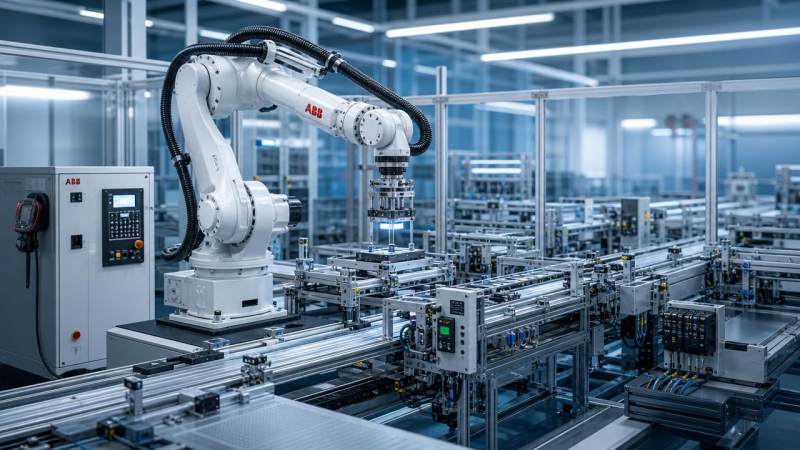
Choosing a reliable industrial robotics manufacturer is not just about payload, speed, or price—it is about verifying engineering consistency, software compatibility, safety compliance, and long-term integration value. For technical evaluators, the real challenge lies in separating marketing claims from measurable performance. This article outlines the key criteria that define dependable robotics manufacturers in today’s smart manufacturing landscape.
Why reliability standards for robotics suppliers are changing
The evaluation logic around any industrial robotics manufacturer has changed significantly in recent years. In the past, buyers often focused on basic hardware specifications: repeatability, reach, payload, cycle time, and unit price. Those metrics still matter, but they no longer tell the full story. In Industry 4.0 environments, robots are no longer isolated machines. They are part of connected production architectures involving PLC platforms, vision systems, MES layers, motion control networks, cybersecurity policies, and traceable safety functions.
This shift means reliability must now be judged at system level, not product level alone. A robot can be mechanically strong but still create downstream risk if its controller lacks open communication support, if spare parts are hard to source globally, or if software updates disrupt validated production logic. For technical evaluation teams, the meaning of a reliable industrial robotics manufacturer has expanded from “can the robot run” to “can the robot run predictably, integrate cleanly, and remain supportable over years of operational change.”
Another major signal is that factories are under pressure to reduce commissioning time while increasing flexibility. High-mix production, labor volatility, and regional supply chain uncertainty have forced manufacturers to value platform stability more than isolated benchmark performance. As a result, the best industrial robotics manufacturer is often not the one with the most aggressive brochure claims, but the one with the most verifiable engineering discipline.
The strongest market signals behind this shift
Several converging forces explain why the market is asking tougher questions of every industrial robotics manufacturer. First, automation projects increasingly span multiple countries, plants, and vendor ecosystems. Standardization matters more because production directors want reusable architectures rather than isolated custom cells. Second, software now influences uptime as much as mechanics do. Third, compliance expectations are rising, especially where collaborative operation, machine safety, and data integration intersect.
Technical evaluators are also more cautious because the cost of a poor robotics decision extends far beyond capex. A weak supplier choice can increase commissioning delays, require expensive middleware, complicate operator training, and weaken maintenance planning. In smart factories, reliability is inseparable from lifecycle cost and cross-platform compatibility.
What separates a reliable industrial robotics manufacturer today
A reliable industrial robotics manufacturer is increasingly defined by consistency across five areas: engineering quality, control architecture openness, compliance maturity, lifecycle support, and application depth. These dimensions are interconnected. A supplier may have strong hardware but weak software tools. Another may have excellent simulation capability but poor field service coverage. Technical evaluators should therefore avoid single-factor decisions.
1. Engineering consistency that goes beyond headline specs
Brochures highlight payload and repeatability, but reliability shows up in stable thermal behavior, cable routing durability, gearbox longevity, controller resilience, and repeatable performance across production batches. A dependable industrial robotics manufacturer should demonstrate that its machines behave consistently not only in demo settings, but also across shifts, ambient changes, and variable duty cycles. Look for validation discipline, field references, and evidence of design maturity rather than novelty alone.
2. Open integration with factory control environments
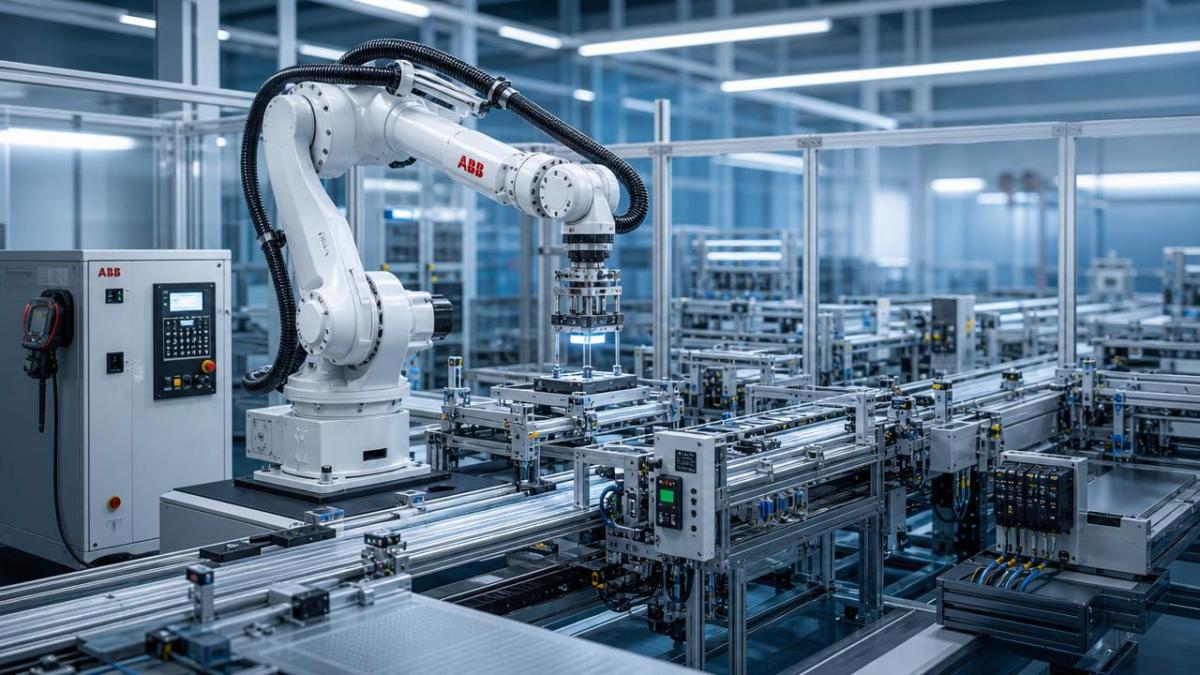
Modern factories rarely buy robots into a blank environment. They integrate them into established PLC brands, SCADA interfaces, MES workflows, traceability systems, safety circuits, and often third-party vision packages. A reliable industrial robotics manufacturer should support common industrial communication standards, provide robust APIs or software libraries, and reduce the need for custom bridging. The less integration friction a supplier creates, the lower the project risk.
3. Compliance readiness and safety documentation
As robotic systems are deployed in more diverse environments, compliance has become a decisive trust signal. An industrial robotics manufacturer should provide clear alignment with relevant ISO, IEC, CE, and regional safety expectations where applicable. What matters is not only certification status, but also the quality of technical documentation, safety manuals, risk assessment support, and application guidance. Reliable suppliers help integrators verify safe deployment faster and with fewer assumptions.
4. Lifecycle support, not just initial delivery
A robot cell may run for many years, often through product changes, software revisions, and operator turnover. That is why a reliable industrial robotics manufacturer must prove support durability: spare part continuity, service network responsiveness, firmware governance, training resources, and local application engineering availability. A lower purchase price can become irrelevant if support delays create extended downtime or if software updates force costly revalidation.
5. Application knowledge in real production conditions
Factories do not buy robots in the abstract. They buy welding accuracy, palletizing stability, machine tending reliability, assembly precision, inspection repeatability, or packaging throughput. A strong industrial robotics manufacturer understands process reality, including end-of-arm tooling behavior, part variability, upstream and downstream dependencies, and takt constraints. This application knowledge often predicts project success better than raw robot performance figures.
How these changes affect different evaluation stakeholders
The trend toward system-level reliability affects multiple roles differently. For production leaders, the concern is uptime and scalability. For automation engineers, it is integration effort and control stability. For procurement, it is total cost of ownership and vendor risk. For system integrators, it is implementation predictability. This is why the same industrial robotics manufacturer may look attractive to one team but problematic to another unless evaluation criteria are aligned early.
The most common blind spots in supplier selection
Many technical teams still evaluate an industrial robotics manufacturer too narrowly. One blind spot is overvaluing isolated demo performance. A polished showroom cycle does not prove resilience in dusty, humid, multi-shift, or mixed-product environments. Another blind spot is assuming that software compatibility can be solved later. In practice, late-stage integration friction often causes the most expensive delays.
A third blind spot is neglecting support localization. Even a globally known industrial robotics manufacturer may have uneven regional service strength. If application engineers, spare parts, or safety experts are not available in the operating region, response times can undermine otherwise strong technology. Finally, some teams underestimate version control and change management. As robotics become more digital, firmware discipline and software lifecycle clarity are part of reliability.
What technical evaluators should check now before shortlisting
Given current market conditions, technical evaluators should use a structured review model before selecting an industrial robotics manufacturer. Start by mapping the robot’s role in the full line architecture. Then test the supplier’s ability to support that architecture across commissioning, operation, maintenance, and scaling. A reliable robotics partner should make risk visible, not hide it behind marketing simplification.
- Confirm compatibility with existing PLC, fieldbus, vision, and MES environments.
- Request evidence of stable deployment in similar duty cycles and application types.
- Review safety documentation, certification scope, and risk assessment support.
- Assess spare parts policy, service coverage, and firmware update governance.
- Verify training quality for programmers, operators, and maintenance staff.
- Examine simulation, offline programming, and diagnostic tool maturity.
How the next phase of robotics purchasing is likely to evolve
The next phase of industrial automation procurement will likely favor manufacturers that combine mechanical reliability with digital transparency. Buyers increasingly want predictable data structures, cleaner interoperability, remote support readiness, and clearer lifecycle commitments. This does not mean only the largest industrial robotics manufacturer will win. It means that trust will be earned by measurable operating maturity, not just product range or price pressure.
Another likely direction is stronger preference for standardized robotics platforms that can be replicated across sites. In that environment, the best industrial robotics manufacturer will be the one that reduces variation in programming logic, spare parts strategy, safety validation, and operator training. Replicability is becoming a core reliability signal because it directly affects scaling economics.
Practical decision signals that deserve ongoing attention
For technical evaluation teams, the most useful signals are often operational rather than promotional. Pay attention to how clearly a manufacturer answers integration questions, how transparently it defines support scope, how structured its documentation is, and how realistically it discusses application limits. A reliable industrial robotics manufacturer does not promise universal fit. It explains where its platform performs well, what conditions affect results, and what engineering assumptions must be validated.
In practical terms, if an industrial robotics manufacturer can demonstrate stable field references, strong control compatibility, documented compliance discipline, lifecycle planning, and credible application support, it is more likely to deliver long-term value than a supplier competing mainly on isolated speed or acquisition cost. Reliability, in today’s market, is a systems capability.
Final guidance for evaluating trend impact on your own factory
The core market change is clear: robotics selection is moving from machine comparison to platform risk assessment. For any technical evaluator reviewing an industrial robotics manufacturer, the right question is no longer “Which robot looks strongest on paper?” but “Which supplier is most likely to support stable production, scalable integration, and controlled lifecycle cost?”
If your organization wants to judge how these trends affect its own automation roadmap, focus on a few questions: Does the supplier fit your existing control ecosystem? Can it support multi-year software and maintenance needs? Is its safety and compliance evidence deployment-ready? Does it have application depth in your process? And can its platform be replicated without hidden engineering overhead? These are the questions that separate a credible industrial robotics manufacturer from a risky one.
Recommended News
- 2026/10/24Car Spare Parts: How to Check Fitment and Avoid Ordering the Wrong PartOrder car spare parts with confidence. Learn how to verify VINs, OEM numbers, and fitment details to avoid costly mistakes and choose the right replacement first time.
- 2026/10/23How Do You Select a Motion Control System for Synchronized Axes?How do I select a motion control system for synchronized axes? Discover key timing, feedback, and performance checks to choose confidently and reduce costly integration risks.
- 2026/10/23Integrating End-of-Line Sortation with Packing Stations and Conveyor ControlsOptimize end of line sortation with coordinated packing stations and conveyor controls. Learn how to prevent bottlenecks, improve routing accuracy, and handle exceptions reliably.