
Search News
Industry Portal
Popular Tags
Automation engineering sourcing mistakes that affect delivery and support
Author
Dr. Victor Gear
Time
May 09, 2026
Pageviews
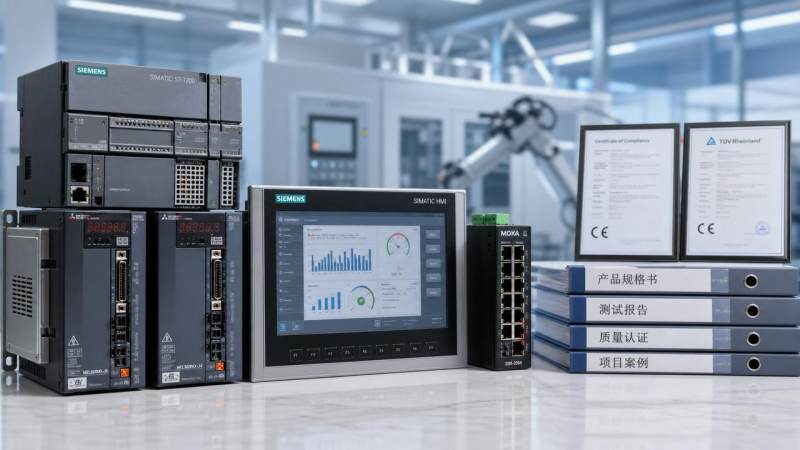
In automation engineering sourcing, a single procurement mistake can ripple through delivery schedules, system integration, and long-term technical support. For distributors, agents, and channel partners, understanding how supplier selection, compliance gaps, and lifecycle planning affect project outcomes is essential. This article explores the most common sourcing mistakes and how to avoid them for more reliable automation deployments.
For channel partners, the biggest risk is rarely just price. It is choosing components, platforms, or suppliers that look acceptable during quotation but create hidden costs during commissioning, certification, spare parts fulfillment, software updates, or after-sales support. In practice, the wrong sourcing decision can delay factory acceptance, weaken customer trust, and reduce future repeat business.
The core search intent behind this topic is practical and commercial: readers want to know which automation engineering sourcing mistakes most often damage delivery performance and support quality, how to detect those risks early, and what sourcing criteria improve project reliability. They are not looking for generic procurement theory. They need judgment tools that connect sourcing decisions to real project outcomes.
For distributors and agents, the most useful perspective is this: sourcing is not only about buying a product that meets a technical specification. It is about selecting an automation ecosystem that can be delivered, integrated, serviced, and sustained across the full lifecycle of the machine or production line. That is where many avoidable mistakes begin.
Why automation engineering sourcing mistakes become delivery and support problems
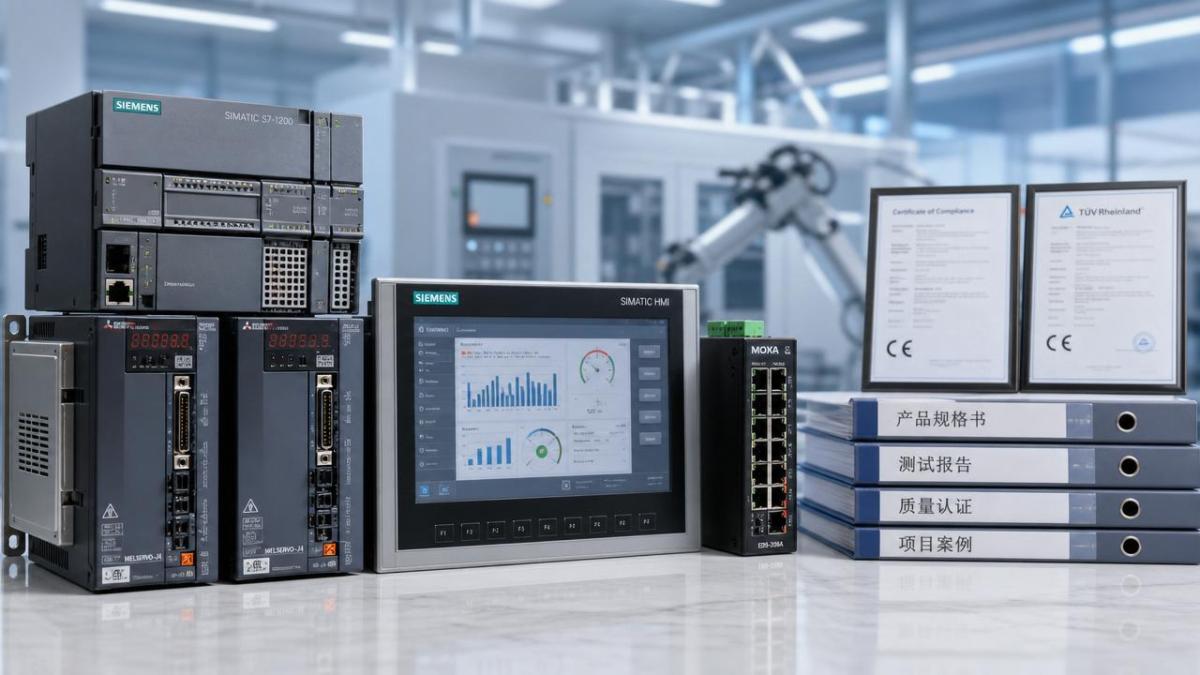
In industrial automation, delivery risk and support risk are tightly linked. A part that arrives on time but lacks proper documentation, compatible firmware, local service coverage, or replacement availability is still a sourcing failure. Likewise, a technically advanced solution that requires specialized engineering support beyond the channel partner’s real capability can quickly become a liability.
This is especially true in cross-border and multi-brand projects. A distributor may source PLCs from one vendor, servo systems from another, HMI platforms from a third, and network components from yet another. On paper, the bill of materials may look optimized. In reality, every interface between those systems introduces integration dependencies, version control concerns, and accountability gaps when something fails.
For target readers such as distributors, resellers, and agents, the business consequences are serious. Missed delivery milestones affect revenue recognition. Extended commissioning increases engineering burden. Weak support readiness can lead to urgent field escalations, unplanned warranty exposure, and damage to partner credibility. That is why automation engineering sourcing must be evaluated from a system reliability perspective, not only a procurement perspective.
Mistake 1: Choosing suppliers mainly on unit price instead of total delivery capability
One of the most common sourcing errors is overemphasizing purchase price while underestimating delivery execution. A supplier may offer a lower-cost motor drive, controller, pneumatic assembly, or industrial software license, but if lead times are unstable, export documentation is incomplete, or technical clarification is slow, the initial savings disappear quickly.
For channel partners, total delivery capability includes more than inventory. It also includes quotation responsiveness, engineering communication quality, change management discipline, packaging reliability, batch consistency, and the supplier’s ability to handle urgent replacement or shortage scenarios. A low price with weak operational maturity often causes more disruption than a higher-priced but better-supported brand.
A useful sourcing question is not “Who is cheapest today?” but “Who can consistently support scheduled delivery across repeat orders, design revisions, and field issues?” This shift is critical in automation engineering sourcing because factory projects are deadline-driven and often tied to installation windows, customer audits, or production ramp-up targets.
Mistake 2: Verifying product specifications but not system compatibility
Many sourcing teams confirm voltage ratings, torque values, I/O counts, pressure ranges, communication ports, or software features, yet fail to test whether the full system stack will work smoothly together. In automation projects, support problems often come from compatibility gaps rather than outright product defects.
Examples are common: a servo drive supports the required protocol, but not the exact controller firmware version in the project; a robot can perform the motion task, but its safety integration differs from the line standard; an IIoT gateway can collect data, but its cybersecurity policy conflicts with the customer’s IT environment; an HMI package includes multilingual capability, but not the expected recipe structure or alarm handling logic.
Distributors and agents should therefore evaluate sourcing at three levels: component compatibility, software and firmware compatibility, and service-tool compatibility. If field engineers need multiple proprietary configuration tools, separate licensing schemes, or highly specialized programming knowledge, support complexity rises sharply. This affects commissioning speed and after-sales scalability.
A strong sourcing review should include interface mapping, protocol validation, revision control checks, and practical integration assumptions. If those checks are missing, the channel partner may be buying “compliant products” that still create noncompliant project behavior.
Mistake 3: Ignoring compliance, certification, and regional market requirements
Another costly mistake in automation engineering sourcing is assuming that a technically suitable product is automatically market-ready. In reality, compliance affects delivery, installation approval, and long-term support. Missing or unclear certification can block shipments, delay customer acceptance, or create legal exposure in regulated sectors.
For global channel partners, compliance review should include applicable standards such as CE, IEC, ISO-related design expectations, electrical safety documentation, EMC considerations, and region-specific labeling or documentation requirements. In some markets, local customer specifications may be even stricter than baseline regulatory rules.
This issue is especially relevant when sourcing from emerging suppliers or when substituting established brands with alternatives. The product may function well, but if declarations of conformity, test reports, material traceability, or safety architecture documentation are incomplete, delivery can stall at exactly the wrong moment.
Support is also affected. When a field issue arises, customers often expect rapid access to manuals, wiring references, functional safety information, and revision history. If documentation quality is weak, every service intervention takes longer. For a distributor or agent, that means higher support costs and slower issue resolution.
Mistake 4: Underestimating lifecycle availability and spare parts strategy
A sourcing decision does not end when a machine ships. In automation, post-installation support may continue for years. One of the biggest mistakes channel partners make is selecting products without confirming lifecycle stability, replacement policy, and spare parts continuity.
This is particularly dangerous in PLC and control systems, motion components, and industrial software. If a supplier changes product generations frequently, discontinues communication modules with short notice, or provides limited backward compatibility, the distributor may struggle to support installed systems. The result is customer frustration, emergency redesign work, and reduced confidence in future recommendations.
A better sourcing model includes lifecycle questions from the start: What is the expected support window? How are end-of-life notices communicated? Are form-fit-function replacements available? Can firmware archives and configuration backups be maintained? Are service parts stocked regionally? Without clear answers, even a technically sound sourcing choice can become a long-term support burden.
For agents and distributors, lifecycle planning also supports commercial strategy. Customers are more likely to commit to a platform when they trust that maintenance, expansion, and modernization will remain feasible. In that sense, lifecycle transparency is not just a support issue. It is a sales advantage.
Mistake 5: Assuming supplier support will compensate for weak internal qualification
Some channel partners rely too heavily on the manufacturer’s technical team and do not assess whether their own organization can realistically support the sourced solution. This becomes a serious mistake when dealing with advanced robotics, complex servo tuning, functional safety architectures, or MES/ERP integration tools.
If the sourced technology requires a depth of application engineering that the distributor cannot provide, every installation becomes dependent on external support availability. That may work for isolated projects, but it is not scalable for channel business. Slow response times, language barriers, time zone gaps, and differing escalation priorities can all weaken customer experience.
Before committing to a new automation platform, distributors and agents should assess internal readiness: sales engineering competence, commissioning capability, troubleshooting tools, software training level, and documentation management. They should also define where supplier support begins and ends. Ambiguity in this area is one of the main reasons post-delivery expectations break down.
The best sourcing decisions are matched to support capacity. A moderately complex solution that the channel can fully support may create more long-term value than a more advanced platform that depends on constant factory intervention.
Mistake 6: Treating sourcing as a one-time transaction instead of a risk-managed process
In high-value automation projects, sourcing should be a structured engineering and commercial process. Yet many organizations still treat it as a transactional activity driven by immediate BOM fulfillment. This leads to fragmented decision-making, inconsistent vendor evaluation, and poor learning across projects.
A more effective automation engineering sourcing framework includes supplier prequalification, technical due diligence, support capability scoring, compliance review, lifecycle review, and contingency planning. It also includes lessons learned from previous installations: Which brands caused repeated commissioning delays? Which suppliers responded well to urgent failures? Which software tools created hidden training costs?
For channel partners, this process discipline matters because they sit between manufacturers and end users. They absorb technical ambiguity from both sides. A structured sourcing approach reduces that ambiguity and improves the reliability of quotations, timelines, and support commitments.
This is where benchmark-oriented evaluation adds value. Instead of relying only on marketing claims or isolated price comparisons, distributors can compare platforms against engineering standards, service criteria, and deployment fit. That produces better sourcing decisions and stronger customer confidence.
How distributors and agents can improve sourcing decisions before problems appear
The most practical way to reduce sourcing mistakes is to apply a pre-award checklist that reflects real delivery and support conditions. This checklist should go beyond product performance and include operational and lifecycle questions that directly affect execution.
Key review points should include supplier lead time stability, engineering response speed, compatibility with target control architecture, certification completeness, firmware and software version management, local service availability, spare parts policy, warranty handling process, and training support. If any of these areas are unclear, the sourcing risk is higher than the quotation suggests.
It is also wise to classify sourced items by criticality. For example, standard sensors may be sourced with broader flexibility, while PLC platforms, motion systems, safety controllers, and industrial software should undergo tighter evaluation because they have greater impact on commissioning and support continuity.
Another useful practice is to align sourcing decisions with the expected service model. If the channel partner promises first-line support, then product selection should favor platforms with accessible diagnostics, clear documentation, and manageable training requirements. If second-line support must come from the manufacturer, service-level expectations should be explicitly defined before the deal is closed.
Finally, distributors should document approved alternatives and substitution rules in advance. During shortages or design changes, rushed substitutions often create the very compatibility and support issues discussed earlier. Prevalidated options reduce disruption and improve delivery resilience.
What strong automation engineering sourcing looks like in practice
Effective automation engineering sourcing is not about avoiding all risk. It is about making risk visible early enough to manage it. Strong sourcing practice connects commercial evaluation with engineering reality, delivery capability, compliance confidence, and lifecycle support planning.
For distributors, resellers, and agents, that means choosing suppliers and platforms that can be defended not only in a quote comparison but also in a commissioning meeting, a compliance review, and a service escalation call. The right sourcing decision should remain strong after installation, not only before purchase order approval.
In practical terms, the best sourcing partners are those that provide stable documentation, transparent roadmaps, credible certifications, responsive technical support, and product ecosystems that reduce integration friction. These qualities directly support on-time delivery and lower after-sales burden, which is exactly what channel businesses need to protect margin and reputation.
Conclusion: better sourcing decisions create stronger delivery performance and support trust
The most damaging automation engineering sourcing mistakes are rarely obvious at the buying stage. They appear later as delivery delays, integration conflicts, compliance problems, spare parts shortages, or support escalation pressure. For distributors and agents, these issues affect both project profitability and long-term customer trust.
The key takeaway is clear: evaluate sourcing decisions through the full lifecycle of the automation system. Price matters, but delivery discipline, compatibility, certification, support readiness, and lifecycle continuity matter more when projects become real. Channel partners that source with this broader lens are better positioned to deliver reliable automation solutions and build stronger, repeatable customer relationships.
In a market where smart manufacturing performance depends on both hardware precision and software intelligence, disciplined sourcing is not a back-office task. It is a strategic engineering function. When done well, it reduces risk, improves service outcomes, and turns automation supply decisions into a competitive advantage.
Recommended News
- 2026/10/24Car Spare Parts: How to Check Fitment and Avoid Ordering the Wrong PartOrder car spare parts with confidence. Learn how to verify VINs, OEM numbers, and fitment details to avoid costly mistakes and choose the right replacement first time.
- 2026/10/23How Do You Select a Motion Control System for Synchronized Axes?How do I select a motion control system for synchronized axes? Discover key timing, feedback, and performance checks to choose confidently and reduce costly integration risks.
- 2026/10/23Integrating End-of-Line Sortation with Packing Stations and Conveyor ControlsOptimize end of line sortation with coordinated packing stations and conveyor controls. Learn how to prevent bottlenecks, improve routing accuracy, and handle exceptions reliably.