
Search News
Industry Portal
Popular Tags
How to Compare Industrial Robotic Welder OEMs on Weld Accuracy
Author
Dr. Victor Gear
Time
May 04, 2026
Pageviews
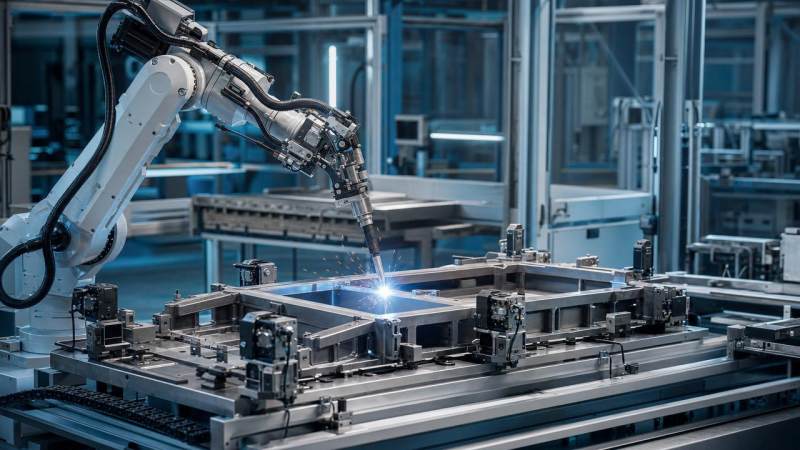
Choosing an industrial robotic welder OEM with high precision is not just about catalog specs—it is about verifying real weld accuracy under production conditions. For technical evaluators, the right comparison framework must connect repeatability, seam tracking, control intelligence, and integration reliability to measurable output quality. This guide explains how to assess OEMs with engineering rigor, reduce investment risk, and identify the suppliers most capable of delivering consistent welding performance.
Why Weld Accuracy Must Be Judged by Application Scenario
A technical evaluator rarely buys a robotic welding system for a generic use case. The real question is whether an industrial robotic welder OEM with high precision can maintain weld quality in the exact environment where the cell will run: thin sheet metal, heavy structural steel, mixed-model production, high-speed takt time, or low-volume high-mix fabrication. The same robot may perform well in one scenario and underperform in another if part variation, fixture quality, thermal distortion, or software capability are not aligned.
This is why OEM comparison should start with scenario mapping rather than brochure claims. In automotive body welding, micron-level positional consistency and cycle time stability matter most. In construction equipment, torch reach, gap tolerance, and deposition stability may matter more than peak speed. In contract manufacturing, fast program changeover and ease of operator recovery can outweigh absolute theoretical repeatability. For G-IFA-style benchmarking, application context is the filter that turns raw specification data into a reliable sourcing decision.
The Main Business Scenarios Where OEM Differences Become Visible
When comparing an industrial robotic welder OEM with high precision, technical teams should classify projects into a few practical operating scenarios. This avoids overvaluing a single metric such as repeatability while missing the system factors that actually affect weld accuracy on the line.
This scenario-based approach is especially useful for production directors and automation engineers who need to justify capital expenditure with measurable process outcomes. A supplier that is excellent for repetitive fixture-controlled welding may not be the best industrial robotic welder OEM with high precision for adaptive welding in variable part conditions.
Scenario 1: High-Volume Production Cells Need More Than Nominal Repeatability
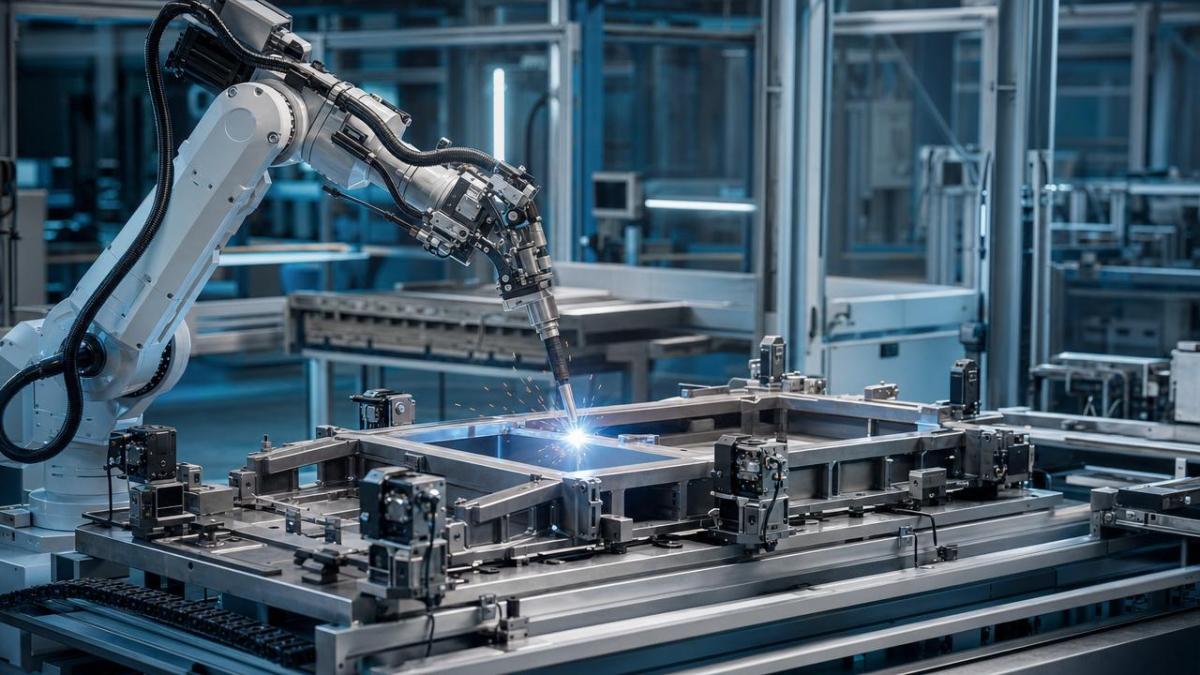
In high-volume manufacturing, the temptation is to shortlist OEMs based on robot arm repeatability alone. That is incomplete. Repeatability measured under ideal laboratory conditions does not automatically translate into weld accuracy once the torch, cable package, positioner, fixture, and heat input interact under continuous cycle loading. For this scenario, evaluators should compare the full welding package, not the manipulator in isolation.
The best industrial robotic welder OEM with high precision for this environment should demonstrate stable TCP retention, consistent arc ignition, and minimal path drift across long production runs. Ask for endurance data after thousands of cycles, not only first-run test results. Review how the OEM manages dress pack routing, torch collision recovery, and preventive maintenance intervals. Even small mechanical deviations become expensive when multiplied across a fast takt line.
Technical evaluators should also test whether the control platform supports real-time correction through seam tracking or laser guidance without slowing throughput beyond acceptable limits. In high-volume applications, a system that is slightly slower on paper but consistently in tolerance may outperform a faster competitor with more frequent rework.
Scenario 2: High-Mix, Low-Volume Shops Need Flexibility With Accuracy
Fabricators running many part numbers face a different challenge. Here, the value of an industrial robotic welder OEM with high precision depends on how quickly the system can adapt to changing geometries, variable fixtures, and limited engineering support. In these projects, the risk is not only bad welds but also lost time during setup, teaching, and recovery.
For this scenario, evaluators should examine offline programming capability, digital twin accuracy, touch sensing routines, and user interface design for parameter changes. If operators need excessive manual compensation every time a new batch starts, the OEM’s precision claim has limited practical value. Accuracy must be repeatable across changeovers, not just inside a fixed demonstration cell.
Another key factor is knowledge transfer. Some OEMs provide sophisticated controls but require highly specialized programmers. Others balance advanced functions with usable HMI design, template-based welding recipes, and clearer diagnostics. For smaller or decentralized plants, the second option may be the safer investment, especially when internal robotics expertise is uneven across shifts.
Scenario 3: Large Tolerance Workpieces Require Adaptive Control, Not Just Precision Hardware
Heavy equipment, energy infrastructure, and fabricated steel assemblies often involve dimensional variation that cannot be eliminated entirely upstream. In such cases, the right industrial robotic welder OEM with high precision is one that combines rigid mechanics with strong sensing and compensation capabilities. Pure positional precision is not enough when actual joint location moves from part to part.
Evaluate how each OEM handles seam search, through-arc tracking, laser seam finding, and coordinated motion with external axes. Ask whether compensation logic can adjust not only path location but also weld parameters such as weave width, travel speed, or current settings in response to joint condition. This matters because a robot that reaches the seam accurately may still produce poor metallurgical results if process adaptation is weak.
Also compare payload-to-reach behavior under actual torch and cable loads. Long-arm robots may show acceptable nominal specs but lose effective weld accuracy if structural deflection is not well controlled. For these applications, request trial data on representative large parts, preferably including positioners and real welding consumables.
What Technical Evaluators Should Measure Beyond the Datasheet
A disciplined OEM comparison should convert scenario needs into measurable checkpoints. Below are the evaluation areas that most often reveal the true capability gap between vendors.
Mechanical and motion accuracy
Check repeatability, absolute path accuracy, backlash behavior, interpolation smoothness, and thermal stability during continuous welding. If the process includes long seams or multi-axis coordination, request live demonstrations rather than relying on brochures.
Process control intelligence
Compare arc sensing, seam tracking, adaptive parameter control, and defect detection logic. A leading industrial robotic welder OEM with high precision should show how software improves weld outcome, not only robot movement.
Integration reliability
Review compatibility with PLCs, positioners, safety systems, MES, and quality traceability platforms. At G-IFA level, system openness matters because a precise robot that is hard to integrate can delay commissioning and reduce actual line performance.
Serviceability and lifecycle consistency
Accuracy is a lifecycle issue. Ask about spare parts availability, calibration routines, remote diagnostics, software updates, and local field support. Weld quality often degrades gradually when maintenance architecture is weak.
Common Misjudgments When Comparing Industrial Robotic Welder OEMs
One frequent mistake is choosing the OEM with the best single-axis or robot-only precision data while ignoring the welding package, fixture interaction, and process variability. Another is assuming that a brand proven in automotive will automatically fit shipbuilding, heavy machinery, or custom fabrication. The operating window is different, and so is the definition of “high precision.”
Technical evaluators also sometimes undervalue software maturity. Yet in many real factories, the difference between acceptable and excellent weld accuracy comes from how quickly the control system detects drift, compensates for joint variation, and guides recovery after interruptions. The strongest industrial robotic welder OEM with high precision is often the one with balanced mechatronics, controls, and service support rather than the most aggressive catalog numbers.
Finally, be careful with demo conditions. If test coupons are perfectly prepared, fixtured under ideal conditions, and run by the vendor’s best specialist, the result may not represent plant reality. Ask for FAT or pilot trials using your materials, your joint designs, and your expected production rhythm.
How to Build a Practical Comparison Framework for Supplier Selection
A useful sourcing framework starts by ranking application risks. Define whether your line is driven primarily by cosmetic appearance, penetration integrity, throughput, flexibility, or traceability. Then convert those priorities into weighted scoring criteria. For example, a pressure vessel project may assign more weight to process monitoring and quality records, while a mixed-model fabrication line may prioritize ease of reprogramming and adaptive sensing.
Next, require each OEM to respond using the same test matrix. This should include part types, material thickness range, welding process, cycle target, fixture assumptions, expected tolerance variation, and required data interfaces. A side-by-side evaluation becomes far more credible when all suppliers are measured under comparable constraints. This is the method technical benchmark organizations like G-IFA encourage because it reduces marketing noise and improves engineering transparency.
If possible, include pilot acceptance criteria such as bead position deviation, first-pass yield, recovery time after fault, and calibration retention after a fixed runtime period. These indicators reveal whether an industrial robotic welder OEM with high precision can deliver sustainable accuracy rather than short-term showroom performance.
FAQ for Evaluators Comparing High-Precision Robotic Welding OEMs
Is robot repeatability the best indicator of weld accuracy?
No. It is important, but actual weld accuracy depends on TCP stability, seam finding, fixture condition, torch package behavior, process control, and integration quality.
Which scenario benefits most from an industrial robotic welder OEM with high precision?
High-volume lines, critical joint applications, and mixed-model cells with tight quality requirements benefit the most. However, each scenario values precision differently, so the evaluation criteria must match the production context.
Should software and connectivity be part of the OEM comparison?
Yes. In modern smart manufacturing, weld precision is increasingly sustained by software intelligence, diagnostics, and data traceability, not mechanics alone.
Final Decision Guidance for Your Own Production Scenario
The right industrial robotic welder OEM with high precision is the one that proves accuracy in your production reality, not the one with the most impressive isolated specification. Start with scenario definition, compare suppliers using common test conditions, and focus on the interaction of mechanics, sensing, controls, and integration. For technical evaluators, this method reduces sourcing risk and leads to a more defensible automation investment.
If your organization is benchmarking candidates, align your review with measurable line outcomes: weld consistency, adaptation to variation, uptime, traceability, and long-term maintainability. That is the most reliable path to selecting an OEM capable of supporting high-performance welding inside a smart manufacturing strategy.
Recommended News
- 2026/10/24Car Spare Parts: How to Check Fitment and Avoid Ordering the Wrong PartOrder car spare parts with confidence. Learn how to verify VINs, OEM numbers, and fitment details to avoid costly mistakes and choose the right replacement first time.
- 2026/10/23How Do You Select a Motion Control System for Synchronized Axes?How do I select a motion control system for synchronized axes? Discover key timing, feedback, and performance checks to choose confidently and reduce costly integration risks.
- 2026/10/23Integrating End-of-Line Sortation with Packing Stations and Conveyor ControlsOptimize end of line sortation with coordinated packing stations and conveyor controls. Learn how to prevent bottlenecks, improve routing accuracy, and handle exceptions reliably.