
Search News
Industry Portal
Popular Tags
How to compare automation engineering quotation offers fairly?
Author
Dr. Victor Gear
Time
Apr 27, 2026
Pageviews
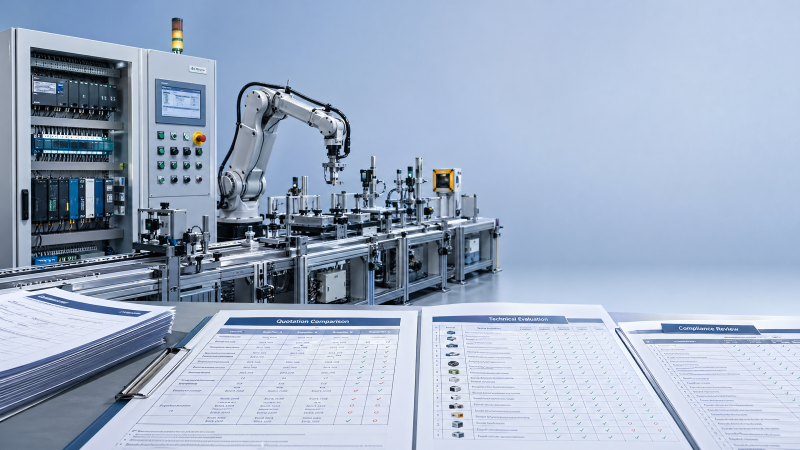
Comparing automation engineering quotation offers fairly is not about choosing the cheapest line at the bottom of a proposal. It is about making sure each supplier is pricing the same scope, the same technical performance, the same compliance level, and the same long-term support obligations. In practice, many buyers end up comparing unlike-for-like offers: one quotation includes commissioning, another excludes it; one includes CE documentation and FAT, another assumes the customer will handle them; one offers a lower industrial automation price but uses lower-grade components that increase downtime risk later.
If you want to compare offers fairly, start by normalizing scope, then review technical fit, standards compliance, lifecycle cost, delivery risk, and supplier capability. This applies whether you are evaluating a control systems cost proposal, an MES software price package, a motion control price breakdown, a hydraulic systems quotation, or a robotic arms quotation. The goal is simple: identify the offer that creates the best operational value with the lowest project risk.
What does a “fair” comparison of automation quotations actually mean?
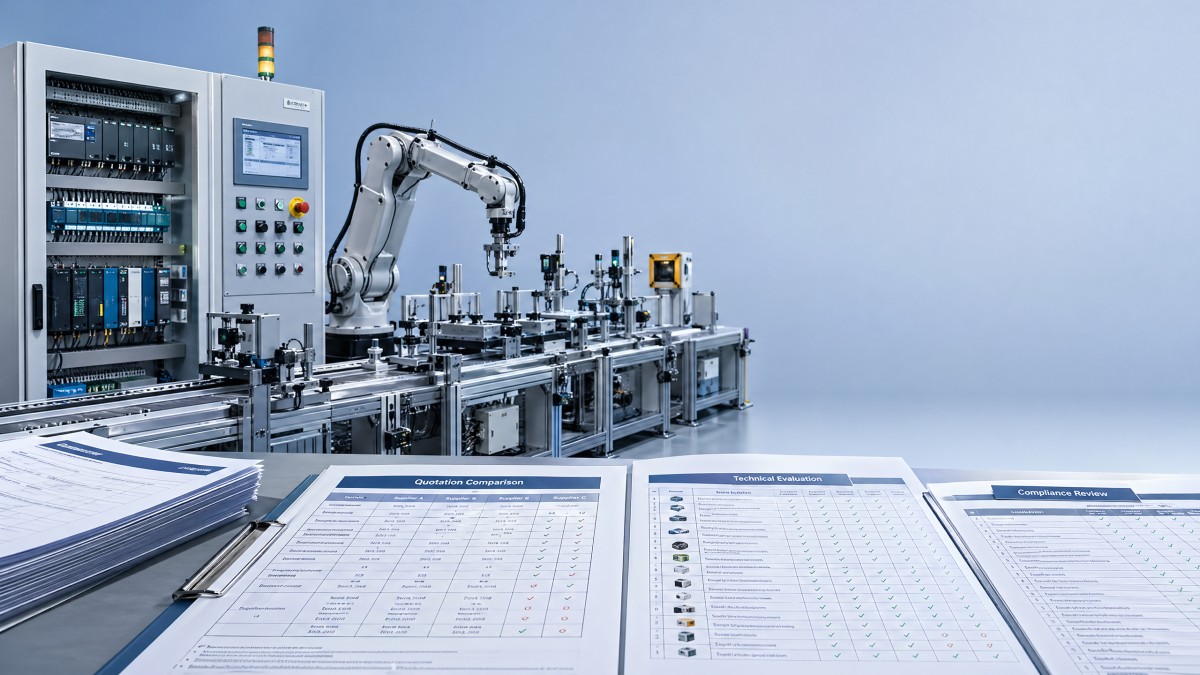
A fair comparison means every bidder is assessed against the same decision framework, not just the same budget target. In automation engineering, price alone rarely reflects total value. A lower quotation can become the most expensive option if it causes integration delays, lower OEE, software limitations, spare parts issues, or non-compliance with required standards.
At minimum, a fair comparison should answer these questions:
- Are all vendors quoting the same project scope?
- Are the same performance targets assumed?
- Do the offers include equivalent hardware and software quality levels?
- What is included in installation, testing, training, and after-sales support?
- What risks are transferred to the supplier and what risks remain with the buyer?
- What will the system cost to run, maintain, and expand over its lifecycle?
For procurement teams, this creates a structured sourcing process. For engineers and operators, it reduces technical mismatch. For decision-makers, it protects ROI and implementation timelines.
Start with scope normalization before comparing any price
The biggest reason quotation reviews go wrong is that suppliers price different assumptions. Before judging industrial automation price, create a scope normalization sheet. This document should list every required deliverable and force a line-by-line comparison.
Typical scope items to normalize include:
- System design and engineering hours
- PLC, HMI, SCADA, IPC, and network architecture
- Robotics, servo systems, drives, sensors, and safety devices
- Panel building and electrical design
- Pneumatic and hydraulic components
- MES, ERP, or IIoT software modules and licenses
- Installation, cable routing, and site integration work
- Factory Acceptance Test (FAT) and Site Acceptance Test (SAT)
- Documentation, validation files, manuals, and backups
- Training for operators, maintenance staff, and engineers
- Warranty, spare parts, and remote support terms
Without this step, a lower control systems cost may simply reflect missing engineering tasks. A lower MES software price may exclude connectors, analytics modules, user licenses, or cybersecurity hardening. A lower robotic arms quotation may not include end-of-arm tooling, safety fencing, or integration programming.
Compare technical fit, not just brand names and quantities
Once the scope is aligned, the next priority is technical suitability. Two suppliers may both offer servo systems, PLCs, or robots, but their selections may differ greatly in performance, maintainability, and compatibility with your plant.
Key technical comparison points include:
- Performance: cycle time, payload, repeatability, positioning accuracy, speed, torque, and throughput
- Environmental suitability: IP rating, temperature range, dust, moisture, washdown, vibration, or hazardous area needs
- Integration compatibility: existing PLC family, fieldbus protocol, ERP/MES connection, historian support, and network standards
- Scalability: future line expansion, modularity, software extensibility, and additional station support
- Maintainability: local spare part availability, diagnostics quality, ease of troubleshooting, and technician familiarity
This is especially important when reviewing motion control price or hydraulic systems quotation details. A cheaper servo package that lacks tuning stability at your target speed can reduce machine reliability. A low-cost hydraulic design may raise energy use and maintenance frequency. Technical fit should always be evaluated against your real production conditions, not only catalog specifications.
Check what is included in compliance, safety, and documentation
Compliance-related gaps are a hidden source of cost escalation. In many projects, one vendor includes safety validation, CE support, and technical file preparation, while another leaves these items undefined.
When comparing offers, verify whether the quotation includes:
- Conformity with relevant ISO, IEC, CE, UL, or local standards
- Machine safety risk assessment
- Safety PLC, relays, light curtains, interlocks, and emergency stop architecture
- Functional safety calculations and validation
- Electrical schematics, I/O lists, cable lists, and panel documentation
- Software backups, version control, source code access, and change logs
- Operation manuals and maintenance documentation
For enterprise buyers, this is not a paperwork issue alone. Compliance affects startup speed, legal exposure, audit readiness, and long-term serviceability. If one industrial automation price looks lower because safety engineering is not fully included, the comparison is not fair.
Look beyond CAPEX: compare lifecycle cost and operational impact
The best quotation is often not the cheapest purchase price, but the best total-cost-of-ownership option. This matters for all major automation categories, including MES software price evaluation, control systems cost review, and robotic arms quotation analysis.
Lifecycle cost factors include:
- Energy consumption
- Expected maintenance intervals
- Consumables and wear parts
- Software subscription or renewal fees
- Spare part pricing and delivery time
- Downtime risk and recovery speed
- Required operator skill level
- Upgrade cost over 3 to 10 years
For example, a lower MES software price may become less attractive if every integration, dashboard, or user expansion requires a paid add-on. A low motion control price may hide future replacement costs if the drive family has poor long-term support. A lower robotic arms quotation may deliver weaker uptime if local service coverage is limited.
A practical way to compare lifecycle value is to score each supplier on a weighted matrix:
- Initial project cost
- Technical performance
- Standards compliance
- Service and support capability
- Estimated operating cost
- Expansion flexibility
- Implementation risk
Assess delivery risk, project execution quality, and support model
In automation projects, execution quality is often as important as hardware selection. A supplier with a strong engineering process can reduce debugging time, startup delays, and change-order disputes.
Review these supplier-side factors carefully:
- Relevant industry references and case studies
- Experience with similar line speeds, products, or factory standards
- Project management methodology and communication plan
- Lead times for key components
- In-house versus subcontracted engineering scope
- Commissioning team capability
- Local service presence and response SLA
- Training depth for operators and maintenance teams
This is where decision-makers can separate a low headline quotation from a reliable project partner. A low control systems cost is less meaningful if the vendor cannot support FAT, SAT, or post-launch tuning effectively. In smart manufacturing environments, support responsiveness can directly affect production continuity.
Watch for common quotation traps that distort comparison
Many automation offers appear competitive because important costs are deferred, excluded, or vaguely defined. Watch for these common traps:
- Open-ended integration scope: “to be confirmed” items later become change orders
- Excluded site work: installation, cable trays, utilities, or mechanical adaptation not included
- Limited software rights: source code access restricted or license ownership unclear
- Unclear acceptance criteria: performance targets not contractually measurable
- Optimistic lead times: critical components not actually secured
- Minimal warranty language: weak coverage for commissioning defects or early failures
- Training gaps: operators receive only basic handover, reducing real usability
These issues matter across all quotation types, from hydraulic systems quotation packages to MES software price proposals. If an item is important to plant operation, it should be explicitly written into the offer.
A practical checklist to compare automation engineering quotations fairly
If you need a usable internal method, apply this sequence:
- Define the required outcome: throughput, quality, compliance, integration, and support expectations
- Issue a common bid structure: force all vendors to quote the same template
- Normalize scope: mark included, excluded, and optional items
- Review technical fit: compare architecture, components, and performance assumptions
- Check compliance and documentation: verify standards and deliverables
- Calculate lifecycle cost: not only purchase price
- Score execution risk: experience, lead time, service, and commissioning quality
- Clarify commercial terms: payment schedule, warranty, penalties, and change-order rules
- Run a final weighted evaluation: combine cost, value, and risk into one view
This process helps procurement teams stay objective while giving engineers enough depth to validate technical decisions. It also gives business leaders a stronger basis for approving investment with confidence.
When should the lowest quotation be rejected?
The lowest offer should be rejected when it creates a clear imbalance in risk, performance, or ownership cost. Examples include:
- Critical scope omissions compared with other bids
- Inferior compliance or safety provisions
- Weak software openness or poor integration capability
- Unrealistic delivery promises
- Low-quality components in uptime-critical applications
- Insufficient post-installation service support
In other words, if the quotation looks cheaper because it shifts risk back to your factory, it is not truly cheaper. This is one of the most important principles when evaluating industrial automation price proposals in modern production environments.
Conclusion: fair comparison means comparing value, risk, and fitness together
To compare automation engineering quotation offers fairly, do not start with the final price line. Start with scope alignment, technical fit, standards compliance, lifecycle economics, and supplier execution capability. Whether you are reviewing control systems cost, MES software price, motion control price, hydraulic systems quotation, or robotic arms quotation, the winning offer should be the one that best supports reliable production, safe operation, and scalable business performance.
A fair comparison protects more than budget. It protects uptime, compliance, maintainability, and long-term ROI. For buyers, engineers, operators, and business leaders alike, that is the standard that turns quotation review into a strategic decision rather than a price-only exercise.
- motion control
- MES software
- hydraulic systems
- control systems
- smart manufacturing
- industrial automation
- automation engineering
- robotic arms
- robotic arms quotation
- motion control price
- automation engineering quotation
- industrial automation price
- control systems cost
- hydraulic systems quotation
- MES software price
Recommended News
- 2026/10/25750W High-Speed Servo Motors: Evaluating Torque at Your Required RPMSelecting a high-speed servo 750W? Learn to verify torque at your required RPM, assess duty cycles, and match the drive to avoid overheating and costly sizing mistakes.
- 2026/10/24Why Do Motion Control Systems Lose Positioning Accuracy?Why does motion control lose positioning accuracy? Discover how backlash, heat, encoder errors, and servo tuning affect precision—and learn how to diagnose faults and reduce downtime.
- 2026/10/24Power Plant Process Controls: How Boiler–Turbine Coordination WorksExplore power plant process controls to see how boiler–turbine coordination balances load response and steam pressure. Learn what to evaluate for stable, reliable plant performance.