
Search News
Industry Portal
Popular Tags
Is an industrial robotics manufacturer ready to scale?
Author
Dr. Victor Gear
Time
May 23, 2026
Pageviews
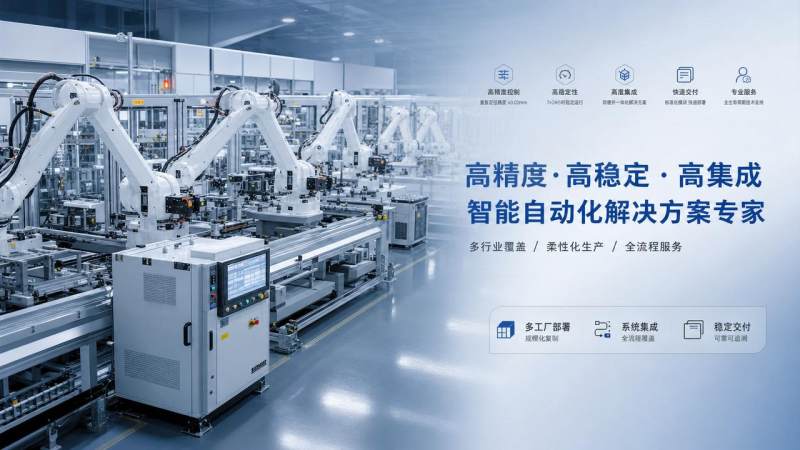
Is an industrial robotics manufacturer truly ready to scale beyond pilot projects and regional demand? For project managers and engineering leaders, growth is not just about output—it depends on system reliability, compliance, integration readiness, and long-term ROI. This article explores the technical and operational benchmarks that define scalable automation, helping decision-makers reduce risk and build smarter expansion strategies.
For teams responsible for factory expansion, a capable industrial robotics manufacturer must do far more than assemble robot arms. It must support multi-site deployment, deliver stable control architecture, meet international standards, and integrate with upstream and downstream systems such as PLCs, MES, ERP, servo drives, sensors, and safety networks.
This matters even more in Industry 4.0 environments, where automation decisions affect cycle time, asset utilization, maintenance workload, and digital traceability for 3 to 10 years. Platforms such as G-IFA help decision-makers compare hardware precision, software intelligence, and engineering maturity across the full automation stack before budgets are committed.
What scaling readiness means for an industrial robotics manufacturer
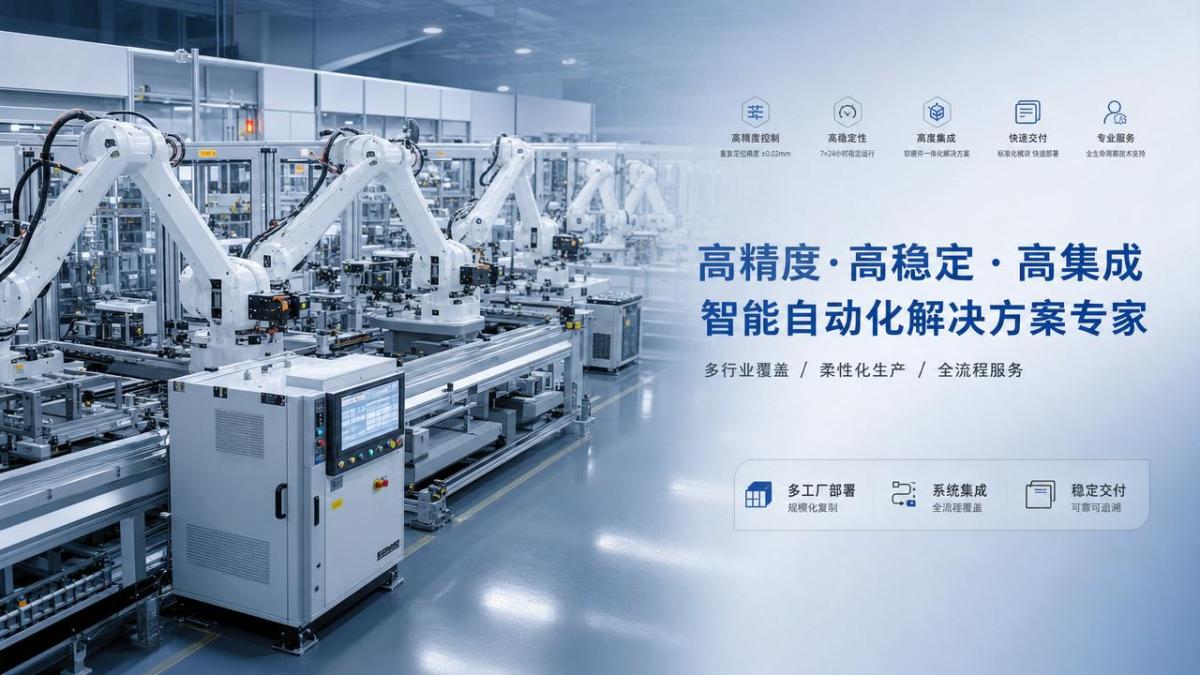
Scaling is not simply increasing annual unit shipments from 100 systems to 1,000 systems. For project leaders, the real question is whether the industrial robotics manufacturer can replicate performance across regions, applications, and customer environments without driving up downtime, integration cost, or commissioning delays.
In practical terms, readiness to scale usually depends on 4 interconnected layers: hardware consistency, control compatibility, compliance management, and lifecycle support. If one layer is weak, expansion often stalls after the first 2 or 3 successful pilot lines.
The shift from pilot success to repeatable delivery
A pilot cell can tolerate engineering workarounds, manual tuning, and local service intervention. A scaled program cannot. Once deployments move across 5 plants or more, variation in wiring standards, network architecture, gripper interfaces, and safety validation can multiply project risk very quickly.
That is why repeatability matters. The industrial robotics manufacturer should be able to document payload ranges, repeatability tolerances, control cabinet options, communication protocols, and spare-part logic in a standardized format. Common robot repeatability targets in industrial applications often range from ±0.02 mm to ±0.1 mm, depending on task and arm class.
Key signals that project managers should verify
Before approving a larger rollout, engineering teams should validate whether the supplier can support not only the robot, but the complete production context. The checklist below helps frame that review.
- Stable delivery lead times, typically within 8 to 16 weeks for standard configurations
- Documented integration with at least 3 common industrial communication protocols such as EtherNet/IP, PROFINET, or EtherCAT
- Safety architecture that supports cell-level risk assessment, guarding, emergency stops, and functional safety validation
- Service response structure with remote diagnosis and on-site escalation targets, often within 24 to 72 hours
- Parts availability planning for wear components, controllers, teach pendants, cables, and reducers
Why benchmarking matters
An industrial robotics manufacturer may look competitive on unit price, but scaling decisions should be benchmarked against broader automation performance. G-IFA’s cross-sector view is useful here because robot deployment quality depends on interactions with motion control, PLC logic, industrial software, and pneumatic or hydraulic subsystems, not just the arm itself.
The table below summarizes the difference between pilot-stage capability and true scaling readiness from a project management perspective.
The pattern is clear: scaling readiness is a systems capability, not a sales claim. Project managers who assess only arm speed or payload often miss the operational factors that decide whether expansion stays on schedule.
Technical benchmarks that reduce risk in multi-site automation programs
When selecting an industrial robotics manufacturer for broader deployment, technical due diligence should focus on the interfaces between machine performance and plant infrastructure. This is where many rollout failures appear, especially in facilities with mixed-vendor control systems or legacy equipment older than 7 years.
1. Mechanical performance and application fit
A scale-ready robotics platform should offer a clear matrix across payload, reach, mounting orientation, and duty cycle. For example, project teams may need compact 3 kg to 12 kg cobot-style handling for assembly, 20 kg to 80 kg robots for packaging and palletizing, or 100 kg and above for heavy machine tending.
Engineering fit also includes ingress protection, thermal limits, vibration tolerance, and end-effector compatibility. If one site requires IP65 washdown protection and another runs clean dry assembly, the industrial robotics manufacturer should support both without forcing an entirely different software environment.
2. Control compatibility and software openness
Robot hardware is only one part of the production cell. Large automation programs depend on reliable communication with PLCs, HMI layers, SCADA, MES, and quality systems. A mature supplier should provide standard fieldbus options, API documentation where relevant, and data models that simplify OEE tracking, fault logging, and recipe management.
This is especially important when commissioning windows are tight. In many factories, final line integration takes only 2 to 6 weeks, so teams cannot afford closed architectures that require custom middleware for every new deployment.
3. Compliance, safety, and international deployment readiness
For regional expansion, compliance readiness must be reviewed early. The industrial robotics manufacturer should be prepared to support documentation and design alignment around standards commonly referenced in global automation projects, including ISO, IEC, and CE-related expectations where applicable.
Project leaders should confirm whether the vendor can supply electrical drawings, risk-assessment inputs, maintenance procedures, and user manuals in the formats needed by local authorities or internal corporate engineering teams. Missing documents can delay FAT or SAT by days or even several weeks.
A practical benchmark matrix
The following benchmark matrix gives project managers a structured way to compare suppliers during technical review and procurement workshops.
These ranges are not universal specifications, but they provide a realistic baseline for comparing suppliers. A project team can then adjust thresholds according to takt time, product variation, plant location, and internal maintenance capability.
Operational scaling: supply chain, service, and lifecycle economics
Even a technically strong industrial robotics manufacturer can struggle during expansion if its supply chain and service model are immature. For project managers, this is where budgeting and scheduling become tightly linked. A delayed reducer, controller, or teach pendant can stop an entire installation sequence.
Supply continuity and modular design
Manufacturers ready to scale usually rely on modular platforms rather than highly fragmented custom designs. Shared controller families, common cable sets, standardized end-of-arm interfaces, and unified programming logic can reduce spare-part complexity by 20% to 40% in larger fleets, depending on deployment scope.
This directly benefits engineering teams managing 3, 6, or 12 line expansions. Standardization lowers training time, simplifies maintenance plans, and improves uptime because technicians face fewer unique failure modes across sites.
Service depth beyond warranty terms
A strong industrial robotics manufacturer should provide a lifecycle support model, not just a warranty period. That includes preventive maintenance intervals, firmware update policy, obsolescence planning, remote troubleshooting tools, and technician training paths for plant teams or local integrators.
For mission-critical cells, project teams should ask for service definitions in measurable terms: inspection every 6 or 12 months, stocked critical spares for 24 months, remote diagnostics capability, and escalation procedures for repeated faults. Service language without metrics creates budget uncertainty later.
ROI should include downtime and integration cost
Purchase price alone rarely predicts total project value. A lower-cost robot can become more expensive if it requires longer programming time, custom communication gateways, or frequent service calls. For a realistic ROI model, teams should calculate at least 5 cost layers over 3 to 5 years.
- Initial equipment and tooling cost
- Integration and commissioning labor
- Training and process validation time
- Spare parts and preventive maintenance
- Downtime exposure and recovery speed
When these layers are modeled together, the most scalable industrial robotics manufacturer is often the one with the lowest disruption risk, not the lowest invoice amount.
How project managers can evaluate a supplier before full rollout
A structured evaluation process helps engineering leaders avoid rushed decisions driven by pilot enthusiasm. Before moving from one demonstration cell to enterprise rollout, teams should review the supplier in stages and confirm performance with documented evidence.
A 5-step validation framework
The framework below is practical for project managers overseeing cross-functional automation investments.
- Step 1: Define the application envelope, including payload, cycle time, reach, environmental conditions, and line availability targets
- Step 2: Review control and software interfaces, especially PLC, vision, MES, and safety communication requirements
- Step 3: Validate compliance documentation, FAT criteria, SAT criteria, and maintenance procedures
- Step 4: Stress-test support readiness through spare-part mapping, response timelines, and training coverage
- Step 5: Run a fleet-level ROI model for 3 to 5 years instead of a single-cell payback estimate
Common mistakes during supplier selection
Many scaling programs underperform because teams focus heavily on robot speed and ignore deployment friction. Other common mistakes include accepting unclear software licensing terms, underestimating network integration work, and failing to align local plant maintenance capability with the selected platform.
Another frequent issue is evaluating the industrial robotics manufacturer in isolation. In reality, robotic performance depends on the wider automation architecture. Benchmarking data across robotics, PLC control, motion systems, industrial software, and fluid power components gives a more accurate picture of project risk.
Where G-IFA adds value to decision-making
For project managers and engineering leads, G-IFA provides a practical reference layer across 5 critical automation pillars: Industrial Robotics & Cobots, PLC & Control Systems, Motion Control & Transmission, Industrial IoT & Software, and Pneumatic & Hydraulic Systems. That broader view supports decisions that are technically connected, not siloed.
By comparing automation components against recognized international frameworks and engineering expectations, teams can identify mismatches earlier, narrow supplier lists faster, and reduce the risk of scaling with equipment that performs well in demos but poorly in complex production environments.
A project-ready industrial robotics manufacturer is one that can deliver repeatable mechanical performance, open integration, compliance support, stable supply, and measurable lifecycle service across multiple sites. For engineering leaders, that combination is what turns automation from a pilot success into a scalable production asset.
If you are comparing suppliers, planning a multi-line upgrade, or building a long-term smart manufacturing roadmap, use structured benchmarks before expanding. To reduce risk and evaluate solutions with greater technical clarity, contact G-IFA, request a tailored assessment, or explore more automation benchmarking insights today.
Recommended News
- 2026/10/24Car Spare Parts: How to Check Fitment and Avoid Ordering the Wrong PartOrder car spare parts with confidence. Learn how to verify VINs, OEM numbers, and fitment details to avoid costly mistakes and choose the right replacement first time.
- 2026/10/23How Do You Select a Motion Control System for Synchronized Axes?How do I select a motion control system for synchronized axes? Discover key timing, feedback, and performance checks to choose confidently and reduce costly integration risks.
- 2026/10/23Integrating End-of-Line Sortation with Packing Stations and Conveyor ControlsOptimize end of line sortation with coordinated packing stations and conveyor controls. Learn how to prevent bottlenecks, improve routing accuracy, and handle exceptions reliably.