
Search News
Industry Portal
Popular Tags
What makes an industrial robotic welder oem fit shipyards
Author
Dr. Victor Gear
Time
May 28, 2026
Pageviews
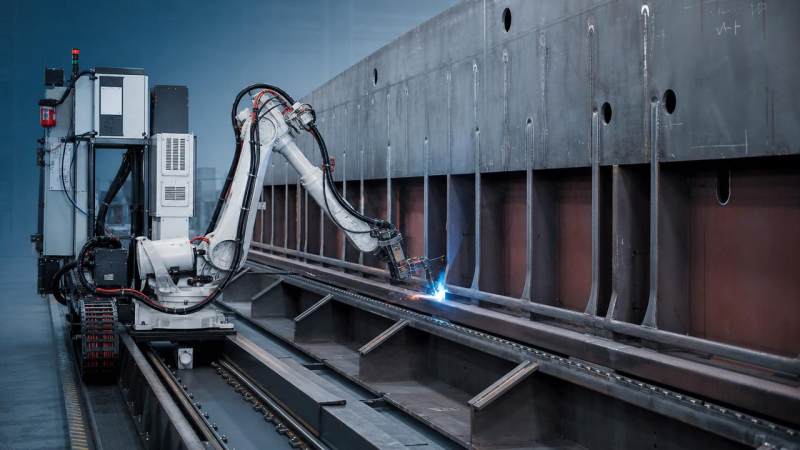
Choosing an industrial robotic welder oem for shipbuilding is about far more than weld speed alone. In shipyards, harsh environments, oversized steel sections, and strict certification demands require automation partners that combine robust hardware, precise control, and proven integration expertise. For decision-makers, the right OEM can reduce production risk, improve weld consistency, and support long-term competitiveness in modern vessel manufacturing.
Why does an industrial robotic welder OEM for shipbuilding need a different standard?
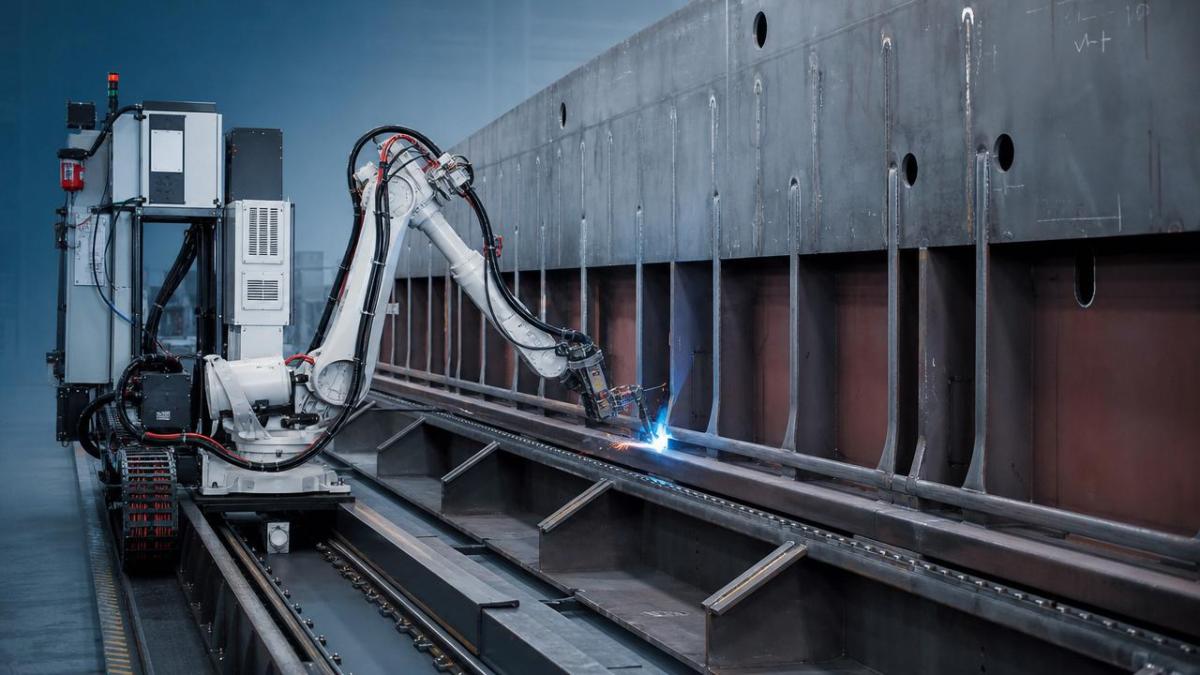
A shipyard is not a standard factory floor. It handles large steel panels, curved structures, thick plates, long seam welding, and frequent repositioning. That changes the selection logic for any industrial robotic welder oem for shipbuilding.
Decision-makers usually focus on output, labor availability, and payback period. Yet in shipbuilding, weld accessibility, gantry travel, arc stability, fume control, and classification compliance can affect project performance just as much as robot cycle time.
This is where G-IFA adds value. Rather than treating robotics as an isolated machine purchase, G-IFA evaluates the full automation chain: robotic arms, welding power sources, PLC and control systems, motion platforms, industrial software, and data visibility against recognized engineering practices.
- Shipyards need systems that can tolerate dust, spatter, vibration, and temperature variation without losing repeatability.
- Production teams need integrators and OEMs that understand plate line workflows, block assembly, and rework reduction.
- Management needs traceability, service support, and realistic commissioning plans rather than only attractive brochure specifications.
An OEM fit for shipyards is therefore not simply a robot supplier. It is a technical partner capable of aligning welding quality, line integration, safety logic, digital monitoring, and long equipment life under demanding marine fabrication conditions.
Which shipyard applications are best suited to robotic welding?
Not every weld in shipbuilding should be automated first. The strongest return usually comes from repetitive, high-volume, geometry-stable tasks where manual welding creates bottlenecks, variation, or labor strain.
High-potential applications
- Panel line welding for flat sections with predictable seam paths and recurring part dimensions.
- Stiffener and bracket welding where consistency and speed strongly influence downstream assembly.
- Sub-assembly fabrication for blocks, frames, and modular units that benefit from offline programming and fixture-based positioning.
- Heavy plate fillet and butt welds where arc quality, deposition control, and reduced operator exposure matter.
Applications that require more caution
- Highly variable repair work with poor part consistency and unpredictable access angles.
- Tight compartments where conventional robot reach and collision avoidance become difficult.
- Low-volume custom weldments where programming and fixture cost outweigh labor savings.
For executives, the key is phased automation. Start with repetitive weld families that can prove quality and throughput gains, then expand into more complex stations as digital process knowledge matures.
What technical capabilities should buyers assess first?
When comparing an industrial robotic welder oem for shipbuilding, headline payload and reach are not enough. Buyers should review the complete welding cell architecture, because shipyard performance depends on how the robot, positioner, controls, software, and welding process work together.
The table below highlights practical evaluation points that production directors and engineering teams should prioritize during prequalification.
A strong OEM should be able to explain these items in relation to your weld map, part mix, and production takt. If the conversation stays too general, the solution may not be mature enough for shipyard deployment.
How should executives compare OEM options beyond price?
Low acquisition price can become expensive if the system struggles with fit-up variation, programming complexity, or unreliable uptime. A realistic comparison framework should combine capital cost with operational impact and implementation risk.
The following comparison table can help decision-makers assess whether an industrial robotic welder oem for shipbuilding is suitable for strategic investment rather than short-term budget relief.
For many shipyards, the best-value option is the one that reduces schedule disruption, welding defects, and ramp-up friction. That is why benchmarking total solution capability matters more than comparing robot arm prices alone.
What standards, controls, and compliance issues should not be overlooked?
Shipbuilding buyers operate under tighter quality scrutiny than many general fabrication sectors. Welding automation must therefore support not only productivity goals but also auditable process control and safe equipment integration.
Key compliance checkpoints
- Electrical and machinery compliance should be checked against applicable ISO, IEC, CE, and local safety requirements for industrial equipment.
- Welding procedure qualification, parameter management, and process traceability should align with the yard’s quality system and customer documentation expectations.
- Robot cell safety should cover guarding, emergency stop logic, interlocks, access zones, and maintenance modes.
- Data integration with MES, ERP, or production reporting tools should be reviewed early if management wants visibility into utilization, downtime, and weld history.
G-IFA’s cross-sector benchmarking is useful here because it connects mechanical performance with software intelligence. In practical terms, that helps buyers assess whether a proposed robotic welding system can support both shop-floor execution and management-level traceability.
A common mistake is postponing compliance review until late-stage commissioning. That often causes redesign, delayed acceptance, or restricted production release. Early specification discipline lowers these risks significantly.
How can buyers reduce project risk during procurement and implementation?
A good industrial robotic welder oem for shipbuilding should not only sell equipment; it should support a clear decision path from feasibility to stable production. This is especially important when capital budgets are under pressure and delivery windows are tight.
Practical procurement checklist
- Define the first automation target by weld family, annual volume, plate range, and quality pain point rather than by vague automation ambition.
- Request a preliminary process concept covering robot type, welding source, external axes, fixture assumptions, software scope, and operator roles.
- Verify how the OEM manages seam variation, fit-up deviation, torch maintenance, and offline programming for large assemblies.
- Ask for a commissioning plan with milestones for FAT, site installation, training, trial production, and acceptance criteria.
- Review spare parts strategy, remote support method, and expected response time before contract finalization.
Implementation sequence that usually works
- Feasibility assessment using real parts, weld procedures, and production routing data.
- Cell design with integration points for controls, motion, safety, and data interfaces.
- Offline programming and fixture validation before installation.
- Factory acceptance testing and shipyard commissioning with process tuning.
- Operator training, KPI tracking, and phased optimization after start-up.
This structured approach helps management compare vendors on execution quality, not just proposal appearance. It also exposes hidden gaps in controls, software, or service capability before they become operational problems.
What cost factors and alternatives should be considered?
The business case for robotic welding in shipyards depends on more than labor replacement. Rework costs, schedule penalties, consumable usage, floor utilization, and quality consistency often have equal or greater financial impact.
The cost table below helps frame discussions around investment options and realistic trade-offs.
In many yards, a mixed strategy makes sense. Use robotic cells for repeatable panel and sub-assembly work, while keeping manual or portable welding resources for repair, outfitting, and low-repeatability zones. This balanced model supports both productivity and operational flexibility.
FAQ: what do buyers ask most about an industrial robotic welder OEM for shipbuilding?
How do we know if robotic welding is suitable for our shipyard?
Start by identifying repetitive weldments with stable geometry, measurable rework cost, and labor bottlenecks. If those jobs consume a meaningful share of throughput time, a robotic cell is often worth evaluating. The best candidates usually involve panels, stiffeners, frames, and modular sub-assemblies.
What is the biggest mistake when selecting an OEM?
Choosing on equipment price alone. In shipbuilding, integration depth, welding process knowledge, and commissioning capability often matter more than the base robot model. A low-cost system with weak fixturing logic or poor support can create expensive downtime and quality drift.
Should we prioritize hardware or software capability?
Both matter, but software increasingly shapes long-term value. Offline programming, production data capture, alarm visibility, and parameter traceability help shipyards scale automation with less disruption. G-IFA’s perspective is especially relevant because it bridges hardware precision with digital control intelligence.
How long does implementation usually take?
The timeline depends on cell complexity, fixture readiness, and interface scope. Buyers should ask for a milestone plan covering concept validation, mechanical build, controls integration, FAT, site installation, and training. A credible OEM will define assumptions clearly instead of offering an unrealistically short promise.
Why work with G-IFA when evaluating shipyard welding automation?
G-IFA helps decision-makers evaluate automation with engineering discipline rather than vendor noise. Its value lies in comparing industrial robotics, control systems, motion platforms, industrial software, and fluid power infrastructure through a common technical lens.
For buyers assessing an industrial robotic welder oem for shipbuilding, that means clearer visibility into solution fit, integration risk, compliance logic, and lifecycle practicality. Instead of reviewing each component in isolation, management can make decisions based on how the complete system will perform in a demanding production environment.
- Clarify technical parameters for robot reach, welding process, external axes, and control architecture.
- Compare solution paths for panel welding, block fabrication, or mixed production layouts.
- Review delivery planning, commissioning scope, software integration, and support expectations.
- Discuss certification considerations, traceability needs, and practical procurement criteria.
If your team is defining a new shipyard automation project or upgrading an existing welding line, contact G-IFA to discuss parameter confirmation, OEM selection, integration strategy, delivery timing, custom solution design, and quotation alignment. A better decision usually starts with a better technical filter.
Recommended News
- 2026/10/24Car Spare Parts: How to Check Fitment and Avoid Ordering the Wrong PartOrder car spare parts with confidence. Learn how to verify VINs, OEM numbers, and fitment details to avoid costly mistakes and choose the right replacement first time.
- 2026/10/23How Do You Select a Motion Control System for Synchronized Axes?How do I select a motion control system for synchronized axes? Discover key timing, feedback, and performance checks to choose confidently and reduce costly integration risks.
- 2026/10/23Integrating End-of-Line Sortation with Packing Stations and Conveyor ControlsOptimize end of line sortation with coordinated packing stations and conveyor controls. Learn how to prevent bottlenecks, improve routing accuracy, and handle exceptions reliably.