
Search News
Industry Portal
Popular Tags
Automation Solutions That Create Hidden Maintenance Costs
Author
Cobots
Time
Apr 17, 2026
Pageviews
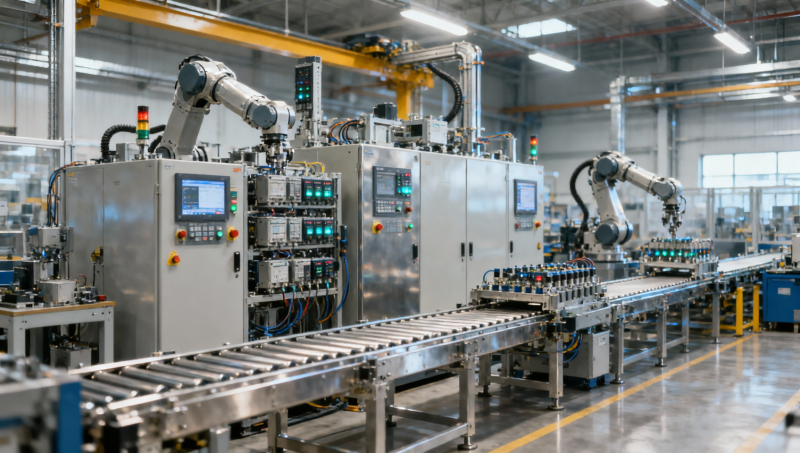
Many automation solutions promise faster output, but hidden maintenance costs often emerge when industrial equipment, automation components, and industrial control systems are poorly matched to real factory demands. For teams researching factory integration, production automation, and intelligent manufacturing, understanding how industrial machinery and manufacturing systems affect uptime, service burden, and robotic arms performance is essential before making long-term investment decisions.
The core issue is not whether automation improves productivity—it usually does. The real question is whether the chosen system will stay reliable, serviceable, and cost-effective after installation. For information researchers and frontline users, hidden maintenance costs often come from poor component compatibility, over-complex system design, limited spare parts availability, difficult diagnostics, and software dependencies that increase downtime. In practice, the best automation solution is not the one with the most features, but the one that fits the factory’s process, operator skill level, and maintenance capacity.
Where hidden maintenance costs usually start
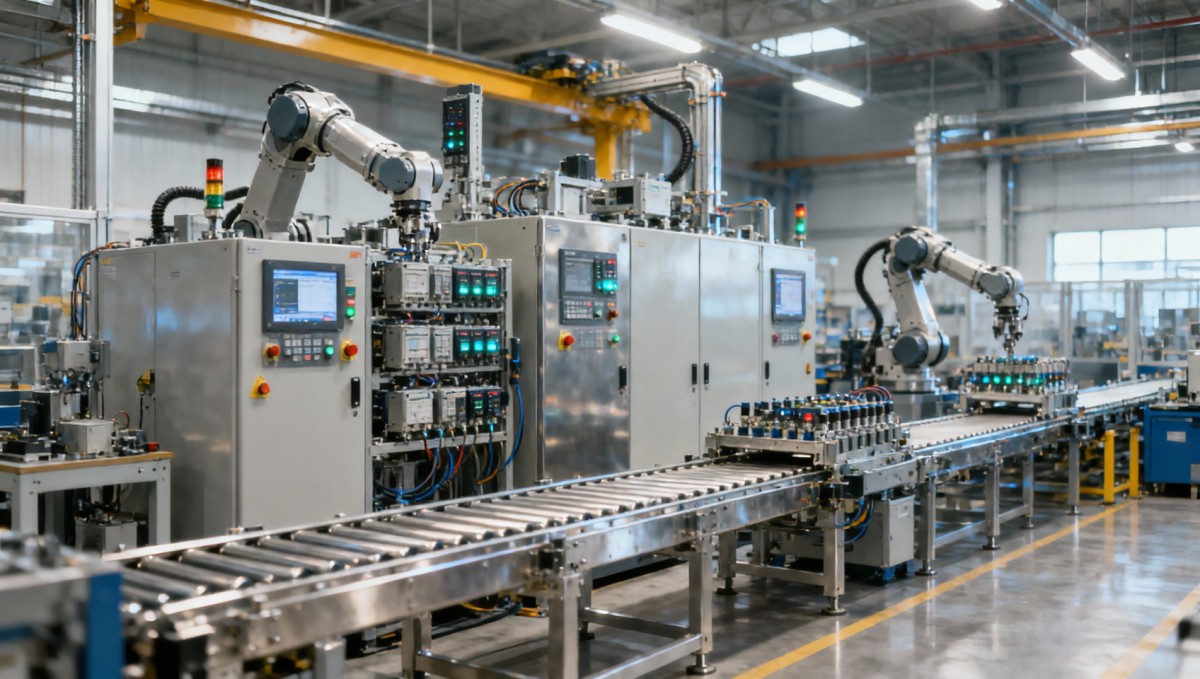
Many production automation projects look efficient on paper but become expensive in daily operation. This usually starts long before breakdowns appear. Hidden maintenance costs are often built into the original design decision.
Common causes include:
- Overengineered systems: A highly advanced setup may offer capabilities the factory does not actually use, while creating more failure points and more difficult troubleshooting.
- Poor integration between industrial machinery and control systems: When PLC platforms, sensors, drives, robotic arms, and software are not well matched, maintenance becomes slower and more dependent on specialist support.
- Limited standardization: Using too many brands, protocols, or custom components increases spare parts complexity and training requirements.
- Difficult software maintenance: Licensing restrictions, proprietary programming environments, and vendor-only updates can turn small adjustments into recurring service costs.
- Weak environmental fit: Dust, heat, vibration, washdown exposure, or unstable power conditions can shorten component life if the selected automation components are not designed for the real operating environment.
In smart manufacturing, maintenance cost is often less about one major failure and more about repeated small losses: longer diagnosis time, extra technician visits, frequent recalibration, more unplanned stoppages, and delayed production recovery.
What operators and researchers should check before trusting an automation proposal
Target readers searching this topic usually want practical decision criteria. They want to know how to identify risk before purchase, not after commissioning. A useful evaluation should focus on service burden, uptime stability, and long-term maintainability.
Before accepting an automation solution, check these areas carefully:
- Mean time to repair: If a drive, PLC module, HMI, or sensor fails, how quickly can the issue be isolated and fixed?
- Spare parts access: Are critical parts stocked locally? Are lead times acceptable for production continuity?
- Diagnostic transparency: Can in-house teams read alarms, trace faults, and restore operation without waiting for the integrator?
- Programming openness: Can plant engineers modify basic logic and parameters safely, or is every adjustment locked behind external service support?
- Training burden: Does the system match the actual skill level of operators and maintenance technicians?
- Compatibility with existing manufacturing systems: Can the new solution communicate smoothly with MES, ERP, SCADA, and existing industrial control systems?
For information researchers, this is where benchmarking becomes important. Comparing equipment only by speed, payload, or advertised intelligence is not enough. Industrial robotics, servo systems, pneumatic units, and control platforms should also be assessed for lifecycle serviceability, parts ecosystem, documentation quality, and standards compliance.
Why some “high-performance” automation systems become expensive to own
High-performance automation hardware can deliver real gains, but only when the surrounding production conditions support it. In many factories, hidden maintenance costs appear because system capability is higher than operational readiness.
For example, a fast robotic arm may improve cycle time, but if end-of-arm tooling wears quickly, calibration drifts often, or programming changes require external specialists, the performance gain may be offset by maintenance burden. Similarly, advanced motion control systems can increase accuracy, but if the plant lacks technicians trained in servo tuning and network diagnostics, downtime may increase instead of decrease.
This problem is especially common in:
- Factories upgrading from semi-automatic lines to fully integrated automation
- Sites with mixed legacy and new industrial control systems
- Operations with high product variation and frequent changeovers
- Plants where maintenance teams are small or multi-functional rather than specialized
In these cases, hidden costs often come from adaptation work: software patching, interface modules, repeat commissioning, emergency support visits, and production losses during troubleshooting. The automation solution may still be technically impressive, but economically inefficient.
How to judge whether an automation solution fits real factory conditions
A practical automation decision should connect engineering performance with day-to-day factory reality. For users and operators, the best system is one that can be maintained consistently under normal plant conditions.
Use the following fit-check questions:
- Is the solution sized for the actual process?
Avoid selecting capacity, precision, or software complexity far beyond real production needs. - Can operators recover from common faults quickly?
A system that stops often and requires specialist reset procedures will create recurring productivity loss. - Are wear parts and consumables predictable?
Pneumatic seals, belts, filters, sensors, and connectors should have clear replacement intervals and manageable cost. - Does the control architecture support modular maintenance?
Modular I/O, standardized wiring, and clear labeling reduce service time significantly. - Is the vendor ecosystem stable?
Long-term support matters. A low initial price may become expensive if support channels are weak or product lines are discontinued.
For intelligent manufacturing projects, fit matters more than marketing language. A simpler, well-supported production automation system often delivers better total value than a more advanced but fragile setup.
How hidden maintenance costs affect total ROI
Many buyers calculate ROI from labor reduction, higher throughput, and lower defect rates. That is necessary, but incomplete. A realistic ROI model should include maintenance-related losses that emerge over the full lifecycle.
These hidden cost categories should be included:
- Unplanned downtime and lost output
- External service contracts and emergency support fees
- Software update and licensing costs
- Operator retraining and maintenance training
- Spare parts inventory expansion
- Integration rework between machines and software platforms
- Quality losses caused by drift, instability, or inconsistent synchronization
When these factors are included, some low-price automation solutions no longer look economical. On the other hand, equipment with better diagnostics, stronger standards alignment, and better parts availability may show lower total ownership cost even with a higher initial investment.
This is why engineering-led benchmarking is valuable. Comparing industrial equipment through the lens of uptime, maintainability, interoperability, and standards compliance helps reduce risk before capital is committed.
What a lower-risk automation strategy looks like
A lower-risk strategy does not reject advanced automation. It applies it with discipline. The goal is to improve factory efficiency without creating a maintenance structure the plant cannot sustain.
In most cases, a lower-risk automation roadmap includes:
- Standardized core platforms: Fewer control ecosystems make troubleshooting and training easier.
- Clear maintenance access: Mechanical layout, cable routing, and component positioning should support safe and fast service work.
- Open diagnostic visibility: Alarm history, fault logs, and condition monitoring should be available to plant teams.
- Phased integration: Expanding automation step by step often reveals compatibility and service issues earlier.
- Lifecycle evaluation: Assess not only performance at startup, but also support over five to ten years.
For readers evaluating factory integration or intelligent manufacturing upgrades, this approach provides a more reliable basis for decision-making than focusing only on peak output claims.
Conclusion
Automation solutions create hidden maintenance costs when they are too complex, poorly integrated, difficult to service, or disconnected from real factory conditions. For information researchers and equipment users, the smartest evaluation method is to look beyond productivity promises and ask how the system will behave over years of daily operation.
If industrial machinery, automation components, and industrial control systems are selected with maintainability, compatibility, and operator reality in mind, automation can strengthen uptime and long-term ROI. If not, even advanced production automation can become a source of recurring service burden and avoidable downtime. The best decision is usually the one that balances technical performance with practical maintainability.
Recommended News
- 2026/10/24Car Spare Parts: How to Check Fitment and Avoid Ordering the Wrong PartOrder car spare parts with confidence. Learn how to verify VINs, OEM numbers, and fitment details to avoid costly mistakes and choose the right replacement first time.
- 2026/10/23How Do You Select a Motion Control System for Synchronized Axes?How do I select a motion control system for synchronized axes? Discover key timing, feedback, and performance checks to choose confidently and reduce costly integration risks.
- 2026/10/23Integrating End-of-Line Sortation with Packing Stations and Conveyor ControlsOptimize end of line sortation with coordinated packing stations and conveyor controls. Learn how to prevent bottlenecks, improve routing accuracy, and handle exceptions reliably.