
Search News
Industry Portal
Popular Tags
Why China cobot makers fit fast electronics assembly lines
Author
Cobots
Time
May 21, 2026
Pageviews
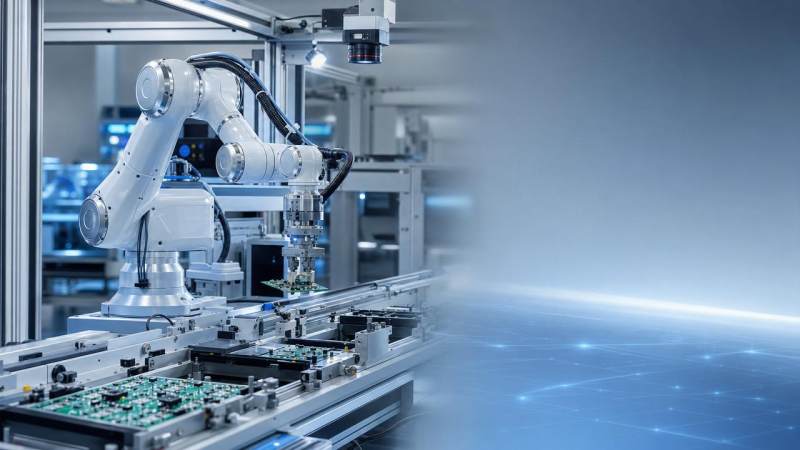
For project managers under pressure to scale electronics production without sacrificing precision, choosing the right cobot manufacturer china for electronics assembly can directly affect speed, flexibility, and ROI.
As product cycles shorten and changeovers accelerate, China’s leading cobot suppliers offer compact automation, quick integration, and pricing that supports practical deployment across fast electronics lines.
This matters across the wider industrial landscape, where smart manufacturing depends on verified performance, digital compatibility, and repeatable engineering standards.
Using the G-IFA perspective, the key question is not only who sells robots, but who fits real assembly constraints with measurable technical value.
What makes a cobot manufacturer china for electronics assembly different from general robot suppliers?
Electronics assembly needs more than payload and reach. It needs clean motion, compact footprints, simple teaching, and reliable cycle consistency.
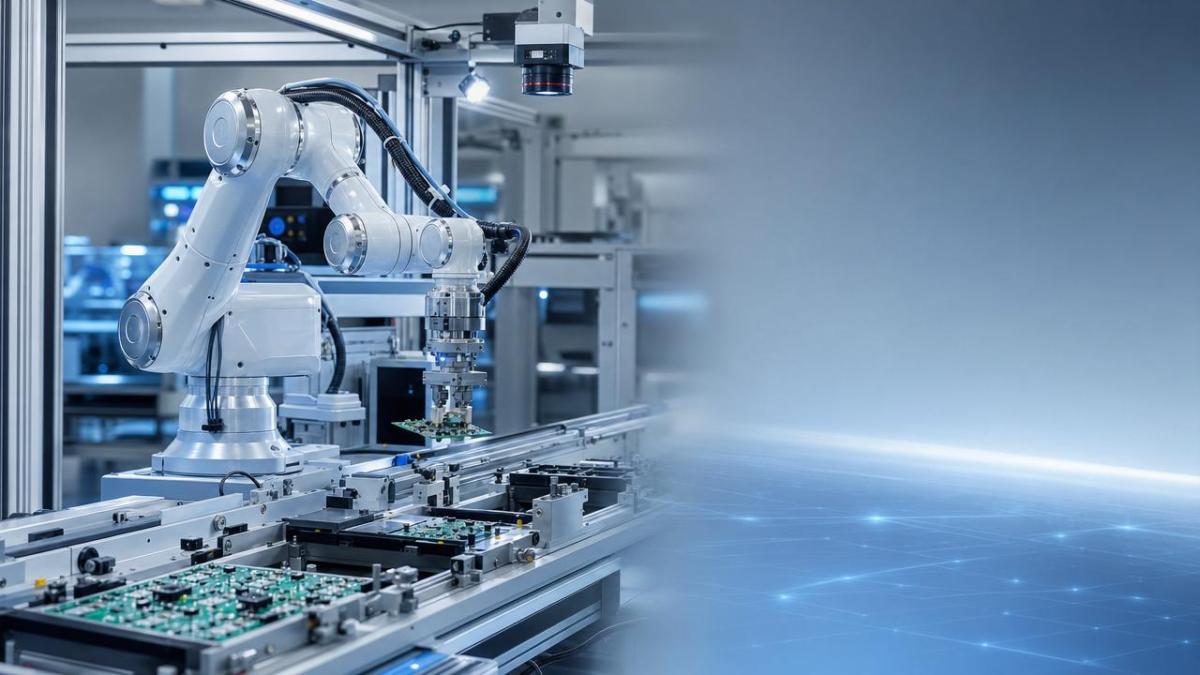
A strong cobot manufacturer china for electronics assembly usually designs around dense workstations, frequent SKU shifts, and tight quality tolerances.
Unlike heavy industrial robots, cobots are built for safer human collaboration, quicker setup, and easier redeployment between stations.
In electronics plants, this can support screwdriving, dispensing, solder support, light pick-and-place, testing assistance, labeling, and tray handling.
China-based suppliers often stand out because they combine mechanical hardware with local ecosystem advantages in vision, end effectors, feeders, and controls.
That ecosystem reduces integration friction. It also shortens lead times for spare parts, customized tooling, and software adjustments.
Why do China cobot makers fit fast electronics assembly lines so well?
Speed in electronics is not only robot speed. It includes deployment speed, switchover speed, debugging speed, and maintenance response time.
A capable cobot manufacturer china for electronics assembly often addresses all four.
Fast deployment
Many Chinese cobot systems use simplified interfaces, drag teaching, and modular I/O options that reduce commissioning effort.
This helps when a line must move from pilot runs to stable production without long engineering delays.
Compact cell design
Electronics factories rarely have spare floor space. Compact arms and lightweight bases fit benches, conveyors, and semi-manual cells more easily.
That allows automation to enter constrained stations without full line reconstruction.
Flexible changeovers
High-mix production rewards robots that can switch fixtures, recipes, and vision parameters quickly.
A good cobot manufacturer china for electronics assembly supports recipe management and tool compatibility for that reality.
Balanced economics
Cost matters, but total cost matters more. Competitive hardware pricing becomes valuable when paired with stable software and practical support.
That balance is one reason China cobot makers are increasingly visible in global electronics automation decisions.
Which electronics assembly tasks are best suited to these cobots?
Not every task belongs on a cobot. The best results appear where force, precision, repeatability, and flexibility align.
- PCB loading and unloading
- Connector insertion assistance
- Screwdriving for small housings
- Adhesive or thermal paste dispensing
- Functional test handling
- Packaging and final tray placement
Tasks needing ultra-high speed may still favor SCARA or dedicated mechanisms. Tasks with heavier payloads may need traditional industrial robots.
But when versatility and moderate precision dominate, a cobot manufacturer china for electronics assembly can be an efficient match.
This is especially true for pilot automation, multi-model lines, and stations where human operators still handle complex exceptions.
How should performance be evaluated before selecting a cobot manufacturer china for electronics assembly?
Selection should move beyond brochure claims. Real evaluation requires process-fit checks and engineering evidence.
Key technical points to verify
- Repeatability under actual payload and tool conditions
- Cycle time including approach, settling, and handoff
- Vision integration with lighting and small-part contrast
- ESD-friendly workstation compatibility
- MES, PLC, and traceability interface options
- Compliance with ISO, CE, or relevant safety requirements
The strongest vendors welcome sample testing. They demonstrate not only motion, but process stability over repeated cycles.
G-IFA’s benchmarking logic supports comparing hardware and software together, because electronics uptime depends on both layers.
What common risks and misconceptions should be avoided?
One common mistake is assuming any cobot can handle micro-assembly. Precision claims must be tested against fixtures, tools, and part tolerances.
Another misconception is that lower purchase price guarantees better ROI. Integration delays can erase initial savings quickly.
A third risk is ignoring software openness. Electronics lines increasingly need traceability, barcode logic, and station-level data exchange.
Without those interfaces, even a capable arm becomes isolated equipment.
It is also risky to overlook after-sales engineering depth. Fast assembly lines need fast troubleshooting, not only warranty coverage.
How do cost, implementation time, and ROI usually compare?
Implementation economics depend on application complexity. Simple tending or packaging cells deploy faster than precision dispensing or guided insertion.
Still, a cobot manufacturer china for electronics assembly often reduces barriers through packaged cells, local component sourcing, and modular accessories.
Typical ROI drivers include labor stabilization, better yield consistency, lower rework, and smoother scaling during demand spikes.
Time-to-value improves when the robot controller integrates cleanly with feeders, screwdrivers, cameras, and line control logic.
The hidden costs usually come from fixture redesign, process tuning, training, and validation cycles. These should be estimated early.
Practical selection checklist
- Define takt time and acceptable tolerance clearly.
- Match payload and reach to the real tool stack.
- Request sample validation on actual parts.
- Confirm PLC, MES, and quality data interfaces.
- Review service commitments and spare lead times.
- Calculate ROI using uptime and yield, not labor alone.
What is the best next step when evaluating suppliers?
Start with one process, not the whole factory. Choose a station with repeatable tasks, measurable defects, and frequent manual strain.
Then compare each cobot manufacturer china for electronics assembly against the same benchmark conditions.
Focus on verified cycle data, integration readiness, safety compliance, and support capability. Those factors predict long-term line value better than headline specs.
In fast electronics production, the best partner is the one that combines precise hardware, usable software, and dependable engineering response.
G-IFA’s cross-sector benchmarking approach is useful here because it filters automation choices through standards, interoperability, and production realism.
When the evaluation is structured, a suitable cobot manufacturer china for electronics assembly can become a practical accelerator for quality, flexibility, and scalable smart manufacturing.
Recommended News
- 2026/10/24Car Spare Parts: How to Check Fitment and Avoid Ordering the Wrong PartOrder car spare parts with confidence. Learn how to verify VINs, OEM numbers, and fitment details to avoid costly mistakes and choose the right replacement first time.
- 2026/10/23How Do You Select a Motion Control System for Synchronized Axes?How do I select a motion control system for synchronized axes? Discover key timing, feedback, and performance checks to choose confidently and reduce costly integration risks.
- 2026/10/23Integrating End-of-Line Sortation with Packing Stations and Conveyor ControlsOptimize end of line sortation with coordinated packing stations and conveyor controls. Learn how to prevent bottlenecks, improve routing accuracy, and handle exceptions reliably.