
Search News
Industry Portal
Popular Tags
What HMI display resolution standards actually affect on line
Author
Dr. Isaac Logic
Time
Apr 30, 2026
Pageviews
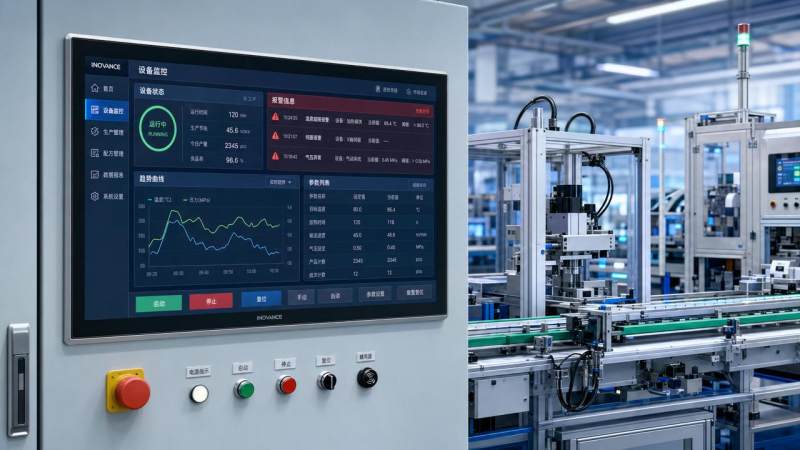
On a production line, HMI display resolution standards influence far more than screen sharpness. They affect operator response speed, alarm visibility, touch accuracy, and the clarity of critical process data under real working conditions. For users and operators, understanding hmi display resolution standards helps reduce input errors, improve workflow efficiency, and support safer, more reliable human-machine interaction.
What do HMI display resolution standards actually mean in daily line operation?
For many operators, hmi display resolution standards sound like a specification that matters only to engineers or procurement teams. In practice, they directly affect what you can read, how quickly you can react, and how confidently you can use a touch panel during a shift. Resolution defines how many pixels a screen uses to present buttons, alarms, trends, recipes, and machine status. Standards matter because they create predictable screen quality across different HMI sizes, brands, and applications.
On a busy line, an operator rarely studies the screen in ideal office conditions. They may be wearing gloves, standing at an angle, moving between stations, or checking data under harsh lighting. In those conditions, poor resolution can make numbers look crowded, alarm icons too small, and touch targets harder to hit. A display that looks acceptable during installation may become frustrating during repetitive use.
This is why hmi display resolution standards should be understood as a usability issue, not just a visual one. They influence whether the HMI supports smooth production or creates hidden friction that slows decisions and increases avoidable mistakes.
Why do operators care about resolution if the screen already “works”?
A screen can function and still be inefficient. That is the key point. Operators care because line performance depends on speed, clarity, and consistency. If an HMI shows compressed menus, overlapping text, or tiny trend lines, the operator spends more time searching for information. Even a few extra seconds per interaction can accumulate into downtime, slower changeovers, or delayed response to faults.
Resolution affects several operational details at once:
- How readable setpoints, counters, and process values are from normal viewing distance
- How many useful data points can be displayed without clutter
- How clearly alarms and warnings stand out during fast decision moments
- How accurately touch commands are registered on buttons, sliders, and menus
- How well multilingual labels, symbols, and maintenance instructions remain legible
When hmi display resolution standards are matched correctly to the task, users spend less effort decoding the interface and more effort controlling the process. That difference matters in packaging, assembly, food processing, material handling, and other automation-heavy environments where one unclear display can affect an entire sequence.
Which line situations are most affected by HMI display resolution standards?
Not every station on a production line needs the same display performance. However, some situations are especially sensitive to hmi display resolution standards. The more visual decisions the operator must make, the more resolution matters.
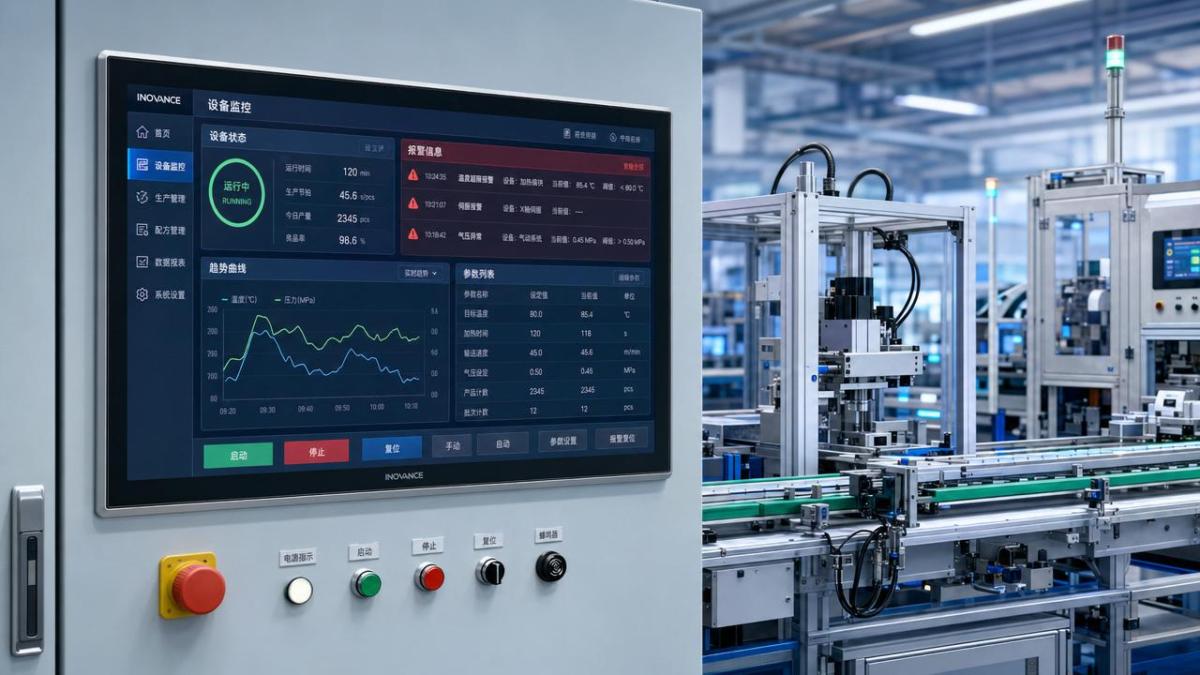
First, alarm-heavy systems benefit greatly from better screen definition. If several warnings appear at once, low resolution can make priority levels, timestamps, and fault descriptions harder to separate quickly. That can delay troubleshooting and increase stress during breakdowns.
Second, recipe-based or batch operations often require users to review tables, parameter fields, and step sequences. If the screen cannot present enough information clearly, operators may need to jump through too many pages. More navigation means more chances to miss a setting.
Third, lines with trend monitoring, OEE dashboards, or energy tracking need enough pixel density to show curves, bars, and historical values in a meaningful way. A trend that looks like a rough blur does not help anyone identify drift or instability.
Finally, multi-machine cells and integrated systems are often where poor HMI choices become obvious. If one operator supervises conveyors, robots, drives, and safety states from one panel, the display must present a lot of information without becoming visually overwhelming. In such cases, understanding hmi display resolution standards is part of operational risk control.
How can users tell whether a resolution is appropriate for their HMI screen size and task?
This is one of the most useful questions because a high number alone does not guarantee a better user experience. Operators and supervisors should judge resolution together with screen size, viewing distance, content density, and interface design. A small screen with high resolution may still be hard to use if buttons become tiny. A larger screen with moderate resolution may work well if the interface is designed cleanly.
A practical way to evaluate hmi display resolution standards is to ask what the operator must do most often. Is the screen mainly used for start-stop control and simple status checks? Is it used for detailed diagnostics and recipe editing? Is the user standing close, or reading from one meter away? The answers change what “good enough” means.
The table below offers a simple decision guide for common line needs.
For operators, the simplest test is real-use simulation. Open typical pages, trigger alarms, enter values, and navigate common workflows before final approval. If users hesitate, zoom in with their eyes, or mis-tap fields during testing, the HMI may meet technical specs but fail operationally.
What mistakes are common when comparing HMI display resolution standards?
A common mistake is focusing only on pixel numbers while ignoring the complete human-machine context. Buyers may compare 800×480, 1024×600, or 1280×800 and assume the highest figure is automatically best. But an HMI is not a consumer tablet. In industrial environments, usability depends on touch response, brightness, interface scaling, software layout, and the actual tasks performed by the operator.
Another mistake is reusing one screen design across all panel sizes without adaptation. A layout created for a larger display may become crowded on a smaller HMI, even if it technically fits. That creates hidden problems such as tiny confirmation buttons, truncated text, or hard-to-read maintenance notes.
Some teams also underestimate environmental factors. Dust, vibration, glare, and PPE use can reduce practical readability. In these conditions, hmi display resolution standards interact with brightness, contrast, and icon sizing. A highly detailed screen may perform poorly if the operator cannot quickly distinguish key elements.
There is also a training mistake: assuming users will “get used to it.” Operators do adapt, but adaptation is not the same as efficiency. If the display creates extra cognitive load every day, the line pays for it through slower actions, more workarounds, and inconsistent responses between shifts.
How do HMI display resolution standards affect safety, quality, and downtime?
The effect is often indirect but significant. In safety-related interactions, the operator must identify machine state, warnings, and recovery steps without confusion. If an acknowledgment field is hard to distinguish from a navigation key, or if alarm text wraps badly, the chance of incorrect action increases. Resolution alone does not create safety, but poor visual clarity can weaken safe response.
For quality control, screen clarity supports accurate parameter entry. Incorrect setpoints, recipe mismatches, or missed tolerance warnings can result in scrap or rework. A well-designed HMI aligned with suitable hmi display resolution standards helps operators confirm values faster and with greater confidence, especially during product changeovers.
Downtime is perhaps where the impact becomes most visible. During a fault, every second matters. Operators need alarm details, machine location, and guided recovery instructions to appear clearly and quickly. If the display is visually cramped, users may call maintenance earlier than necessary or spend too long navigating between screens. That increases lost production time even when the actual fault is minor.
For organizations benchmarking automation performance, including groups such as G-IFA that value verified engineering decisions, display resolution should be treated as part of the human factors layer of industrial reliability. It is not cosmetic. It supports repeatable operation.
Before selecting or upgrading an HMI, what should operators and line teams confirm first?
Before making a final decision, teams should confirm the job the screen must perform, not just the model they want to buy. The best starting point is a short internal checklist built around real user behavior. This reduces the risk of purchasing an HMI that looks modern but creates friction on the floor.
- What are the most frequent operator actions: monitoring, entry, alarm response, setup, or troubleshooting?
- How far from the screen does the user normally stand?
- Will gloves, dust, moisture, or glare affect interaction?
- How much information must appear on one page without scrolling?
- Are multiple languages, symbols, or detailed maintenance messages required?
- Does the software scale well to the selected screen resolution?
- Have actual operators tested the interface under realistic conditions?
These questions make hmi display resolution standards easier to evaluate in a practical way. Instead of asking only whether a resolution is “high,” ask whether it helps the right user complete the right task with less effort and less risk.
What is the simplest takeaway for users who are not display specialists?
The simplest takeaway is this: if the HMI is hard to read, slow to navigate, or easy to mis-touch during normal work, the resolution choice may be part of the problem. Good hmi display resolution standards improve more than appearance. They support clear alarms, smoother workflows, more accurate touch operation, and faster understanding of machine conditions.
For users and operators, the goal is not to memorize every display specification. It is to recognize how screen clarity affects line efficiency, product quality, and confidence during exceptions. A good HMI should feel intuitive under pressure, not just look fine in a catalog.
If you need to confirm a specific HMI solution, upgrade path, parameter fit, validation method, project timeline, or supplier direction, it is best to first discuss the operator tasks, screen distance, alarm complexity, interface layout, and real environmental conditions. Those questions lead to better choices than resolution numbers alone.
Recommended News
- 2026/10/24Car Spare Parts: How to Check Fitment and Avoid Ordering the Wrong PartOrder car spare parts with confidence. Learn how to verify VINs, OEM numbers, and fitment details to avoid costly mistakes and choose the right replacement first time.
- 2026/10/23How Do You Select a Motion Control System for Synchronized Axes?How do I select a motion control system for synchronized axes? Discover key timing, feedback, and performance checks to choose confidently and reduce costly integration risks.
- 2026/10/23Integrating End-of-Line Sortation with Packing Stations and Conveyor ControlsOptimize end of line sortation with coordinated packing stations and conveyor controls. Learn how to prevent bottlenecks, improve routing accuracy, and handle exceptions reliably.