
Search News
Industry Portal
Popular Tags
Which HMI Display Resolution Standards Matter Most
Author
Dr. Isaac Logic
Time
Apr 28, 2026
Pageviews
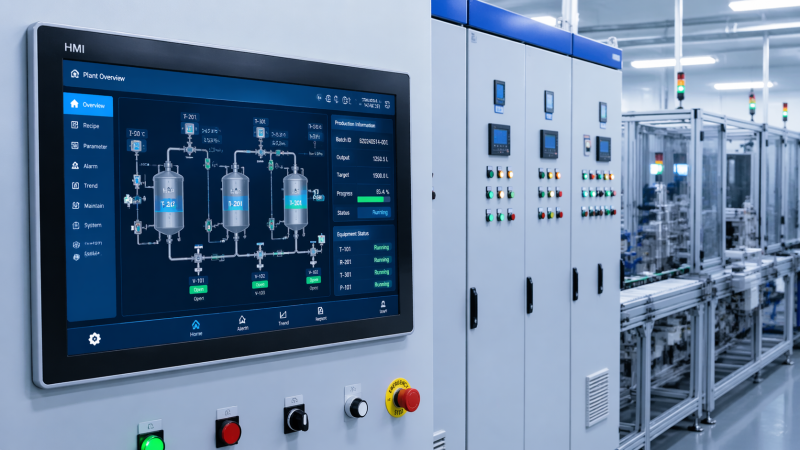
Choosing the right HMI display resolution standards affects far more than screen clarity—it shapes operator efficiency, system usability, and long-term automation ROI. For engineers, buyers, and plant decision-makers comparing platforms alongside issues like industrial pc thermal management, cybersecurity for industrial control, and modbus vs ethernet/ip latency data, understanding which display specifications truly matter is essential to building smarter, more reliable production systems.
Which HMI display resolution standards actually affect industrial performance?
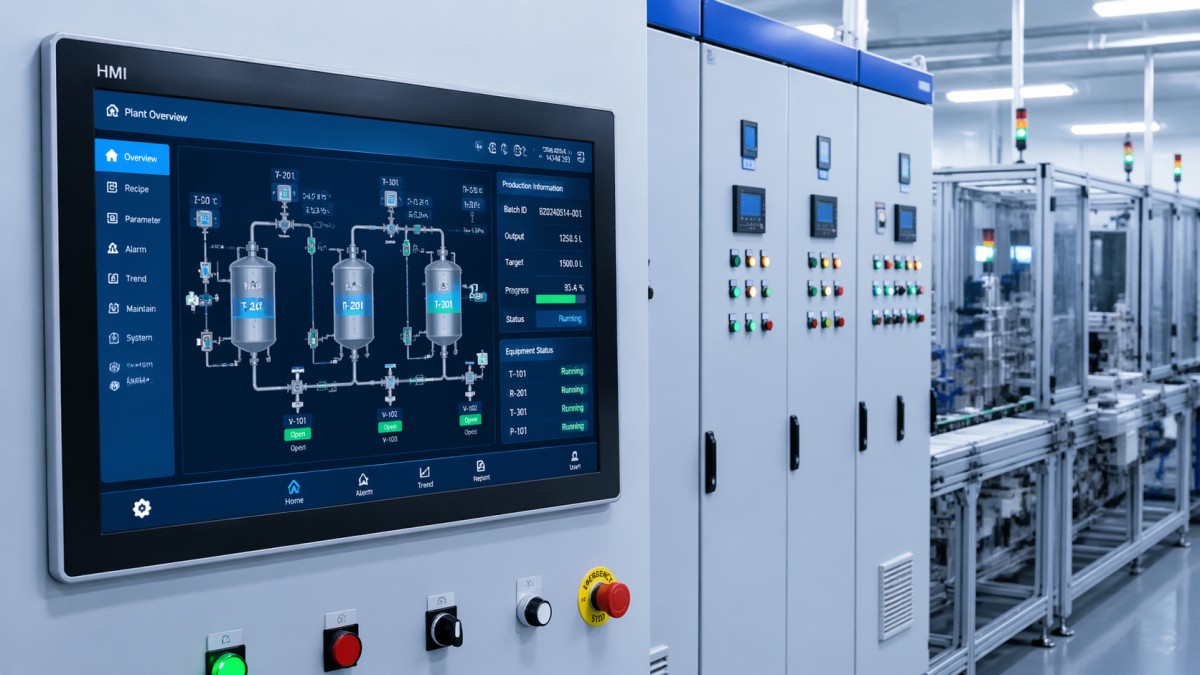
In industrial automation, HMI display resolution standards are not only about how sharp a screen looks. They directly affect whether operators can read alarms within 1–2 seconds, whether maintenance teams can interpret trend curves without zooming repeatedly, and whether process data remains usable across 8-hour, 12-hour, or continuous multi-shift production. A resolution that seems acceptable in a demo room may become inefficient on a noisy shop floor where operators stand 0.5–1.5 meters from the panel.
For information researchers and procurement teams, the most important point is this: the “best” HMI display resolution depends on screen size, viewing distance, control complexity, and software layout density. A 7-inch panel with 800×480 may be practical for simple machine start-stop control, while a 15-inch or 21-inch interface handling MES dashboards, multi-window SCADA summaries, or recipe management often needs Full HD or higher to avoid interface crowding.
This is where G-IFA adds value. Instead of evaluating HMI screens in isolation, G-IFA compares display decisions against the wider automation stack: PLC response visibility, industrial network latency interpretation, robotics cell supervision, and software usability in real production conditions. That cross-sector view helps buyers avoid a common mistake—selecting a display specification that looks modern on paper but does not fit the actual operator task.
In practice, 3 core questions determine whether an HMI display resolution standard matters: how much information must be shown at once, how quickly operators must react, and how long the interface must remain readable without fatigue. If one screen must display alarms, motor status, recipe values, and maintenance prompts together, resolution becomes a functional requirement, not a cosmetic upgrade.
Why resolution matters beyond pixels
A higher resolution gives designers more room for process variables, icons, trend graphs, and multilingual labels. However, higher resolution only improves usability when paired with appropriate screen size and HMI software scaling. If not, operators may face tiny buttons, compressed text, and mis-taps during line changeovers or fault recovery. In industrial settings, one missed touch during a 3-step alarm reset can create unnecessary downtime.
Resolution also influences cybersecurity and remote diagnostics. Many plants now mirror HMI views to industrial PCs, engineering stations, or secure remote maintenance sessions. A display standard that supports clear dashboards and event logs can reduce interpretation errors during troubleshooting windows of 15–30 minutes, especially when engineering teams are reviewing live machine behavior from outside the production cell.
Typical industrial priorities when evaluating HMI resolution
- Readable alarm text and status indicators at normal operating distance, often between 0.7 and 1.2 meters.
- Enough screen space for 3–5 concurrent information blocks, such as machine status, recipe values, trend curves, and alarm history.
- Touch accuracy for gloved or fast-moving operators during repeated interactions over 200–500 touches per shift.
- Consistent display output when integrated with PLC, SCADA, MES, and remote service workflows.
How do common HMI display resolution standards compare in real plant scenarios?
Industrial buyers often encounter familiar options such as 800×480, 1024×600, 1280×800, and 1920×1080. These numbers are easy to compare, but procurement decisions should link them to machine complexity, interface density, and lifecycle requirements. A panel used for a compact conveyor or packaging substation does not need the same visual capacity as a central line-control HMI supervising drives, robot cells, and production data exchange.
The table below summarizes where common HMI display resolution standards fit best. It focuses on practical deployment rather than marketing language, making it easier for procurement teams and system integrators to align screen specification with production needs.
The key takeaway is that common HMI display resolution standards are valid only when matched to use case. For example, a 10-inch display at 1024×600 may support a standard packaging line well, but if the same interface later expands to include OEE metrics, maintenance logs, and remote troubleshooting pages, the original choice can become a bottleneck within 12–24 months.
This is why many industrial teams now evaluate resolution with future software load in mind. G-IFA’s benchmarking perspective is useful here because factories rarely upgrade screens alone. They upgrade workflows involving control systems, motion devices, IIoT connectivity, and engineering visibility. A display specification should therefore be selected as part of a broader automation architecture plan.
Scenario-based comparison for users and buyers
Operators usually care about readability and fast touch response. Procurement teams focus on standardization, support life, and total cost. Decision-makers look at ROI and scalability. That means the same HMI display resolution standard can be judged differently depending on role. A clear buying process should account for all 3 perspectives before any panel is approved.
- For single-purpose machines, lower-to-mid resolution often reduces cost and simplifies training.
- For flexible production lines, mid-to-high resolution supports recipe complexity and future software layers.
- For enterprise-connected equipment, higher resolution often improves data visibility during diagnostics and management review.
What technical specifications should be checked together with HMI display resolution standards?
A frequent procurement mistake is to evaluate HMI display resolution standards without checking the surrounding technical conditions. In reality, panel usability depends on at least 5 linked dimensions: screen size, aspect ratio, brightness, touch technology, and software rendering capability. A high-resolution panel with poor brightness in a reflective environment may perform worse than a lower-resolution panel designed for industrial lighting conditions.
For most factory environments, brightness, contrast, and viewing angle deserve as much attention as pixel count. In indoor control cabinets or enclosed operator stations, moderate brightness may be acceptable. In open production areas with overhead lighting or sunlight spill, readability can degrade quickly. The problem is amplified when small fonts and dense graphics are placed on high-resolution displays without proper UI scaling.
Another issue is thermal behavior. Higher performance panels, especially those used like industrial PCs or edge visualization nodes, may generate more heat. When buyers are already considering industrial pc thermal management, the HMI interface hardware should be reviewed for enclosure ventilation, ambient temperature range, and continuous operating duty. Resolution itself is not the thermal cause, but more advanced visualization hardware often changes the heat profile of the station.
The following table helps organize a realistic technical review. It is especially useful for system integrators and plant engineers who need a 4-step screening approach before moving into brand or platform comparison.
The main lesson is that HMI display resolution standards should be reviewed as part of a technical package, not as a standalone feature. A screen that looks advanced in specification sheets may still underperform if the HMI runtime, touch layer, or software architecture is mismatched. Good industrial selection always connects pixels to process behavior.
A practical 4-step screening method
- Map operator tasks: identify whether the HMI is for control only, control plus diagnostics, or line-wide supervision.
- Define viewing conditions: estimate distance, lighting, glove use, and interaction frequency per shift.
- Review software density: count how many data blocks, alarm areas, and trend windows must coexist on one screen.
- Check growth over 12–36 months: include possible IIoT dashboards, cybersecurity events, and production analytics screens.
Standards and compatibility context
There is no single universal industrial rule that says one HMI resolution is mandatory for all applications. Instead, compatibility with broader design and compliance frameworks matters. In multinational projects, buyers often review whether the full machine interface aligns with relevant ISO, IEC, CE, or internal corporate visualization requirements. Resolution is one part of human-machine readability, safety communication, and system consistency across sites.
How should procurement teams choose the right HMI display resolution standard?
For procurement, the best decision is rarely the cheapest panel or the highest resolution panel. It is the panel that supports present operations and future integration without forcing premature replacement. In many plants, HMI lifecycle planning spans 3–7 years, so selection should consider software expansion, spare strategy, engineering support, and operator training effort from day one.
A useful approach is to divide purchases into 3 categories: compact machine HMI, general-purpose equipment HMI, and line or cell supervisory HMI. This helps standardize purchasing decisions across departments. It also avoids the common problem where one project team selects underpowered panels while another over-specifies premium screens for simple tasks, increasing spare parts complexity.
G-IFA is especially relevant for this stage because procurement teams rarely evaluate HMI requirements in isolation. They need cross-checks against PLC architecture, motion systems, industrial communications, and software roadmap. A display resolution that works today but fails when Ethernet-based diagnostics or MES-linked workflow screens are added can create hidden reinvestment costs later.
The checklist below supports faster vendor comparison and internal approval. It is suitable for technical buyers, operations managers, and decision-makers trying to balance budget, standardization, and long-term usability.
5 purchasing checkpoints before approval
- Confirm the number of active pages and whether 3–5 information zones must appear simultaneously without excessive tab switching.
- Check if the panel will remain local only or later connect to SCADA, MES, remote diagnostics, or cybersecurity monitoring layers.
- Review whether software migration to another resolution will require page redesign, revalidation, or operator retraining over 1–3 weeks.
- Assess spare part strategy: can one standard be reused across multiple machines, lines, or plants?
- Estimate total lifecycle impact, including engineering hours, downtime risk, and future replacement cost—not just hardware price.
Common procurement misjudgments
One common mistake is choosing based on catalog hierarchy alone, assuming higher resolution always means better industrial value. In reality, some operations benefit more from larger touch targets and simpler navigation than from dense graphics. Another mistake is standardizing one resolution across all equipment without considering different roles, from operator touchscreens to line-monitoring stations.
A third issue appears during retrofit projects. Plants often replace legacy HMIs while keeping existing PLC logic and network structure. If the new display resolution standard changes page proportions significantly, engineering teams may face unexpected redesign work, validation delays of 2–6 weeks, and usability issues during startup. Early compatibility checks can prevent that.
Which myths about HMI display resolution standards create avoidable risk?
Several myths continue to distort HMI selection. The first is that resolution alone determines visual quality. In practice, font sizing, color contrast, screen coating, and layout discipline often have equal or greater effect. A poorly designed Full HD interface can be less usable than a well-structured 1024×600 interface for repetitive machine operation.
The second myth is that higher resolution automatically improves control precision. It does not. Machine precision comes from sensors, motion control, PLC logic, mechanics, and feedback systems. The HMI helps users monitor and command those functions. Better resolution improves information presentation, but it does not replace sound control engineering or stable network performance.
The third myth is that display upgrades are easy retrofit tasks. In some cases they are. In others, changing an HMI display resolution standard affects graphic assets, alarm page formatting, recipe tables, user permissions, and remote visualization tools. The ripple effect can be substantial when systems have been in operation for 5–10 years and documentation is incomplete.
For plants under tight budgets, another misconception is that a lower initial screen cost always saves money. If an under-specified panel forces frequent page switching, slows troubleshooting, or requires replacement during a planned line expansion, the total cost of ownership can rise. In industrial environments, even a short recurring delay per intervention can accumulate over hundreds of maintenance events per year.
FAQ for engineers, users, and buyers
How do I know if a higher HMI resolution is necessary?
Choose a higher resolution when one screen must display multiple process zones, detailed alarm history, trend graphs, or MES-linked production data at the same time. If operators constantly switch among 4–6 pages to complete one task, your current resolution or layout may be limiting workflow efficiency.
Is 800×480 still acceptable in modern automation?
Yes, for simple standalone equipment, compact machines, and focused control interfaces. It remains practical where the HMI is used mainly for start-stop, status viewing, and limited parameter entry. It becomes restrictive when diagnostics, analytics, multilingual instructions, or supervisory dashboards are added.
What should be reviewed during retrofit projects?
Review page aspect ratio, runtime software compatibility, touch target size, alarm formatting, and integration with PLC and network protocols. Also check whether existing engineering files can be migrated cleanly. In retrofit work, hidden software conversion effort often matters more than the screen hardware itself.
Do HMI display resolution standards affect remote access and diagnostics?
They can. Higher-resolution layouts may improve remote interpretation of alarms, process snapshots, and maintenance trends, especially when mirrored to engineering stations or secure service tools. However, usability still depends on good interface hierarchy, not just more pixels.
Why consult G-IFA before standardizing your HMI display strategy?
When factories compare HMI display resolution standards, they are often making a broader decision about usability, integration risk, and future digitalization. G-IFA helps technical and commercial teams move beyond isolated spec-sheet comparison. By benchmarking automation components across robotics, PLC and control systems, motion technology, industrial software, and fluid power ecosystems, G-IFA supports more reliable technology filtering for real production environments.
That matters for stakeholders at every level. Researchers need clear evaluation logic. Operators need readable, efficient interfaces. Buyers need structured comparison criteria. Business decision-makers need confidence that current purchases will remain workable as factories expand Industry 4.0 capabilities over the next 12–36 months. A display decision is small in appearance, but it can influence training burden, service response, and upgrade cost for years.
If you are reviewing HMI display resolution standards for a new machine, a retrofit line, or a multi-site standardization program, G-IFA can support practical comparison around parameter confirmation, architecture fit, software usability, delivery considerations, and compliance context. This is especially helpful when HMI decisions intersect with industrial PC selection, control network design, remote diagnostics, and plant-wide data visibility requirements.
Contact G-IFA to discuss your screen size and resolution requirements, interface complexity, delivery timeline, retrofit constraints, or vendor comparison framework. You can also request support for selection criteria, integration risk review, expected implementation steps, and quotation alignment for broader smart manufacturing projects. That way, your HMI choice becomes a controlled engineering decision rather than a guess driven by catalog numbers alone.
Recommended News
- 2026/10/24Car Spare Parts: How to Check Fitment and Avoid Ordering the Wrong PartOrder car spare parts with confidence. Learn how to verify VINs, OEM numbers, and fitment details to avoid costly mistakes and choose the right replacement first time.
- 2026/10/23How Do You Select a Motion Control System for Synchronized Axes?How do I select a motion control system for synchronized axes? Discover key timing, feedback, and performance checks to choose confidently and reduce costly integration risks.
- 2026/10/23Integrating End-of-Line Sortation with Packing Stations and Conveyor ControlsOptimize end of line sortation with coordinated packing stations and conveyor controls. Learn how to prevent bottlenecks, improve routing accuracy, and handle exceptions reliably.