
Search News
Industry Portal
Popular Tags
How CNC control affects accuracy, speed, and rework
Author
Dr. Isaac Logic
Time
May 26, 2026
Pageviews
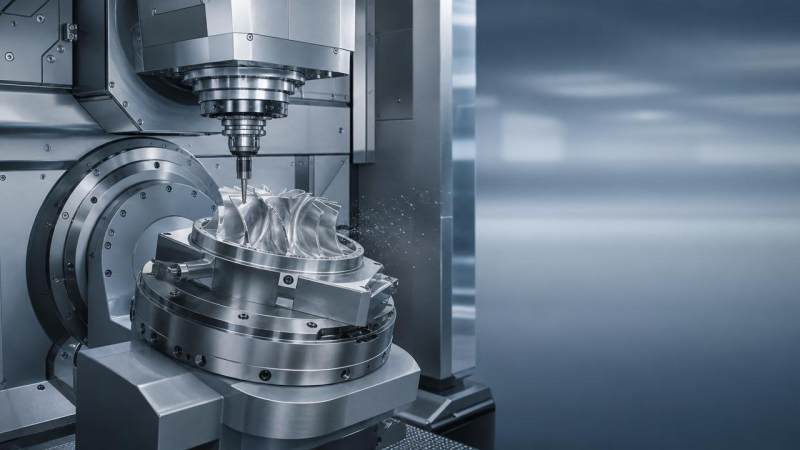
For technical evaluators, CNC control is more than a software layer. It determines how precisely a machine follows a toolpath, how quickly it reaches productive feedrates, and how often parts require correction or scrap.
Across modern factories, CNC control has become a critical signal of equipment quality. In mixed-volume production, tighter tolerances and shorter delivery windows expose control weaknesses faster than spindle power alone.
This matters across the broader industrial landscape. Whether machining housings, fixtures, molds, shafts, medical parts, or automation components, CNC control affects measurable output, process stability, and downstream cost.
Why CNC control is now a stronger performance differentiator
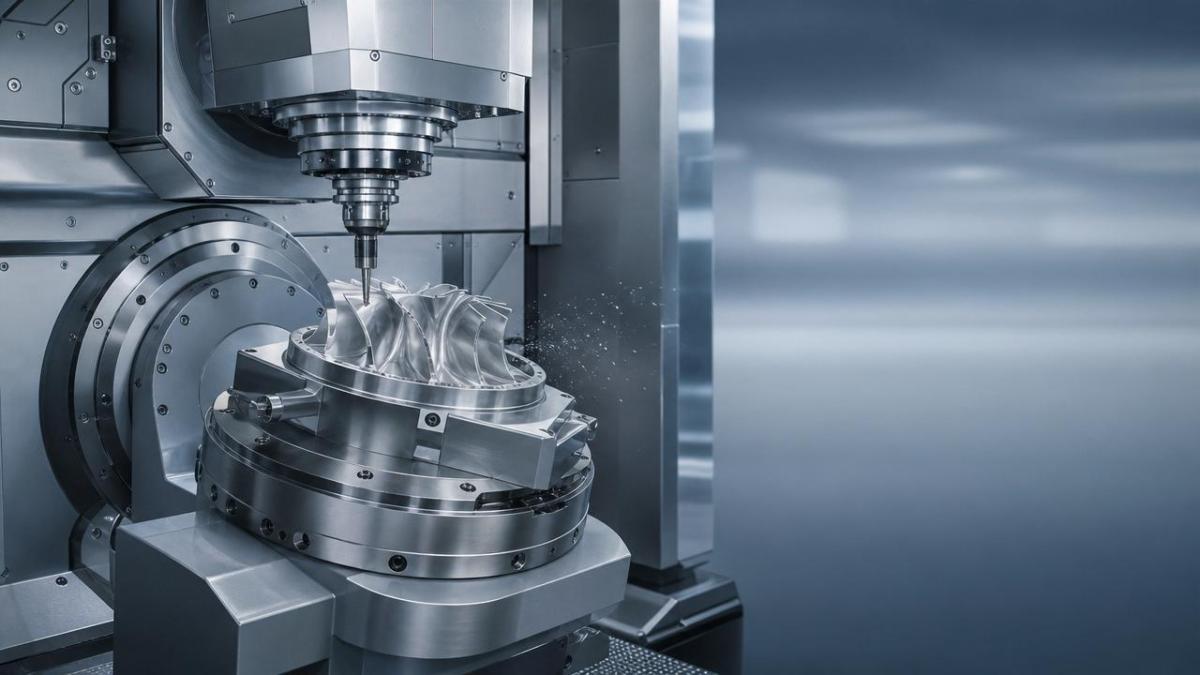
A decade ago, machine comparisons often focused on axis travel, spindle speed, and frame rigidity. Those factors still matter, yet CNC control now shapes more of the final result.
The reason is simple. Production has become more data-driven, more flexible, and less tolerant of variation. Small control delays can now create visible losses in quality, utilization, and delivery reliability.
Advanced CNC control improves contouring, acceleration management, and error correction. Weak CNC control creates overshoot, vibration, poor surface finish, inconsistent dimensions, and repeated setup adjustments.
In Industry 4.0 environments, CNC control also influences traceability. A control platform that captures alarms, offsets, load behavior, and cycle data supports stronger root-cause analysis and lower process risk.
The trend signal: accuracy, speed, and rework are becoming linked decisions
Many operations once treated accuracy, throughput, and rework as separate topics. That separation is fading. CNC control connects them through interpolation quality, servo tuning, feedback response, and look-ahead capability.
When CNC control processes dense toolpaths poorly, machines slow down in corners, leave marks on surfaces, and drift from programmed geometry. That reduces speed first, then harms quality, then raises rework.
When CNC control handles motion smoothly, feedrate remains stable, cutting forces stay more predictable, and dimensional outcomes become more repeatable. This creates a compounding effect across cycle time and first-pass yield.
Key signals seen on the shop floor
- Shorter cycle times without visible chatter or path hesitation
- Better roundness, straightness, and corner fidelity at higher feeds
- Lower variation between shifts, batches, and repeated setups
- Fewer manual edits to offsets and fewer trial cuts
- Reduced polishing, deburring, and dimensional correction work
What drives the effect of CNC control on measurable outcomes
The influence of CNC control becomes clearer when broken into engineering drivers. Each driver changes the way a machine interprets commands, reacts to disturbances, and maintains geometric intent.
Why these drivers matter more today
Toolpaths are denser, materials are harder, and part geometries are more varied. Under these conditions, CNC control quality decides whether a machine sustains productive motion or constantly trades speed for stability.
This is especially visible in high-speed milling, multi-axis contouring, hard turning, and parts that require both fine finish and positional consistency. In each case, CNC control becomes a direct cost variable.
How CNC control changes results across different business stages
The effect of CNC control is not limited to cutting performance. It extends from process planning to inspection, maintenance, and digital integration. That wider impact is often underestimated during machine evaluation.
During programming and setup
Stronger CNC control usually tolerates complex CAM output more efficiently. It reduces the need for simplifying toolpaths, lowering feedrates, or adding protective pauses to avoid machine behavior issues.
Setup also becomes faster when CNC control supports reliable probing, coordinate management, and clear diagnostics. Better consistency at this stage reduces first-piece iteration and accelerates stable production release.
During production execution
In active machining, CNC control governs acceleration, corner smoothing, axis synchronization, and disturbance handling. These functions influence whether the machine delivers programmed intent or introduces process variation.
This is where cycle time and rework begin to interact. If CNC control cannot hold smooth motion, operators often reduce feeds to protect quality, sacrificing output before quality failures even appear.
During quality control and continuous improvement
A modern CNC control platform can provide trend data on alarms, servo loads, thermal behavior, and offset changes. That data supports repeatable troubleshooting and more disciplined improvement decisions.
Without this visibility, recurring dimensional drift may be misdiagnosed as tooling, fixture, or operator variation. Rework persists because the true source inside the CNC control loop remains hidden.
What deserves closer attention when comparing CNC control options
Not all CNC control systems deliver the same real-world value, even when brochure claims appear similar. A practical comparison should focus on capability under production conditions, not only nominal specifications.
- Interpolation performance on short block programs and freeform surfaces
- Look-ahead depth and feedrate stability during rapid contour changes
- Servo update rate, following error behavior, and tuning flexibility
- Encoder feedback resolution and thermal compensation capability
- Alarm transparency, diagnostics access, and data export options
- Compatibility with PLC, MES, ERP, and industrial IoT environments
For a broader automation context, this aligns with the engineering logic promoted by G-IFA. Hardware precision and software intelligence must be assessed together, because CNC control sits at that exact intersection.
A practical decision framework for reducing process risk
A useful evaluation method is to connect CNC control features to actual loss categories. This avoids overvaluing marketing terms while keeping attention on measurable plant outcomes.
Where CNC control decisions are heading next
The next shift is not simply faster machining. It is more intelligent CNC control with better prediction, richer diagnostics, and tighter integration with digital production systems.
As factories seek verifiable efficiency gains, CNC control will increasingly be judged by first-pass yield, energy use per part, unattended stability, and data transparency. Those metrics are more strategic than peak speed claims.
This creates a clear direction for evaluation. The best CNC control is the one that protects tolerance, preserves throughput, and prevents hidden rework across the entire process chain.
Next-step actions for stronger CNC control decisions
Start by reviewing parts that repeatedly lose time through finish correction, offset changes, or unstable cycle times. Those parts often reveal where CNC control limitations are masking themselves as everyday production noise.
- Map rework causes against machine programs, materials, and path density
- Run side-by-side tests focused on contour quality and feedrate retention
- Ask for diagnostic visibility, compensation logic, and integration evidence
- Benchmark CNC control performance against international engineering standards
A disciplined review of CNC control can reveal where accuracy losses, speed limits, and rework costs truly originate. For organizations aligning machining investments with smart manufacturing goals, that insight is a competitive advantage.
Recommended News
- 2026/10/24Car Spare Parts: How to Check Fitment and Avoid Ordering the Wrong PartOrder car spare parts with confidence. Learn how to verify VINs, OEM numbers, and fitment details to avoid costly mistakes and choose the right replacement first time.
- 2026/10/23How Do You Select a Motion Control System for Synchronized Axes?How do I select a motion control system for synchronized axes? Discover key timing, feedback, and performance checks to choose confidently and reduce costly integration risks.
- 2026/10/23Integrating End-of-Line Sortation with Packing Stations and Conveyor ControlsOptimize end of line sortation with coordinated packing stations and conveyor controls. Learn how to prevent bottlenecks, improve routing accuracy, and handle exceptions reliably.