
Search News
Industry Portal
Popular Tags
What matters most when choosing a motion control OEM?
Author
Dr. Isaac Logic
Time
May 19, 2026
Pageviews
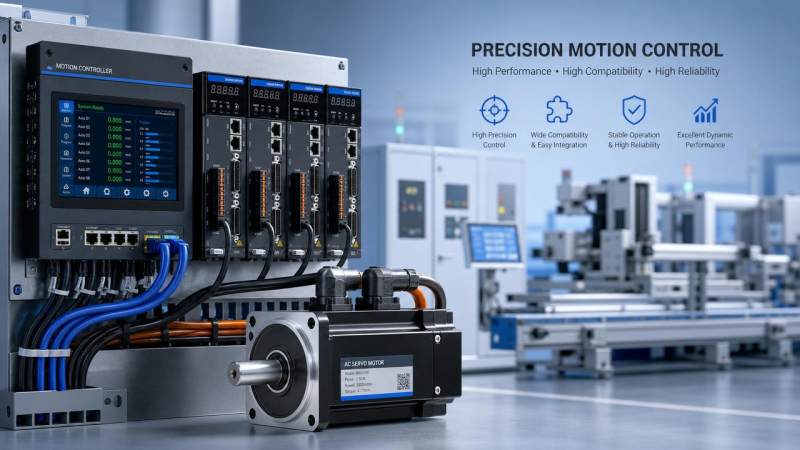
Choosing the right motion control OEM can determine whether an automation project delivers long-term precision, uptime, and scalability—or creates costly integration risks. For technical evaluators, the decision goes far beyond product specs: it requires assessing engineering depth, standards compliance, interoperability, and lifecycle support. This guide outlines the factors that matter most when comparing OEM partners in modern industrial automation.
Why does a motion control OEM matter more than a component datasheet?
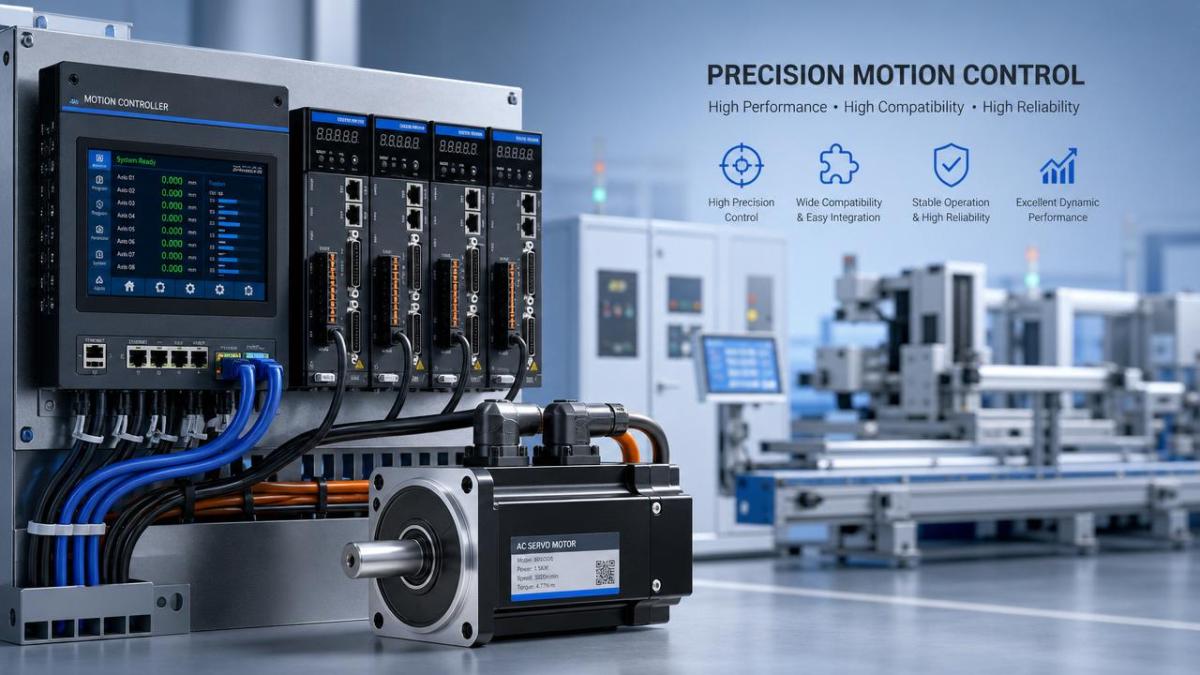
In complex automation environments, a motion control OEM is not just a parts supplier. It influences servo behavior, axis synchronization, machine safety, software communication, and long-term maintainability across the production lifecycle.
For technical evaluation teams, the risk often starts when a promising motor, drive, or controller performs well in isolation but fails under real plant conditions. Heat, vibration, electrical noise, fieldbus conflicts, and mixed-vendor architectures expose weaknesses that a basic specification sheet does not reveal.
This is why motion control OEM selection should be treated as a system-level decision. In Industry 4.0 factories, motion hardware must work with PLCs, HMIs, robots, machine vision, MES data flows, and safety architectures without creating hidden integration debt.
- A capable OEM reduces commissioning time by offering predictable tuning behavior, complete documentation, and tested communication profiles.
- A weak OEM may still offer acceptable unit pricing, but it can increase field troubleshooting, spare-parts complexity, and validation workload.
- The best partner supports both current machine requirements and future expansion, including more axes, faster cycle times, and digital integration.
G-IFA approaches this problem as a technical filter rather than a sales directory. By benchmarking automation solutions across motion control, PLC systems, robotics, industrial software, and fluid power, it helps evaluation teams compare OEM readiness in a broader engineering context.
What should technical evaluators check first when comparing a motion control OEM?
The first screening step is not price. It is application fit. A motion control OEM that works well for packaging equipment may not be ideal for semiconductor handling, CNC subsystems, or synchronized material transport.
Before shortlisting vendors, define the machine profile clearly: axis count, load behavior, speed range, acceleration demand, required repeatability, fieldbus architecture, safety level, environmental exposure, and expected maintenance model.
Core screening questions
- Does the motion control OEM have experience in applications with comparable dynamic performance, duty cycle, and control complexity?
- Can its drives, motors, encoders, and controllers integrate with the PLC and network stack already used on site?
- Are standards, documentation, safety functions, and service response sufficient for your validation process?
- Can the OEM support future scaling without forcing a full platform redesign?
A structured evaluation matrix makes these questions easier to compare across candidates. The table below summarizes the dimensions that usually have the highest impact on project success and total lifecycle risk.
Technical evaluators should use this matrix early, not after supplier discussions become procurement-driven. Once a platform is tentatively approved, changing the motion control OEM becomes much more expensive.
Which technical performance indicators reveal real OEM capability?
Not every application needs extreme speed or nanometer-level precision. What matters is matching motion performance to process risk. A pick-and-place cell, a converting line, and a coordinated gantry all stress the control platform differently.
Performance factors that deserve close review
- Positioning repeatability: Important for dosing, assembly, inspection alignment, and small-part handling.
- Torque stability at low speed: Critical in winding, conveying, and precision feed systems.
- Dynamic response: Determines how well the axis handles fast acceleration, load changes, and short cycle production.
- Multi-axis synchronization: Essential in electronic camming, flying shear, registration control, and coordinated robot interfaces.
- Thermal robustness: Affects stability in enclosed cabinets, continuous-duty machines, and high ambient temperature plants.
A credible motion control OEM should explain how its system behaves under load variation, not just under ideal laboratory conditions. Ask for engineering evidence such as tuning methodology, network cycle support, feedback resolution options, and diagnostic depth.
G-IFA’s benchmarking perspective is useful here because motion cannot be assessed separately from the surrounding automation stack. The most reliable platform is often the one that balances control performance with software transparency, not the one with the most aggressive headline specification.
How important are standards, certification, and interoperability?
For many technical evaluators, compliance only becomes urgent near machine delivery. That is late. A motion control OEM should be screened for standards alignment at the beginning, especially in export-oriented projects or regulated manufacturing environments.
Common evaluation areas include electrical safety, EMC behavior, functional safety support, and documentation completeness. Even when an OEM component is technically suitable, weak compliance support can delay approval and increase engineering rework.
The table below helps compare what technical teams should request from a motion control OEM when certification and interoperability are part of the procurement decision.
Interoperability deserves special attention in brownfield projects. A motion control OEM may be excellent in a closed ecosystem but difficult to integrate into an installed base built around another PLC family or software standard.
How should you compare OEMs on cost, risk, and lifecycle value?
The cheapest motion control OEM is rarely the lowest-cost choice over five to ten years. Technical evaluators should separate acquisition price from engineering effort, downtime exposure, spare-parts planning, and upgrade path.
A lower-cost platform can still be the right choice if machine complexity is moderate, cycle-time sensitivity is limited, and local service is strong. But for high-speed, multi-axis, or globally deployed equipment, lifecycle factors usually dominate.
Typical hidden costs in motion control OEM selection
- Longer commissioning due to incomplete tuning tools or unstable communication setup.
- Extra control cabinet redesign caused by thermal, wiring, or footprint constraints.
- Repeat validation work when firmware revisions are poorly controlled.
- Inventory burden if drives, feedback devices, and cables are highly proprietary.
- Downtime escalation when replacement lead times are long or regional support is weak.
A good practice is to score each motion control OEM on both technical fitness and operational resilience. If two platforms are close in servo performance, the better support model, documentation quality, and revision transparency may decide the outcome.
Which procurement process reduces selection mistakes?
Technical evaluators often inherit compressed timelines. That makes structured procurement even more important. The goal is not only to choose a motion control OEM but also to reduce downstream surprises during design, commissioning, and after-sales support.
Recommended evaluation workflow
- Define the motion profile and machine constraints in measurable terms, including axis loads, speeds, jerk limits, feedback needs, and duty cycle.
- Shortlist OEMs based on application relevance, communication compatibility, and standards support rather than brand familiarity alone.
- Request engineering documents early, including manuals, device files, thermal guidance, safety notes, and spare-parts policy.
- Run a proof-of-fit review or pilot test for high-risk applications such as synchronized axes, high-speed indexing, or precision registration tasks.
- Evaluate service response, localization capability, and change management before final approval.
Where possible, involve controls engineering, maintenance, quality, and procurement in the same review cycle. A motion control OEM can look attractive to one function while introducing risk for another.
This cross-functional lens is where G-IFA adds value. Its intelligence model is built around real manufacturing interdependence, connecting motion systems with PLC architecture, industrial software, robotics, and compliance considerations instead of treating them as isolated categories.
What are the most common mistakes when choosing a motion control OEM?
Many selection errors happen because teams optimize for a visible factor and ignore a system factor. That pattern is common in multi-site industrial projects where time pressure favors quick comparison over engineering depth.
Frequent evaluation mistakes
- Choosing on torque or power rating alone without checking inertia matching, control loop quality, or overload behavior.
- Assuming fieldbus compatibility means seamless PLC integration and identical engineering workflow.
- Ignoring thermal and cabinet design implications until the detailed mechanical layout is already frozen.
- Treating safety functions as a compliance checkbox instead of part of real machine architecture.
- Underestimating support quality, firmware governance, and spare-parts planning for exported equipment.
The best defense against these mistakes is disciplined benchmarking. Technical teams need comparable criteria, evidence-based review, and realistic plant context. A motion control OEM should earn approval through fit, not through claims.
FAQ: what do technical evaluators ask most often?
How do I know whether a motion control OEM is suitable for multi-axis synchronized applications?
Check support for coordinated motion functions, network determinism, controller update performance, encoder feedback options, and application examples involving camming, gearing, or registration. Also ask how the OEM handles tuning across axes rather than on a single drive basis.
What matters more: motor performance or software tools?
In practical machine building, both matter, but software tools often determine how quickly performance can be realized. Strong diagnostics, parameter backup, trace functions, alarm clarity, and repeatable commissioning workflows can significantly reduce project risk.
When should I reject a motion control OEM early?
Reject early when documentation is incomplete, communication support is vague, standards information cannot be produced, firmware policy is unclear, or the vendor cannot explain how its platform behaves in an application like yours. Early uncertainty often becomes late-stage cost.
Is a single-vendor automation platform always better?
Not always. A single-vendor stack can simplify engineering and support, but it may reduce flexibility or increase lock-in. Mixed architectures can work very well if interoperability is verified carefully and lifecycle ownership is clearly understood.
Why choose us when evaluating a motion control OEM?
G-IFA helps technical evaluators make stronger decisions by comparing motion control OEM options through the wider lens of industrial automation performance, interoperability, and compliance. Our focus is not limited to isolated hardware claims. We assess how motion systems align with PLC platforms, industrial software environments, robotics interfaces, and real factory operating conditions.
If you are screening a motion control OEM for a new line, retrofit, or global equipment program, you can consult us on practical evaluation topics such as parameter confirmation, fieldbus compatibility, standards-related documentation, delivery considerations, spare-parts planning, and custom solution fit.
You can also engage G-IFA for shortlist validation when your team needs help comparing architecture options, reducing integration risk, or clarifying whether a lower-cost alternative will create higher commissioning or lifecycle cost. For technical reviews, quotation alignment, sample feasibility, or project-specific selection guidance, contact us with your application requirements and existing automation stack.
Recommended News
- 2026/06/18ADAS Adaptive Cruise Control Explained: Sensors, Following Distance, and Common Failure PointsADAS adaptive cruise control explained clearly: learn how sensors, following distance, and common failure points affect safety, comfort, and real-world system reliability.
- 2026/06/18Industrial Automation vs Manual Production: How to Compare ROI, Labor, and ThroughputIndustrial automation vs manual production: compare ROI, labor costs, throughput, quality, and risk with a practical framework to choose the smarter manufacturing path.
- 2026/06/18How Eco Friendly Hotel Amenities Manufacturers Meet Bulk Order and Custom Packaging NeedsEco friendly hotel amenities manufacturer insights for bulk buyers: learn how suppliers manage large orders, custom packaging, quality control, and sustainable compliance with lower sourcing risk.