
Search News
Industry Portal
Popular Tags
When Custom Hydraulic Systems Make More Sense
Author
Robert Valve
Time
Apr 26, 2026
Pageviews
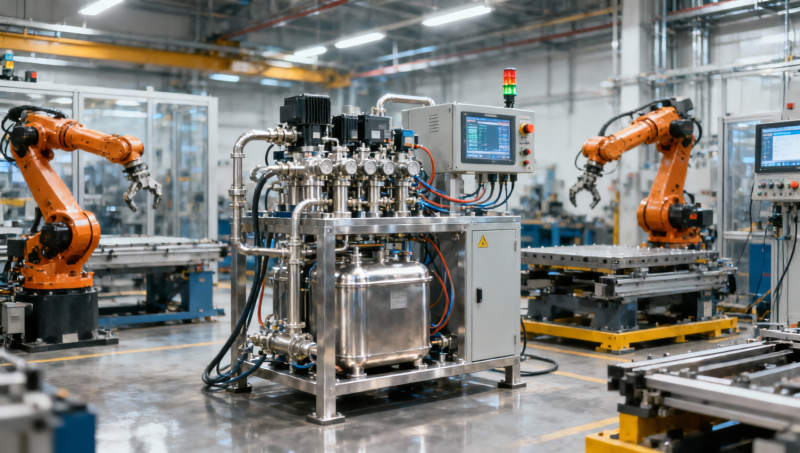
In smart manufacturing, hydraulic systems custom solutions often make more sense when standard units cannot meet performance, space, or control demands. For buyers comparing industrial IoT solutions, control systems OEM options, and heavy duty industrial equipment, the right hydraulic design can improve reliability, efficiency, and long-term value. This article explains when customization is the smarter choice for modern industrial automation B2B platform sourcing.
For research teams, operators, procurement managers, and business leaders, the decision is rarely about “custom versus standard” in isolation. It is about lifecycle fit. A standard hydraulic power unit may be cost-effective for a stable, repeatable process, but in automated production environments with tight footprints, variable duty cycles, or digital integration requirements, custom hydraulic systems often reduce hidden losses that appear later as downtime, control instability, or maintenance complexity.
At G-IFA, cross-sector benchmarking matters because hydraulic design now sits inside broader automation architecture. Pressure, flow, valve response, sensor feedback, PLC communication, and safety compliance must work together. When one part of that chain is mismatched, even a well-built production line can lose efficiency. That is why evaluating custom hydraulic systems should be a technical and commercial exercise, not only a component sourcing decision.
Why Standard Hydraulic Units Reach Their Limits
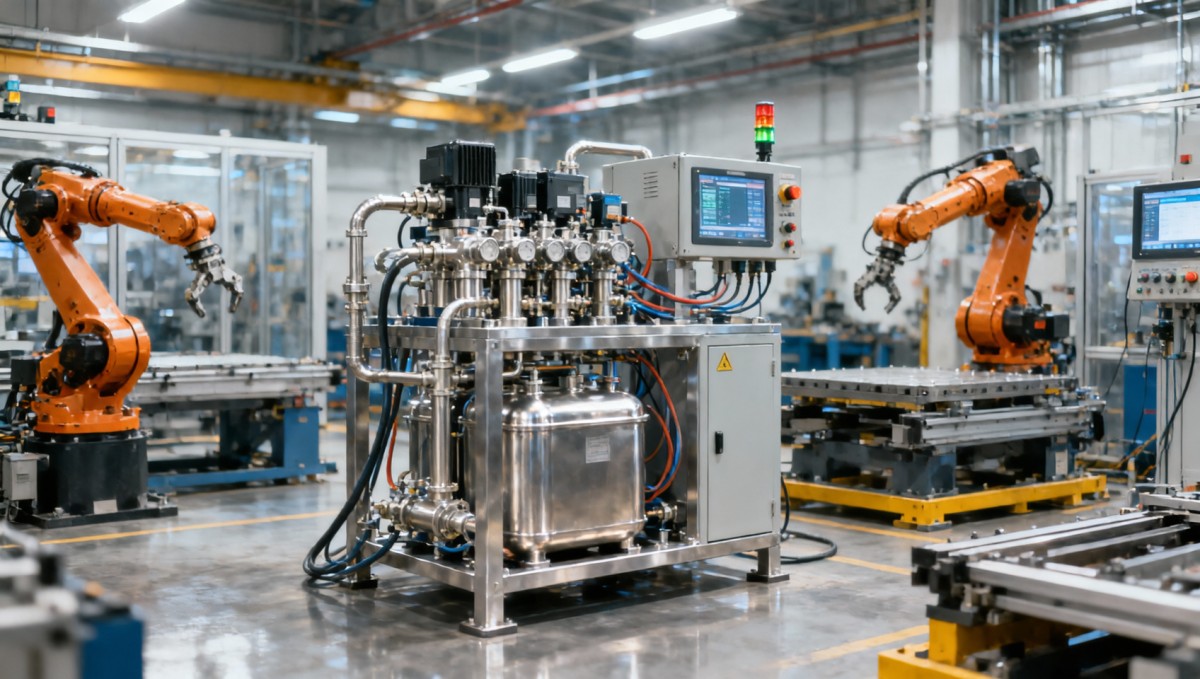
Standard hydraulic packages are designed for broad compatibility. They work well in many applications, especially when load profiles are predictable, ambient conditions are moderate, and installation space is generous. In practice, however, modern factories often ask one system to do more: support 2 to 4 motion sequences, fit into compact machine frames, interface with PLC or MES layers, and maintain stable pressure across fluctuating cycles.
The limits usually appear in five areas. First, flow and pressure may be oversized, increasing energy use. Second, reservoir and manifold layouts may not fit the machine envelope. Third, response speed can be too slow for synchronized automation. Fourth, off-the-shelf valve logic may not support multi-axis or proportional control. Fifth, standard units often need retrofit work to meet ISO, IEC, or CE-related integration expectations in export-oriented equipment.
For operators, this mismatch shows up as unstable cycle times, excess heat, noise, or difficult maintenance access. For procurement teams, it appears as repeated modifications after installation. For decision-makers, the bigger issue is that a low initial purchase price can lead to 10% to 25% higher lifecycle cost when unplanned service, line stops, and inefficient energy consumption are added.
Common signs that a standard unit is no longer enough
- Pressure demand varies widely, such as 80 bar in standby and 210 bar during peak load.
- Installation space is restricted by robot cells, conveyors, guarding, or cable routing.
- Cycle frequency exceeds 15 to 20 starts per hour, creating thermal stress.
- Machine builders require sensor-rich feedback for predictive maintenance or remote diagnostics.
- One hydraulic source must serve several actuators with different speed and load priorities.
The table below outlines where standard configurations commonly fail and where custom hydraulic systems create measurable operational value in industrial automation.
The key takeaway is not that standard systems are obsolete. It is that they are best for stable, low-variation tasks. Once space, control, duty cycle, or digital visibility become critical, custom hydraulic systems usually provide a cleaner engineering fit and better commercial predictability.
When Custom Hydraulic Systems Make More Sense in Industrial Automation
Custom hydraulic systems make the most sense when the hydraulic package is part of a larger automation objective rather than a standalone power source. This is common in press lines, die handling equipment, automated clamping systems, heavy-duty positioning tables, robotics support platforms, and material handling stations where repeatability and integration matter as much as raw force.
A typical trigger is variable load behavior. If a machine alternates between light movement and high-force holding, a custom design can combine pressure compensation, accumulator support, and proportional valve control to smooth output and reduce pump strain. In many factories, this can cut unnecessary motor runtime by several minutes per hour, especially when duty cycles shift across 2 or 3 production recipes.
Another strong case is environmental or installation complexity. A hydraulic unit operating at 35°C ambient temperature in a dust-prone area has different cooling, filtration, and sealing needs than a unit in a climate-controlled assembly room. Likewise, a system mounted near collaborative robot cells or enclosed machine bases may require vertical tank geometry, remote manifolds, or lower-noise pump arrangements below 70 to 75 dB.
Scenarios where customization delivers clear value
Below are common scenarios in which a custom hydraulic system often outperforms a catalog unit by aligning the hydraulic architecture with process demands, digital controls, and maintenance access.
For sourcing teams using a modern industrial automation B2B platform, the practical question is whether hydraulic performance affects throughput, quality, or line availability. If the answer is yes, custom engineering deserves early consideration. Waiting until commissioning to solve hydraulic mismatches usually extends timelines by 2 to 6 weeks and raises integration risk.
A useful decision rule
- If one system must support multiple actuator profiles, custom design is often justified.
- If downtime costs are high, such as multi-shift production or export deadlines, custom reliability features matter more.
- If controls must connect to PLC, HMI, SCADA, or MES layers, preplanned signal architecture saves rework later.
- If maintenance access is difficult, service-oriented layout can lower intervention time from 2 hours to under 45 minutes for routine checks.
In short, custom hydraulic systems make more sense when the hydraulic unit influences the performance of the entire automation cell, not just one actuator. That systems view is especially important in Industry 4.0 environments where mechanical power and digital control must operate as one architecture.
Key Design Factors Buyers Should Evaluate Before Specifying a Custom System
A successful custom hydraulic project starts with the right inputs. Many procurement problems begin because the request only lists maximum pressure and motor power. That is not enough. Suppliers need a fuller operating picture: load profile, duty cycle, oil temperature range, target response time, available footprint, control interface requirements, and maintenance conditions. Without these details, even a custom design can be under-optimized.
For most industrial applications, buyers should document at least four operating ranges: working pressure, peak flow, cycle frequency, and environmental exposure. For example, a unit may need 160 bar nominal pressure, 220 bar peak, 25 L/min steady flow, and short bursts to 40 L/min. If these values are not separated clearly, pumps and valves are often oversized, causing extra heat and inefficient energy use.
Control strategy is equally important. In automated production, hydraulic actuation may need to exchange status signals with PLCs in milliseconds, support alarm logic, or provide pressure and temperature data for preventive maintenance. A custom system should therefore be assessed not only by hydraulic output but also by sensor architecture, cabinet integration, and communication readiness.
Core specification checklist
- Define nominal and peak pressure separately, rather than using one maximum number.
- Map continuous versus intermittent flow demand across a full production cycle.
- Confirm installation constraints including service clearance, hose routing, and ventilation area.
- Specify control requirements such as analog signals, digital I/O, alarm outputs, or fieldbus compatibility.
- Set maintenance expectations, including filter replacement interval, oil sampling plan, and acceptable service time.
The following matrix helps procurement and engineering teams compare what matters most when selecting a custom hydraulic systems supplier or evaluating design proposals.
A good custom design should also reflect compliance context. Export equipment, regulated sectors, and multi-site manufacturing groups often require documentation packs, electrical alignment, and safety logic that match broader plant standards. Buyers who include these requirements early can reduce approval cycles and improve handover quality.
Typical parameter ranges by use case
In factory automation, many custom hydraulic systems fall within practical ranges such as 70 to 250 bar, 10 to 120 L/min, and motor sizes from 2.2 kW to 30 kW. These are not universal values, but they are useful planning bands. When requirements exceed these ranges, thermal management, noise control, and safety circuit design usually need closer engineering review.
Implementation, Lead Time, and Risk Control in a Custom Hydraulic Project
One reason some buyers hesitate to choose custom hydraulic systems is concern over lead time. That concern is valid, but it is often misunderstood. A well-scoped custom project may add only 1 to 3 weeks to engineering compared with a standard order, while saving far more time during commissioning. The true risk is not customization itself. The real risk is incomplete input data, late design changes, or poor alignment between hydraulic, electrical, and automation teams.
A disciplined workflow usually has 5 stages: requirement definition, concept confirmation, detailed design, assembly and testing, and site integration. Depending on complexity, many industrial projects move from approved specification to factory acceptance in 3 to 8 weeks. Systems with special manifolds, imported components, or extensive control interfaces may take longer, especially when multi-country compliance documentation is required.
Risk control should focus on the interfaces. Most project overruns come from three failure points: actuator data that changes after design freeze, control signals not matched to PLC logic, and insufficient service access in the final machine enclosure. Early 3D layout checks, I/O confirmation, and pressure-flow validation can prevent expensive revisions later.
Recommended implementation flow
- Collect process data, actuator requirements, duty cycles, and ambient conditions.
- Review concept drawings with hydraulic and controls teams before procurement release.
- Confirm compliance expectations, documentation scope, and operator safety logic.
- Run pre-delivery testing for pressure stability, leakage, heat behavior, and control response.
- Plan site commissioning with clear ownership for mechanical, electrical, and software integration.
For global buyers, another practical step is supplier benchmarking. Platforms such as G-IFA are valuable because they help compare hydraulic capability in the context of the wider automation stack. A hydraulic package that performs well on paper but lacks control compatibility or documentation discipline may still increase project risk. Benchmarking should therefore include not only hardware quality but also integration maturity.
Maintenance planning should be part of implementation, not an afterthought. In demanding environments, filter inspection may be scheduled every 500 to 1,000 operating hours, with oil condition reviews at fixed intervals based on contamination levels and thermal exposure. Custom layouts that simplify access to filters, drains, and test ports can significantly reduce routine maintenance time and technician error.
Common mistakes to avoid
- Choosing a custom system without clearly defined load cases.
- Approving hydraulic design before PLC signal mapping is finalized.
- Ignoring heat management in compact enclosures or high-cycle applications.
- Focusing only on upfront price instead of downtime cost over 12 to 36 months.
When these risks are managed correctly, custom hydraulic systems are not slower or more uncertain than standard alternatives. In many cases, they are the more predictable route because they reduce the mismatch between machine design, control architecture, and operating reality.
Procurement FAQ for Research Teams, Operators, and Decision-Makers
The questions below reflect common sourcing and operational concerns raised by industrial buyers evaluating custom hydraulic systems for smart manufacturing environments.
How do I know whether a custom hydraulic system is economically justified?
A custom solution is usually justified when hydraulic performance affects uptime, product quality, or commissioning speed. If line stoppage costs are high, if the machine needs integrated diagnostics, or if standard units require major retrofit work, the higher upfront engineering cost is often offset within 12 to 24 months through lower service events and fewer process disruptions.
What information should procurement prepare before requesting a quote?
At minimum, prepare actuator data, target pressure and flow ranges, cycle time, ambient temperature, available installation space, power supply details, and required control signals. Including even 6 to 8 core data points early can dramatically improve quote accuracy and shorten the back-and-forth engineering cycle.
How long does a custom hydraulic project usually take?
For many industrial automation applications, a realistic planning range is 3 to 8 weeks from confirmed specification to tested assembly. More complex builds with special manifolds, extensive sensor packages, or international compliance requirements may need a longer schedule. Buyers should always separate engineering lead time from site commissioning time.
What should operators look for after installation?
Operators should monitor pressure stability, temperature behavior, unusual noise, leak points, and alarm frequency during the first production cycles. A healthy system should show consistent response across repeated runs and predictable thermal behavior. If oil temperature rises too quickly or actuator motion becomes inconsistent, control tuning or flow balancing may need adjustment.
Can custom hydraulic systems support Industry 4.0 goals?
Yes, especially when the design includes pressure transducers, temperature monitoring, status feedback, and clean interfaces to PLC or higher-level software. In that setup, hydraulic systems become visible assets within the broader automation environment rather than isolated power modules. This improves diagnostics, maintenance planning, and sourcing transparency across the production lifecycle.
When standard hydraulic units fit the application, they remain a sensible and efficient choice. But when machine layout, control complexity, duty cycle variation, serviceability, or digital integration become critical, custom hydraulic systems make more sense because they solve the right problem at the system level, not just at the component level.
For information researchers, users, procurement specialists, and business decision-makers, the most effective sourcing approach is to evaluate hydraulics alongside robotics, PLC architecture, motion control, and industrial software compatibility. That is where G-IFA creates value: by helping industrial teams compare options through technical benchmarks, integration logic, and practical decision criteria.
If you are assessing a new machine build, upgrading a legacy line, or comparing industrial automation B2B platform options, now is the right time to review whether a custom hydraulic design can improve reliability, efficiency, and total project performance. Contact us to discuss your application, request a tailored solution, or explore more smart manufacturing benchmarks and sourcing guidance.
- motion control
- industrial IoT
- hydraulic systems
- control systems
- smart manufacturing
- industrial automation
- factory automation
- industrial software
- industrial equipment
- hydraulic systems supplier
- industrial automation B2B platform
- control systems OEM
- hydraulic systems custom
- industrial IoT solutions
- heavy duty industrial equipment
- Industry 4.0
Recommended News
- 2026/10/24Car Spare Parts: How to Check Fitment and Avoid Ordering the Wrong PartOrder car spare parts with confidence. Learn how to verify VINs, OEM numbers, and fitment details to avoid costly mistakes and choose the right replacement first time.
- 2026/10/23How Do You Select a Motion Control System for Synchronized Axes?How do I select a motion control system for synchronized axes? Discover key timing, feedback, and performance checks to choose confidently and reduce costly integration risks.
- 2026/10/23Integrating End-of-Line Sortation with Packing Stations and Conveyor ControlsOptimize end of line sortation with coordinated packing stations and conveyor controls. Learn how to prevent bottlenecks, improve routing accuracy, and handle exceptions reliably.