
Search News
Industry Portal
Popular Tags
When hydraulic systems custom pays off
Author
Robert Valve
Time
Apr 17, 2026
Pageviews
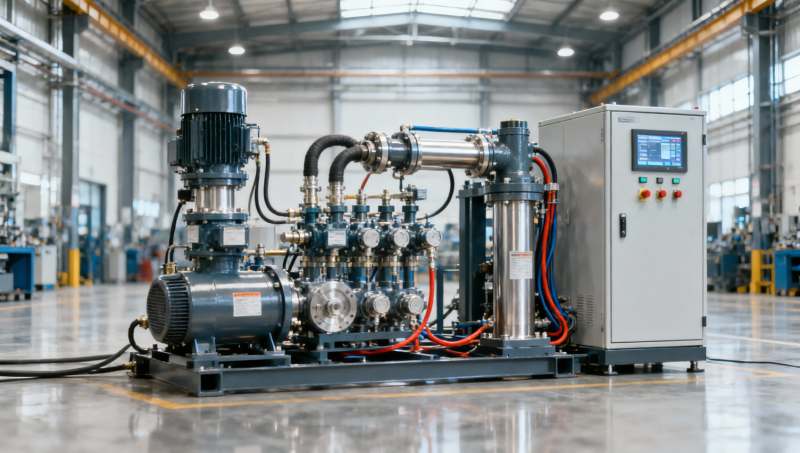
For manufacturers comparing automation investments, knowing when hydraulic systems custom pays off is key to balancing performance, durability, and cost. As an industrial automation B2B platform, G-IFA helps information seekers evaluate options across motion control supplier networks, control systems OEM solutions, and MES software sourcing benchmarks, so every sourcing decision is backed by clear engineering data and real-world production logic.
In most cases, a custom hydraulic system pays off only when standard units cannot reliably meet the machine’s force, duty cycle, space, safety, or integration requirements. For information seekers evaluating industrial automation options, the real question is not whether custom is “better,” but whether the added engineering cost creates measurable returns through uptime, cycle performance, energy control, maintenance reduction, or longer asset life. If the application is simple, stable, and widely served by off-the-shelf components, custom design is often unnecessary. But in demanding production environments, customization can prevent costly compromises.
When does a custom hydraulic system actually make economic sense?
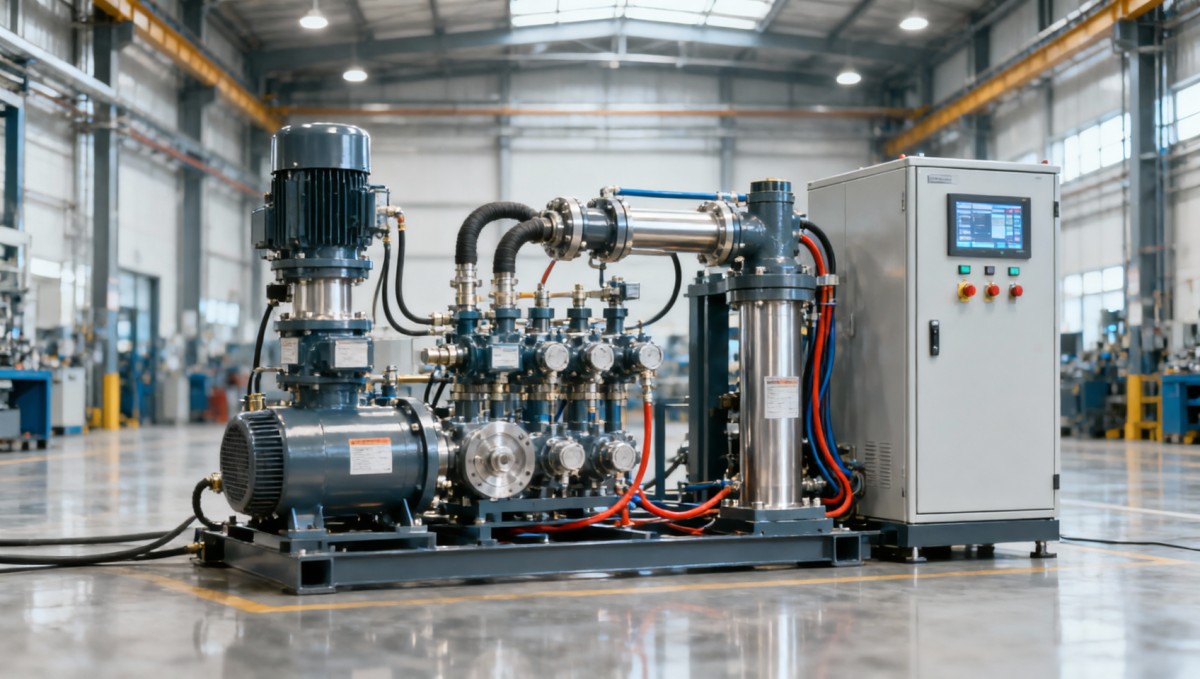
The strongest search intent behind “when hydraulic systems custom pays off” is decision support. Readers usually want to know when customization is justified, what signals indicate that standard products are not enough, and how to compare engineering value against total cost. They are not looking for a generic definition of hydraulics. They want a practical threshold for decision-making.
A custom hydraulic system typically makes sense when one or more of the following conditions exist:
- Force and motion demands exceed standard package capability. Heavy forming, pressing, clamping, lifting, or synchronized actuation often require tailored pressure, flow, and control behavior.
- Duty cycle is severe. If the machine runs continuously, under shock loads, or in harsh thermal conditions, standard configurations may fail early or require frequent intervention.
- Installation space is constrained. Compact equipment, mobile machinery, or retrofits often need custom reservoir geometry, manifold design, hose routing, or integrated power units.
- Precision and repeatability matter. Applications that demand stable speed control, controlled deceleration, or synchronized multi-axis hydraulic behavior benefit from engineered tuning.
- Safety or compliance requirements are non-standard. Redundant circuits, load holding, emergency lowering, or region-specific compliance may require a purpose-built architecture.
- The hydraulic system must integrate tightly with PLC, sensors, drives, or MES-level monitoring. Standard units may provide basic functionality, but not the data visibility or control logic modern smart factories expect.
If none of these conditions apply, a standard hydraulic package is often the more cost-effective path. The value of custom engineering appears when avoiding underperformance, redesign, and downtime matters more than minimizing initial purchase price.
What do information-focused buyers care about most before choosing custom?
Readers in the research phase usually care about five practical issues:
- How much more will custom cost upfront?
- Will the performance gain be measurable in production?
- What risks are reduced compared with adapting a standard system?
- Will maintenance become easier or more complicated?
- How will the system fit into wider automation architecture?
These are valid concerns because custom hydraulic systems are rarely bought as isolated products. They affect machine layout, control systems, commissioning time, spare parts strategy, and long-term operating cost. For that reason, the decision should be based on lifecycle performance rather than component price alone.
In industrial automation, many costly mistakes happen when buyers compare only nameplate specifications. A standard hydraulic power unit may appear cheaper on paper, but if it leads to unstable cycle times, overheating, excessive noise, difficult maintenance access, or repeated seal failures, the true cost quickly rises. For production directors and engineers, the better comparison is total cost of ownership versus process fit.
How can you tell that a standard hydraulic solution is likely to become a compromise?
There are several early warning signs that indicate an off-the-shelf hydraulic system may create operational limitations:
- The application needs multiple performance targets at once, such as high force, compact footprint, and tight control accuracy.
- The machine builder is adding valves, adapters, external cooling, or extra piping just to make a standard unit work.
- Previous systems experienced recurring overheating, cavitation, pressure instability, or hose wear.
- The hydraulic circuit must support variable production modes rather than one fixed cycle.
- The plant needs condition monitoring, remote diagnostics, or digital integration beyond basic pressure feedback.
- Environmental conditions such as dust, washdown, vibration, or ambient heat are far from standard operating assumptions.
When these signs appear, custom engineering often saves money by removing inefficiencies before the equipment enters full production. This is especially true in high-throughput lines where even small losses in cycle consistency or availability can carry large financial impact.
Where does the ROI of custom hydraulic systems usually come from?
The return on a custom hydraulic system does not usually come from one dramatic improvement. It more often comes from several smaller gains accumulating over time:
- Higher uptime: Better-matched components and circuit logic reduce unplanned failures.
- Improved cycle performance: Flow control, pressure response, and actuator sizing can be tuned to the actual process.
- Lower maintenance burden: Cleaner layout, better access, proper filtration, and reduced thermal stress extend service intervals.
- Longer component life: Correct sizing avoids overpressure, overheating, and premature wear.
- Lower energy waste: Custom pump selection, load-sensing strategies, or variable-speed drive integration can improve efficiency.
- Reduced redesign costs: A system built around the machine avoids later modifications to structure, controls, or piping.
For example, if a standard system forces oversized operation to cover peak load, the plant may pay continuously in energy use and heat generation. A custom design can align pump capacity, valve behavior, and actuator response with the real load profile. In such cases, the payback may not come from purchase savings, but from operational stability and lower cumulative waste.
Which applications are most likely to justify customization?
Custom hydraulic systems are most commonly justified in applications where operating demands are high, consequences of failure are expensive, or integration requirements are complex. Typical examples include:
- Metal forming and press systems
- Heavy-duty clamping and fixture automation
- Die casting and injection support systems
- Industrial lifting and synchronized cylinder control
- Mobile or compact machinery with strict space limits
- Retrofits where legacy mechanical structures must be preserved
- Automation cells requiring close PLC and sensor integration
In contrast, standard solutions are often sufficient for simple lifting, basic linear motion, low-duty actuation, and applications with broad standardization across the market. If replacement speed, low upfront cost, and minimal engineering time are the top priorities, standard packages may offer better value.
How should buyers evaluate custom hydraulic system suppliers?
A good supplier evaluation should go beyond catalog range and price quotation. Buyers should look for evidence of engineering discipline, not just assembly capability. Useful evaluation criteria include:
- Application understanding: Can the supplier translate machine requirements into pressure, flow, control, and thermal design logic?
- Simulation and validation capability: Do they verify performance assumptions before build?
- Component transparency: Are pumps, valves, seals, manifolds, and control elements specified clearly and benchmarked against recognized standards?
- Integration readiness: Can the system communicate with PLC and supervisory architectures used in modern automation environments?
- Serviceability: Is maintenance access considered in the design, or only hydraulic function?
- Documentation quality: Are schematics, bill of materials, maintenance plans, and commissioning procedures complete?
For research-driven buyers using industrial sourcing platforms, this is where benchmark repositories and cross-sector technical data become valuable. Comparing custom hydraulic suppliers through engineering criteria helps reduce procurement risk far more effectively than comparing unit price alone.
What is a practical decision framework for choosing custom vs standard?
If you need a simple way to decide, use this four-part test:
- Performance gap: Does a standard system fully meet force, speed, precision, and duty cycle requirements without workarounds?
- Operational risk: If the system underperforms, what is the cost in downtime, scrap, maintenance, or safety exposure?
- Integration complexity: Does the application require close coordination with controls, sensors, data platforms, or unique machine geometry?
- Lifecycle economics: Will custom design reduce total cost over the asset life, even if upfront cost is higher?
If the answer is “yes” to several of these questions, a custom hydraulic system is likely worth serious consideration. If the answer is “no” across most of them, standardization is usually the smarter choice.
Conclusion: when hydraulic systems custom pays off
Custom hydraulic systems pay off when they solve a real production problem that standard equipment cannot address efficiently, reliably, or safely. For information seekers evaluating automation investments, the best decision is usually not based on whether custom sounds advanced, but on whether it improves measurable outcomes: uptime, control, service life, integration, and total cost of ownership.
In short, choose standard when the application is common and predictable. Choose custom when machine demands, operating conditions, or automation architecture make compromise expensive. That is where custom hydraulic engineering stops being a premium option and becomes a rational industrial investment.
Recommended News
- 2026/10/24Car Spare Parts: How to Check Fitment and Avoid Ordering the Wrong PartOrder car spare parts with confidence. Learn how to verify VINs, OEM numbers, and fitment details to avoid costly mistakes and choose the right replacement first time.
- 2026/10/23How Do You Select a Motion Control System for Synchronized Axes?How do I select a motion control system for synchronized axes? Discover key timing, feedback, and performance checks to choose confidently and reduce costly integration risks.
- 2026/10/23Integrating End-of-Line Sortation with Packing Stations and Conveyor ControlsOptimize end of line sortation with coordinated packing stations and conveyor controls. Learn how to prevent bottlenecks, improve routing accuracy, and handle exceptions reliably.