
Search News
Industry Portal
Popular Tags
Why industrial sensors fail in harsh environments
Author
Robert Valve
Time
May 20, 2026
Pageviews
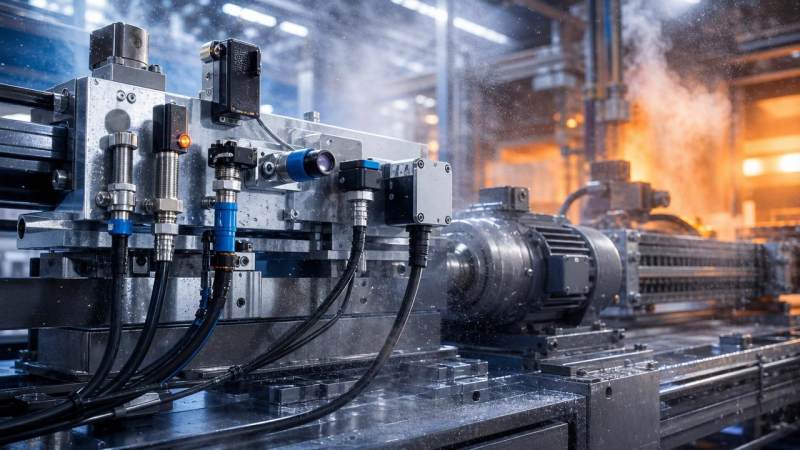
Industrial sensors sit at the edge of every automated process. They detect position, pressure, temperature, flow, speed, and presence before larger control decisions happen.
In clean labs, sensor life can match catalog expectations. In harsh plants, however, industrial sensors often fail early and create expensive service loops.
Heat, vibration, moisture, dust, washdown chemicals, and unstable power all compress reliability margins. Small weaknesses then become repeated alarms, false readings, and unplanned downtime.
Across smart manufacturing, this issue is becoming more visible. Faster lines, tighter tolerances, and connected diagnostics mean sensor failure now affects both production output and data quality.
Understanding why industrial sensors fail in harsh environments is no longer just a maintenance concern. It is a system design, lifecycle cost, and automation performance issue.
Harsh environments are exposing weak points in industrial sensors faster than before
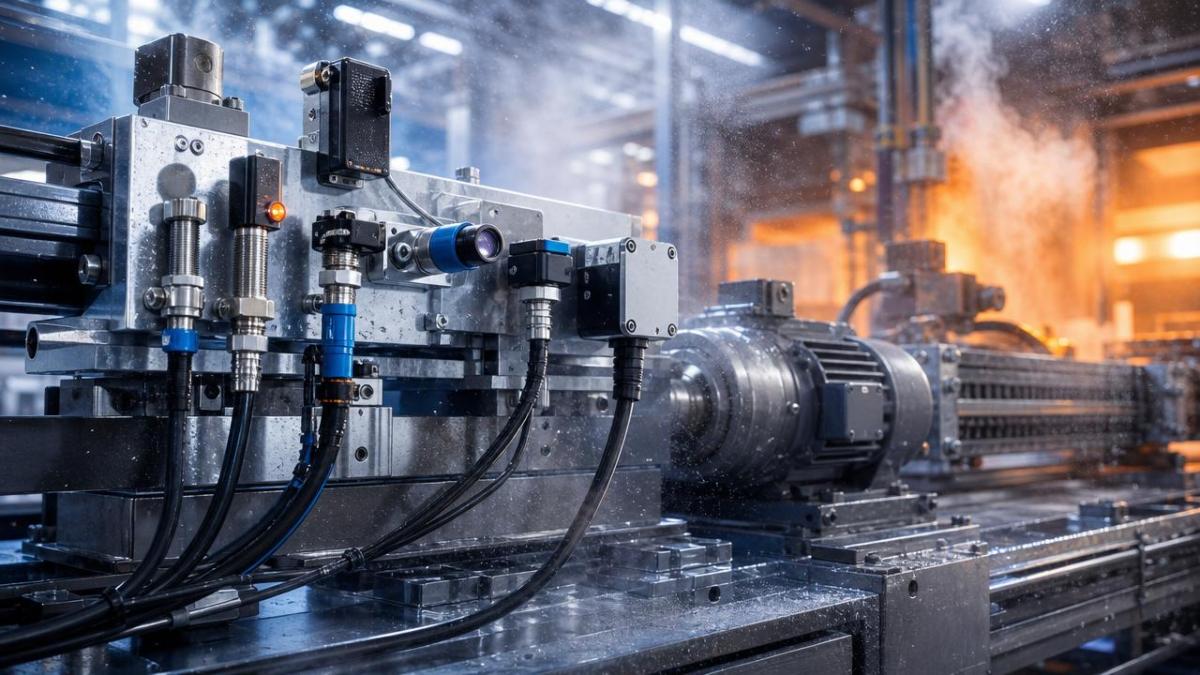
Modern factories operate longer, hotter, and with less manual buffering. That raises stress on industrial sensors installed near motors, ovens, pumps, conveyors, and outdoor equipment.
The shift toward predictive maintenance also changes expectations. A drifting sensor is now as problematic as a dead sensor because wrong data corrupts analysis.
At the same time, more facilities are mixing old assets with new IIoT layers. Compatibility gaps can amplify failure symptoms through noise, power mismatch, or poor signal conditioning.
This trend matters across robotics, motion control, PLC systems, MES-linked equipment, and fluid power systems. Industrial sensors are common failure points because they are nearest to physical stress.
The main failure drivers of industrial sensors are becoming easier to identify
Most sensor failures in harsh environments are not random. They usually result from a mismatch between environmental stress and actual sensor design limits.
Heat is still the most underestimated enemy
Many industrial sensors are rated for ambient temperature, not actual mounting temperature. A sensor near a gearbox or furnace can exceed its limit even in moderate room conditions.
Thermal cycling is equally destructive. Repeated heating and cooling expands materials at different rates and slowly opens paths for moisture and electrical instability.
Vibration damage often starts in the connection path
The sensing element may survive, while the cable, M12 connector, or terminal point fails first. This is common on conveyors, compressors, and mobile automation platforms.
Repeated micro-movement causes fretting corrosion. That creates higher resistance and unstable communication before complete disconnection appears.
Moisture and chemicals defeat weak sealing claims
IP ratings help, but they do not guarantee survival against steam, pressure washdown, alkaline cleaners, oil mist, or solvent splash.
Industrial sensors fail when cable jackets harden, O-rings degrade, or vent membranes clog. Once sealing degrades, corrosion accelerates rapidly.
The push toward smarter factories is increasing the cost of sensor failure
In traditional lines, one failed sensor could stop a station. In connected factories, the same event can disrupt control logic, traceability records, and maintenance analytics.
That means industrial sensors now influence more than equipment uptime. They also affect software confidence, quality verification, and root-cause investigations.
- Robotic cells may lose positional confirmation and trigger safety slowdowns.
- PLC and control systems may receive noisy inputs that create nuisance alarms.
- Motion systems may compensate for incorrect feedback and reduce accuracy.
- MES or ERP-linked reporting may store bad process data.
- Pneumatic and hydraulic systems may operate outside intended pressure windows.
For integrated production lines, a single weak sensor can propagate cost across mechanics, controls, software, and service labor.
Selection mistakes remain a leading reason industrial sensors fail early
Many failures are introduced during specification, not operation. The wrong sensing principle in the right housing will still fail functionally.
- Using standard photoelectric sensors where dust or steam obscures optics.
- Selecting general-purpose proximity sensors for high-temperature mounting zones.
- Choosing cable materials without checking oil, coolant, or cleaner compatibility.
- Ignoring EMC conditions near drives, welders, or high-current motor circuits.
- Assuming IP67 is enough for aggressive washdown or outdoor seasonal cycling.
Better reliability starts with application mapping. That includes ambient extremes, media exposure, cleaning methods, mounting stress, and electrical environment.
What should be monitored first when industrial sensors work in extreme conditions
A practical inspection strategy reduces guesswork. It also helps separate sensor defects from wiring, logic, or process variation.
Core checkpoints
- Measure actual temperature at the sensor body during peak operation.
- Inspect connectors for looseness, oxidation, and vibration wear.
- Check cable bend radius, strain relief, and rubbing points.
- Review washdown frequency, chemical type, and contact duration.
- Compare output stability before and after nearby motors start.
- Look for drift trends, not only hard failures.
These checks reveal whether industrial sensors are failing from environment, installation, or electrical interaction. Each cause needs a different corrective action.
Durability improvements now depend on design, installation, and maintenance together
No single upgrade solves harsh-environment failure. Better results come from stacking several small protections around industrial sensors.
In many cases, relocating the sensor slightly, shielding radiant heat, or rerouting the cable delivers more value than switching brands alone.
The next reliability advantage will come from evidence-based sensor lifecycle decisions
Harsh-environment reliability improves fastest when failure data is standardized. Track location, media exposure, temperature, runtime, failure mode, and replacement part history.
This creates a benchmark for comparing industrial sensors across different vendors, machine zones, and production conditions. It also supports smarter stocking and maintenance timing.
Useful next steps include:
- Audit the ten most frequently replaced industrial sensors by location.
- Map each failure against heat, vibration, moisture, dust, and chemical factors.
- Recheck connector, cable, and mounting choices before changing sensor models.
- Validate ratings against actual conditions, not nominal machine specifications.
- Use benchmark-based evaluation aligned with ISO, IEC, and CE expectations.
As industrial automation grows more data-driven, sensor durability becomes a strategic engineering metric. Reliable industrial sensors protect uptime, process confidence, and the long-term value of smart factory investment.
Recommended News
- 2026/10/24Car Spare Parts: How to Check Fitment and Avoid Ordering the Wrong PartOrder car spare parts with confidence. Learn how to verify VINs, OEM numbers, and fitment details to avoid costly mistakes and choose the right replacement first time.
- 2026/10/23How Do You Select a Motion Control System for Synchronized Axes?How do I select a motion control system for synchronized axes? Discover key timing, feedback, and performance checks to choose confidently and reduce costly integration risks.
- 2026/10/23Integrating End-of-Line Sortation with Packing Stations and Conveyor ControlsOptimize end of line sortation with coordinated packing stations and conveyor controls. Learn how to prevent bottlenecks, improve routing accuracy, and handle exceptions reliably.