
Search News
Industry Portal
Popular Tags
How precise OEM robot welders reduce rework risk
Author
Dr. Victor Gear
Time
May 20, 2026
Pageviews
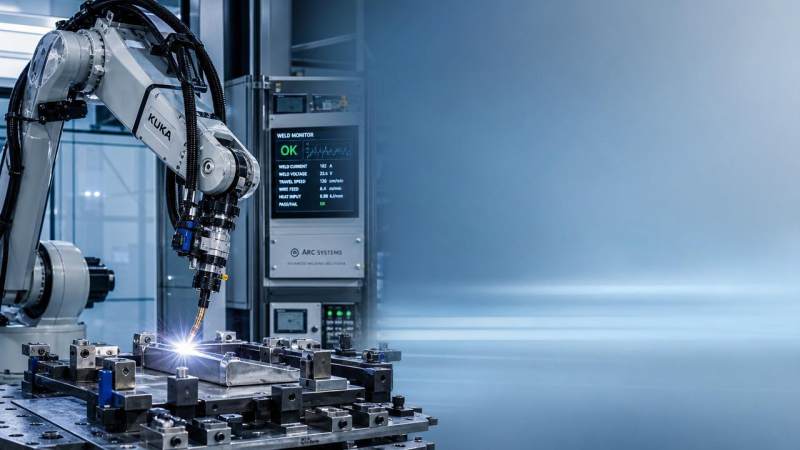
For quality and safety leaders, the question is not whether robotic welding improves throughput, but whether it measurably lowers defect exposure and compliance risk. In most cases, the answer is yes—if the system is engineered for repeatability, weld stability, traceability, and fit with real production conditions.
The core search intent behind “How precise OEM robot welders reduce rework risk” is practical evaluation. Readers want to understand how a high-precision OEM robotic welding system reduces defects, where that reduction comes from, how to verify the claims, and what indicators matter before approval or purchase.
For quality control teams and safety managers, the biggest concerns are usually consistent weld quality, process drift, heat input control, operator exposure, nonconformance rates, and the hidden cost of rework. They also want confidence that automation will support audits, standards compliance, and root-cause investigation rather than create a new black box.
The most useful content, therefore, is not a generic explanation of robotic welding. It is a decision-focused discussion of defect mechanisms, tolerance control, programming accuracy, fixture interaction, data traceability, inspection integration, and the evaluation criteria that distinguish a marketing claim from a genuinely precise OEM solution.
In this article, the priority is to show where precision directly affects rework risk, what quality and safety teams should ask an OEM, and how an industrial robotic welder oem with high precision contributes to stronger process capability in complex manufacturing environments.
Why rework risk in welding is really a precision and control problem
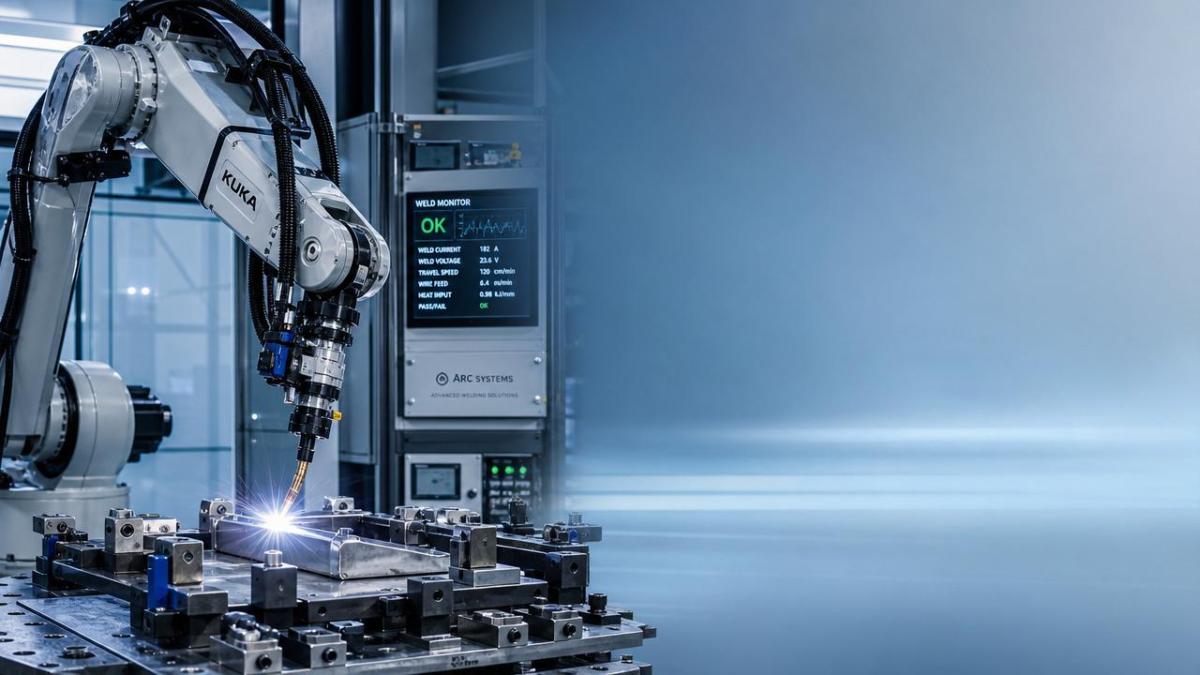
Rework in welding rarely comes from one dramatic failure. More often, it grows from small variations that accumulate across torch path, joint fit-up, travel speed, wire feed consistency, arc stability, and thermal distortion. When these variables move outside acceptable windows, defect rates rise quietly before they become obvious in scrap reports.
That is why precision matters beyond simple positioning accuracy. A welding robot may repeat a path reliably, yet still produce inconsistent outcomes if seam tracking is weak, fixtures are unstable, or heat input varies across parts. True precision is process precision, not just motion precision.
For quality leaders, this distinction is critical. Rework risk is tied to whether the whole cell can hold the weld process inside validated limits shift after shift. A precise OEM system reduces variation at the source, which is more valuable than detecting defects only after production has already absorbed the cost.
Safety leaders should also view rework as a risk signal. Every additional repair cycle introduces more manual handling, more arc exposure, more grinding, more part movement, and more opportunities for injury or noncompliant workarounds. Lower rework is therefore both a quality outcome and a safety outcome.
How high-precision OEM robot welders reduce weld defects in practice
An industrial robotic welder oem with high precision reduces rework risk through repeatable torch positioning, controlled travel speed, stable approach angles, and tighter management of weld bead geometry. These factors directly affect penetration consistency, fusion quality, bead placement, and final dimensional integrity.
Path repeatability is one of the clearest advantages. In manual welding, even skilled operators vary slightly over time due to fatigue, line conditions, and part accessibility. A well-engineered robot repeats qualified paths with minimal deviation, reducing common quality escapes such as underfill, overlap, missed joints, and inconsistent bead shape.
Heat input control is equally important. Excess heat can warp components, damage nearby materials, and increase downstream fit problems. Too little heat can compromise fusion. Precision welding systems keep travel speed, arc parameters, and dwell behavior more stable, which lowers the risk of distortion-driven rework and hidden structural defects.
Advanced OEM systems also improve seam following and compensation. In real plants, parts are not always perfectly identical. Slight variation in joint location or gap can turn a nominally good program into a defect generator. Precision systems that integrate sensing, adaptive correction, or calibrated offset strategies can maintain quality under realistic tolerance conditions.
Another practical benefit is reduced dependence on operator-to-operator judgment. Quality teams often struggle when acceptance depends too heavily on individual technique. Robotic precision moves the process toward standardized execution, making outcomes more predictable and corrective action more objective.
Which quality issues are most affected by robotic welding precision
Not every weld problem is solved by a robot, but several common nonconformities are strongly influenced by system precision. These include inconsistent bead placement, variable leg length on fillet welds, insufficient fusion caused by path drift, excessive spatter linked to unstable process setup, and distortion resulting from poor thermal control.
Dimensional nonconformance is another major issue. Even if a weld appears visually acceptable, accumulated heat and inconsistent bead size can alter part geometry enough to create assembly problems downstream. Precise robotic execution helps maintain dimensional consistency, which matters greatly in high-volume or tightly toleranced assemblies.
For safety-sensitive products, joint integrity is often the most important concern. In sectors where welds affect structural performance, pressure containment, or guarding reliability, subtle inconsistency creates unacceptable risk. Precision does not guarantee compliance by itself, but it creates a more stable foundation for procedure qualification and ongoing verification.
Quality teams should also consider appearance-related defects where customer acceptance matters. Uneven weld beads, excessive cleanup, and cosmetic inconsistency may not always create safety failures, but they still trigger rework, delay shipment, and weaken confidence in manufacturing discipline.
What quality control and safety managers should verify before trusting OEM precision claims
OEMs often promote accuracy, repeatability, and intelligent control, but those terms need translation into production reality. Quality and safety managers should ask how the system performs under actual welding loads, thermal conditions, and part variation—not only under ideal dry-cycle demonstrations.
Start with process capability evidence. Ask for application-specific data showing defect reduction, first-pass yield improvement, and tolerance stability across comparable materials and joint types. A meaningful evaluation should connect robot precision to weld results, not just to axis specifications.
Calibration and maintenance strategy are equally important. A precise robot that gradually drifts without robust calibration checks can create false confidence. Review how the OEM manages TCP verification, fixture alignment, sensor recalibration, preventive maintenance intervals, and diagnostics that detect process deviation before defects multiply.
Traceability should also be on the checklist. A strong OEM solution should support data capture for weld parameters, alarms, recipe control, and revision history. For audits and root-cause analysis, the ability to reconstruct what happened on a suspect batch is often just as valuable as the robot’s nominal precision.
Safety managers should verify cell safeguarding, interlocks, fume control integration, and repair-cycle exposure reduction. The best precision system is not only one that makes better welds, but one that reduces the operational conditions that lead to rushed repairs, unsafe access, and inconsistent manual intervention.
How precision welding supports compliance, audits, and continuous improvement
From a quality systems perspective, precision helps by making the process more measurable. Stable robotic welding creates cleaner baselines for inspection, SPC, and nonconformance analysis. When variation narrows, it becomes easier to identify whether a defect came from material changes, fixture wear, programming error, or upstream dimensional issues.
This has direct value during audits and customer reviews. A process supported by repeatable automation, documented parameter control, and revision-managed programs is easier to defend than a process that depends heavily on undocumented manual adjustments. Precision therefore improves not only output quality, but governance quality.
For continuous improvement teams, consistent robotic execution accelerates learning. If every part is welded differently, root-cause analysis becomes noisy and slow. If weld execution is stable, improvement efforts can focus on the real variables that still matter, such as joint preparation, fit-up quality, consumables, or part design.
That is especially relevant in smart manufacturing environments. Organizations like G-IFA emphasize that hardware precision and software intelligence work best together. When robotic welding data can connect with MES, quality records, and maintenance systems, manufacturers gain a more complete picture of process health and rework drivers.
Where an OEM robotic welding solution delivers the strongest return
The business case is strongest where weld defects are expensive, recurring, or safety-critical. High-mix, medium-volume production can benefit when part families are standardized enough for robust programming. High-volume lines benefit even more when small defect reductions translate into large annual savings.
Return is also compelling where rework disrupts downstream flow. A weld defect does not only consume repair labor. It can delay assembly, create schedule instability, increase inspection load, and force extra material handling. Precision that improves first-pass quality often produces wider operational gains than the weld station metrics alone suggest.
Industries with strict documentation needs also gain disproportionate value. When customers expect validated procedures, repeatable records, and confidence in structural consistency, a precise OEM robotic cell supports both manufacturing performance and commercial credibility.
However, expectations should remain realistic. A robot cannot compensate for poor part design, uncontrolled fit-up, weak fixturing, or unmanaged consumables. The best results come when the OEM solution is evaluated as part of a complete welding system, not as an isolated machine purchase.
How to evaluate whether a high-precision OEM system is right for your plant
A practical evaluation starts by mapping your current rework profile. Which defects occur most often? Which cause the highest cost, safety concern, or delivery disruption? If the dominant issues relate to inconsistency in path execution, heat input, or repeatability, robotic precision may address the root causes effectively.
Next, compare application demands with OEM capabilities. Review materials, thickness ranges, joint accessibility, required cycle times, expected tolerances, sensing options, fixture needs, and data integration requirements. A capable OEM should discuss process windows and limitations clearly rather than implying universal suitability.
Pilot validation is essential. Before full deployment, test representative parts under realistic conditions and measure first-pass yield, weld appearance, dimensional outcomes, repair frequency, and inspection results. The right benchmark is not whether the robot can weld, but whether it can maintain quality with less rework under everyday production variation.
Cross-functional review improves decision quality. Quality control, safety, maintenance, production, and engineering should all be involved. Rework risk is not purely a welding issue; it is a system issue. The best purchasing decisions happen when technical precision is evaluated alongside maintainability, usability, traceability, and operational safety.
Conclusion: precision matters when it is proven in process outcomes
For quality and safety leaders, the value of robotic welding precision lies in one practical result: fewer defects that require repair, reinspection, or explanation. A precise OEM system lowers rework risk by holding the process closer to validated conditions, improving weld consistency, and reducing the operational instability that creates hidden cost.
The most important takeaway is that not all robotic welding precision is equal. The right industrial robotic welder oem with high precision should demonstrate repeatable results under real production conditions, support traceability, integrate with quality controls, and reduce both defect exposure and repair-related safety burdens.
When evaluated properly, such systems do more than automate a weld. They help build a more predictable manufacturing process—one that is easier to control, easier to audit, and less vulnerable to the quality failures that erode margins and confidence.
Recommended News
- 2026/10/24Car Spare Parts: How to Check Fitment and Avoid Ordering the Wrong PartOrder car spare parts with confidence. Learn how to verify VINs, OEM numbers, and fitment details to avoid costly mistakes and choose the right replacement first time.
- 2026/10/23How Do You Select a Motion Control System for Synchronized Axes?How do I select a motion control system for synchronized axes? Discover key timing, feedback, and performance checks to choose confidently and reduce costly integration risks.
- 2026/10/23Integrating End-of-Line Sortation with Packing Stations and Conveyor ControlsOptimize end of line sortation with coordinated packing stations and conveyor controls. Learn how to prevent bottlenecks, improve routing accuracy, and handle exceptions reliably.