
Search News
Industry Portal
Popular Tags
Why auto assembly lines choose SCARA factories
Author
Dr. Victor Gear
Time
May 20, 2026
Pageviews
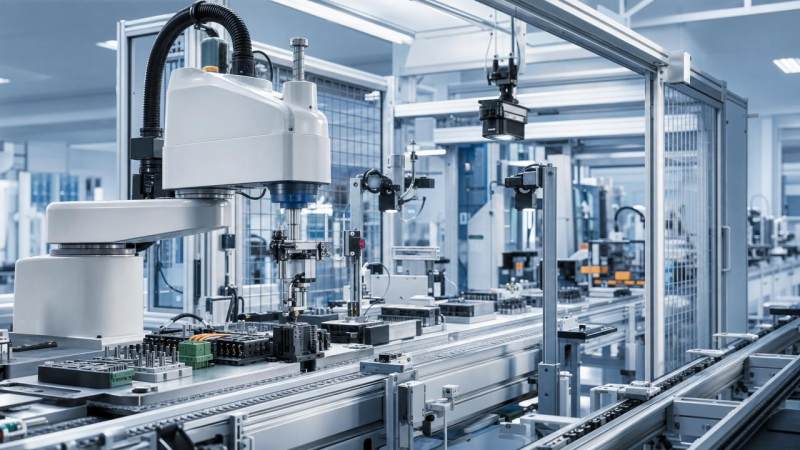
As automotive production demands faster cycle times, tighter tolerances, and lower risk, choosing the right automation partner becomes critical.
A scara robot factory for automotive assembly delivers speed, repeatability, and integration stability for modern vehicle lines.
In high-volume environments, every second saved at fastening, dispensing, testing, or parts transfer directly affects overall equipment effectiveness.
That is why the scara robot factory for automotive assembly has become a strategic reference point in Industry 4.0 planning.
For G-IFA, the issue is not only robot speed.
It is the combined engineering quality across mechanics, controls, software interoperability, safety compliance, and lifecycle support.
SCARA systems in automotive assembly context
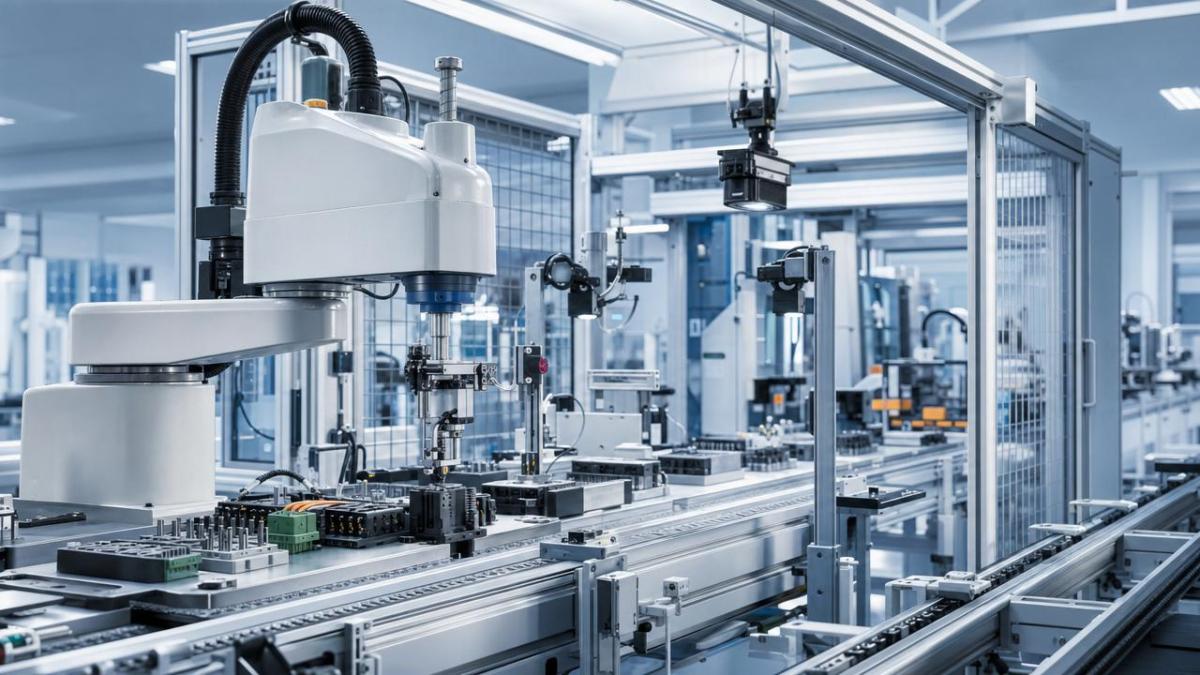
SCARA stands for Selective Compliance Assembly Robot Arm.
Its kinematic structure supports high-speed horizontal motion and controlled vertical insertion.
This makes SCARA ideal for repetitive assembly tasks that require precision and short travel distances.
A scara robot factory for automotive assembly usually focuses on integrated cells rather than standalone machines.
These cells combine robots, end effectors, feeders, vision, PLC logic, traceability systems, and safety architecture.
Compared with Cartesian or general-purpose articulated robots, SCARA platforms often achieve better takt performance in compact assembly stations.
Typical automotive uses include connector insertion, small-part fastening, sealant dispensing, PCB handling, sensor mounting, and subassembly transfer.
Because many auto components are becoming smaller and smarter, these applications continue to expand.
Current industry signals driving SCARA adoption
Automotive lines are changing under pressure from electrification, product variation, and stricter quality governance.
A scara robot factory for automotive assembly aligns with these shifts because it supports modular, data-connected, and space-efficient automation.
- EV platforms require precise assembly of battery modules, connectors, and electronic control units.
- Shorter model cycles increase demand for flexible tooling and fast line changeovers.
- Traceability standards are rising for torque, position, barcode, and process confirmation data.
- Labor variability increases the value of repeatable automated micro-assembly.
- Factory footprint constraints favor compact robot cells over larger motion platforms.
These signals explain why more lines evaluate SCARA solutions not as isolated equipment, but as standardized building blocks.
Why auto assembly lines choose SCARA factories
The advantage of a scara robot factory for automotive assembly starts with engineering specialization.
Dedicated factories refine robot architecture, servo tuning, cable routing, controller logic, and validation methods around assembly-intensive tasks.
1. Faster and more consistent takt achievement
SCARA robots accelerate horizontal pick-and-place and insertion movements with minimal path complexity.
That lowers cycle variability and helps stations hit design throughput more consistently.
2. Better precision for insertion and fastening
Automotive assembly often depends on exact alignment.
A mature scara robot factory for automotive assembly optimizes rigidity, repeatability, and compliance behavior for those repetitive contact tasks.
3. Easier integration with factory controls
Integration readiness matters as much as robot mechanics.
Strong SCARA suppliers support fieldbus communication, PLC coordination, HMI diagnostics, MES connectivity, and vision synchronization.
4. Reduced project risk
Standardized modules shorten commissioning time.
Validated safety circuits, proven end-effectors, and known software interfaces reduce implementation uncertainty.
5. Lower lifecycle cost in focused applications
The lowest purchase price rarely means the best long-term value.
When uptime, maintenance access, spare parts consistency, and programming efficiency improve, total cost performance usually improves too.
Application value across key automotive processes
A scara robot factory for automotive assembly creates value where movement is repetitive, precise, and tightly linked to quality confirmation.
In these processes, robot performance alone is insufficient.
The surrounding ecosystem decides whether the station stays reliable at production scale.
Evaluation points for selecting a SCARA factory
A technical review should verify whether the scara robot factory for automotive assembly can support standards-aligned deployment.
- Check repeatability, payload, cycle time, and duty rating under realistic automotive conditions.
- Confirm compatibility with PLC brands, industrial Ethernet protocols, and plant MES requirements.
- Review support for ISO, IEC, CE, and machine safety documentation.
- Assess spare parts policy, service response time, and software update discipline.
- Request benchmark data from comparable fastening, insertion, or dispensing applications.
- Verify integration experience with vision guidance, force control, barcode reading, and traceability tools.
This is where G-IFA’s benchmarking approach becomes useful.
Cross-pillar evaluation links robot hardware to controls, software, and production data architecture.
Implementation guidance and practical cautions
Even the best scara robot factory for automotive assembly cannot compensate for weak process definition.
Before deployment, define part tolerances, feeder stability, error recovery logic, and maintenance access windows.
- Avoid over-specifying payload if speed is the true priority.
- Design fixtures that support repeatable robot approach angles.
- Use vision only where mechanical referencing cannot achieve robust results.
- Build preventive maintenance around cycle counts, not reactive failure events.
- Standardize data tags for torque, position, alarm, and quality records.
These steps help preserve the speed advantage of SCARA while reducing hidden downtime sources.
Next-step alignment for automation planning
Auto assembly lines choose SCARA factories because focused engineering reduces uncertainty across performance, compliance, and integration.
The right scara robot factory for automotive assembly is not defined by brochure claims alone.
It is defined by measurable cycle capability, standards alignment, software openness, and proven line-level reliability.
G-IFA supports this decision path by comparing robotics, controls, motion systems, and industrial software through verifiable engineering criteria.
When planning new assembly cells or retrofits, start with benchmarked data, application-specific validation, and a clear integration roadmap.
That approach turns SCARA selection into a lower-risk, future-ready investment for automotive assembly performance.
Recommended News
- 2026/10/24Car Spare Parts: How to Check Fitment and Avoid Ordering the Wrong PartOrder car spare parts with confidence. Learn how to verify VINs, OEM numbers, and fitment details to avoid costly mistakes and choose the right replacement first time.
- 2026/10/23How Do You Select a Motion Control System for Synchronized Axes?How do I select a motion control system for synchronized axes? Discover key timing, feedback, and performance checks to choose confidently and reduce costly integration risks.
- 2026/10/23Integrating End-of-Line Sortation with Packing Stations and Conveyor ControlsOptimize end of line sortation with coordinated packing stations and conveyor controls. Learn how to prevent bottlenecks, improve routing accuracy, and handle exceptions reliably.