
Search News
Industry Portal
Popular Tags
Why do CCTVsystems fail after cheap upgrades?
Author
Lina Cloud
Time
May 29, 2026
Pageviews
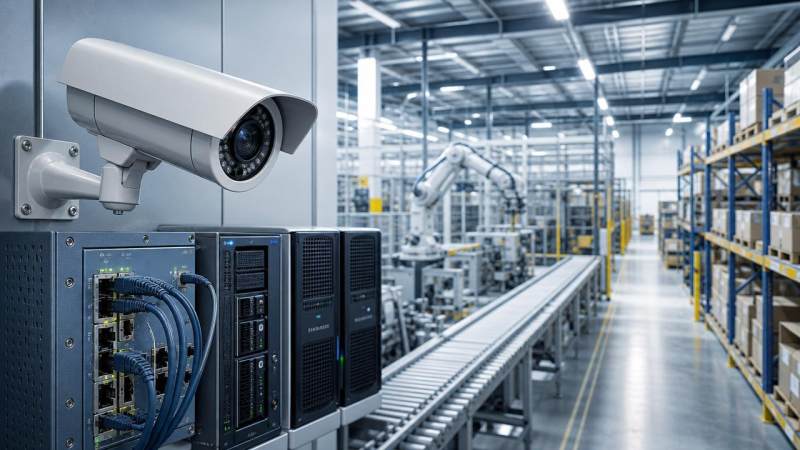
Cheap upgrades often make CCTVsystems look affordable on paper, yet hidden gaps can turn savings into operational risk.
In factories, warehouses, utilities, and automated sites, surveillance is not just visual monitoring. It supports safety, uptime, traceability, and incident response.
The real question is not which camera costs less. It is whether the full architecture can survive industrial conditions and future expansion.
Why cheap CCTVsystems fail in real industrial scenarios
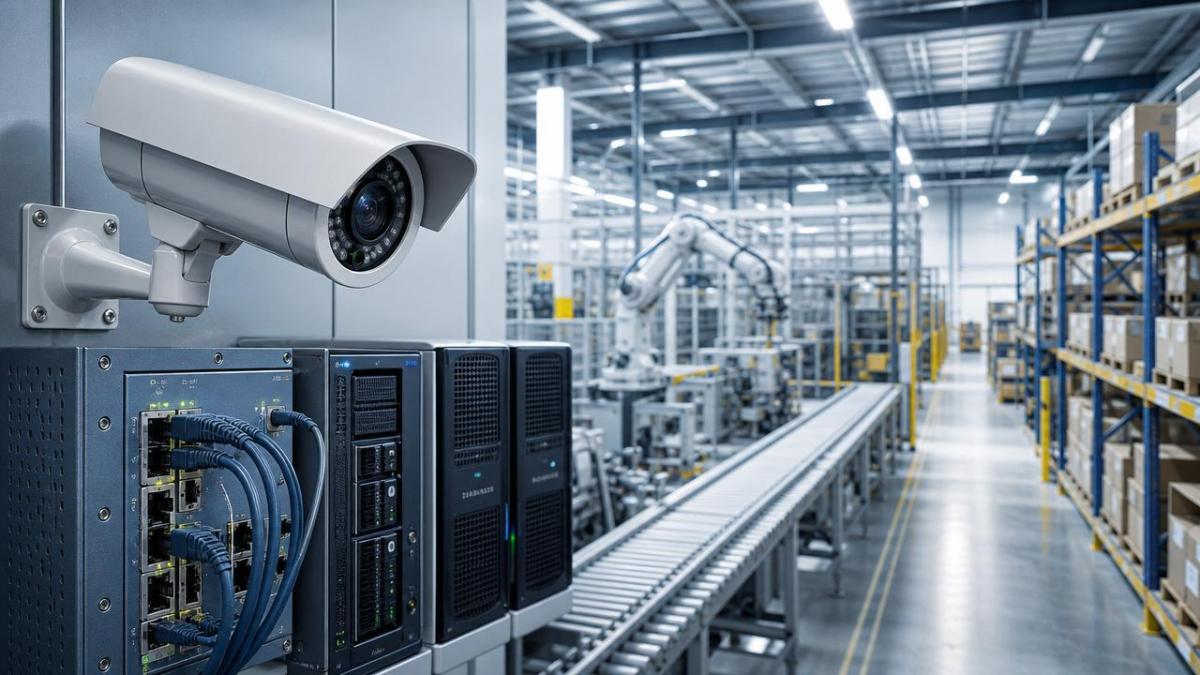
Cheap CCTVsystems usually fail because the upgrade focuses on visible devices, not the complete surveillance chain.
A camera may look sharper during testing. Yet cables, switches, storage, firmware, lighting, and software may remain unsuitable.
Industrial sites also punish weak components. Vibration, heat, dust, electrical noise, and long operating hours expose hidden design shortcuts.
For G-IFA, reliable surveillance belongs within a broader intelligent factory benchmark. Hardware precision and software intelligence must work together.
When CCTVsystems are upgraded without engineering validation, failure often appears later as dropped frames, blind spots, data loss, or delayed alarms.
Scenario background: different sites need different surveillance judgments
CCTVsystems cannot be judged by resolution alone. Each environment creates different requirements for recording, network load, analytics, and resilience.
A small office may accept basic monitoring. A production line may need synchronized evidence across robots, conveyors, PLC events, and access zones.
A warehouse needs clear footage across aisles and docks. A chemical area needs safe housings, stable storage, and controlled maintenance access.
This is why cheap upgrades often disappoint. They copy a generic layout instead of matching the operational risk profile.
Good CCTVsystems start with scenario judgment. The design should reflect working hours, lighting changes, asset value, compliance needs, and response procedures.
Production lines: when camera savings create downtime risk
Production lines need more than continuous video. They need reliable evidence when defects, stoppages, or safety events occur.
Cheap CCTVsystems may use consumer-grade cameras with weak shutters, unstable firmware, or poor low-light performance near moving equipment.
Motion blur can hide the exact moment a component jams. Network delay can make video useless for event correlation.
The key judgment is whether surveillance can align with production timestamps, alarm logs, and machine states.
For automated facilities, CCTVsystems should support stable frame rates, time synchronization, industrial PoE design, and protected network segmentation.
Core checks for production areas
- Confirm frame rate under full network load, not only during single-camera testing.
- Validate camera placement against moving parts, glare, and maintenance access.
- Use time synchronization for video, PLC alarms, MES events, and access records.
- Check whether storage retains critical footage during peak recording periods.
Warehouses and logistics zones: where blind spots become loss points
Warehouses are dynamic spaces. Pallets, forklifts, docks, cages, and temporary storage zones change the visibility map daily.
Cheap CCTVsystems often fail here because camera counts are reduced to meet a budget target.
The result is partial coverage. Important transitions between receiving, storage, picking, packing, and dispatch may lack usable evidence.
Low-cost lenses may also distort long aisles. Poor infrared design can overexpose reflective wrapping and hide labels.
Warehouse CCTVsystems should be judged by evidence continuity. Every high-value movement should remain visible from entry to exit.
Best-fit requirements for logistics surveillance
- Cover dock doors, staging lanes, picking routes, and exception handling areas.
- Test video clarity with forklifts moving and lights changing.
- Plan storage retention around claims, disputes, and audit cycles.
- Avoid isolated recorders without remote health monitoring.
Remote sites and utilities: when weak integration delays response
Remote facilities depend heavily on surveillance availability. A failed stream may remain unnoticed until an incident has already escalated.
Cheap CCTVsystems may lack device health alerts, redundant power planning, or secure remote access controls.
Outdoor areas add further pressure. Temperature swings, moisture, insects, corrosion, and lightning exposure can quickly damage weak equipment.
The key judgment is service continuity. CCTVsystems must keep recording even when bandwidth is unstable or connectivity is interrupted.
Local buffering, surge protection, watchdog recovery, and managed remote diagnostics are often more valuable than the cheapest camera price.
Office, campus, and mixed-use sites: why compatibility still matters
Mixed-use sites often combine reception areas, workshops, laboratories, server rooms, parking zones, and shared corridors.
Cheap CCTVsystems can create problems when old analog devices, new IP cameras, different codecs, and unsupported software coexist.
Compatibility gaps may appear during playback, export, user permission setup, or integration with access control.
This matters because many incidents are reconstructed after the event. Slow search, missing timestamps, and unreadable files reduce evidence value.
For mixed-use environments, CCTVsystems should be evaluated by user roles, privacy controls, retention rules, and easy evidence retrieval.
Different scenarios, different CCTVsystems requirements
This comparison shows why CCTVsystems should never be selected through device price alone.
The correct specification changes with operating risk, evidence value, environmental stress, and integration depth.
Scenario-fit recommendations before any CCTVsystems upgrade
A reliable upgrade begins with verification. Assumptions should be tested before site-wide deployment.
- Map every surveillance objective to a specific operational risk.
- Test cameras in real lighting, vibration, temperature, and movement conditions.
- Calculate bandwidth and storage for peak recording, not average usage.
- Check firmware lifecycle, cybersecurity updates, and vendor support terms.
- Confirm integration with access control, alarms, MES, ERP, or maintenance systems.
- Define acceptance tests for image quality, playback, export, failover, and alerts.
These steps reduce the chance that CCTVsystems pass installation but fail during real incidents.
They also make supplier accountability clearer because performance conditions are measurable.
Common misjudgments that make cheap upgrades expensive
The first misjudgment is believing higher resolution automatically means better evidence.
Resolution helps only when lens quality, lighting, bitrate, storage, and placement support the required identification task.
The second misjudgment is ignoring network design. CCTVsystems can overload unmanaged switches and disrupt other industrial data flows.
The third misjudgment is accepting mixed components without compatibility testing. Different brands may work initially but fail during updates.
The fourth misjudgment is underestimating storage. Compression settings may save space while destroying critical details during motion.
The fifth misjudgment is weak cybersecurity. Exposed cameras, default passwords, and outdated firmware create unacceptable operational exposure.
Cheap CCTVsystems become expensive when failures require repeated troubleshooting, emergency replacement, insurance disputes, or production interruption.
How G-IFA frames reliable CCTVsystems decisions
G-IFA evaluates factory technology through engineering evidence, cross-sector benchmarking, and alignment with industrial automation standards.
That mindset applies directly to CCTVsystems. Surveillance should be treated as part of the intelligent facility infrastructure.
The best decision compares lifecycle value, integration quality, environmental suitability, and data reliability against the site’s risk profile.
Standards-driven thinking also helps avoid undocumented substitutions, unclear responsibilities, and unsupported components after installation.
A stable system does not need to be overbuilt. It needs to be correctly matched, documented, tested, and maintainable.
Action guide: what to do before choosing the cheaper upgrade
Before approving a low-cost option, request a scenario-based design review and a written performance checklist.
Ask for proof of compatibility across cameras, recorders, switches, software, analytics, storage, and remote access tools.
Run a pilot in the most demanding area first. Choose a line, dock, yard, or remote cabinet where failure would matter.
Measure image quality, latency, event search speed, retention, health alerts, and recovery after power or network interruption.
If cheap CCTVsystems cannot pass these tests, the saving is only an accounting illusion.
Reliable CCTVsystems protect assets, support automation, and preserve operational evidence when the facility needs it most.
The next step is clear: define the scenario, quantify the risk, test the architecture, and upgrade only when performance is verified.
Recommended News
- 2026/07/14Factory Integration Platform vs MES: Which Fits Multi-Line Production Better?Factory integration platform or MES? Discover which option fits multi-line production better, compares connectivity vs execution control, and helps you choose with less risk.
- 2026/07/14Industrial Robotics Platform for Automation: What to Compare Before You InvestIndustrial robotics platform for automation: compare integration, software, safety, and lifecycle support before you invest to reduce risk, improve ROI, and future-proof your production.
- 2026/07/14Carbon Compliance for Export Manufacturers: What Documents and Data Are Required?Carbon compliance explained for export manufacturers: learn which documents, data, and reporting methods buyers and regulators expect to reduce audit risk and win approvals.