
Search News
Industry Portal
Popular Tags
How can industrial infrastructure cut downtime?
Author
Lina Cloud
Time
May 30, 2026
Pageviews
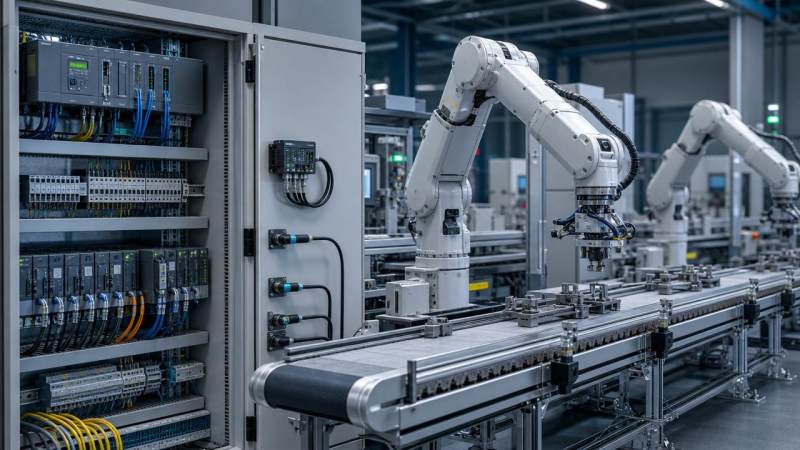
Industrial infrastructure is the backbone of reliable production, yet small weaknesses in controls, motion systems, robotics, utilities, or industrial software can trigger costly downtime.
Reducing stoppages requires more than reactive maintenance. It depends on asset visibility, resilient automation design, verified components, and operating data that exposes risk early.
This guide explains how smarter Industrial infrastructure planning can improve uptime, reduce automation risk, and keep production lines stable under real operating pressure.
Why Industrial infrastructure needs a downtime checklist
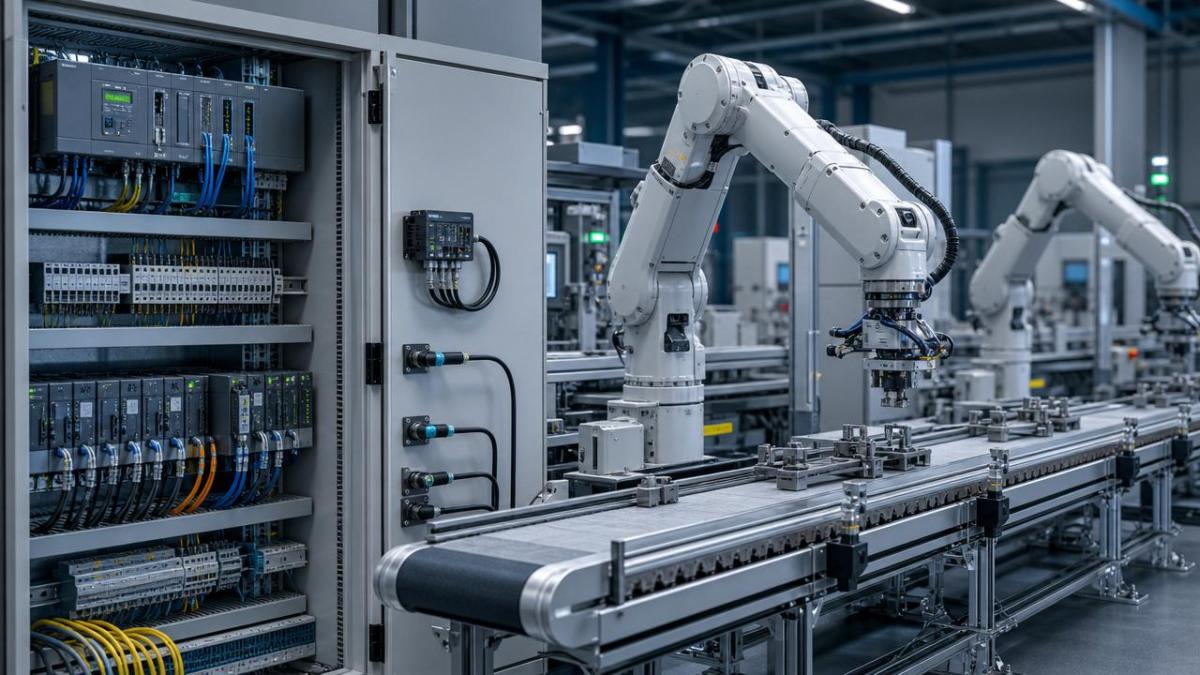
Downtime often looks sudden, but most stoppages develop gradually. A loose connector, overloaded drive, unstable network, or unverified software update can start the chain.
A checklist converts complex Industrial infrastructure into repeatable inspection points. It helps teams compare risks across robotics, PLC systems, drives, sensors, and digital platforms.
It also prevents decisions from being based only on price, brand familiarity, or emergency availability. Reliability becomes measurable before capital is committed.
For Industry 4.0 environments, downtime is rarely isolated. One control fault can affect MES reporting, robot coordination, safety logic, and material flow.
That is why Industrial infrastructure should be reviewed as a connected ecosystem, not as separate machines installed beside each other.
Core checklist for reducing downtime in Industrial infrastructure
Use this checklist before new installations, retrofit projects, line expansions, or recurring downtime investigations.
- Map every critical asset, including PLCs, robots, drives, compressors, switches, sensors, and software interfaces, then rank each by production impact.
- Verify component compliance with ISO, IEC, CE, safety, and communication standards before approving Industrial infrastructure upgrades or replacements.
- Segment industrial networks to separate safety traffic, motion control, data collection, remote access, and enterprise systems where latency can create instability.
- Standardize PLC programs, alarm logic, naming conventions, backup routines, and change records to reduce recovery time after control faults.
- Monitor servo motors, gearboxes, belts, encoders, and bearings with vibration, temperature, torque, and cycle data before mechanical drift becomes downtime.
- Validate robot payload, reach, duty cycle, end-effector design, and collision zones against real production conditions, not only simulation assumptions.
- Build redundancy for power, compressed air, critical network switches, controllers, and data servers where a single failure can stop output.
- Connect MES, ERP, SCADA, and IIoT platforms with clean data models that reveal asset status, bottlenecks, stoppage causes, and maintenance priority.
- Stock spare parts based on failure probability, lead time, interchangeability, and downtime cost, instead of storing only low-value consumables.
- Test recovery procedures through scheduled drills covering PLC restoration, robot mastering, software rollback, network failover, and safe restart.
This checklist makes Industrial infrastructure more predictable because each item links a technical control to an uptime outcome.
Controls and PLC systems: protect the decision layer
Control systems decide how machines react. If PLC logic, I/O modules, communication cards, or safety relays fail, production can stop immediately.
Industrial infrastructure should include documented PLC architectures, firmware baselines, tested backups, and approved modification procedures. Untracked edits are a major downtime risk.
A strong control strategy also separates routine alarms from shutdown alarms. This prevents alarm fatigue and helps fault response focus on true production threats.
Practical control actions
- Back up PLC programs after every approved change, and store copies with version notes, network settings, and responsible sign-off.
- Audit I/O health, spare channel availability, cabinet cooling, grounding, and power quality during every planned maintenance window.
- Review fault codes monthly to identify repeated control interruptions before they become accepted background noise.
Motion control and transmission: remove hidden mechanical instability
Many downtime events begin as small motion errors. A servo following error, slipping belt, or worn gearbox can reduce quality before stopping production.
Industrial infrastructure must treat motion components as precision assets. Drives, motors, encoders, reducers, couplings, and linear guides need measurable limits.
Trend data is essential. Current draw, torque peaks, cycle time drift, lubrication condition, and thermal rise often reveal degradation earlier than visual inspection.
- Set warning thresholds for servo load, temperature, vibration, encoder faults, and positioning deviation based on actual production cycles.
- Align preventive maintenance intervals with duty cycle severity, not only calendar time or generic equipment manuals.
- Confirm that replacement motors, drives, and gearboxes match torque, inertia, communication protocol, and environmental ratings.
Robotics and cobots: design for recovery, not only speed
Robots can improve consistency, but poorly integrated robotic cells can become bottlenecks. Downtime may come from tooling, vision, guarding, or coordination logic.
Reliable Industrial infrastructure defines robot cell behavior during mispicks, jams, emergency stops, and upstream starvation. Recovery must be fast, safe, and repeatable.
Robot selection should consider payload margin, reach envelope, IP rating, controller support, spare part availability, and serviceability under local operating conditions.
Robotic uptime checks
- Teach recovery positions that allow safe restart without manual repositioning or unnecessary full-cell reset procedures.
- Inspect end-effectors, vacuum circuits, grippers, cable routing, and dress packs as part of the Industrial infrastructure health plan.
- Review robot logs alongside PLC alarms to find repeated sequence conflicts, sensor timing issues, or unsafe reset patterns.
Industrial IoT and software: turn downtime into traceable data
Software cannot prevent every stoppage, but it can expose weak signals before losses grow. Good data architecture makes Industrial infrastructure easier to manage.
MES, SCADA, ERP, and IIoT platforms should capture machine states consistently. Downtime categories must be clear, comparable, and linked to asset identities.
If operators manually classify every event without validation, the dataset becomes unreliable. Automated timestamping and standardized fault codes improve decision quality.
- Define downtime codes for mechanical faults, control faults, material shortage, quality hold, changeover delay, and utility interruption.
- Integrate condition monitoring data with work orders, so maintenance actions are triggered by evidence rather than memory.
- Protect industrial networks with access control, patch governance, backups, and recovery plans that suit production risk.
Pneumatic, hydraulic, and utility systems: stabilize the support layer
Utilities are often underestimated. Air pressure drops, hydraulic contamination, cooling failure, or unstable power can shut down otherwise healthy equipment.
Industrial infrastructure should include compressed air quality, pressure mapping, leak detection, filtration, oil analysis, and energy monitoring as uptime controls.
A machine may fault repeatedly because the support system is unstable. Treating the symptom at the machine wastes time and hides the root cause.
Utility reliability checks
- Measure air pressure at the machine during peak demand, not only at the compressor room outlet.
- Track hydraulic oil cleanliness, temperature, water content, and filter condition before valve sticking causes line stoppages.
- Review UPS coverage, grounding, surge protection, and cabinet temperature for controllers, drives, and industrial computers.
Application scenarios for stronger Industrial infrastructure
High-mix production lines
High-mix lines face frequent changeovers and recipe variation. Industrial infrastructure must protect parameter control, tooling verification, and digital work instructions.
Downtime reduction comes from quick validation. Barcode checks, recipe locks, tool presence sensors, and controlled software permissions prevent wrong setups.
Continuous process environments
Continuous operations depend on stable utilities, control loops, and alarm response. A short interruption can create long recovery losses.
Industrial infrastructure should prioritize redundancy, predictive maintenance, clean instrumentation, and clear escalation rules for abnormal trends.
Automated warehouse and logistics systems
Conveyors, sorters, AGVs, scanners, and warehouse software rely on synchronized information flow. Network delays can become physical congestion.
Reliable Industrial infrastructure uses traffic simulation, spare scanner coverage, battery management, and fault-tolerant routing to maintain throughput.
Common overlooked risks that increase downtime
Ignoring lifecycle status creates hidden exposure. Obsolete controllers, drives, HMIs, and sensors may still run, but replacement lead times can extend downtime dramatically.
Accepting poor documentation slows recovery. Missing electrical drawings, network maps, software versions, and spare part references make every fault harder to resolve.
Overlooking integration testing transfers risk to production. Industrial infrastructure should be validated through FAT, SAT, interlock testing, and abnormal scenario checks.
Underestimating cybersecurity can stop operations. Remote access, unpatched systems, shared passwords, and unmanaged devices can compromise both data and machine availability.
Measuring only total downtime hides root causes. Track frequency, duration, asset, fault code, shift, product type, and recovery action for useful analysis.
Execution plan for measurable uptime improvement
Start with the assets that stop the highest-value flow. A focused Industrial infrastructure review usually produces faster results than a broad audit.
- Create an asset criticality list using production impact, repair time, failure history, safety relevance, and spare part availability.
- Collect baseline downtime data for at least one representative operating period before changing maintenance priorities.
- Compare installed automation hardware and software against recognized standards, duty requirements, environmental limits, and supplier support depth.
- Select three recurring stoppage causes, then assign technical owners, corrective actions, deadlines, and verification metrics.
- Review progress monthly using uptime, mean time between failures, mean time to repair, alarm frequency, and maintenance backlog.
This approach keeps Industrial infrastructure work practical. It connects engineering effort to verified improvements instead of isolated technical upgrades.
Summary and next action
Industrial infrastructure cuts downtime when it is designed, monitored, and maintained as one connected system. Controls, motion, robotics, software, and utilities must support each other.
The most effective next step is a critical asset review. Identify the equipment that creates the largest production loss, then verify its data, spares, standards, and recovery process.
Use benchmarked automation data, documented engineering practices, and measurable reliability indicators to de-risk investments. Strong Industrial infrastructure turns uptime from a hope into a managed result.
Recommended News
- 2026/07/14Factory Integration Platform vs MES: Which Fits Multi-Line Production Better?Factory integration platform or MES? Discover which option fits multi-line production better, compares connectivity vs execution control, and helps you choose with less risk.
- 2026/07/14Industrial Robotics Platform for Automation: What to Compare Before You InvestIndustrial robotics platform for automation: compare integration, software, safety, and lifecycle support before you invest to reduce risk, improve ROI, and future-proof your production.
- 2026/07/14Carbon Compliance for Export Manufacturers: What Documents and Data Are Required?Carbon compliance explained for export manufacturers: learn which documents, data, and reporting methods buyers and regulators expect to reduce audit risk and win approvals.