
Search News
Industry Portal
Popular Tags
Manufacturing Systems in 2026 Where Digital Twins Start Paying Off
Author
Lina Cloud
Time
Apr 17, 2026
Pageviews
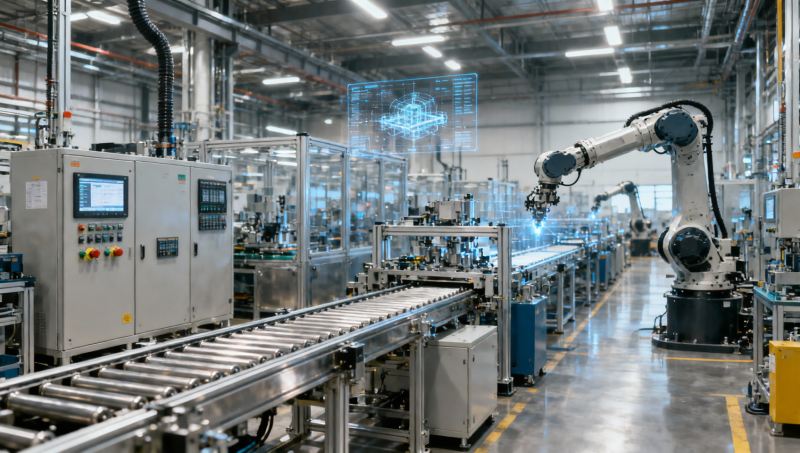
In 2026, manufacturing systems are moving beyond hype as digital twins begin delivering measurable value across factory integration, industrial control, and production automation. For teams evaluating industrial equipment, automation components, and industrial machinery, the real question is no longer whether intelligent manufacturing works, but where automation solutions and robotic arms can generate the fastest operational payback.
That shift matters to production researchers, line operators, automation engineers, and plant managers who need practical answers rather than abstract transformation narratives. In many factories, margins are pressured by shorter batch cycles, rising energy costs, tighter quality tolerances, and the ongoing need to align PLC logic, MES workflows, motion systems, and industrial IoT data without disrupting uptime.
For G-IFA’s audience, the value of digital twins is now judged by engineering clarity: how quickly a virtual model can reduce commissioning hours, improve OEE, shorten troubleshooting loops, or prevent expensive integration errors across robotics, control systems, and software layers. The strongest gains are appearing where hardware precision and software intelligence are already closely linked.
Where Digital Twins Deliver the First Measurable Returns
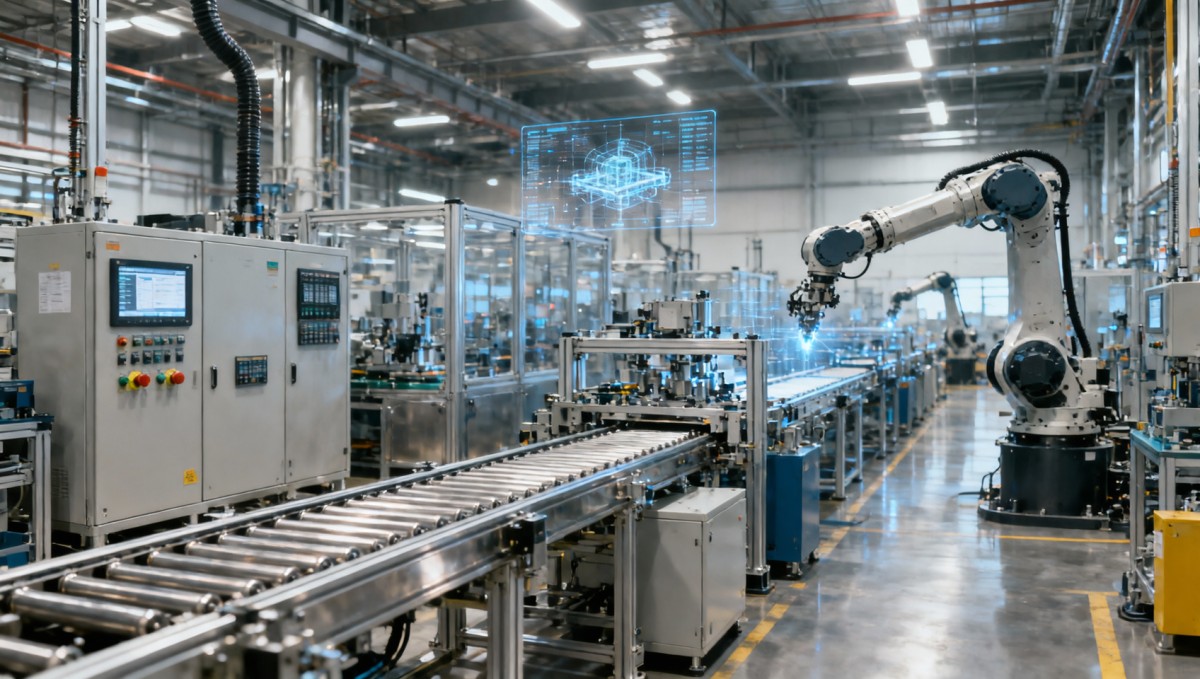
The most reliable payback in manufacturing systems usually starts in 4 areas: line design validation, robot cell simulation, control logic testing, and maintenance planning. These are not speculative use cases. They are operational zones where a digital twin can compress a 6–12 week engineering cycle, reduce on-site rework, and improve startup stability before equipment reaches full production speed.
In discrete manufacturing, digital twins help teams verify cycle balance between conveyors, servo axes, machine vision, and robotic arms before installation. In process industries, the same concept supports pump, valve, pneumatic, and hydraulic behavior analysis under different loads. In both cases, the twin becomes useful when it reflects actual control constraints, sensor behavior, and production recipes rather than a generic 3D model.
For operators and system users, the immediate value often comes from fewer unplanned adjustments during changeovers. If a packaging line handles 3 SKU families with different speed windows, a digital twin can test virtual recipes and line responses before physical switchover. Even a 10–15 minute reduction per changeover becomes meaningful when repeated 20 times per week.
For production researchers, the bigger insight is that the digital twin pays off fastest when connected to real industrial data. A static engineering model may support design reviews, but a connected model linked to PLC tags, MES events, and condition data can support predictive maintenance, alarm pattern analysis, and throughput optimization over 3, 6, or 12-month periods.
High-return use cases in 2026
Before investing, teams should rank use cases by measurable impact rather than technology sophistication. In most plants, the first objective is not a perfect enterprise-scale twin. It is a usable twin that reduces one recurring cost center quickly.
- Virtual commissioning for robotic cells, usually cutting physical debug time by 15%–30% when kinematics and I/O behavior are modeled accurately.
- PLC and control sequence validation, helping teams catch interlock conflicts, timing issues, and handshaking errors before FAT or SAT.
- Throughput optimization in multi-machine lines where a 3%–8% OEE gain can justify the modeling effort within 2–4 quarters.
- Condition-based maintenance for motors, gearboxes, pneumatics, and hydraulic units by comparing actual operating signatures with modeled baselines.
The following table shows where early returns are usually strongest across manufacturing systems and automation environments.
The key conclusion is simple: the fastest return rarely comes from enterprise-scale modeling first. It comes from a narrow but high-friction production problem, especially where commissioning delays, robot interactions, or control instability create repeatable costs.
Why Manufacturing Systems Need More Than a 3D Model
A common mistake in intelligent manufacturing projects is treating digital twins as visualization tools rather than operational engineering assets. A useful twin is not just geometry. It needs behavior, timing, state logic, and real equipment context. Without those layers, the model looks impressive in a review meeting but adds little value during commissioning, maintenance, or capacity planning.
In 2026, the gap between “digital model” and “working digital twin” is increasingly defined by 5 data connections: control logic, sensor streams, production recipes, asset condition data, and historical events. If even 2 of those 5 are missing, the model may still help with layout planning, but it will struggle to support root-cause analysis or predictive actions on the factory floor.
This is especially important for mixed automation environments where industrial robots, cobots, PLCs, drives, HMIs, MES, and ERP systems must exchange information consistently. A robotic arm may achieve a repeatability target, yet still create a production bottleneck if upstream buffer logic or downstream inspection timing is not modeled with similar discipline.
For users and operators, the practical test is whether the twin helps answer daily questions faster. Can it explain why a servo axis exceeds tolerance after 8 hours of runtime? Can it show which pneumatic sequence causes a 2-second delay at each cycle? Can it compare planned versus actual performance across 3 shifts? If not, its operational value remains limited.
Core components of a usable digital twin
Control and timing fidelity
A twin must reflect actual sequencing, not only mechanical movement. That includes PLC scan behavior, interlocks, alarm states, and timing windows across machine-to-machine handshakes.
Physical and process fidelity
The model should include relevant tolerances, payload ranges, speed limits, and environmental conditions. For many lines, an accuracy range such as ±0.5 mm or a conveyor speed difference of 5% is enough to change the behavior of the whole system.
Data continuity
A twin becomes significantly more valuable when live data is refreshed every few seconds or minutes, depending on the process. Slow batch updates may be acceptable for planning, but near-real-time updates are more useful for operations and maintenance.
The table below separates low-value and high-value twin characteristics for manufacturing systems teams evaluating software, control integration, and automation equipment.
For B2B buyers, this distinction matters during vendor assessment. If a solution cannot represent control logic, asset condition, and production states in one usable workflow, it may not reduce risk in the way an industrial team actually needs.
How to Prioritize Digital Twin Projects by Equipment and Process Risk
Not every production line needs the same level of digital twin maturity. A high-speed assembly cell running at 40–80 cycles per minute has different priorities than a low-volume machine shop or a batch process line with long dwell times. In practice, project prioritization should start with three measurable factors: downtime cost, change frequency, and integration complexity.
Downtime cost is often the strongest trigger. If one hour of line stoppage disrupts multiple downstream stations, the value of predictive simulation and control validation rises quickly. Change frequency is the second driver. Lines with weekly product changes, recipe updates, or packaging variations benefit more from virtual testing than fixed-process environments with limited variability.
Integration complexity usually becomes visible where 4 or more subsystems must coordinate in tight sequence: robot, vision, conveyor, PLC, motion controller, and MES being a common example. In these cases, digital twins help teams verify the interaction map before problems appear during site acceptance. This is why many system integrators now treat digital twins as a de-risking tool rather than an optional add-on.
For G-IFA readers comparing industrial automation solutions, a practical selection framework should score each candidate project across technical and business criteria. This avoids overinvesting in low-impact twins while underestimating high-friction bottlenecks that can be modeled with relatively limited scope.
A practical prioritization checklist
- Estimate downtime impact per hour and classify it as low, medium, or high. High-impact lines should be evaluated first.
- Count changeovers or recipe changes per month. More than 8–10 changes usually strengthens the case for simulation-based planning.
- Map subsystem dependencies. If 5 or more automation layers interact, twin-based validation can prevent expensive sequence conflicts.
- Check data readiness. A project with accessible PLC tags, historian data, and machine status events can move faster than one requiring major instrumentation upgrades.
The table below can support internal discussions between engineering, operations, and procurement when ranking which manufacturing systems should receive digital twin investment first.
Projects that rank high on at least 3 of these 4 factors usually produce faster operational payback. That makes them stronger starting points than broad, unfocused digitization programs with unclear ownership or success metrics.
Implementation Steps That Reduce Risk for Operators and Integrators
Digital twin projects fail less from technology limits than from implementation gaps. The most common issues are unclear scope, weak tag mapping, inconsistent asset naming, and poor alignment between operations and controls teams. A factory can own excellent robotics, drives, and software, yet still struggle if the twin is deployed without a disciplined workflow.
A lower-risk implementation usually follows 5 stages over 8–20 weeks, depending on line complexity. Stage 1 defines the business objective, such as reducing commissioning time by 20% or lowering unplanned stoppages in one asset cluster. Stage 2 aligns mechanical, electrical, control, and software data. Stage 3 builds and validates the model. Stage 4 connects real operating data. Stage 5 reviews outcomes against a pre-agreed baseline.
Operators should be involved earlier than many projects assume. They often know which alarms are ignored, which changeover steps are unstable, and where actual process behavior diverges from the engineering specification. Their input can improve model relevance far more than adding visual complexity alone.
System integrators also need a realistic acceptance plan. Instead of asking whether the twin “works,” the better question is whether it supports 3 or 4 defined decisions: can it reduce debug hours, improve line balance, predict maintenance windows, or verify recipe changes? A clear acceptance framework keeps the project grounded in production value.
Recommended rollout sequence
- Start with one production cell, one line segment, or one bottleneck asset rather than the entire plant.
- Define 2–3 KPIs, such as commissioning hours, changeover duration, OEE, or alarm recurrence rate.
- Verify naming consistency across PLC tags, MES events, and maintenance records before integration starts.
- Run side-by-side validation for at least 2–4 weeks so operators can compare actual behavior with the twin.
- Expand only after the first use case proves measurable value.
Common implementation errors
Three mistakes appear repeatedly: choosing a visually impressive but operationally weak model, integrating too many systems at once, and skipping maintenance data. A twin that ignores wear, drift, or service history may support simulation but not lifecycle decisions. That limits its long-term usefulness in industrial automation environments.
Plants that avoid these mistakes usually see cleaner scale-up. More importantly, they generate internal confidence among users, which is essential if the twin is expected to influence daily decisions instead of becoming another underused software layer.
Procurement Questions and Selection Criteria for 2026
As digital twins become more common across manufacturing systems, procurement teams need stronger evaluation criteria than “supports simulation” or “integrates with Industry 4.0.” The right question is how well a solution aligns with the plant’s actual hardware stack, control architecture, data quality, and operating cadence. Compatibility with robotics, PLCs, servo systems, MES, ERP, and condition monitoring platforms should be reviewed in practical detail.
For production decision-makers, 4 criteria usually matter most: model fidelity, integration effort, operational usability, and lifecycle support. A technically capable platform may still be a poor fit if it takes 6 months to onboard one line or requires specialist skills unavailable at the site level. Ease of use matters because operators, engineers, and maintenance teams all interact with the outcome differently.
Lifecycle support is often underestimated. Manufacturing systems evolve through tooling changes, new SKUs, line extensions, and control upgrades. If the twin cannot be updated efficiently every quarter or after each major engineering change, its accuracy will degrade. That turns a once-useful model into a misleading reference.
G-IFA’s benchmarking perspective is especially relevant here. Cross-sector comparison helps buyers filter solutions by engineering integrity, standards alignment, and practical interoperability across the five pillars of smart manufacturing: robotics, PLC and control, motion, IIoT software, and fluid power systems.
Key questions to ask before purchase
- Can the solution model both machine behavior and control states, or only physical movement?
- How many data sources can be connected in a standard deployment: PLC, historian, MES, ERP, or CMMS?
- What is the typical deployment cycle for one line: 4 weeks, 8 weeks, or longer?
- How are updates handled after mechanical modifications, PLC changes, or recipe expansions?
- What level of training is needed for operators, engineers, and maintenance personnel?
Who benefits most first?
The first beneficiaries are usually not executive teams but line-level stakeholders: controls engineers who need cleaner commissioning, operators who need fewer unstable transitions, and maintenance teams that want earlier warnings of drift or wear. When those users gain measurable value, plant-wide adoption becomes easier to justify.
In 2026, digital twins start paying off where the manufacturing system is already data-generating, automation-dense, and change-sensitive. Factories with frequent model changes, tight takt time requirements, or complex robot-control interactions stand to gain the most from disciplined implementation and evidence-based selection.
FAQ: Practical Questions from Manufacturing Teams
How long does a digital twin project usually take?
For a single robotic cell or a focused production segment, a practical project can take 8–12 weeks. More complex lines with multiple machines, MES links, and condition monitoring inputs may require 12–20 weeks. The deciding factors are data availability, asset documentation quality, and the number of subsystems that must be modeled together.
Which factories benefit most from digital twins?
Factories with high automation density, frequent changeovers, or expensive downtime usually benefit first. Typical examples include packaging lines, electronics assembly, automotive subassembly, and complex material handling systems. Any line with recurring interlock issues, bottlenecks, or 5+ tightly linked assets is a strong candidate.
What is the most common misconception?
The biggest misconception is that a digital twin must be enterprise-wide to be worthwhile. In reality, a narrow deployment that reduces commissioning hours by 20% or improves OEE by 3%–5% can create more value than a large but underused platform rollout. Starting small is often the more strategic move.
What should operators and users look for?
Operators should look for usability, alarm clarity, recipe testing support, and visible links between actual machine behavior and modeled behavior. If the twin helps them troubleshoot faster, prepare changeovers better, or understand deviations within one shift instead of several days, it is delivering real operational value.
Digital twins are no longer valuable simply because they are modern. They pay off when they reduce engineering risk, shorten commissioning, improve throughput visibility, and support better decisions across robotics, control systems, motion platforms, industrial software, and fluid power assets. For manufacturers and integrators evaluating their next automation step, the best path is to start where downtime, change frequency, and subsystem complexity already make the business case visible.
G-IFA helps production teams, researchers, and operators compare manufacturing systems with a sharper technical lens, using verifiable engineering criteria rather than trend-driven claims. If you are assessing digital twin readiness, automation components, or smart factory integration priorities for 2026, contact us to get a tailored benchmarking view, discuss equipment selection, or explore more practical industrial automation solutions.
- motion control
- industrial IoT
- ERP systems
- control systems
- smart manufacturing
- industrial automation
- industrial software
- robotic arms
- production automation
- industrial control
- automation solutions
- manufacturing systems
- industrial machinery
- automation components
- factory integration
- industrial equipment
- Industry 4.0
Recommended News
- 2026/06/18ADAS Adaptive Cruise Control Explained: Sensors, Following Distance, and Common Failure PointsADAS adaptive cruise control explained clearly: learn how sensors, following distance, and common failure points affect safety, comfort, and real-world system reliability.
- 2026/06/18Industrial Automation vs Manual Production: How to Compare ROI, Labor, and ThroughputIndustrial automation vs manual production: compare ROI, labor costs, throughput, quality, and risk with a practical framework to choose the smarter manufacturing path.
- 2026/06/18How Eco Friendly Hotel Amenities Manufacturers Meet Bulk Order and Custom Packaging NeedsEco friendly hotel amenities manufacturer insights for bulk buyers: learn how suppliers manage large orders, custom packaging, quality control, and sustainable compliance with lower sourcing risk.