
Search News
Industry Portal
Popular Tags
Smart Manufacturing Benefits That Actually Lower Costs
Author
Lina Cloud
Time
Apr 26, 2026
Pageviews
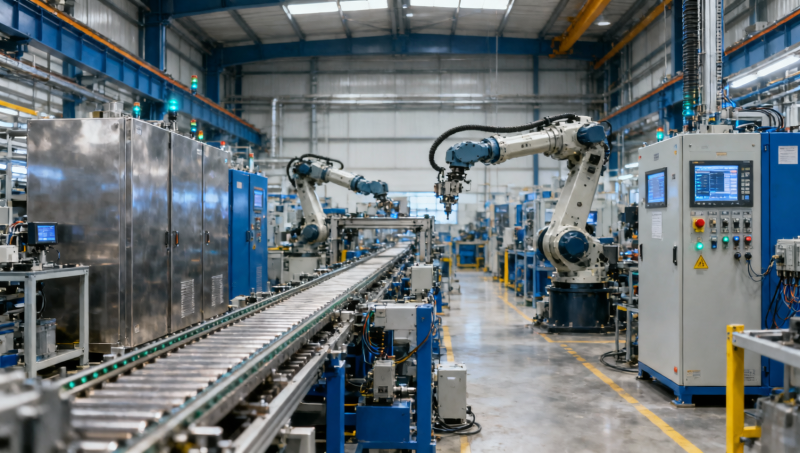
Smart manufacturing benefits are no longer theoretical—they directly reduce downtime, labor waste, and industrial equipment price pressure. By combining industrial IoT for predictive maintenance, MES software sourcing, and control systems OEM strategies, manufacturers can improve output while lowering risk. For buyers comparing an industrial machinery supplier, heavy duty industrial equipment, or an industrial automation B2B platform, the real advantage lies in measurable efficiency, scalable automation, and smarter investment decisions.
Where Smart Manufacturing Actually Cuts Costs
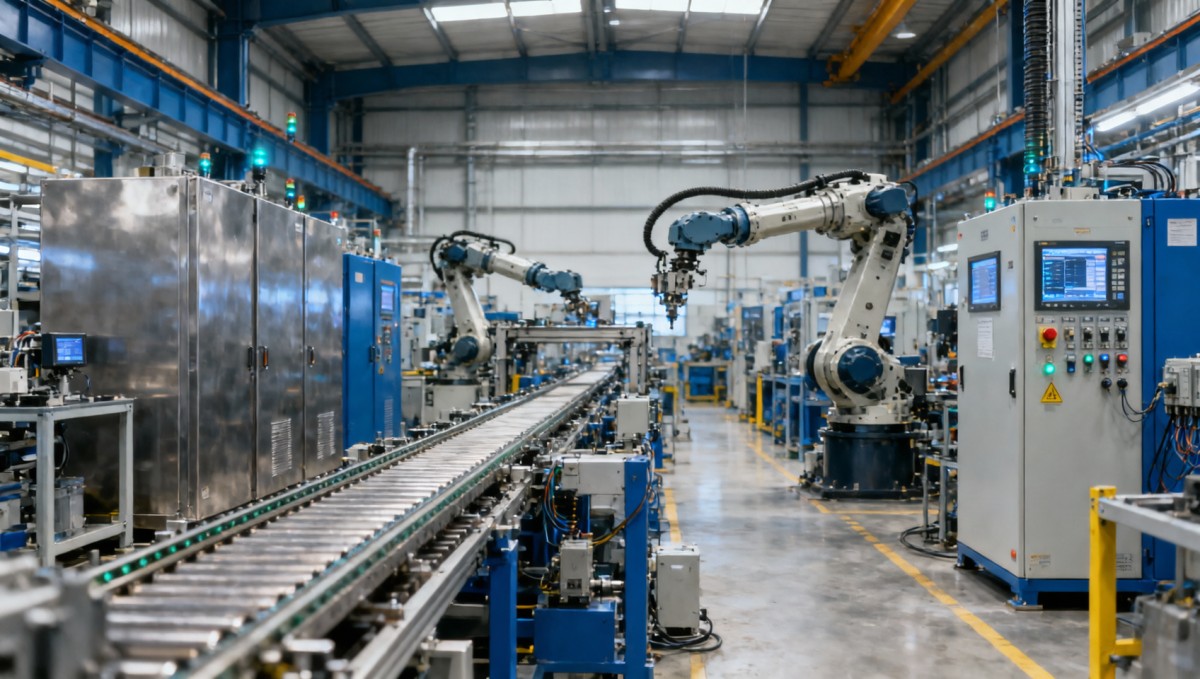
Many factories invest in automation expecting speed, but the stronger business case is cost control across maintenance, labor allocation, scrap, energy use, and unplanned stoppages. In practical terms, smart manufacturing benefits come from turning isolated machines into coordinated production assets. When PLCs, sensors, MES, motion systems, and industrial software share usable data, managers can react earlier and operators can work with fewer blind spots.
For information researchers and procurement teams, the challenge is not whether digitalization matters. The challenge is identifying which upgrades reduce cost within a realistic implementation window such as 4–12 weeks for software integration or 8–24 weeks for equipment-linked automation projects. That distinction matters because many projects fail when they pursue broad transformation instead of targeted loss reduction.
In cross-sector manufacturing, the most repeatable savings usually appear in 4 areas: downtime reduction, better labor utilization, lower defect exposure, and more stable purchasing decisions. A packaging line, metalworking cell, electronics assembly station, or process utility room may use different hardware, yet the same logic applies. Visibility lowers uncertainty, and lower uncertainty often means lower operating cost.
G-IFA helps decision-makers filter this complexity through benchmark-based evaluation across industrial robotics and cobots, PLC and control systems, motion control, industrial IoT and MES or ERP layers, and pneumatic or hydraulic systems. That matters when comparing an industrial machinery supplier or industrial automation B2B platform, because technical fit, standard alignment, and lifecycle cost often matter more than headline purchase price.
The 5 cost centers most often improved first
- Unplanned downtime: sensor data and predictive maintenance can shift repairs from emergency response to scheduled intervention every week, month, or quarter depending on duty cycle.
- Labor waste: repetitive handling, inspection prompts, and machine status visibility reduce idle waiting and unnecessary manual checks across 2-shift or 3-shift operations.
- Material scrap: tighter process control and traceability reduce batch variation, especially where tolerances such as ±0.1 mm to ±0.5 mm influence quality.
- Energy and utility inefficiency: motion tuning, air leakage monitoring, and load-based control reduce hidden losses in compressed air, servo drive use, and auxiliary systems.
- Procurement error: benchmarked evaluation helps buyers avoid over-specification, under-specification, and incompatible control architecture.
Which Smart Manufacturing Tools Deliver the Fastest Return?
Not every smart factory investment lowers costs at the same speed. Some technologies create value in 30–90 days through better monitoring and maintenance discipline. Others require 6–12 months because they involve controls migration, line redesign, or robot cell integration. Buyers should rank projects by operational pain, not by trend value. A line with chronic stoppages may benefit more from condition monitoring than from a full robotic retrofit.
For operators, the highest-impact tools are often the ones that simplify response time. Machine dashboards, alarm prioritization, digital work instructions, and maintenance alerts improve execution without forcing a total process rebuild. For procurement managers, the strongest return often comes from systems that can scale across multiple lines with common communication protocols and manageable spare-part strategy.
The table below compares common smart manufacturing investments by cost impact, implementation burden, and suitability. It is especially useful when evaluating heavy duty industrial equipment upgrades alongside software-led efficiency projects.
The practical lesson is clear: if a plant needs immediate visibility, start with industrial IoT and software layers. If the main issue is machine instability or incompatible architecture, control systems OEM strategy and PLC modernization may create stronger long-term savings. When labor bottlenecks dominate, robot or cobot deployment becomes easier to justify.
How to prioritize with limited budget
A useful method is to score each project against 3 factors: frequency of loss, cost per incident, and implementation complexity. A fault that stops a line twice per week is usually a better target than a low-frequency issue with high visibility but weak financial impact. This avoids spending on attractive technology that does not address core waste.
G-IFA supports this decision process by comparing hardware and software options against international engineering expectations rather than marketing claims alone. For buyers sourcing MES software, industrial machinery, or line automation components, that technical filtering reduces the risk of paying for features that remain unused after commissioning.
How Buyers Should Compare Suppliers, Platforms, and Automation Architectures
A lower quote does not always mean lower cost. In smart manufacturing, purchasing errors often come from incomplete architecture review. A low-cost device may require extra gateways, more engineering hours, longer training, or future replacement due to protocol limits. That is why procurement teams should evaluate total deployment fit across controls, motion, software, service access, and compliance expectations.
This is especially important when comparing an industrial machinery supplier with an industrial automation B2B platform. A machinery supplier may offer stronger mechanical integration, while a platform may provide broader sourcing visibility across sensors, PLCs, drives, actuators, and MES software sourcing. The correct choice depends on whether the project is machine-centric, system-centric, or data-centric.
Before issuing RFQs, teams should define at least 5 evaluation dimensions: compatibility, service response, expansion path, documentation quality, and standards alignment. For projects spanning 2 or more production lines, those factors usually influence operating cost more than minor differences in unit price.
The table below can be used as a supplier comparison framework for buyers assessing smart manufacturing benefits in purchasing terms rather than only technical terms.
This kind of comparison helps enterprise decision-makers move beyond short-term purchase pricing. A cheaper motion drive or HMI may increase long-run cost if operators need repeated intervention, if spare parts are difficult to source, or if controls cannot scale to additional stations. Smart manufacturing benefits are strongest when specification, deployment, and maintainability are aligned from the start.
A practical 4-step sourcing checklist
- Map the loss point first: downtime, scrap, labor intensity, traceability gap, or utility waste.
- Confirm current architecture: PLC generation, network protocol, drive family, software layer, and safety requirements.
- Compare suppliers on lifecycle support over 12–36 months, not just delivery week and unit price.
- Request a phased implementation plan with acceptance criteria, operator training, and spare-part recommendations.
What Implementation Risks Do Companies Often Miss?
The most common smart factory mistake is assuming technology alone lowers costs. In reality, poor tag structure, unclear ownership, weak operator training, and inconsistent maintenance response can erase the expected return. A dashboard is not useful if alarms are ignored. A robot cell does not reduce cost if upstream part flow is unstable. A new MES layer struggles if routing rules and data discipline remain undefined.
For operators and line supervisors, one overlooked issue is alert overload. If every variation generates a warning, teams stop responding with urgency. Good implementation usually separates critical events, advisory events, and trend indicators. In many plants, 3 alarm levels are enough to improve reaction time without creating digital noise.
Procurement teams also underestimate integration lead time. A component may be available in 7–15 days, while controls engineering, panel changes, FAT support, site validation, and operator training may add 2–6 more weeks. This is why implementation planning should be treated as part of sourcing, not as a separate later task.
G-IFA’s engineering benchmark perspective is useful here because it frames digital and mechanical upgrades as one system. A high-speed servo, a 6-axis robotic arm, an edge data gateway, and an MES module should not be evaluated in isolation. Cost reduction depends on how these layers interact under real production conditions.
Common misconceptions that increase cost
“More automation always means lower labor cost.”
Not necessarily. If product variation is high and changeovers occur several times per shift, fixed automation may create rigidity. In these cases, semi-automated stations, cobots, or software-guided manual processes can provide better cost control.
“A cheaper control system is enough if it runs the machine.”
That view ignores diagnostics, cybersecurity posture, spare part continuity, and future integration. A controller that works today but blocks data collection or line expansion may raise total cost over the next 24 months.
“Predictive maintenance only matters for large factories.”
Smaller operations often feel each hour of downtime more sharply because they have fewer redundant assets. Even simple vibration, temperature, or current monitoring on selected assets can improve maintenance timing.
FAQ for Researchers, Operators, Buyers, and Decision-Makers
How do I know whether MES software sourcing is a better first step than new equipment?
Start by checking whether your main losses come from poor scheduling, missing traceability, unclear work-in-process status, or inconsistent reporting. If those issues affect multiple lines, MES software often delivers broader value than replacing one machine. If the real problem is repeated mechanical failure or inadequate cycle time, equipment or controls upgrades may come first.
Which scenarios are best for cobots instead of traditional industrial robots?
Cobots are often suitable for lower payload tasks, frequent human interaction, and medium-speed applications such as tending, light assembly, or repetitive transfer. Traditional industrial robots may be more appropriate for higher speed, heavier loads, or harsher environments. The right choice depends on payload range, reach, cycle target, guarding concept, and line layout.
What should buyers check when comparing heavy duty industrial equipment suppliers?
Check structural suitability, control compatibility, maintenance access, expected operating duty, spare-part lead times, and compliance documentation. It is also important to ask how the equipment connects with existing PLCs, HMIs, and data systems. A machine that cannot support traceability or remote diagnostics may create hidden operating expense.
How long does a typical smart manufacturing project take?
Simple monitoring projects may be deployed in 2–8 weeks. MES or line-level software can take 4–12 weeks depending on process mapping and data structure. Controls upgrades and robotic integration often need 8–24 weeks, especially when safety review, commissioning windows, and operator training are included.
What standards matter when evaluating global automation solutions?
The relevant scope varies by equipment and region, but ISO, IEC, and CE-related expectations are commonly reviewed in international projects. Buyers should confirm which standards apply to electrical safety, machinery design, documentation, and market entry requirements before finalizing specifications.
Why Work with G-IFA When Cost Reduction Needs Technical Proof?
When companies pursue smart manufacturing benefits, they do not just need more product options. They need a reliable technical filter. G-IFA supports production directors, system integrators, automation engineers, and enterprise buyers with cross-sector benchmarking across 5 core pillars: industrial robotics and cobots, PLC and control systems, motion control and transmission, industrial IoT and software including MES or ERP, and pneumatic or hydraulic systems.
That benchmark-driven view helps reduce sourcing risk during early research, specification review, and supplier comparison. Instead of evaluating a single component in isolation, teams can assess how hardware precision, software intelligence, compliance expectations, and lifecycle maintainability work together on a real production line. This is especially useful for companies balancing budget pressure with expansion plans.
If you are comparing an industrial machinery supplier, reviewing MES software sourcing, validating a control systems OEM path, or screening heavy duty industrial equipment for a multi-line environment, G-IFA can help structure the decision. Discussion can focus on parameter confirmation, architecture fit, standards alignment, delivery timing, spare-part strategy, and phased implementation logic.
Contact G-IFA when you need support with 3 practical priorities: selecting the right automation route, reducing technical uncertainty before purchase, and building a smarter investment case. You can consult on configuration ranges, protocol compatibility, line integration risks, certification expectations, sample or pilot scope, and quotation planning for short-term upgrades or longer-term factory modernization.
- industrial robotics
- motion control
- industrial IoT
- MES software
- hydraulic systems
- control systems
- smart manufacturing
- industrial automation
- high-speed servo
- industrial software
- automation solutions
- industrial machinery
- automation components
- industrial equipment
- industrial automation B2B platform
- control systems OEM
- MES software sourcing
- industrial machinery supplier
- industrial equipment price
- smart manufacturing benefits
- heavy duty industrial equipment
- industrial IoT for predictive maintenance
Recommended News
- 2026/06/21Smart Watches Buying Guide: How to Compare Health Sensors, Battery Life, and OSSmart watches buying guide: compare health sensors, battery life, and OS compatibility to find a model that fits your routine, delivers reliable insights, and feels smarter every day.
- 2026/06/21Custom Components vs Standard Parts: How to Decide for Cost, Lead Time, and FitCustom components or standard parts? Learn how to compare cost, lead time, fit, maintenance, and lifecycle risk to make smarter automation decisions with confidence.
- 2026/06/21RV Components Explained: Which Parts Affect Safety, Power, and Water Systems Most?RV Components shape safety, power, and water reliability more than most owners expect. Learn which parts matter most, avoid costly failures, and upgrade smarter.