
Search News
Industry Portal
Popular Tags
Intelligent Manufacturing Projects That Struggle to Move Past Pilots
Author
Lina Cloud
Time
Apr 17, 2026
Pageviews
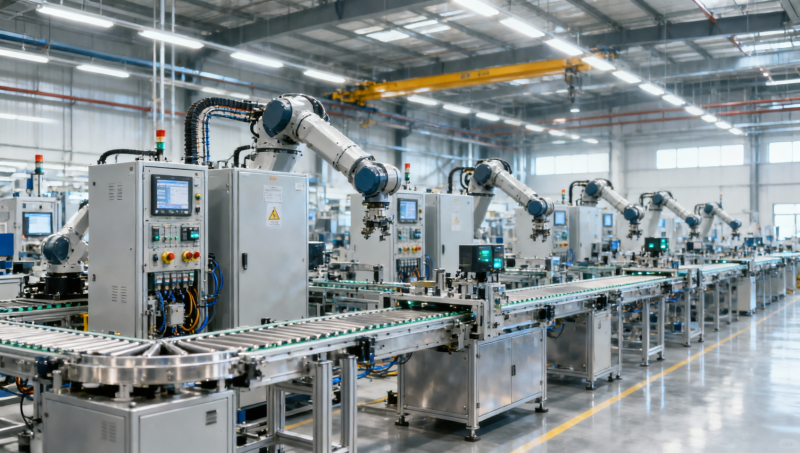
Many intelligent manufacturing initiatives show promise in pilot cells yet stall before full-scale deployment. From industrial equipment and robotic arms to industrial control and factory integration, the gap often lies in fragmented automation components, weak manufacturing systems alignment, and unclear automation solutions. This article explores why production automation struggles to scale and how industrial machinery strategies can move pilots into measurable, plant-wide results.
For research-oriented readers, plant operators, production directors, and system integrators, the central question is rarely whether smart manufacturing works. The real issue is why a pilot that performs well over 1 line, 1 shift, or 1 product family often loses momentum when extended across 3 workshops, 20 machines, or multiple SKUs.
In practice, scale-up failure is usually not caused by a single robot, PLC, or software package. It emerges from a mismatch between hardware capability, control architecture, data quality, maintenance readiness, and plant-level business targets. That is why intelligent manufacturing must be evaluated as a connected production system rather than a collection of isolated technologies.
For organizations using G-IFA as a technical reference point, the most valuable lens is cross-functional benchmarking. Industrial robotics, PLC and control systems, motion control, MES or ERP integration, and pneumatic or hydraulic subsystems must all be judged against deployment reality, not only pilot-stage performance. The sections below break down the common causes of pilot stagnation and the practical actions that help automation projects progress toward repeatable, plant-wide value.
Why Promising Pilots Fail to Scale in Real Factories
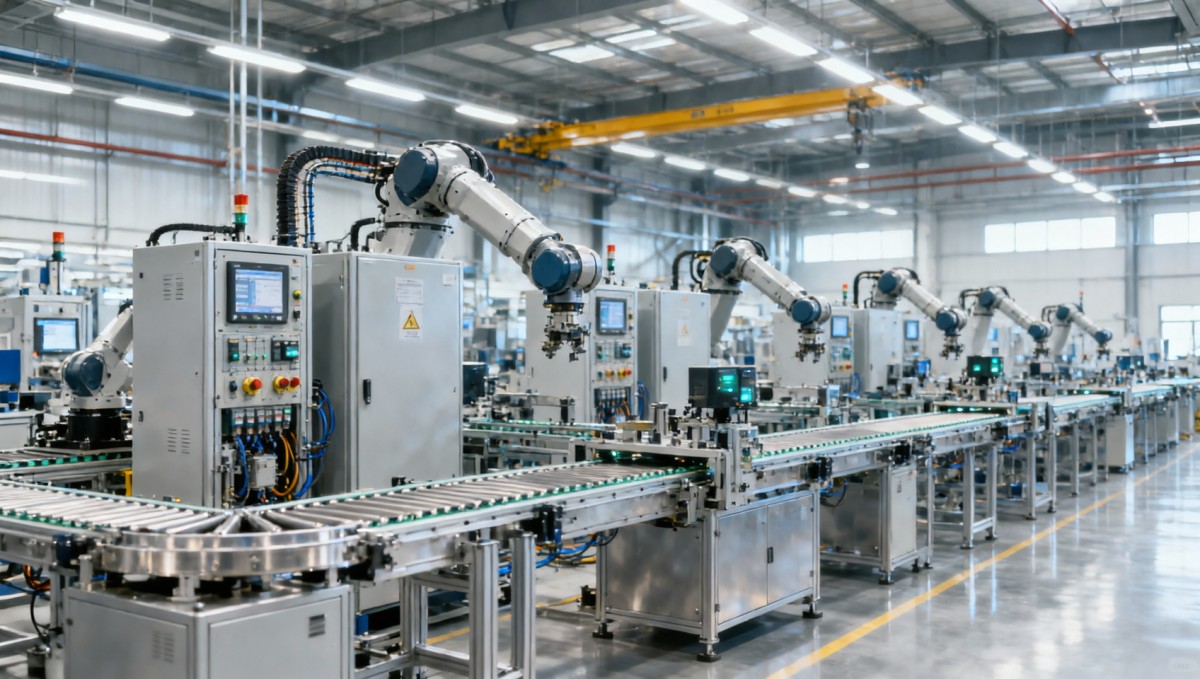
A pilot cell is designed to control variables. It often runs with a limited product mix, a small number of operators, and a dedicated engineering team. Under those conditions, cycle time improvements of 10% to 25% may look convincing. Yet full deployment introduces variability in material flow, shift behavior, maintenance discipline, upstream quality, and IT infrastructure.
One of the most common obstacles is architecture fragmentation. A line may combine 6-axis robot arms from one vendor, PLCs from another, third-party vision systems, and separate MES connectors. Each component can be technically sound, but if data tags, communication protocols, and alarm logic are inconsistent, the plant inherits integration overhead that grows exponentially after the first 2 or 3 lines.
Another issue is that pilot KPIs are often too narrow. Teams may focus on throughput, such as parts per minute, while ignoring OEE stability over 30 to 90 days, mean time to repair, spare-part availability, or operator training load. A pilot can hit target speed but still be unsuitable for scale if downtime rises above 5% to 8% after engineering support is reduced.
Typical pilot-to-scale failure points
The following comparison shows why many intelligent manufacturing projects succeed in demonstration mode but struggle in plant rollout. The difference usually lies in governance, interoperability, and lifecycle planning rather than in isolated machine performance.
The key takeaway is simple: pilot success proves technical possibility, not operational repeatability. If scale-readiness criteria are not defined early, a project can remain trapped in “good demo, weak rollout” mode for 6 to 18 months without delivering enterprise-level returns.
What operators and decision-makers should verify early
- Whether PLC, robot, HMI, and MES naming rules are standardized before the second line is commissioned.
- Whether the pilot is tested across at least 2 shift patterns and 1 realistic maintenance window.
- Whether spare parts, service access, and troubleshooting guides can support response times under 4 hours for critical failures.
- Whether changeover performance remains stable when recipe counts exceed 20 or operator skill levels vary.
Factories that ask these questions early reduce the risk of expensive redesign after capital approval. They also improve collaboration between operations, controls engineering, IT, and procurement, which is often the decisive factor in successful industrial automation scale-up.
The System Alignment Gap: Where Hardware and Software Stop Working Together
Most stalled intelligent manufacturing projects reveal the same structural problem: machines are automated, but the factory is not synchronized. A robotic station can place, weld, inspect, or palletize accurately within ±0.1 mm to ±0.5 mm, yet plant-wide performance still suffers if production orders, quality states, downtime codes, and maintenance signals do not flow across systems in a usable format.
This is where manufacturing execution systems, ERP connectivity, and industrial IoT layers become critical. If the pilot depends on manual spreadsheet updates, local historian exports, or ad hoc middleware scripts, scaling becomes fragile. Every new line adds another integration burden, increasing validation time from 2 weeks to 8 weeks or more.
Control-layer inconsistency is another frequent issue. Plants may use mixed fieldbus or Ethernet-based communication environments, while alarm structures and downtime taxonomies differ by vendor. Operators then receive more data but less clarity. In real production, usability matters as much as signal availability.
Core alignment areas that determine scale readiness
A scalable automation program requires alignment across mechanical, electrical, control, software, and operational layers. The table below highlights the areas that most often separate repeatable deployments from isolated pilots.
The lesson is not that every factory needs the same architecture. Instead, plants need consistent interfaces and governance. Benchmarking against international norms such as ISO, IEC, and CE-related design expectations helps reduce hidden incompatibilities before rollout expands across multiple workcells.
Three signs of weak system alignment
- Operators must use 3 or more screens to understand one stoppage event.
- Engineering teams manually remap tags or alarms each time a new line is added.
- Line performance drops sharply when product variants or shift changes increase.
When these signs appear, the problem is not just a software inconvenience. It is a scale barrier. Plants that resolve architecture alignment early are far more likely to convert a successful pilot into a platform that supports multi-line automation with lower commissioning risk.
How to Build an Automation Strategy That Survives Beyond the Pilot Stage
A scalable automation strategy begins with selecting the right deployment unit. Instead of viewing the pilot as a showcase, leading factories treat it as a template. That means defining what must remain standardized across the next 3 to 5 replications: safety architecture, PLC structure, robot interface logic, HMI design, spare-part philosophy, and data models.
The next step is to define measurable scale criteria before capital expansion. These criteria should include not only cycle time and defect rate, but also training time per operator, planned maintenance interval, software change control, and restart stability after faults. A line that restarts within 5 minutes in testing but needs 25 minutes in production is not truly ready for scale.
Factories also need to think in phases. A typical scale roadmap can be divided into 3 stages: pilot validation, replication readiness, and plant integration. Each stage requires different evidence. Pilot validation proves function. Replication readiness proves repeatability. Plant integration proves business impact across scheduling, traceability, labor balance, and maintenance planning.
A practical rollout framework
- Stage 1: Pilot validation, 4 to 12 weeks. Confirm cycle capability, quality stability, and safety logic under realistic production conditions.
- Stage 2: Replication readiness, 6 to 10 weeks. Freeze standards for controls, parts lists, alarms, recipes, and operator interfaces.
- Stage 3: Plant integration, 8 to 16 weeks. Connect MES or ERP flows, maintenance routines, downtime dashboards, and governance processes.
This phased approach helps procurement and operations make better decisions. Instead of approving large-scale rollout based on a single success metric, stakeholders can evaluate whether the automation solution is robust enough for multiple lines, different operators, and changing production plans.
Selection criteria for scalable automation solutions
When comparing automation vendors, integrators, or subsystem options, teams should prioritize the factors that affect long-term deployment. The list below is especially important for plants investing in robotics, PLC systems, motion control, and industrial software at the same time.
- Standard protocol support and ease of integration across at least 2 to 3 major control environments.
- Availability of spare parts and service support within an agreed response window, often 24 to 72 hours for noncritical items.
- Documentation quality, including wiring, logic descriptions, alarm lists, and maintenance procedures.
- Operator usability, especially for recipe changes, alarm recovery, and manual mode control.
- Scalability of software licenses, data storage, and edge connectivity when line count increases.
A strong strategy does not eliminate uncertainty, but it reduces the probability of redesign, integration drift, and underused capital equipment. In practical terms, that is what moves intelligent manufacturing from pilot enthusiasm to operational credibility.
Implementation, Maintenance, and Operator Adoption: The Hidden Drivers of Scale
Even a well-designed automation architecture can stall if implementation discipline is weak. Commissioning checklists, software version control, acceptance criteria, and training records are often treated as secondary tasks during a pilot. At scale, they become essential. The difference between a repeatable line and a fragile line is often found in documentation quality and maintenance behavior, not hardware capability.
Operator adoption is particularly important. In many plants, the pilot line is run by senior staff or by engineers who know the system deeply. Once rollout begins, day-to-day use shifts to broader teams with mixed experience. If recovery instructions are unclear or HMI navigation is too complex, downtime rises quickly, especially across 2 or 3 shifts.
Maintenance maturity is another hidden factor. Servo systems, end effectors, sensors, pneumatic circuits, and hydraulic components all require inspection intervals. A pilot may tolerate reactive fixes for 4 weeks. A full plant cannot. Preventive routines every 500 to 1,000 operating hours are common, but only if the plant has clear ownership, spare parts, and condition monitoring thresholds.
Implementation checkpoints that reduce rollout risk
The following checklist can be used by production teams, integrators, and engineering managers before approving expansion from pilot to plant-wide deployment.
These checkpoints show that scaling automation is as much an operational discipline as an engineering task. Plants that invest in training, service planning, and maintenance governance consistently extract more value from industrial equipment and software integration than those focused only on installation speed.
Common implementation mistakes
- Treating the FAT or SAT as the endpoint instead of the beginning of operating discipline.
- Assuming pilot-line experts will always be available during multi-line rollout.
- Underestimating the impact of compressed air quality, hydraulic stability, or sensor contamination on long-term reliability.
- Adding software features without a clear change-control process, which creates version confusion after 2 or more replications.
For users and operators, the message is practical: smart manufacturing scales when systems are easier to run, easier to maintain, and easier to recover. Engineering sophistication matters, but operational clarity determines whether that sophistication survives daily production reality.
FAQ: What Buyers and Operators Most Often Ask Before Scaling Intelligent Manufacturing
How do we know if a pilot is ready for rollout?
A pilot is usually ready when it proves stable performance over a meaningful period, often 30 to 90 days, and not just during supervised testing. Teams should verify throughput, scrap rate, downtime patterns, restart behavior, operator usability, and maintenance workload. If the system performs only with continuous engineering support, it is not yet rollout-ready.
Which systems should be standardized first?
Start with the items that multiply integration complexity: PLC structure, robot handshakes, alarm philosophy, HMI navigation, network conventions, and MES data tags. Standardizing these early creates a repeatable foundation. Mechanical variation can often be managed more easily than inconsistent control and data architecture.
What is a realistic rollout timeline for a multi-line expansion?
For many factories, a realistic path is 4 to 12 weeks for pilot validation, 6 to 10 weeks for replication preparation, and 8 to 16 weeks for plant integration, depending on line complexity and software scope. Highly customized environments or multi-site deployments may require longer, especially when ERP, traceability, and quality systems are involved.
What should procurement focus on besides price?
Procurement should assess integration effort, service response, documentation quality, spare-part support, software scalability, and compatibility with existing plant standards. A lower initial quote can become the more expensive option if commissioning stretches by 6 weeks, spare parts are delayed, or local teams cannot maintain the solution without external specialists.
How can G-IFA help reduce scale-up risk?
By benchmarking industrial robotics, PLC and control systems, motion technologies, industrial software, and fluid power components against recognized engineering criteria, G-IFA helps decision-makers compare options beyond marketing claims. This is especially valuable for factories trying to de-risk investments before moving from a pilot cell to broader automation deployment.
Intelligent manufacturing projects do not stall because automation lacks value. They stall because too many initiatives validate performance in a narrow pilot environment without preparing for the realities of plant-wide replication. The most successful programs align hardware, controls, software, maintenance, and operator workflows from the beginning.
For production researchers, users, and operators, the practical path forward is clear: evaluate scale readiness with the same rigor used to evaluate technical feasibility. Compare architectures, verify interoperability, define rollout criteria, and ensure that maintenance and training are built into the deployment plan.
G-IFA supports this decision process by offering a clearer view of automation technologies across robotics, PLC systems, motion control, industrial IoT software, and pneumatic or hydraulic foundations. If you are assessing why a pilot has stalled or planning the next phase of smart factory deployment, contact us to explore benchmark-driven guidance, request a tailored solution path, or learn more about scalable automation strategies.
- industrial robotics
- PLC systems
- motion control
- industrial IoT
- control systems
- smart manufacturing
- industrial automation
- industrial software
- robotic arms
- production automation
- industrial control
- automation solutions
- manufacturing systems
- industrial machinery
- automation components
- factory integration
- industrial equipment
- drive systems
Recommended News
- 2026/06/21Smart Watches Buying Guide: How to Compare Health Sensors, Battery Life, and OSSmart watches buying guide: compare health sensors, battery life, and OS compatibility to find a model that fits your routine, delivers reliable insights, and feels smarter every day.
- 2026/06/21Custom Components vs Standard Parts: How to Decide for Cost, Lead Time, and FitCustom components or standard parts? Learn how to compare cost, lead time, fit, maintenance, and lifecycle risk to make smarter automation decisions with confidence.
- 2026/06/21RV Components Explained: Which Parts Affect Safety, Power, and Water Systems Most?RV Components shape safety, power, and water reliability more than most owners expect. Learn which parts matter most, avoid costly failures, and upgrade smarter.