
Search News
Industry Portal
Popular Tags
When machine automation creates risk instead of savings
Author
Lina Cloud
Time
May 26, 2026
Pageviews
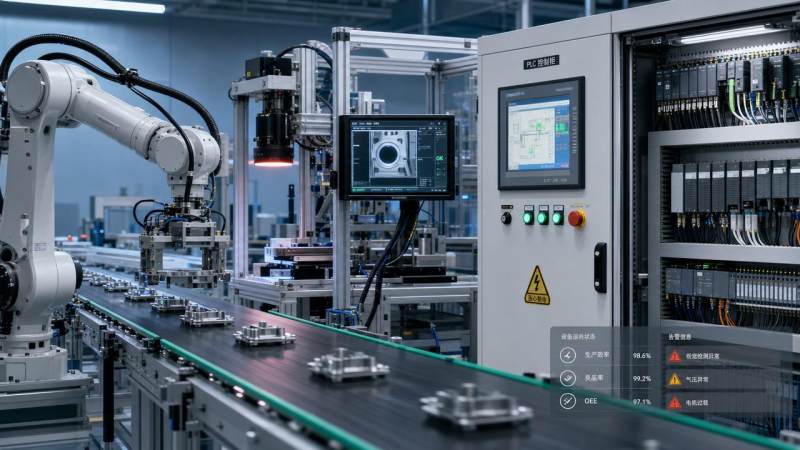
Machine automation promises speed, consistency, and lower operating costs—but without proper validation, it can introduce hidden risks that compromise product quality, worker safety, and system reliability.
In cross-industry operations, the real question is not whether machine automation works, but when it stops creating savings and starts creating exposure.
That shift often appears quietly.
A faster line creates unstable tolerances.
A connected controller expands cybersecurity risk.
A robotic cell removes labor cost, yet increases downtime from integration faults.
For industrial decision-making, the smartest path is scenario-based evaluation, not blanket adoption.
When machine automation looks efficient on paper but risky on the floor
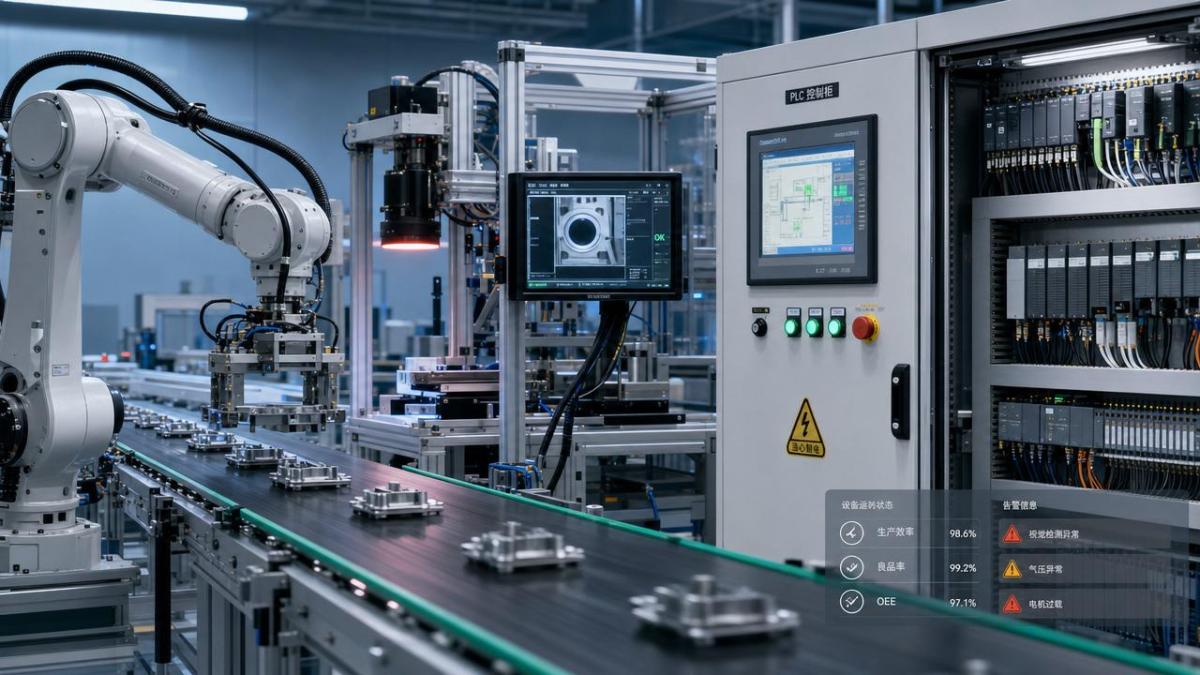
Across assembly, packaging, material handling, inspection, and process control, machine automation behaves differently under real operating conditions.
A stable, high-volume line can benefit from fixed-cycle systems.
A mixed-product environment may suffer from frequent changeovers, software complexity, and higher validation burdens.
This is where engineering benchmarks matter.
Global Intelligent Factory & Automation (G-IFA) focuses on de-risking machine automation through transparent comparison of robotics, PLC platforms, motion systems, industrial software, and fluid power technologies.
Using reference points such as ISO, IEC, and CE expectations, technical teams can judge whether a proposed system improves resilience or simply accelerates failure modes.
Scenario 1: High-speed production where machine automation increases quality drift
In food, consumer goods, electronics, and light industrial lines, machine automation often targets throughput first.
The risk appears when cycle time improves faster than process stability.
Servo tuning, gripper repeatability, sensor latency, and conveyor synchronization can all create micro-variations.
Those variations may stay hidden until scrap, rework, or warranty claims increase.
Core judgment points
- Does faster motion reduce inspection time or measurement accuracy?
- Are tolerances validated at full production speed, not pilot speed?
- Can the control system detect drift before defects leave the line?
- Are maintenance intervals matched to actual duty cycles?
If these checks are weak, machine automation may reduce direct labor while increasing total cost of poor quality.
Scenario 2: Flexible production where machine automation creates integration stress
Multi-SKU production needs flexibility, recipe control, and software coordination.
Here, machine automation risk often comes from integration rather than mechanics.
Robots, PLCs, vision systems, MES, and ERP may each function well alone.
Problems emerge when data models, alarm logic, and changeover rules are poorly aligned.
A small software mismatch can stop an entire line.
In these cases, the expected savings from machine automation disappear into debugging, retraining, and restart losses.
Core judgment points
- Is there a clear ownership map for controls, software, and data interfaces?
- Are recipe changes tested under all exception states?
- Can operators recover safely from partial communication failures?
- Do suppliers follow compatible industrial communication standards?
Scenario 3: Safety-critical operations where machine automation magnifies consequences
In chemical handling, heavy material transfer, metal processing, and hazardous zones, machine automation can reduce manual exposure.
That benefit is real, but only when the safety architecture is complete.
A robotic arm with strong payload performance is not enough.
The full system must include interlocks, emergency stop logic, safe motion functions, guarding, and restart procedures.
If machine automation is installed to remove people from danger but creates unpredictable machine behavior, the overall risk can rise.
Core judgment points
- Were risk assessments updated after every integration change?
- Do safe states cover sensor failure, power loss, and network interruption?
- Is lockout and restart logic tested in realistic maintenance conditions?
- Do pneumatic and hydraulic components fail in a predictable direction?
How machine automation risk differs by operating scenario
This comparison shows why machine automation cannot be judged by payback period alone.
Each scenario changes what “good performance” actually means.
Practical ways to match machine automation to the right environment
A lower-risk approach begins with structured fit assessment.
Before scaling machine automation, validate these points:
- Confirm the true bottleneck. Do not automate a non-critical step.
- Measure baseline scrap, downtime, energy use, and intervention frequency.
- Check standards compliance across robotics, controls, software, and power systems.
- Run pilot validation using worst-case materials, speeds, and shift conditions.
- Test maintenance access, spare parts strategy, and failure recovery time.
- Review cybersecurity exposure for connected machine automation assets.
G-IFA supports this process by comparing technical claims against engineering evidence.
That helps reduce overconfidence in vendor demonstrations and focus attention on long-term line reliability.
Common misjudgments that make machine automation more expensive
Several repeated mistakes turn a promising automation investment into a cost driver.
- Assuming labor reduction automatically equals savings.
- Ignoring software lifecycle costs after installation.
- Evaluating robot speed without checking end-effector stability.
- Treating safety devices as accessories, not system functions.
- Selecting components without benchmarking interoperability.
- Using ideal test materials instead of actual production variability.
These errors are common because machine automation is often sold as certainty.
In reality, risk depends on fit, validation depth, and operational discipline.
Next-step evaluation before expanding machine automation
A strong next step is to audit one production scenario at a time.
Map the process objective, likely failure modes, standards requirements, and data dependencies.
Then compare candidate technologies across the five pillars highlighted by G-IFA.
That includes Industrial Robotics & Cobots, PLC & Control Systems, Motion Control & Transmission, Industrial IoT & Software, and Pneumatic & Hydraulic Systems.
When machine automation is benchmarked against real scenarios instead of assumptions, investment decisions become safer, more traceable, and more durable.
The goal is not less automation.
The goal is machine automation that delivers measurable savings without introducing hidden operational risk.
Recommended News
- 2026/07/11Premium Car Accessories Worth Buying: How to Compare Fit, Quality, and Long-Term ValuePremium car accessories guide: compare exact fit, material quality, installation risk, and long-term value to avoid costly mistakes and choose upgrades that truly last.
- 2026/07/11CNC Machining Tools Selection Guide: Tool Materials, Coatings, and Cutting ApplicationsCNC machining tools selection made simple: learn how tool materials, coatings, and cutting applications affect tool life, surface finish, and productivity for smarter machining decisions.
- 2026/07/11How to Evaluate Recycling Solutions for Industrial Waste Streams and Compliance NeedsRecycling solutions for industrial waste: learn how to assess waste streams, compare technologies, meet compliance needs, and cut risk, cost, and downtime with confidence.