
Search News
Industry Portal
Popular Tags
ERP Systems Price Gaps Usually Come from Hidden Scope
Author
Lina Cloud
Time
May 01, 2026
Pageviews
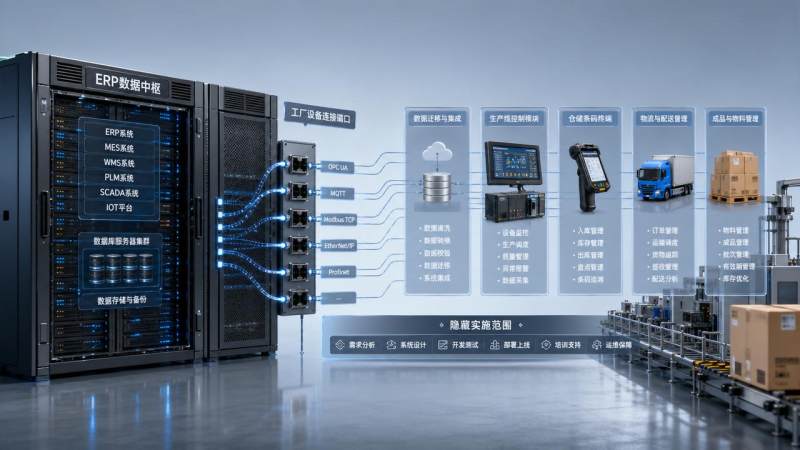
ERP systems price differences often look like vendor pricing issues, but the real cause is usually hidden scope—unlisted integrations, custom workflows, data migration, training, and post-launch support. For procurement teams, this gap can turn a promising quote into a costly implementation. Understanding what is included, excluded, and assumed is the first step to comparing ERP options with clarity and reducing budget risk.
Why hidden scope matters more in some business scenarios than others
For procurement professionals, the biggest mistake is treating ERP systems price as a simple software line item. In reality, ERP cost behaves differently depending on operating complexity, plant connectivity, process standardization, and cross-functional coordination. A trading company with limited workflows may compare quotes on user count and modules. A manufacturer running multiple facilities, automation assets, warehouse transactions, and quality checkpoints must also evaluate interfaces, exception handling, master data cleanup, and change management.
This is why two suppliers can present similar base quotations while the final project budgets diverge sharply. One vendor may include standard finance, procurement, inventory, and reporting with minimal configuration. Another may assume integration to MES, PLC-connected production reporting, barcode systems, supplier portals, EDI, or regional tax logic. The visible quote looks comparable; the operational scope is not.
At G-IFA, where industrial software is assessed alongside automation hardware and control infrastructure, this pattern appears repeatedly: software price gaps are often rooted in process reality. The more your business depends on synchronized data across machines, departments, and sites, the more important it becomes to define scope before discussing ERP systems price.
Typical business scenarios where ERP systems price gaps appear
Procurement teams usually encounter hidden scope in a few recurring situations. Each one changes what a “reasonable” ERP systems price should include.
Scenario 1: Single-site companies replacing spreadsheets or legacy tools
In this scenario, the organization often expects a fast rollout with standard modules. Scope risk usually comes from underestimated data migration, chart of accounts redesign, item master normalization, and user training. The software itself may be affordable, but operational cleanup is not. If the company has years of inconsistent records, the final ERP systems price can rise through consulting hours rather than license fees.
Scenario 2: Discrete manufacturing with shop-floor coordination
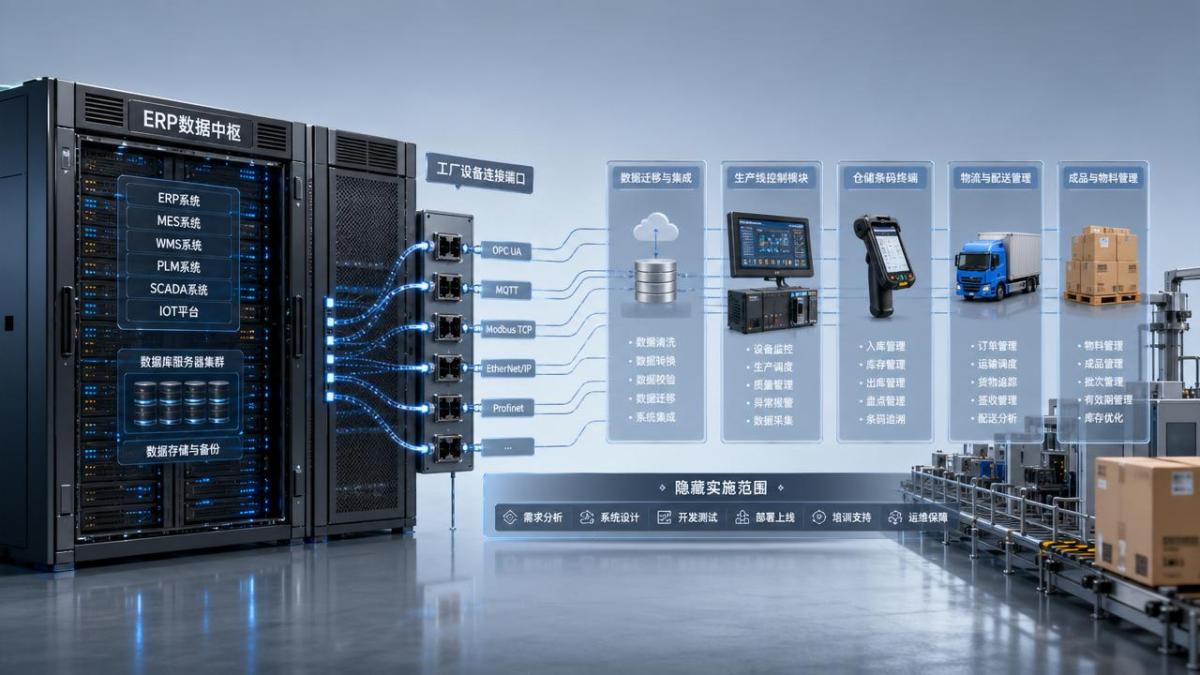
Manufacturers dealing with BOMs, routings, work orders, quality checkpoints, and production scheduling often discover that “standard ERP” is only the beginning. If planners need real-time material status, machine-linked reporting, downtime classification, or traceability by batch and serial number, integration with MES or production data systems becomes a major cost driver. Here, ERP systems price must be judged against plant connectivity needs, not just module lists.
Scenario 3: Multi-site or international operations
When the enterprise runs several plants, warehouses, or legal entities, hidden scope expands quickly. Consolidated reporting, transfer pricing, intercompany transactions, local tax rules, multiple currencies, and role-based approvals all add implementation effort. A low initial ERP systems price may simply mean these complexities are excluded, postponed, or treated as change requests later.
Scenario 4: Highly customized service and project environments
Engineering, installation, and project-based businesses often need milestone billing, project costing, resource planning, service contracts, and field support workflows. If a vendor’s base solution is product-centric, substantial configuration or customization may be needed. In this case, ERP systems price gaps usually reflect the difference between “close enough” functionality and true operational fit.
Scenario comparison: what procurement should compare beyond the quote
The table below helps buyers compare common scenarios and the hidden scope items that most often distort ERP systems price.
What different stakeholders should watch in each scenario
Procurement does not evaluate ERP systems price alone. Scope clarity improves when each stakeholder checks the areas they understand best.
Procurement teams
Focus on commercial structure: licenses or subscription, implementation services, travel, testing support, third-party tools, annual maintenance, and post-go-live support. Require a line-by-line breakdown of included deliverables, excluded activities, and assumptions that could trigger change orders.
Operations and plant managers
Check workflow realism. If the system quote assumes manual workarounds for production confirmation, inventory movement, nonconformance handling, or rework, the initial ERP systems price may be low but operational friction will be high. Good scope should reflect how work actually happens on the floor.
IT and integration teams
Assess interfaces, security, data ownership, and upgrade implications. Hidden scope often lives in middleware, API development, master data governance, and testing cycles. If there are existing PLC, SCADA, WMS, CRM, or BI platforms, each connection should be identified early.
Finance leaders
Look beyond project capex. The real ERP systems price includes recurring support, enhancement requests, reporting maintenance, localization updates, and productivity loss during transition. Finance should ask whether the proposed scope reduces total cost over three to five years, not just at signing.
Common hidden scope items that change ERP systems price
Across industries, the same items repeatedly explain quote differences. These should be validated in every sourcing round:
- Data migration scope: number of years, entities, open transactions, and master data quality.
- Integration count: MES, WMS, CRM, payroll, EDI, supplier portals, e-commerce, or machine data layers.
- Customization level: reports, approval flows, forms, labels, calculations, and industry-specific logic.
- Testing effort: UAT cycles, regression testing, multilingual validation, and cutover rehearsals.
- Training coverage: super users, end users, shift teams, remote sites, and new-hire training assets.
- Support model: hypercare duration, SLA terms, onsite support, and enhancement backlog handling.
If one proposal includes these items and another leaves them vague, the ERP systems price is not truly comparable. A lower quote may simply transfer delivery risk to the buyer.
How to judge scenario fit before choosing the lowest quote
A practical sourcing method is to score vendors by scenario fit instead of headline cost. Start with your operating model: make-to-stock, make-to-order, engineer-to-order, multi-warehouse distribution, or multi-plant manufacturing. Then identify business-critical processes that cannot fail in go-live. This may include lot traceability, planning accuracy, supplier collaboration, financial close speed, or machine-linked production visibility.
Next, ask each supplier to demonstrate those processes using your own examples. Avoid generic demos. If the workflow depends on custom development, require that this be priced or clearly flagged. This approach reveals whether ERP systems price differences come from stronger process coverage or from omitted work.
For industrial businesses, especially those moving toward smart manufacturing, buyers should also test how ERP will coexist with MES, SCADA, IIoT platforms, quality systems, and maintenance tools. As G-IFA’s cross-pillar view suggests, software decisions are more reliable when judged within the larger automation architecture, not in isolation.
Frequent misjudgments in ERP price evaluation
Several recurring mistakes create avoidable budget overruns:
- Comparing only subscription or license cost while ignoring implementation design effort.
- Assuming “standard integration” includes business logic, exception handling, and validation rules.
- Believing minimal customization is always cheaper, even when it creates manual work and adoption problems.
- Underestimating training needs across shifts, plants, and user roles.
- Failing to document who owns data cleansing, test scripts, cutover planning, and support after launch.
The safest procurement posture is not “Which ERP systems price is lowest?” but “Which scope assumption is most likely to become a change request?” That question changes vendor discussions immediately.
FAQ: scenario-based questions procurement teams often ask
Why do two ERP quotes with similar modules have very different totals?
Because modules do not define the full project. ERP systems price also depends on integrations, migration effort, custom workflows, rollout geography, and support commitments. Similar module names can hide very different delivery assumptions.
Which scenario has the highest hidden scope risk?
Usually multi-site manufacturing with plant-floor integration. It combines localization, intercompany logic, traceability, scheduling, quality management, and external system interfaces. In this environment, ERP systems price can rise quickly if these elements are not defined early.
How can procurement make quotes more comparable?
Issue a structured scope sheet covering processes, entities, interfaces, reports, migration, training, testing, and support. Ask each vendor to mark included, excluded, optional, and assumed items. This makes ERP systems price comparison much more reliable.
A practical next step for buyers
If you are sourcing ERP for a manufacturing, distribution, or multi-entity business, start by mapping your actual scenario before negotiating price. Document the workflows that matter, the systems that must connect, the data that must move, and the support the business will need after go-live. Then evaluate ERP systems price in that context.
For procurement teams, the best outcome is not simply a lower number. It is a contract where cost, scope, and operational expectations are aligned. In smart industrial environments, where ERP increasingly interacts with automation and digital production systems, this alignment is what protects budget, timeline, and long-term value.
Recommended News
- 2026/06/22How to Use an Importers Directory for Electronics to Find Verified BuyersImporters directory for electronics: learn how to identify verified buyers, check trade activity, assess technical fit, and turn directory data into qualified sales opportunities.
- 2026/06/22Wholesale Pet Toys: How to Compare Materials, MOQ, and Supplier QualityWholesale pet toys buying guide: compare materials, MOQ, and supplier quality to reduce risk, improve margins, and choose safer, better-selling products with confidence.
- 2026/06/22What Drives Car Maintenance Cost and How to Budget for RepairsCar maintenance cost depends on driving habits, vehicle age, parts quality, and repair timing. Learn how to budget smarter, avoid costly surprises, and plan repairs with confidence.