
Search News
Industry Portal
Popular Tags
When an MES Software Manufacturer Is the Better Fit
Author
Lina Cloud
Time
May 01, 2026
Pageviews
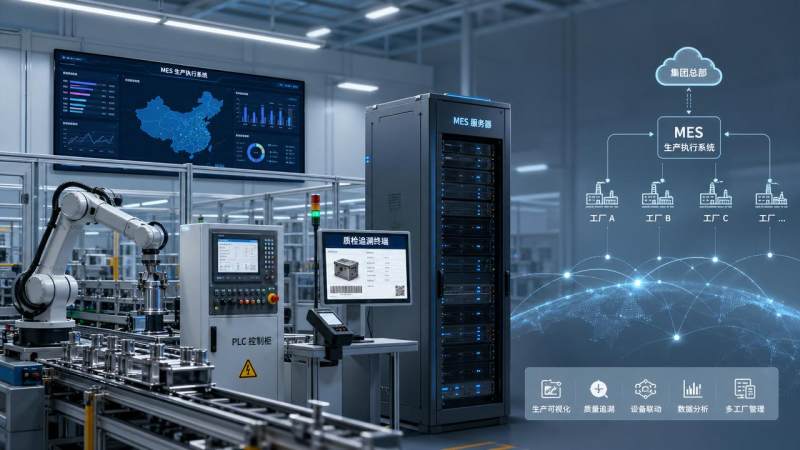
Choosing the right MES partner can shape production visibility, compliance, and long-term factory performance. For enterprise decision-makers evaluating digital transformation, an MES software manufacturer is often the better fit when deep product expertise, scalable integration, and continuous innovation matter most. Understanding when this model delivers greater value helps reduce implementation risk and supports smarter, data-driven manufacturing investments.
Why a Checklist Approach Works Better for MES Partner Selection
For most leadership teams, the biggest mistake is not choosing the wrong technology first; it is choosing a partner without a clear decision framework. MES projects affect production planning, quality records, machine connectivity, operator workflows, traceability, ERP synchronization, and audit readiness. That means the question is not simply whether an MES platform looks capable in a demo. The real question is whether an MES software manufacturer is structurally better equipped than a general software reseller, consultant, or local integrator for your specific factory goals.
A checklist-based evaluation helps decision-makers compare providers on what matters most: product depth, implementation risk, lifecycle support, standards alignment, scalability, and long-term innovation capacity. In cross-industry manufacturing environments, this practical method reduces bias from sales presentations and keeps the focus on measurable fit.
Start Here: 7 Signs an MES Software Manufacturer Is the Better Fit
Before requesting proposals, use the following decision checklist. If your organization answers “yes” to most of these points, an MES software manufacturer is likely the more strategic choice.
- You need a platform with a mature product roadmap, not a one-off custom build that becomes difficult to maintain after launch.
- Your factory requires reliable integration with PLCs, SCADA, ERP, WMS, IIoT devices, or multi-brand automation equipment.
- Traceability, compliance, electronic batch records, or digital quality documentation are business-critical.
- You expect rollout beyond one site and need repeatable deployment standards across multiple plants or regions.
- Your production model may evolve, requiring future modules such as OEE, SPC, scheduling, maintenance, energy analytics, or AI-driven optimization.
- Cybersecurity, data governance, version control, and system upgrade continuity matter at the executive level.
- You want long-term vendor accountability for product performance, release cadence, and technical compatibility.
If these priorities describe your organization, the value of an MES software manufacturer usually comes from owning the product architecture, maintaining engineering control, and improving the platform over time rather than patching disconnected functions together.
Core Evaluation Checklist: What to Verify First
1. Product Ownership and Engineering Depth
The first check is simple: does the provider truly build and maintain the MES platform, or mainly resell and configure it? A genuine MES software manufacturer controls source-level development, release management, feature prioritization, and compatibility testing. This matters because manufacturing environments change constantly. Without direct product ownership, even minor workflow modifications can become expensive and slow.
2. Integration Readiness Across the Factory Stack
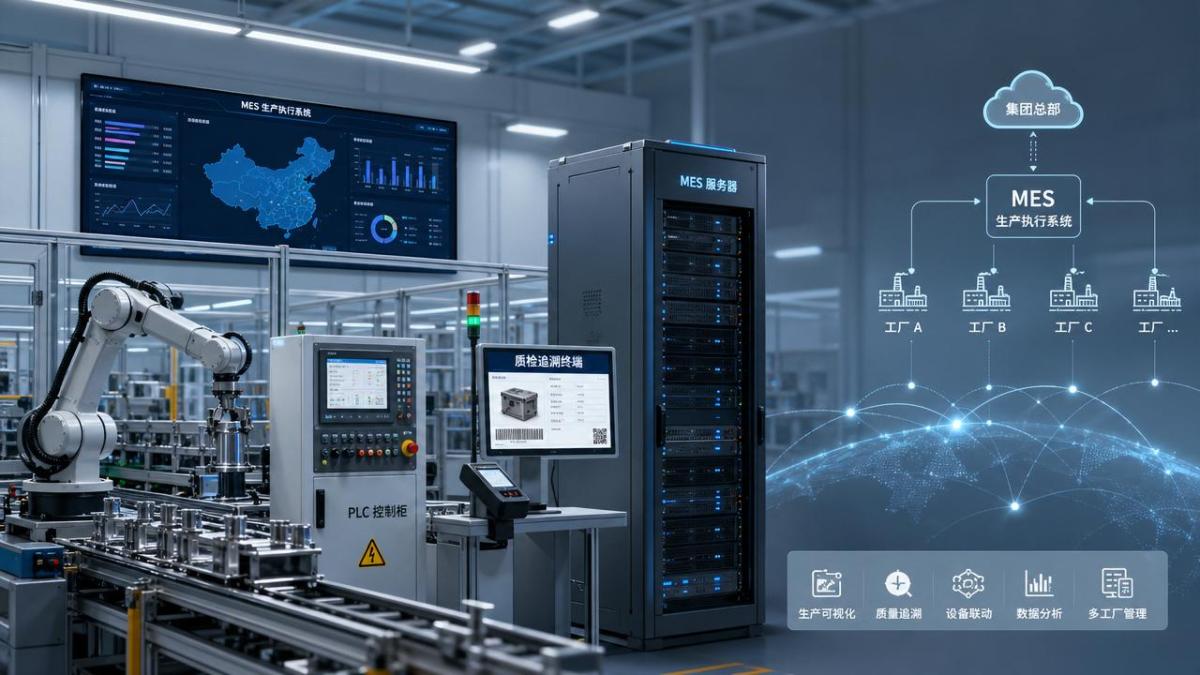
Decision-makers should confirm whether the system connects smoothly with control systems, industrial networks, ERP platforms, quality tools, and historian databases. In smart manufacturing, software cannot be isolated from automation hardware. Providers that understand PLC logic, machine data capture, protocol mapping, and industrial communication standards are often better positioned to reduce deployment friction.
3. Industry Configuration Versus Excessive Customization
A strong MES platform should support configuration for different production models without forcing the client into heavy custom code. The right balance is important. You need enough flexibility to match your workflows, but not so much customization that every upgrade becomes a new project. This is where a mature MES software manufacturer often outperforms smaller providers with ad hoc development practices.
4. Scalability by Site, Line, and Use Case
Executives should ask whether the system can start with one production area and scale across additional lines, plants, or business units. MES success is rarely static. A pilot that works for a single workshop may fail at enterprise scale if user permissions, data models, reporting structures, and deployment governance were not designed properly from the start.
5. Upgrade Path and Lifecycle Stability
Always examine how upgrades are handled. A qualified MES software manufacturer should offer documented release cycles, backward compatibility guidance, and clear policies on support windows. If every enhancement depends on local scripting or undocumented changes, total cost of ownership will rise sharply within two to three years.
6. Data Integrity, Security, and Compliance Controls
Enterprise buyers should verify audit trails, user access logic, change records, backup strategy, and cybersecurity practices. For regulated or quality-sensitive operations, this step is not optional. A reliable MES software manufacturer should be able to explain how data is validated, stored, synchronized, and protected in both cloud-connected and on-premises scenarios.
Decision Table: When the Manufacturer Model Creates More Value
The table below helps business leaders compare common operating situations and determine whether a manufacturer-led MES approach is likely to deliver stronger returns.
Scenario-Based Checks for Different Enterprise Needs
For Operations Leaders Focused on Throughput
Prioritize machine-state visibility, downtime reason capture, cycle-time analysis, dispatching logic, and bottleneck reporting. In these cases, an MES software manufacturer with strong production analytics and line-level integration can help turn data into operational action rather than static dashboards.
For Quality and Compliance Stakeholders
Focus on genealogy, lot tracking, in-process inspection, SPC workflows, deviation handling, and electronic records. The better fit is usually a provider whose product natively supports controlled documentation and process discipline, instead of relying on disconnected third-party tools.
For IT and Digital Transformation Teams
Review API capability, deployment architecture, data models, user administration, cybersecurity design, and integration with enterprise systems. An MES software manufacturer is often preferred when governance, maintainability, and enterprise-grade interoperability are key buying criteria.
For Group-Level Decision-Makers
Examine the provider’s international delivery ability, support structure, localization readiness, and commitment to standards. Organizations with diverse facilities need more than software features; they need a partner capable of sustaining consistency across regions, production cultures, and automation maturity levels.
Commonly Overlooked Risks Before Signing
Even experienced procurement teams can miss issues that later slow implementation or weaken ROI. Pay close attention to these risk reminders:
- A polished demo does not prove deployment simplicity. Ask for architecture diagrams, integration references, and upgrade examples.
- Local customization may solve today’s workflow but create tomorrow’s support burden. Confirm how modifications survive version upgrades.
- A low initial quote can hide future interface fees, validation effort, reporting rework, or support dependency on outside consultants.
- Weak master data preparation often delays go-live more than the software itself. Material definitions, routing logic, equipment hierarchy, and user roles should be planned early.
- If the provider cannot explain how the product aligns with industrial standards, cybersecurity practices, and long-term release control, strategic risk is higher than it appears.
Execution Checklist: What to Prepare Before Contacting Vendors
To evaluate any MES software manufacturer effectively, internal preparation is essential. Decision speed improves when the buying team aligns on facts instead of assumptions.
- Define the primary business objective: throughput, traceability, compliance, scheduling accuracy, labor visibility, or multi-site standardization.
- Map the current system landscape, including ERP, PLC brands, historians, quality tools, and reporting platforms.
- List critical production workflows that must be digitized first, not every possible feature desired over the next five years.
- Clarify whether the first phase is a pilot, a line rollout, or a plant-wide transformation.
- Establish measurable success criteria such as reduced downtime, improved first-pass yield, faster genealogy retrieval, or lower manual reporting effort.
- Prepare governance ownership across operations, quality, IT, and finance so vendor evaluation reflects enterprise reality.
Practical Questions to Ask an MES Software Manufacturer
These questions help move the conversation from marketing claims to operational proof:
- Which core MES functions are standard product features, and which require custom development?
- How do you manage upgrades when customer-specific workflows exist?
- What industrial protocols, machine interfaces, and ERP systems do you commonly integrate with?
- Can you demonstrate multi-site deployment governance and KPI standardization?
- What cybersecurity controls, backup methods, and user permission models are built into the platform?
- How is your roadmap shaped, and how often are releases delivered?
- What level of post-go-live support comes directly from your product engineering team?
FAQ for Enterprise Buyers
Is an MES software manufacturer always better than an integrator?
Not always. If the need is narrow, local, and highly specific, an integrator-led solution may be enough. However, when product stability, scalability, and long-term ownership matter, an MES software manufacturer is often the better fit.
What is the biggest advantage of choosing a manufacturer-led MES model?
The main advantage is accountability. The same organization that designs the platform usually defines the architecture, updates the product, and supports future expansion. That lowers fragmentation and improves lifecycle control.
How can decision-makers reduce implementation risk early?
Reduce risk by validating integration requirements, clarifying business priorities, checking upgrade policy, and confirming whether the provider has delivered similar results in comparable manufacturing environments.
Final Decision Guide and Next Step
For enterprise decision-makers, selecting an MES software manufacturer makes the most sense when the business needs more than short-term software deployment. It becomes the better fit when operational visibility, standards-based integration, compliance control, and future scalability are all part of the investment case. The strongest evaluations are not driven by feature lists alone, but by clear checks around product ownership, engineering depth, lifecycle stability, and site-to-site repeatability.
If your organization is moving toward smart manufacturing, prepare the key facts before the next vendor conversation: target processes, plant systems, integration boundaries, rollout scope, budget expectations, decision timeline, and success KPIs. Then ask the provider to respond in practical terms on fit, implementation method, support model, upgrade path, and collaboration structure. That approach will help you judge not only whether the software works, but whether the partnership can support long-term factory performance.
Recommended News
- 2026/06/21Smart Watches Buying Guide: How to Compare Health Sensors, Battery Life, and OSSmart watches buying guide: compare health sensors, battery life, and OS compatibility to find a model that fits your routine, delivers reliable insights, and feels smarter every day.
- 2026/06/21Custom Components vs Standard Parts: How to Decide for Cost, Lead Time, and FitCustom components or standard parts? Learn how to compare cost, lead time, fit, maintenance, and lifecycle risk to make smarter automation decisions with confidence.
- 2026/06/21RV Components Explained: Which Parts Affect Safety, Power, and Water Systems Most?RV Components shape safety, power, and water reliability more than most owners expect. Learn which parts matter most, avoid costly failures, and upgrade smarter.