
Search News
Industry Portal
Popular Tags
Why a MES software manufacturer matters for traceability
Author
Lina Cloud
Time
May 23, 2026
Pageviews
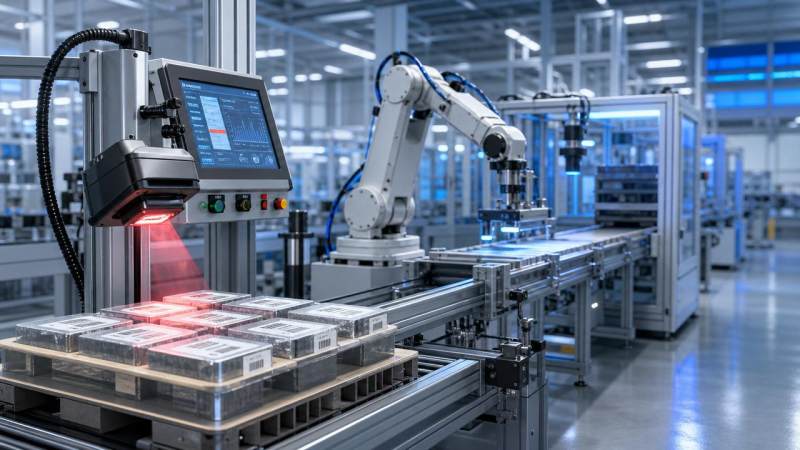
For quality and safety teams, traceability is not just a reporting function. It determines how quickly a factory can isolate defects, verify compliance, investigate incidents, and protect customers.
That is why the choice of a MES software manufacturer matters. The right provider does more than supply screens and dashboards. It creates the data structure that makes traceability trustworthy, usable, and audit-ready.
When traceability fails, the problem is rarely a missing barcode alone. It is usually weak data design, inconsistent machine integration, poor event capture, or software that cannot connect quality actions to production reality.
For quality control and safety managers, the practical question is simple. Can this MES vendor help us build a complete record of who did what, where, when, with which material, machine, parameter, and result?
If the answer is yes, traceability becomes a tool for risk control and faster decisions. If the answer is no, the factory may still collect data, but it will struggle when recalls, deviations, or audits occur.
Why traceability depends on the MES software manufacturer, not only the MES features
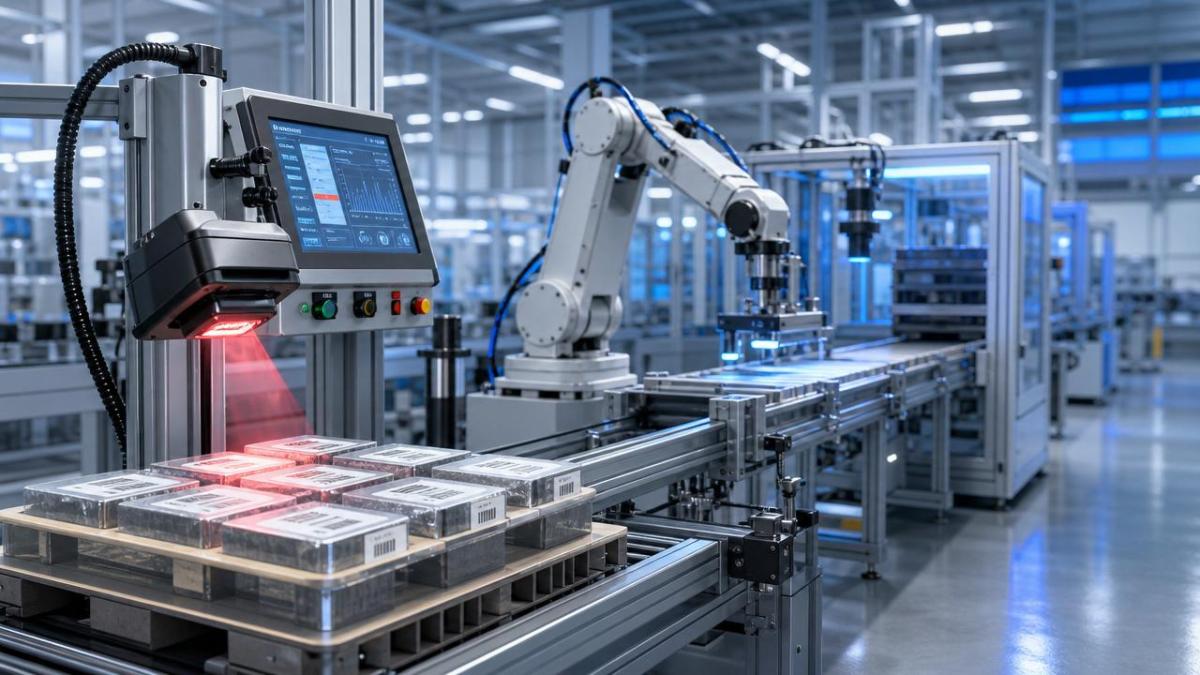
Many factories compare MES platforms by feature lists. They check batch tracking, genealogy, dashboards, and reporting. Those items matter, but traceability performance depends just as much on the manufacturer behind the software.
A capable manufacturer defines how data is modeled, how integrations are maintained, how exceptions are handled, and how upgrades affect historical records. These factors determine whether traceability works under pressure, not just during demos.
In quality and safety environments, traceability must survive real factory conditions. That includes manual operations, machine downtime, operator changes, rework loops, material substitutions, and process deviations across multiple shifts.
A strong MES provider understands that traceability is an operational discipline. It designs systems that capture events at the source, preserve context, and make records searchable during investigations, audits, and corrective actions.
A weaker provider may still offer attractive interfaces. However, if event logic is fragile or integrations are shallow, your team may end up manually reconciling records exactly when speed and certainty matter most.
What quality and safety teams actually need from traceability
Quality and safety professionals do not need traceability in theory. They need evidence they can trust. That means every critical product, process, and personnel event must be recorded with clear timestamps and relationships.
At minimum, teams need lot and serial genealogy, material consumption records, machine parameter history, operator identification, inspection outcomes, nonconformance links, rework history, and final release status.
They also need traceability to support action, not just storage. A useful MES should help teams answer urgent questions fast, such as which batches used a suspect component or which lines ran outside validated settings.
Safety teams often require even more context. They may need to trace maintenance status, lockout procedures, alarm history, environmental conditions, or training records tied to specific operations and time windows.
When these elements are connected inside one auditable system, factories reduce investigation time and limit the scope of recalls. When they remain fragmented across spreadsheets and disconnected systems, risk expands quickly.
How the right MES software manufacturer improves recall speed and root-cause analysis
Recall speed depends on data completeness and retrieval logic. During a product issue, teams must identify affected units quickly, separate them from unaffected production, and justify decisions to customers or regulators.
A reliable MES software manufacturer builds traceability so that upstream and downstream relationships are explicit. This allows teams to move from a failed unit to the exact material lot, machine state, operator action, and process window.
That level of linkage shortens root-cause analysis. Instead of debating which records are correct, teams can compare event histories, identify process drift, and confirm whether the issue was isolated or systematic.
For example, if a sealing defect appears in packaged goods, the MES should show the production order, sealing temperature range, operator logins, maintenance history, rejected units, and material lots used during the shift.
Without that structure, the factory may recall far more product than necessary. Overbroad recalls increase cost, damage brand confidence, and suggest that internal controls are weaker than they should be.
Key capabilities that make traceability reliable in daily operations
Not all traceability functions are equally important. For quality and safety teams, several capabilities have direct practical value because they reduce ambiguity and improve evidence quality during investigations.
First is event-level data capture. The system should record production, inspection, material issue, parameter change, hold, release, rework, and deviation events as they happen, not after manual backfilling.
Second is strong genealogy modeling. The MES must connect raw materials, subassemblies, work-in-progress units, and finished goods across splits, merges, partial consumption, and rework operations.
Third is machine and control system integration. If critical process values live only inside PLCs, SCADA screens, or local device logs, traceability remains incomplete and difficult to defend during audits.
Fourth is electronic enforcement. The best systems do not simply record mistakes after they happen. They prevent unauthorized material use, invalid routing steps, or out-of-spec processing before bad output continues.
Fifth is auditability. Every edited record, override, exception approval, and status change should leave a visible trail. For regulated or safety-sensitive production, this is essential for credibility.
Why integration quality is often the difference between usable and unusable traceability
Traceability breaks when data lives in islands. Many factories have ERP for orders, QMS for quality events, SCADA for machine data, and paper records for manual checks. An MES sits in the middle, but only if integration is strong.
This is where the MES software manufacturer becomes especially important. The provider must understand industrial communication, transaction timing, master data governance, and how to align digital events with physical production flow.
If integrations are weak, the MES may show production progress while missing the exact machine settings or inspection hold that explains a defect. In that case, traceability appears present but fails under scrutiny.
Quality teams should ask whether the vendor has proven integration experience with PLCs, sensors, barcode systems, weighing devices, vision systems, ERP platforms, and laboratory or quality management tools.
For global or multi-site operations, integration discipline matters even more. Standardized event definitions across plants make benchmarking, escalation, and compliance reporting far more reliable.
How to evaluate a MES software manufacturer for traceability performance
Vendor evaluation should go beyond product brochures. Quality and safety teams should examine how the manufacturer thinks about data integrity, validation, exception handling, and long-term support.
Start with industry fit. Has the provider worked in environments where traceability is operationally critical, such as food, pharmaceuticals, automotive, electronics, chemicals, or high-risk discrete manufacturing?
Next, review the traceability model in detail. Ask for a real workflow showing material receipt, lot assignment, machine execution, in-process inspection, nonconformance, rework, release, and recall search.
Then test exception logic. What happens when labels are unreadable, operators bypass a step, a machine goes offline, or substitute material is used under approval? Real factories run on exceptions, not ideal paths.
Also assess reporting speed and search depth. During an incident, can users query affected lots, machines, shifts, and process conditions in minutes, or will IT need to build manual extracts?
Finally, investigate governance. How does the manufacturer handle upgrades, data migration, cybersecurity, role permissions, and audit trails? A traceability platform must remain dependable over many years.
Common traceability risks caused by choosing the wrong provider
The wrong MES vendor can leave a factory with expensive software but weak control. One common problem is shallow deployment, where only order tracking is implemented while quality-critical events remain outside the system.
Another risk is inconsistent master data. If materials, routes, equipment, and quality plans are not managed carefully, traceability records may exist but fail to match real production relationships.
Some providers also underestimate manual processes. Yet many defects and safety deviations happen at hand assembly, changeover, cleaning, sampling, or packaging stages where human actions must be captured clearly.
There is also the risk of poor usability. If operators find the system slow or confusing, they create workarounds. Once people bypass the system, traceability confidence drops immediately.
For quality managers, the biggest danger is false confidence. A dashboard may look complete, but if timestamps drift, machine data is delayed, or exception approvals are undocumented, the record will not stand up under pressure.
Business value for factories beyond compliance
Traceability is often justified through compliance, but its value is broader. A well-designed MES helps factories reduce scrap, improve containment speed, stabilize process control, and strengthen supplier accountability.
It also improves cross-functional decision-making. Production, quality, maintenance, engineering, and safety teams can review the same event history instead of arguing across disconnected records.
For management, this means lower recall exposure and better operational visibility. For frontline teams, it means faster investigations and less time spent collecting evidence manually from multiple systems.
In continuous improvement programs, traceability data becomes a source of pattern detection. Teams can identify recurring defect clusters by machine, tool, material lot, operator group, or process parameter range.
That turns MES from a documentation layer into a prevention tool. The factory does not simply prove what happened. It learns how to stop the same problem from happening again.
What a strong final decision should look like
For quality and safety leaders, choosing a MES software manufacturer should be treated as a risk-control decision, not just a software purchase. The best partner helps build evidence, accountability, and response speed.
Look for a manufacturer that understands industrial operations deeply, integrates well with controls and enterprise systems, and can model traceability around your actual process risks rather than generic templates.
The right choice will give your factory a living production record that supports audits, recalls, CAPA processes, and daily quality assurance. That is what makes traceability operationally valuable.
In practical terms, a strong MES provider helps your teams answer the hardest questions quickly and with confidence. Which product is affected, what caused the issue, who approved the deviation, and what must happen next?
When those answers are available in one reliable system, factories protect customers better, reduce financial exposure, and create safer, smarter operations. That is why a MES software manufacturer truly matters for traceability.
Recommended News
- 2026/07/07Industrial Automation Platform for Energy Management: What to Compare Before BuyingIndustrial automation platform for energy management: compare integration, scalability, compliance, and true ROI before buying to avoid hidden costs and choose a platform built for long-term plant performance.
- 2026/07/07How to Use Product Specification Resources for Motors in Servo System SelectionProduct specification resources for motors help you compare torque, thermal limits, inertia, feedback, and compliance for smarter servo system selection with less risk and better performance.
- 2026/07/07Surgical Instruments Explained: Types, Materials, and Sterilization BasicsSurgical instruments explained clearly: explore key types, materials, and sterilization basics to compare quality, durability, and safe performance with confidence.