
Search News
Industry Portal
Popular Tags
What affects linear guide rail wholesale pricing most
Author
Marcus Torque
Time
May 17, 2026
Pageviews
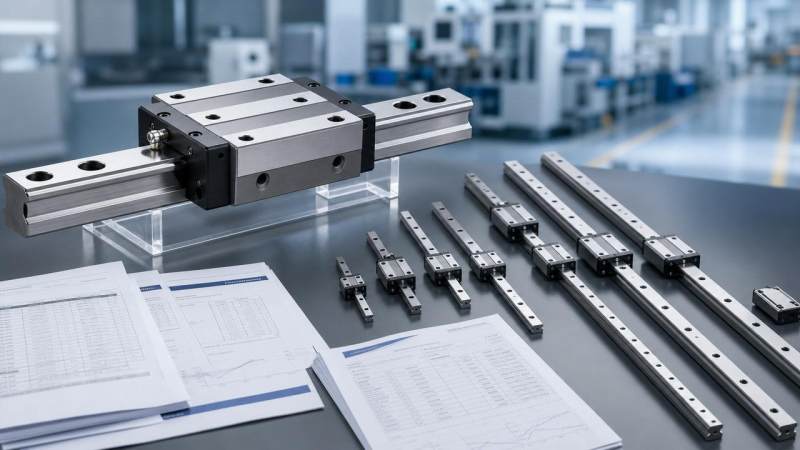
When evaluating linear guide rail wholesale options, pricing is rarely driven by unit cost alone. Material grade, precision class, load capacity, brand reputation, order volume, and quality certification all shape the final quote. For business evaluators, understanding these cost factors is essential to balancing procurement budgets, long-term performance, and supply chain reliability in automation and smart manufacturing projects.
What business buyers really need to know about linear guide rail wholesale pricing
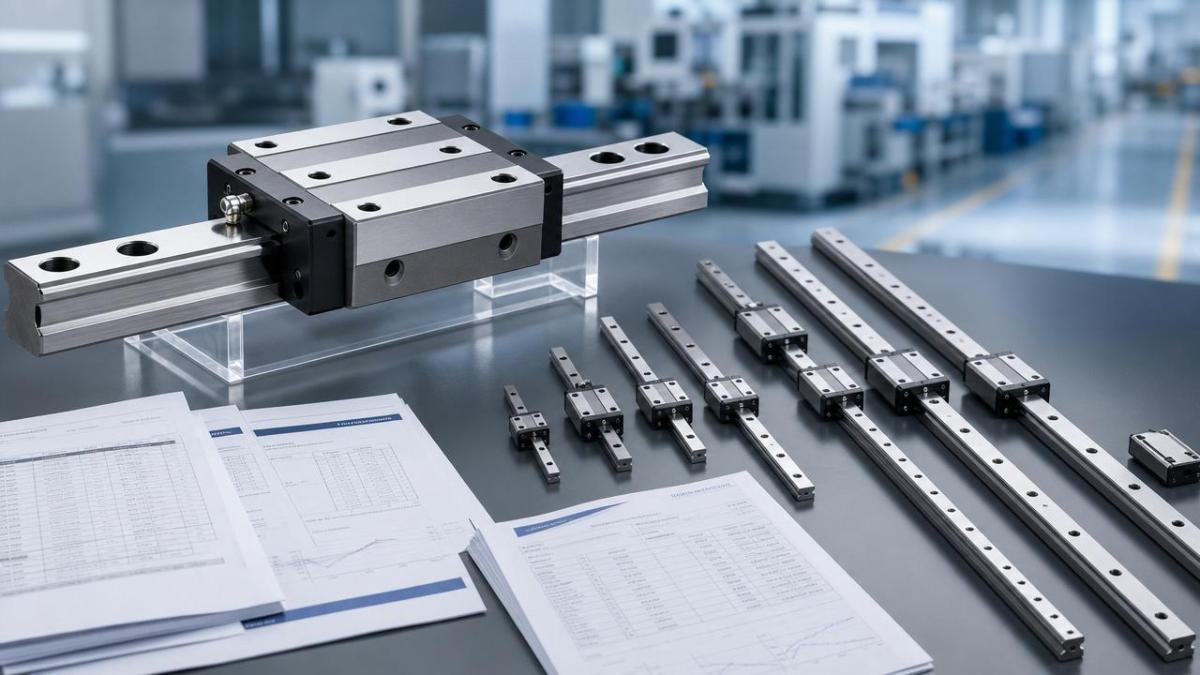
The core search intent behind linear guide rail wholesale pricing is practical, not academic. Buyers want to know which factors truly change quotations and how to compare suppliers without hidden risk.
For commercial evaluators, the biggest concern is not finding the lowest list price. It is determining whether a lower quote will later create maintenance costs, delivery delays, or performance failures.
That makes the answer clear: the biggest drivers of price are specification level, manufacturing quality, order structure, and supplier credibility. Unit price matters, but total procurement value matters more.
In industrial automation, guide rails directly affect motion accuracy, load stability, machine uptime, and lifecycle cost. A small difference in wholesale pricing can reflect a major difference in engineering reliability.
What is the core search intent behind this topic?
Users searching for this topic usually want to identify the main variables behind price variation in the linear guide rail wholesale market. They are trying to understand why quotations differ so widely.
They may also be benchmarking multiple suppliers for automation projects, resale distribution, OEM integration, or factory equipment upgrades. In each case, the question is commercial judgment rather than simple product curiosity.
The real intent is to separate justified cost from avoidable markup. Buyers want a framework for evaluating whether a quote reflects stronger material, precision, service, and compliance, or just branding.
For this reason, the most useful content is decision-oriented: what affects cost most, when higher pricing is worth paying, and how to avoid selecting a supplier based only on headline numbers.
Which issues matter most to business evaluators?
Business evaluators usually focus on five questions. First, what technical factors increase price most? Second, which factors are worth paying for in the intended application?
Third, can the supplier deliver consistent quality at scale? Fourth, how will logistics, lead time, and customization affect the final landed cost? Fifth, what procurement risks are hidden behind an unusually low quote?
They also care about operational fit. A rail used in a high-speed pick-and-place system requires different precision and durability than one used in a lower-duty transfer platform.
That means the purchasing decision must connect mechanical performance with business impact. Price evaluation only becomes meaningful when linked to uptime, replacement cycles, warranty exposure, and customer satisfaction.
The biggest cost driver: precision grade and manufacturing tolerance
Among all pricing variables, precision grade is often one of the strongest. Linear guide rails made to tighter tolerances require better grinding, inspection, assembly control, and process consistency.
Higher precision classes support smoother motion, lower deviation, and better repeatability. In automation systems where positioning accuracy affects output quality, this added cost may be fully justified.
However, not every application needs top-grade precision. If the system handles slower transfer, moderate loads, or non-critical alignment, paying for excessive precision can reduce procurement efficiency.
For wholesale buyers, the key is matching tolerance class to operational need. Over-specification raises cost unnecessarily, while under-specification creates vibration, wear, and downstream equipment instability.
Material quality and heat treatment have a direct impact on price
Steel grade is another major factor in linear guide rail wholesale pricing. Better raw material improves hardness stability, wear resistance, and deformation control under repeated industrial loads.
Heat treatment quality matters just as much as the base material. Inconsistent hardening can shorten service life, especially in applications with high cycling frequency, contamination, or continuous duty.
Lower-priced rails may use acceptable-looking materials but weaker metallurgical control. This is where quotations can become misleading, because visual similarity does not guarantee equal performance in operation.
Business buyers should ask for hardness data, material specifications, and process standards. These details often reveal whether a cheaper quote reflects true efficiency or simply reduced product durability.
Load capacity, rail size, and carriage design strongly shape quotations
Larger rails cost more because they consume more material, require more machining time, and are designed for higher load capacity. Carriage type also affects price through structure and bearing complexity.
A heavy-load application may need wider rails, reinforced blocks, or multiple carriages per axis. These choices increase the quote, but they may also reduce deflection and extend equipment life.
Preload level is another cost variable. Higher preload improves stiffness and motion control, but it requires more precise assembly and can raise manufacturing cost as well as installation sensitivity.
For evaluators, the important question is whether the configuration supports the actual duty cycle. A lower-cost rail that operates near its limit often becomes the more expensive choice over time.
Brand reputation influences price, but not always without reason
Brand is often treated as a markup issue, yet in industrial components it can represent testing discipline, traceability, technical support, and field-proven reliability across many automation environments.
Established international brands usually command higher wholesale prices because they invest in process control, certification, distribution support, and predictable dimensional consistency between production batches.
That said, premium branding is not always necessary for every project. Some emerging manufacturers now offer solid quality for less, particularly in mid-range applications with controlled operating conditions.
The right evaluation approach is to compare brand premium against risk reduction. If a project has expensive downtime exposure, stronger brand assurance may provide better total value than the lowest quote.
Order volume and purchasing structure can change price more than many buyers expect
Wholesale pricing naturally improves with larger volumes, but the relationship is not purely linear. Discounts depend on standardization, production planning, packaging efficiency, and long-term purchasing predictability.
Suppliers can usually price more aggressively when buyers commit to repeat orders, stable specifications, or annual demand forecasts. This lowers planning uncertainty and improves manufacturing efficiency.
Mixed-model orders, urgent requests, and fragmented shipment schedules often weaken price advantages. Even if the nominal quantity is high, operational complexity may prevent the supplier from offering the best rate.
For business evaluators, the lesson is simple: negotiate the full purchasing model, not just per-piece cost. Forecast visibility and specification consistency can unlock better wholesale pricing than one-time bargaining.
Customization and non-standard requirements often create hidden cost layers
Standard products are usually priced more competitively because tooling, inspection routines, and supply planning are already optimized. Once customization begins, cost structures can change quickly.
Common non-standard requests include custom lengths, special hole spacing, corrosion-resistant treatment, dust protection, preload adjustments, and modified carriage designs for unique machine architectures.
These changes may require separate machining, smaller production runs, special quality checks, or engineering review. As a result, the final wholesale price may rise beyond what basic catalog comparisons suggest.
Buyers should identify early which specifications are essential and which are merely preferred. Reducing unnecessary customization is one of the most effective ways to control total procurement cost.
Certification, testing, and quality documentation also affect the final quote
In global industrial purchasing, documentation has value. Suppliers that provide ISO-aligned quality systems, inspection reports, dimensional records, and material traceability usually carry somewhat higher overhead.
For business evaluators, this added cost can be worthwhile, especially in regulated industries or export projects where compliance evidence supports internal approval, customer acceptance, and supplier accountability.
Testing consistency also matters when scaling across multiple sites or machine platforms. If every batch performs differently, the hidden cost appears in installation adjustments, rejection rates, and maintenance events.
Therefore, a slightly higher quote with stronger documentation may improve procurement confidence. In many industrial settings, verification quality is part of product value, not just an administrative extra.
Logistics, lead time, and regional supply risk are often underestimated
Wholesale buyers sometimes compare ex-factory prices without fully accounting for transport cost, import duties, packaging protection, insurance, and inventory buffering required for long-distance supply chains.
Lead time is equally important. A lower unit price can lose its advantage if delayed delivery disrupts machine assembly, plant commissioning, or customer shipment schedules.
Regional risk also affects pricing logic. Suppliers with diversified production, stable export capability, and responsive after-sales support may cost more initially but reduce supply interruption exposure.
For automation projects, schedule reliability has financial value. Procurement teams should evaluate landed cost and timing risk together rather than treating them as separate decisions.
How to judge whether a low wholesale quote is genuinely competitive
The best way to assess a low quote is to break it into technical, operational, and commercial components. Ask what material, tolerance class, preload, service life, and inspection standard are actually included.
Then compare scope consistency across suppliers. Many price gaps result from unequal assumptions, such as different accuracy grades, shorter blocks, less documentation, or excluded accessories.
It is also useful to review sample performance, warranty terms, and batch stability. A supplier that performs well once but inconsistently over volume may create serious downstream cost exposure.
In short, a competitive quote is not simply the cheapest. It is the one that meets specification, reduces lifecycle risk, supports delivery needs, and aligns with the economic profile of the project.
What should be prioritized in procurement decisions?
For business evaluators, the most important priorities are application fit, lifecycle economics, and supplier reliability. These three factors usually explain whether a price is sensible or misleading.
Start by confirming the real operating requirements: speed, load, precision, environment, duty cycle, and maintenance expectation. Then remove unnecessary over-specification that adds cost without useful return.
Next, compare suppliers on consistency, documentation, lead time, and support responsiveness. This is especially important in smart manufacturing projects where motion components influence system integration stability.
Finally, evaluate total cost of ownership instead of purchase price alone. In linear guide rail wholesale decisions, the smartest buying strategy balances commercial efficiency with long-term operational confidence.
Conclusion: the factors that affect linear guide rail wholesale pricing most
The strongest influences on linear guide rail wholesale pricing are precision class, material and heat treatment quality, load capacity, configuration complexity, brand assurance, order volume, and certification support.
For business buyers, the right question is not which supplier is cheapest. It is which offer delivers the best combination of technical suitability, lifecycle value, supply stability, and manageable risk.
In industrial automation and smart manufacturing, guide rails are not minor commodities. They are performance-critical components whose pricing often reflects engineering depth and quality control maturity.
When procurement teams evaluate quotations through that broader lens, they make better investment decisions, protect project outcomes, and build stronger sourcing strategies for future automation growth.
Recommended News
- 2026/07/01What Impacts Industrial Coatings Performance in Corrosive Plant Environments?Industrial coatings performance in corrosive plants depends on environment, surface prep, product selection, and application quality. Learn what prevents early failure and protects assets longer.
- 2026/07/01Linear Motion for Robotics: Key Factors in Accuracy, Speed, and Payload SelectionLinear motion for robotics explained: compare accuracy, speed, and payload factors to choose the right axis, improve uptime, and boost automation performance.
- 2026/07/01How to Choose Adjustable Steel Scaffolding Jacks by Load Capacity and Site ConditionsAdjustable steel scaffolding jacks selection starts with load capacity and site conditions. Learn how to compare specs, reduce risk, and choose safer, more reliable support.