
Search News
Industry Portal
Popular Tags
How to choose a motion control supplier
Author
Marcus Torque
Time
Apr 17, 2026
Pageviews
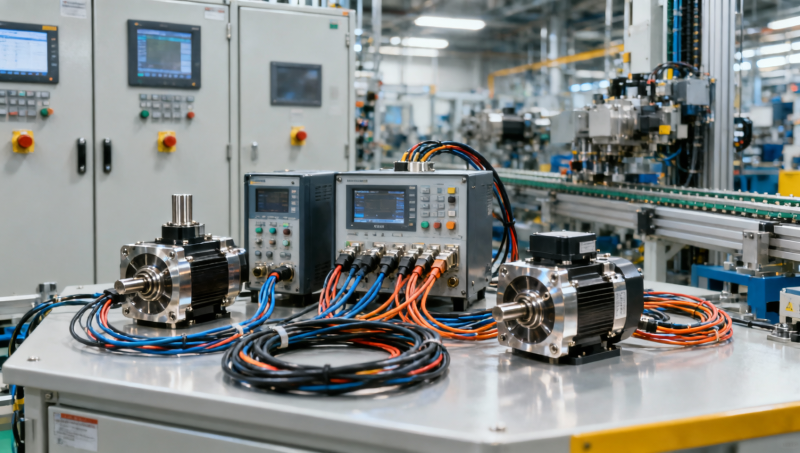
Choosing the right motion control supplier is no longer just a procurement task—it is a strategic decision that affects precision, uptime, scalability, and integration across the factory. For information-driven buyers comparing a motion control OEM, ERP systems supplier, MES software sourcing options, or broader industrial automation B2B platform resources, understanding technical fit, compliance, and long-term engineering support is essential.
Why supplier selection matters in modern motion control projects
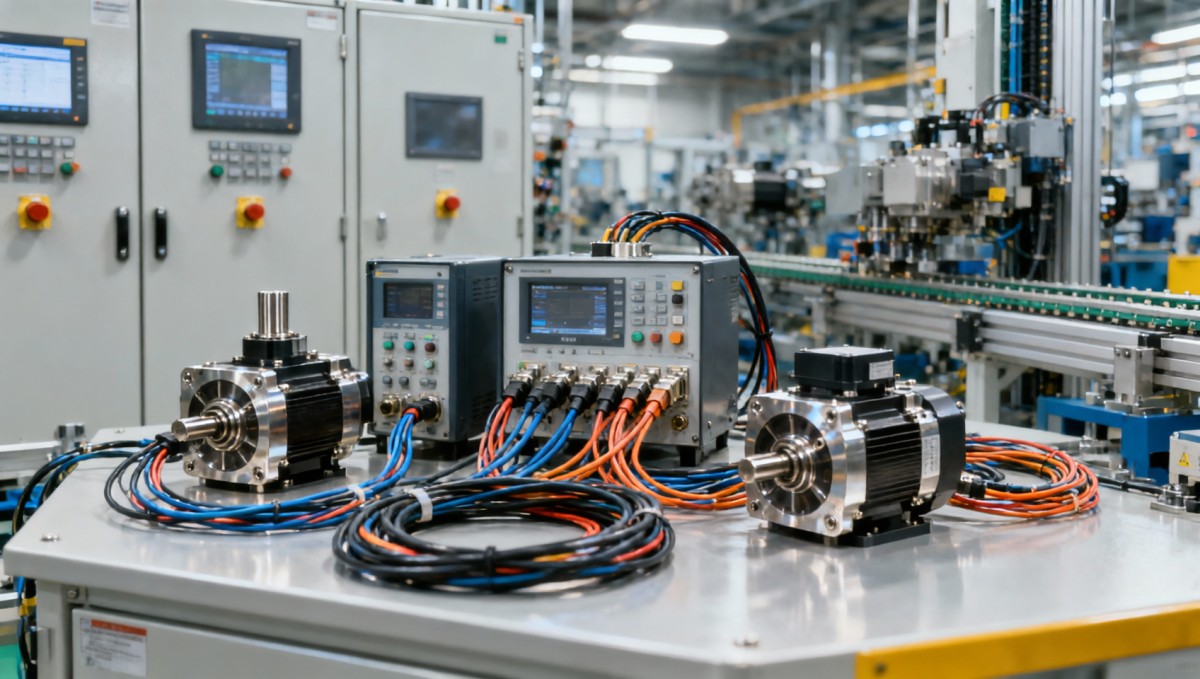
Motion control sits at the center of automated production. It connects servo drives, motors, encoders, controllers, HMIs, safety devices, and increasingly MES or ERP data layers. If the supplier is weak in one link, the entire line may suffer from unstable synchronization, commissioning delays, or limited expansion options after 12–24 months of operation.
For information researchers, the biggest challenge is not finding suppliers. It is filtering them. Many vendors can provide catalogs, but far fewer can explain response bandwidth, position accuracy, bus compatibility, environmental limits, and lifecycle support in a way that helps engineers make a low-risk decision.
This is where a technical benchmark perspective becomes useful. In industrial automation, comparing a motion control supplier should involve more than unit price. It should cover at least 5 decision layers: control architecture, communication protocol, compliance, field support, and future integration with Industrial IoT or plant software.
G-IFA approaches this issue as an intelligence hub rather than a simple vendor list. By mapping motion control and transmission components against broader factory systems such as PLC platforms, MES software, and ERP systems suppliers, it helps buyers understand whether a supplier fits a complete production environment instead of a single isolated machine.
What information researchers should verify first
- Whether the supplier supports the required motion profile, such as point-to-point positioning, interpolation, indexing, camming, or multi-axis synchronization for 2-axis to 16-axis systems.
- Whether communication is based on common industrial protocols such as EtherCAT, PROFINET, Modbus TCP, CANopen, or other fieldbus standards already used in the plant.
- Whether compliance documents, traceability files, manuals, wiring guidance, and commissioning support can be provided within a realistic pre-sales cycle of 3–10 business days.
- Whether the supplier can support spare parts, firmware updates, and migration planning over a lifecycle that often runs 5–10 years in industrial environments.
These checks immediately reduce noise in the market. They also prevent a common mistake: selecting a supplier with acceptable hardware specs but weak integration capacity. In Industry 4.0 settings, the best motion control supplier is often the one that can bridge mechanics, controls, and software data flow with minimal risk.
How to compare motion control suppliers beyond price
A practical comparison model should separate commercial promises from engineering capability. Buyers often receive quotations within 2–7 days, but the key issue is whether the quoted solution can meet acceleration profiles, repeatability targets, thermal conditions, and network response requirements in the real application.
In packaging, semiconductor handling, electronics assembly, CNC support systems, and conveyor automation, performance tolerance can vary widely. Some applications are satisfied with repeatability in the ±0.1 mm range, while others require tighter positioning, smoother torque control, or better stability under continuous duty cycles.
The following table helps structure a supplier comparison for motion control procurement. It is especially useful for buyers screening options through an industrial automation B2B platform where many suppliers appear similar at first glance.
This comparison shows why the lowest quote is rarely the lowest total cost. If a cheaper supplier adds 2–4 weeks of debugging or requires protocol conversion hardware, the savings can disappear quickly. Information researchers should therefore compare quoted scope, engineering completeness, and lifecycle service together.
Three common supplier profiles
Low-cost component trader
This type may offer attractive pricing and short-term availability, but often has limited application engineering depth. It may be suitable for replacement parts or simple single-axis tasks, yet risky for synchronized lines or projects that require integration with MES software sourcing plans and production data feedback.
Focused motion control OEM
A dedicated motion control OEM usually performs better on tuning tools, servo matching, and control documentation. This profile often fits machine builders and integrators that already have internal automation engineers and need strong hardware specialization.
Systems-capable automation partner
This supplier profile is often best for factories building scalable digital infrastructure. It can coordinate controls, field devices, ERP systems suppliers, MES interfaces, and compliance documentation. The initial evaluation may take longer, often 1–2 extra weeks, but project risk is usually lower for complex lines.
Which technical and compliance factors should buyers examine?
Technical fit begins with the application load. Buyers should collect at least 6 basic inputs before asking for a quotation: payload, travel distance, speed target, acceleration target, duty cycle, and ambient conditions. Without these, supplier recommendations may be generic and impossible to validate.
Environmental and electrical conditions are equally important. A motion control supplier should clarify operating temperature range, enclosure expectations, cabinet heat load, power quality sensitivity, and braking requirements. In many factories, a servo cabinet can face dust, vibration, or ambient conditions around 10°C–40°C, which influences selection and reliability.
Compliance should be treated as a working requirement, not a last-minute document request. International projects often require alignment with ISO-oriented machinery safety processes, IEC electrical conventions, and CE-related technical documentation where applicable. The supplier does not replace the machine builder’s responsibility, but it should provide component-level support documents in an organized form.
For research-stage buyers using G-IFA, the advantage is cross-pillar visibility. Motion control selection can be reviewed together with PLC architecture, software layer compatibility, and transmission components. This avoids a common late-stage problem: the servo system works, but data exchange with plant software or safety logic becomes inefficient.
Technical checklist for pre-qualification
- Axis requirement: single-axis, 2–4 axes, or multi-axis coordinated motion above 6 axes.
- Feedback type: incremental encoder, absolute encoder, or application-specific feedback strategy.
- Control behavior: indexing, gearing, camming, interpolation, registration, or tension control.
- Factory interface: PLC platform, SCADA, MES software sourcing direction, and possible ERP data linkage.
- Service expectations: remote support within 24–48 hours, startup support, and spare strategy for 1–3 years.
A qualified supplier should answer these points with specific engineering language. If the discussion stays at catalog level for too long, the supplier may not be ready for higher-value applications. Good selection depends on measurable fit, not branding alone.
The next table organizes common criteria into an actionable qualification screen. It is especially useful when comparing motion control candidates with other automation sourcing paths on a single review sheet.
A supplier that answers all four categories clearly is usually more dependable than one that only emphasizes price or lead time. In research-driven procurement, clarity is a risk-control tool.
What procurement workflow reduces risk for information-driven buyers?
A structured sourcing process often saves more time than fast but incomplete RFQ activity. In many industrial automation projects, the difference between a stable launch and a delayed launch is not the hardware itself. It is the quality of technical clarification during the first 2–3 procurement stages.
For motion control supplier evaluation, buyers should move through a disciplined sequence: requirement definition, technical shortlisting, documentation review, commercial alignment, and support confirmation. This process works especially well when comparing a motion control OEM with broader industrial automation B2B platform options.
G-IFA supports this workflow by acting as a technical filter. Instead of reviewing suppliers in isolation, users can compare motion control, PLC and control systems, Industrial IoT, and software dependencies within one decision framework. That makes sourcing more strategic and less reactive.
A 4-step supplier selection path
- Define the application envelope. Prepare motion profile, axis count, load, duty cycle, target line speed, environmental conditions, and software integration needs.
- Shortlist 3–5 suppliers. Remove any option that cannot confirm protocol compatibility, technical documentation scope, or support response expectations.
- Request engineering evidence. Ask for sizing logic, architecture suggestion, draft BOM, commissioning assumptions, and expected lead time such as 2–6 weeks for standard items.
- Validate lifecycle support. Confirm spare strategy, remote service process, software update path, and escalation ownership during startup and maintenance phases.
This workflow also helps when budget is limited. Instead of trying to reduce cost blindly, buyers can identify where standardization is acceptable and where performance cannot be compromised. For example, a simple conveyor axis may allow a more economical configuration, while registration control in high-speed packaging may require more advanced servo and feedback capability.
A realistic procurement plan should also consider delivery risk. Standard components may ship in 1–4 weeks, while configured systems, documentation packages, or nonstandard motor variants can take longer. Good suppliers discuss these constraints early instead of leaving them to the purchase order stage.
Common mistakes, practical FAQs, and when to consult a specialist
Even experienced teams can misread supplier capability. One frequent mistake is assuming that a strong catalog means strong application support. Another is evaluating servo hardware without checking software tools, protocol openness, or whether the supplier can coordinate with an ERP systems supplier or MES software sourcing roadmap.
A second mistake is skipping document review. In cross-border projects, delays often come not from hardware failure but from incomplete drawings, unclear parameter backup methods, or missing compliance files. A supplier that can organize these items within a clear 3-stage review process usually creates less downstream friction.
The final mistake is treating motion control as a stand-alone purchase. In a smart factory, motion, PLC logic, safety architecture, edge data, MES, and ERP connectivity increasingly affect one another. Better sourcing decisions come from looking at the full automation stack.
FAQ
How many suppliers should I compare for a motion control project?
For most research-stage procurement, 3–5 qualified suppliers is a practical range. Fewer than 3 reduces comparison quality, while more than 5 often creates noise unless the project is very large. The goal is not quantity, but meaningful contrast in technical fit, support depth, and lifecycle risk.
What documents should I request before shortlisting?
Request a preliminary architecture proposal, main component list, controller and protocol details, electrical connection guidance, environmental limits, and available compliance documents. If possible, also ask how parameter backup, firmware management, and startup support are handled within the first 30 days after installation.
Is a motion control OEM always better than a broader automation supplier?
Not always. A motion control OEM may be stronger in servo tuning and axis performance. A broader automation partner may be stronger in plant-wide coordination, especially when PLC, MES, ERP, and Industrial IoT interfaces matter. The better option depends on whether your main risk lies in precision control or system integration.
What is a reasonable response time for technical support?
For standard pre-sales questions, 24–48 hours is a reasonable benchmark. For sizing review or architecture feedback, 3–7 business days is common. Faster is useful, but quality matters more than speed. A rushed answer without load calculations or protocol clarification is not a sign of strong support.
Why work with G-IFA when evaluating a motion control supplier
G-IFA is designed for buyers who need more than promotional material. It provides a structured view across Industrial Robotics and Cobots, PLC and Control Systems, Motion Control and Transmission, Industrial IoT and Software, and Pneumatic and Hydraulic Systems. That cross-sector visibility is valuable when a motion control choice affects the entire production architecture.
For information researchers, the benefit is practical: faster technical filtering, clearer benchmark logic, and better alignment with international expectations such as ISO, IEC, and CE-related project needs. Instead of comparing supplier claims one by one, you can frame the decision around engineering fit, compliance readiness, integration risk, and support maturity.
If you are comparing a motion control OEM, reviewing an ERP systems supplier, planning MES software sourcing, or mapping broader industrial automation B2B platform options, G-IFA can help you narrow the field with technical context. This is particularly useful when delivery windows are tight, certification requirements are high, or factory scenarios are complex.
Contact G-IFA to discuss parameter confirmation, product selection logic, expected lead time, protocol compatibility, compliance document needs, sample or test evaluation options, and quotation coordination. If your team is still in the research phase, sharing the application profile, axis requirements, and software environment is often enough to begin a more reliable supplier assessment.
Recommended News
- 2026/06/21Smart Watches Buying Guide: How to Compare Health Sensors, Battery Life, and OSSmart watches buying guide: compare health sensors, battery life, and OS compatibility to find a model that fits your routine, delivers reliable insights, and feels smarter every day.
- 2026/06/21Custom Components vs Standard Parts: How to Decide for Cost, Lead Time, and FitCustom components or standard parts? Learn how to compare cost, lead time, fit, maintenance, and lifecycle risk to make smarter automation decisions with confidence.
- 2026/06/21RV Components Explained: Which Parts Affect Safety, Power, and Water Systems Most?RV Components shape safety, power, and water reliability more than most owners expect. Learn which parts matter most, avoid costly failures, and upgrade smarter.