
Search News
Industry Portal
Popular Tags
How to vet a motion control OEM
Author
Marcus Torque
Time
Apr 17, 2026
Pageviews

Choosing the right motion control OEM can make or break an automation project. For information-driven buyers comparing a motion control supplier, control systems OEM, or broader industrial automation B2B platform options, careful vetting is essential to reduce risk, ensure compliance, and protect long-term performance. This guide explains how to evaluate technical capability, quality standards, integration readiness, and sourcing reliability before making a decision.
What should you verify first when vetting a motion control OEM?
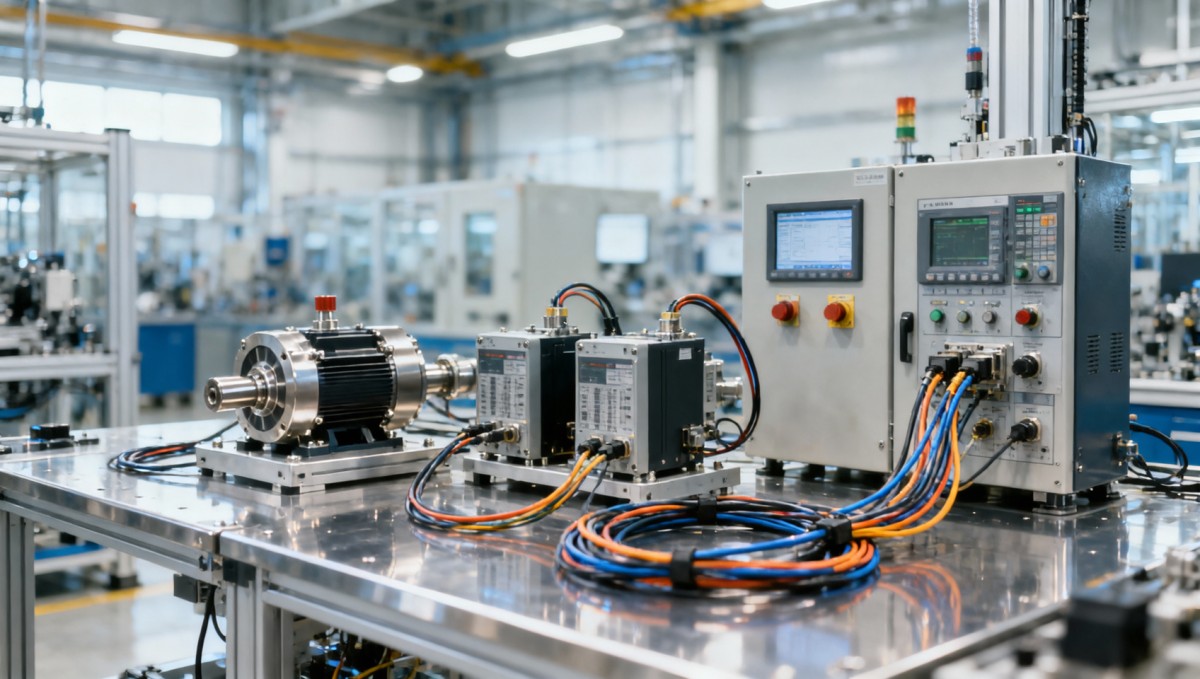
A motion control OEM should not be screened only by catalog breadth or quoted price. For industrial automation buyers, the first pass is about fit: does the supplier’s engineering capability match the load profile, duty cycle, control architecture, and compliance needs of your application? In practice, 4 core areas should be reviewed before any RFQ moves forward: product scope, engineering depth, manufacturing discipline, and post-sale support.
Many sourcing problems start when a buyer treats all motion control suppliers as interchangeable. A servo motor producer may be strong in component manufacturing but weak in multi-axis tuning. A control systems OEM may provide broad integration support but rely on third-party drive platforms. For that reason, information researchers should separate component competence from system-level competence within the first 7–10 days of supplier evaluation.
At G-IFA, cross-sector benchmarking is useful because motion control decisions rarely stand alone. Servo drives, PLC compatibility, encoder feedback, transmission design, and industrial software integration affect the same production line. Reviewing a vendor against ISO, IEC, and CE-relevant expectations helps buyers compare technical claims in a disciplined way instead of relying on brochures or sales language.
The first-pass screening checklist
- Confirm whether the OEM designs critical motion products in-house or mainly assembles sourced components. This affects traceability, firmware control, and long-term spare parts continuity.
- Check whether the supplier supports the required motion topology: single-axis, synchronized multi-axis, camming, interpolation, or high-speed indexing.
- Review supported communication protocols such as EtherCAT, PROFINET, Modbus, or CANopen where relevant to your existing PLC and SCADA environment.
- Verify whether the OEM can document application limits including ambient temperature ranges, enclosure levels, braking options, encoder types, and overload characteristics.
A supplier that cannot clearly explain these fundamentals early in the process will usually create delays later during design review, FAT preparation, or commissioning. For B2B buyers under a 2–4 week sourcing window, this early filter saves time and avoids costly trial-and-error engagement.
How do you compare technical capability beyond the brochure?
Technical capability in motion control is best evaluated through evidence, not adjectives. Buyers should request application notes, wiring examples, tuning workflows, motor-drive matching rules, and fault handling logic. A credible motion control OEM should explain how its platform behaves under acceleration, deceleration, backlash compensation, peak torque demand, and continuous-duty operation rather than speaking only in general performance terms.
In many projects, the true challenge is not rated power but control stability. A 400W or 750W servo may look adequate on paper, yet oscillation, thermal rise, or encoder mismatch can appear when the machine cycles at high frequency for 16–20 hours per day. That is why buyers should ask for typical sizing methodology, commissioning parameters, and recommended safety margins for inertia ratio and load variability.
When comparing a motion control supplier, look at how the vendor handles the full motion chain. Motors, drives, couplings, gearboxes, feedback devices, and controller response all matter. G-IFA’s benchmark-oriented view is valuable here because it connects Motion Control & Transmission with PLC & Control Systems and Industrial IoT & Software, helping decision-makers understand whether a supplier supports practical line integration rather than isolated component delivery.
Technical questions that reveal real engineering strength
The table below helps information researchers compare technical evidence from different motion control OEM candidates in a structured way.
If an OEM answers these questions with specific ranges, documents, and engineering assumptions, it usually signals mature application capability. If responses stay vague, or if the supplier avoids responsibility for tuning and integration, the buyer should treat that as a risk marker rather than a minor gap.
Red flags in technical review
- Only nominal ratings are provided, with no peak load or duty-cycle discussion.
- No clear answer on encoder resolution, cable length limitations, or EMI practices.
- Protocol support is claimed, but no integration examples or manuals are available.
- Remote diagnostics, firmware update policy, or spare parts strategy are undefined.
Which quality, compliance, and supply chain checks matter most?
A motion control OEM may look technically strong but still create procurement risk if quality systems and supply continuity are weak. For industrial automation projects, buyers should review 3 layers of operational reliability: manufacturing quality control, regulatory alignment, and supply chain resilience. These checks are especially important when equipment will be installed across multiple regions or exported to markets with specific safety documentation requirements.
Common compliance references include ISO-managed quality processes, IEC-oriented electrical practices, and CE-related conformity where applicable. Buyers should not assume every motion control supplier provides the same depth of documentation. Ask whether the OEM can support declaration packages, electrical documentation, labeling consistency, and component traceability. For some projects, document readiness is as important as mechanical performance.
Lead time transparency also matters. A competitive quote loses value if critical servo drives require 8–12 weeks while replacement cables or encoder modules require a separate sourcing path. Information researchers should map not only standard lead times but also buffer strategy, alternative part availability, and after-sales spare stock policy for the first 12 months of operation.
A practical compliance and sourcing review matrix
Use the following table to compare quality and sourcing reliability across motion control OEM candidates before shortlisting.
The best motion control OEM is not always the one with the largest product catalog. It is the one that can sustain document quality, parts continuity, and predictable response across the entire equipment lifecycle. In B2B sourcing, that often matters more than a modest initial unit price difference.
Minimum documents worth requesting
- Datasheets with electrical and mechanical ratings, including duty-related limitations.
- User manuals covering installation, wiring, alarms, and commissioning.
- Drawings or dimensional files for panel and machine design review.
- A clear spare parts and replacement policy for at least 1 production cycle or planned support horizon.
How do you evaluate integration readiness and project execution?
Even a technically sound servo system can fail commercially if integration takes too long. That is why a motion control supplier should be assessed not only on components, but also on execution readiness. Buyers should ask how the OEM supports the 4 critical project stages: pre-sales application review, design coordination, commissioning, and after-sales troubleshooting. This is especially important for system integrators handling compressed project timelines.
A useful question is whether the OEM can work within your existing industrial automation stack. If your line already uses a specific PLC family, HMI environment, or MES data flow, the OEM should explain how motion alarms, status words, and operating data can be exposed upstream. In Industry 4.0 settings, motion control is no longer isolated hardware; it is a data-generating layer in the digital production system.
At G-IFA, this is where benchmark intelligence becomes practical. Because the platform compares robotics, PLCs, motion transmission, and industrial software together, buyers can validate whether a supplier’s motion solution supports broader factory interoperability. That reduces the common problem of choosing a strong axis product that later creates software, network, or maintenance friction elsewhere on the line.
Questions to ask during execution planning
- How many engineering touchpoints are included before order release: 1 review call, 2 drawing rounds, or a full application workshop?
- What is the normal commissioning support model: remote only, on-site optional, or partner-based regional service?
- Can the OEM provide sample code, register maps, or function blocks for common PLC environments?
- How are faults escalated, and what is the expected response window during startup or the first 30–90 days after installation?
For complex lines, buyers should also separate standard integration from custom development. A supplier may support standard EtherCAT commissioning in 3–5 days but need 2–3 additional weeks for custom synchronization logic, specialized gear ratio handling, or data interface mapping. Clarifying this early prevents disputes over scope and delivery expectations.
A realistic implementation flow
Most motion control OEM projects follow a practical sequence of 5 steps: application data collection, motor and drive sizing, interface confirmation, commissioning preparation, and startup support. If the vendor cannot describe this flow clearly, it often means the project execution model is still reactive rather than mature.
What procurement mistakes do information researchers commonly make?
One common mistake is over-focusing on unit cost while underestimating integration cost. A lower-priced servo package may still be more expensive if tuning takes an extra 5–7 days, spare parts are hard to source, or documentation gaps delay panel certification. In industrial automation B2B procurement, total project cost often depends on engineering hours, startup speed, and downtime exposure rather than hardware price alone.
Another mistake is assuming that a broad industrial automation B2B platform listing equals supplier qualification. Listings can help with discovery, but they do not replace engineering due diligence. Buyers still need to test whether a motion control OEM can support the exact operating profile, such as repetitive indexing, continuous conveyor synchronization, packaging machine acceleration, or gantry positioning within a realistic tolerance band.
Researchers also miss long-tail risks such as cable compatibility, brake release timing, encoder substitution, and firmware revision management. These details often emerge only after PO placement, when leverage is lower and schedule pressure is higher. A disciplined sourcing process should identify these issues before commercial commitment.
Common misconceptions and better decisions
Is a larger catalog always safer?
Not necessarily. A focused OEM with strong application engineering, stable firmware, and clear support boundaries can be a better fit than a larger supplier with uneven response quality. Buyers should measure usable support depth, not just product count.
Should you shortlist only by quote speed?
Fast quotation is useful, but it does not prove technical readiness. A good motion control supplier should ask for load data, motion profile, installation constraints, and control architecture before finalizing recommendations. If no technical questions are raised, the quote may be generic rather than reliable.
Is one sample test enough?
Only for simple cases. For multi-axis or high-duty applications, buyers should review at least 3 things: sample performance, documentation quality, and support responsiveness. One good sample does not guarantee stable scale-up across a full production program.
FAQ: practical questions before selecting a motion control OEM
For information-driven buyers, these are the questions that usually shape the final shortlist and help distinguish a capable motion control OEM from a high-risk option.
How long does motion control OEM evaluation usually take?
For a standard sourcing project, initial screening may take 7–10 days, while a deeper technical and commercial review often takes 2–4 weeks. If custom integration, certification review, or multi-country deployment is involved, the evaluation window can extend further. The key is to keep a structured checklist so time is spent on evidence, not repeated vendor introductions.
What are the top factors to compare between suppliers?
Start with 5 factors: application fit, integration compatibility, quality documentation, lead time stability, and after-sales support. If the project is safety-sensitive or export-oriented, add compliance readiness and engineering change control. This comparison framework gives procurement teams a more reliable basis than price ranking alone.
When should you request a sample or pilot test?
A sample or pilot is most useful when the application includes high acceleration, continuous operation, unusual inertia, or protocol-specific integration risk. For simple single-axis tasks, document review may be enough. For demanding applications, a pilot phase can expose tuning, heat, vibration, or communication issues before a larger purchase commitment.
What if the OEM is technically strong but weak in documentation?
Treat that as a serious commercial risk. Weak documentation slows design review, installation, troubleshooting, and customer acceptance. In regulated or export environments, missing documents can become a project blocker. Technical strength and documentation discipline should be considered together, not as separate optional qualities.
Why work with G-IFA when evaluating a motion control supplier?
G-IFA supports information researchers who need more than supplier marketing. By benchmarking automation technologies across Industrial Robotics & Cobots, PLC & Control Systems, Motion Control & Transmission, Industrial IoT & Software, and Pneumatic & Hydraulic Systems, G-IFA helps buyers assess whether a motion control OEM fits the broader architecture of a modern production line.
This matters when procurement teams need to de-risk decisions across multiple variables at once: axis performance, controller compatibility, document readiness, export compliance, service response, and lifecycle continuity. Instead of comparing isolated claims, buyers can use verifiable engineering perspectives aligned with international standards and practical factory requirements.
If you are comparing a motion control supplier, a control systems OEM, or industrial automation B2B platform options, G-IFA can help you narrow the shortlist with a structured evaluation lens. You can consult on parameter confirmation, protocol compatibility, product selection, lead time expectations, compliance requirements, spare strategy, and custom solution fit before moving into quotation or pilot testing.
What you can discuss with us
- Servo motor, drive, and controller matching for your load profile and duty cycle.
- PLC, fieldbus, and software integration risks across mixed-brand automation environments.
- Lead time planning, spare parts strategy, and supplier screening criteria for multi-stage sourcing.
- Documentation readiness, certification expectations, and practical due diligence questions before RFQ.
When the goal is not just to buy components but to protect delivery, uptime, and long-term maintainability, structured vetting becomes a competitive advantage. That is where G-IFA adds value: clearer comparison, lower sourcing uncertainty, and better alignment between motion technology and real factory performance.
Recommended News
- 2026/06/21Smart Watches Buying Guide: How to Compare Health Sensors, Battery Life, and OSSmart watches buying guide: compare health sensors, battery life, and OS compatibility to find a model that fits your routine, delivers reliable insights, and feels smarter every day.
- 2026/06/21Custom Components vs Standard Parts: How to Decide for Cost, Lead Time, and FitCustom components or standard parts? Learn how to compare cost, lead time, fit, maintenance, and lifecycle risk to make smarter automation decisions with confidence.
- 2026/06/21RV Components Explained: Which Parts Affect Safety, Power, and Water Systems Most?RV Components shape safety, power, and water reliability more than most owners expect. Learn which parts matter most, avoid costly failures, and upgrade smarter.